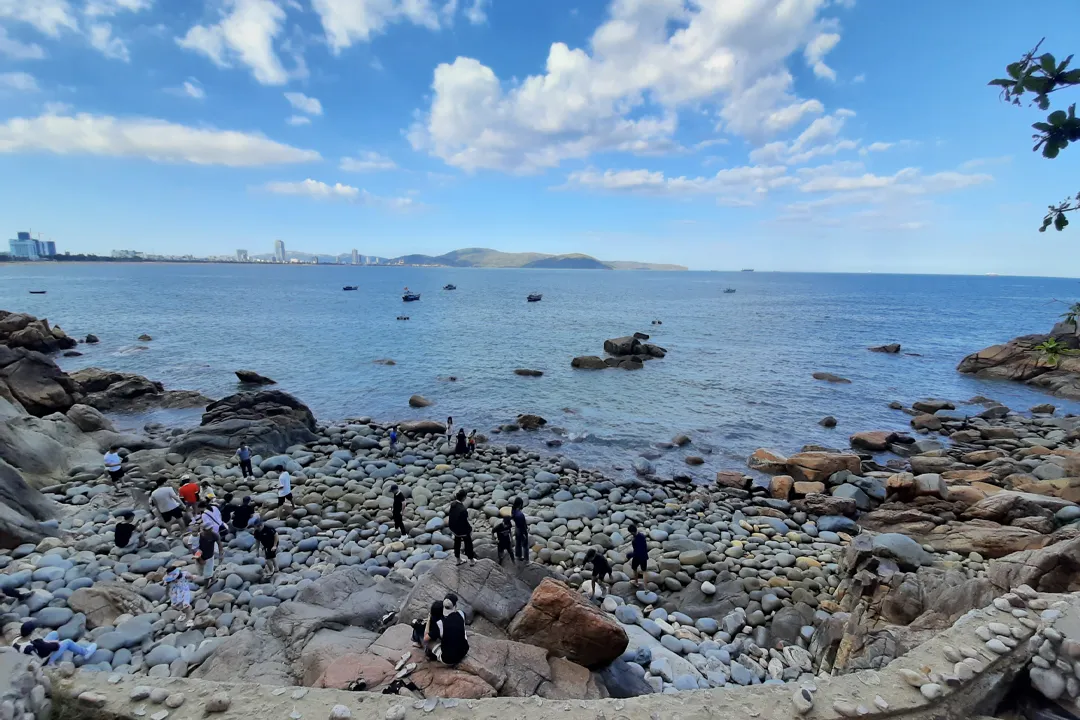
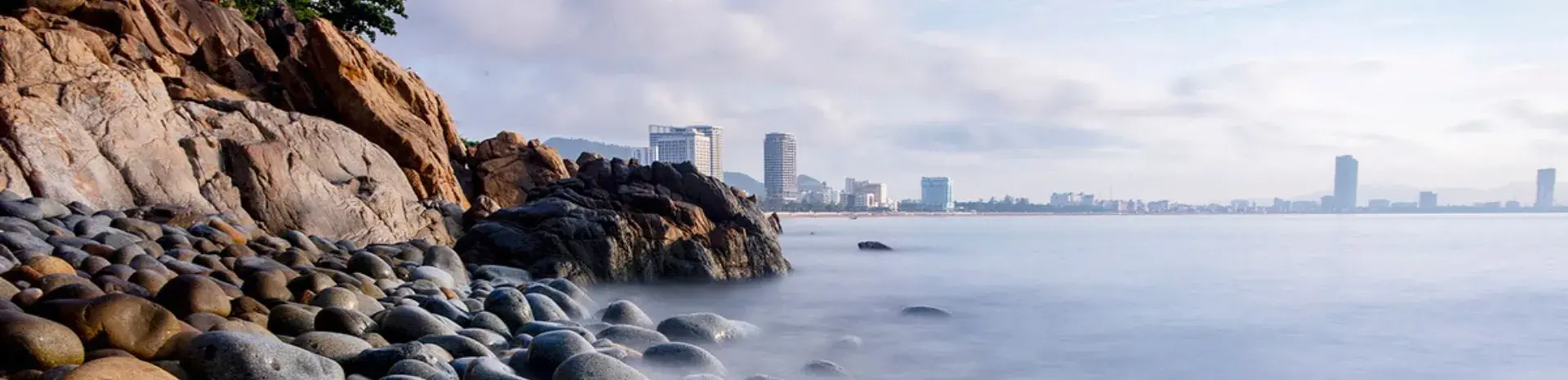
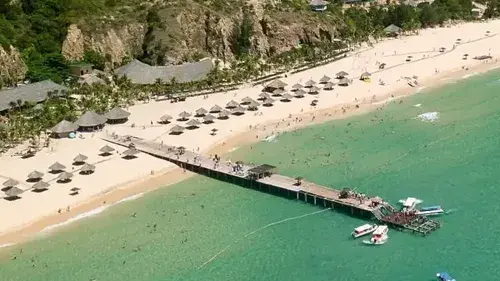
Just a few kilometres south of Quy Nhon’s city centre, Ghenh Rang unfolds like a living painting – jagged rock formations tumbling into emerald water, gentle waves lapping at a crescent of white sand, and a hillside where Vietnam’s most tragic poet rests in eternal silence. This coastal sanctuary is famous for two things: the grave of Han Mac Tu, whose love poems still move readers, and the pristine Hoang Hau Beach (Queen’s Beach), once reserved for royalty. For travelers seeking a blend of natural beauty, literary romance, and quiet seclusion, Ghenh Rang offers a soulful escape from the ordinary.
Ghenh Rang: A Legend of Immortal Love
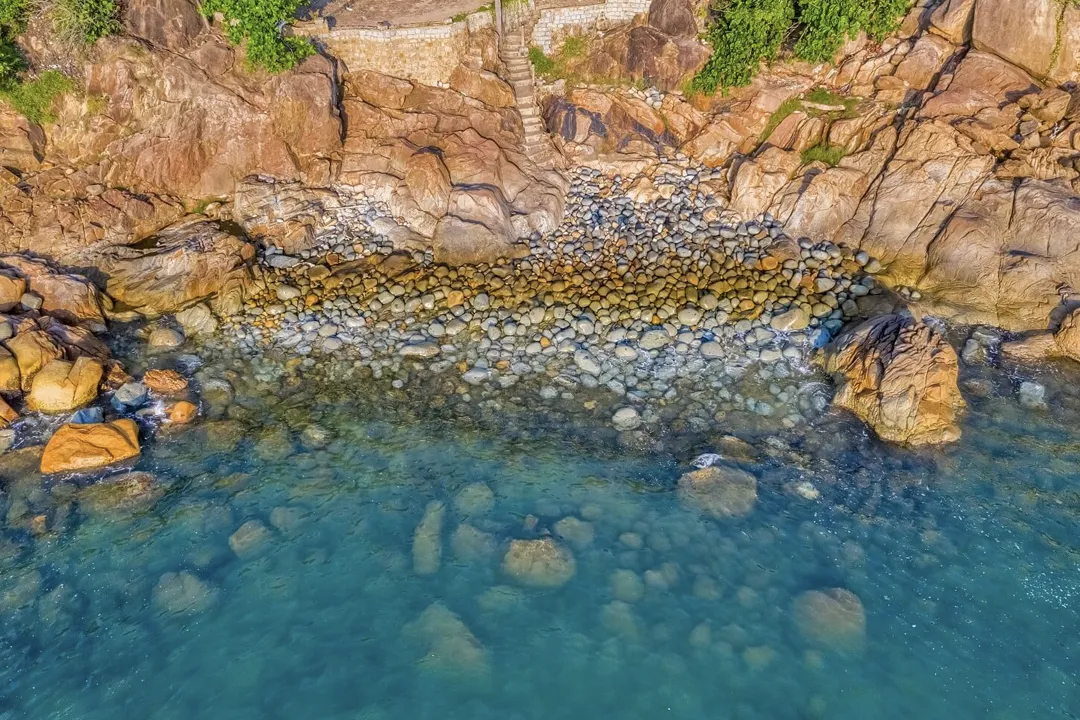
In the introductions to Ghềnh Ráng Tiên Sa, this place is known for the story of a gentle and virtuous girl. She fell in love with a young man from her village. However, a calamity occurred when the district magistrate became infatuated with her beauty and was determined to possess her by any means. When the girl fled the village to Quy Nhơn, the magistrate sent soldiers after her. As she reached the Ghềnh Ráng section, a storm arose, and then the rocky mountain split open into a large crevice, and suddenly the girl disappeared. Upon hearing of his lover's disappearance, the young man searched everywhere. When he arrived at Ghềnh Ráng, he saw the faint silhouette of the girl. Later, no one knows where the young man went, but whenever lightning flashes are seen in this coastal area, people believe that the girl is returning to visit her former lover. It is precisely because of the legend of this girl's faithful and steadfast love that this place is named "Ghenh Rang Tien Sa"
.webp)
Hoang Hau Beach and the Garden of Rock Sculptures
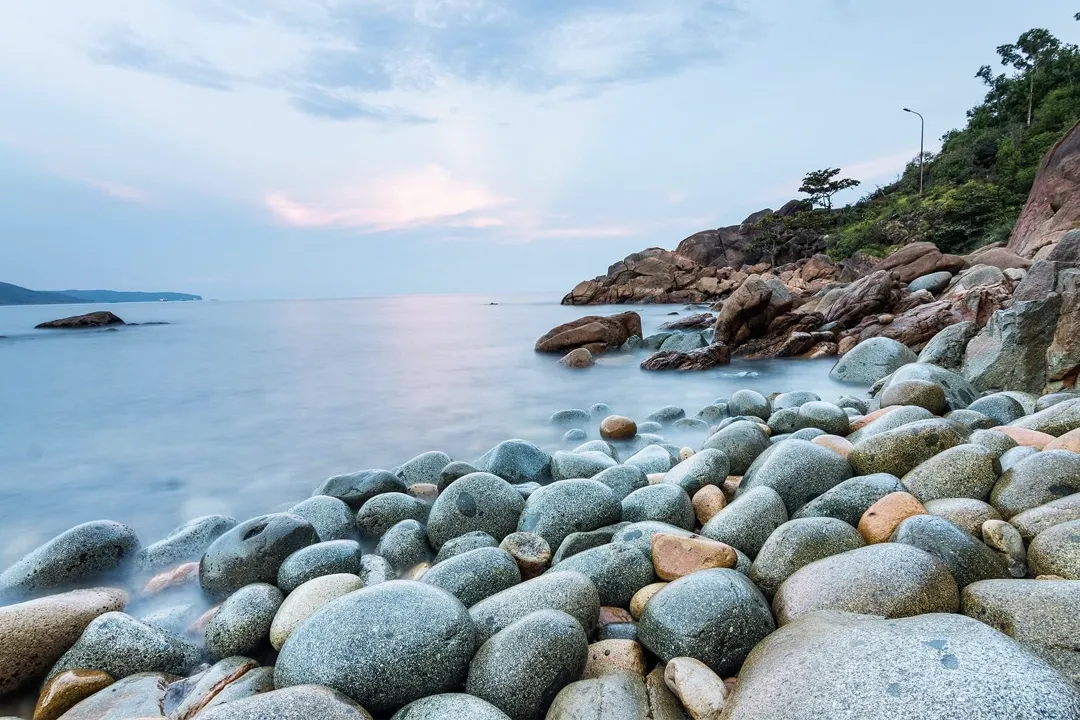
Below the poet’s hill, a narrow path winds down through a dense thicket of banyans and wild morning glory. It leads to the small, sheltered cove known as Hoang Hau Beach – “Queen’s Beach”. Legend says that Queen Nam Phuong, wife of Vietnam’s last emperor Bao Dai, used to swim here in the 1930s. The royal family had a modest retreat nearby, and the queen fell in love with the cove’s privacy and gentle surf. Today, the beach is open to everyone. It is not large – perhaps 200 metres of fine, grey‑white sand – but the setting is dramatic. Huge boulders, some as tall as houses, frame both ends of the beach, their surfaces pitted and coloured with orange lichen. The water is clear and remarkably calm, sheltered from the open sea by the rocky promontories. Swimming here is safe and pleasant, especially in the early morning before the sun becomes intense. There are no motorised water sports, no jet skis, no loud music. Just a few families, some teenagers laughing, and the soft hiss of waves on sand. To the north side of the beach, a local artist has created a small “rock garden” – not a formal sculpture park, but a whimsical collection of balanced stones, painted faces, and driftwood arrangements. It changes each year as the sea reclaims some pieces and locals add new ones. For photographers, the interplay of the giant boulders, the blue water, and the white sand is a gift. The best shots come in the late afternoon (3:00–4:30 PM), when the sun is low and the rocks cast long shadows. There is a small café at the top of the stairs serving fresh coconuts (20,000 VND / ~0.80 USD) and grilled squid (50,000 VND / ~2 USD). The owner, a cheerful woman named Co Ba, has been here for twenty years and can tell you stories about every storm that has reshaped the beach.
The Poetic Soul of Han Mac Tu
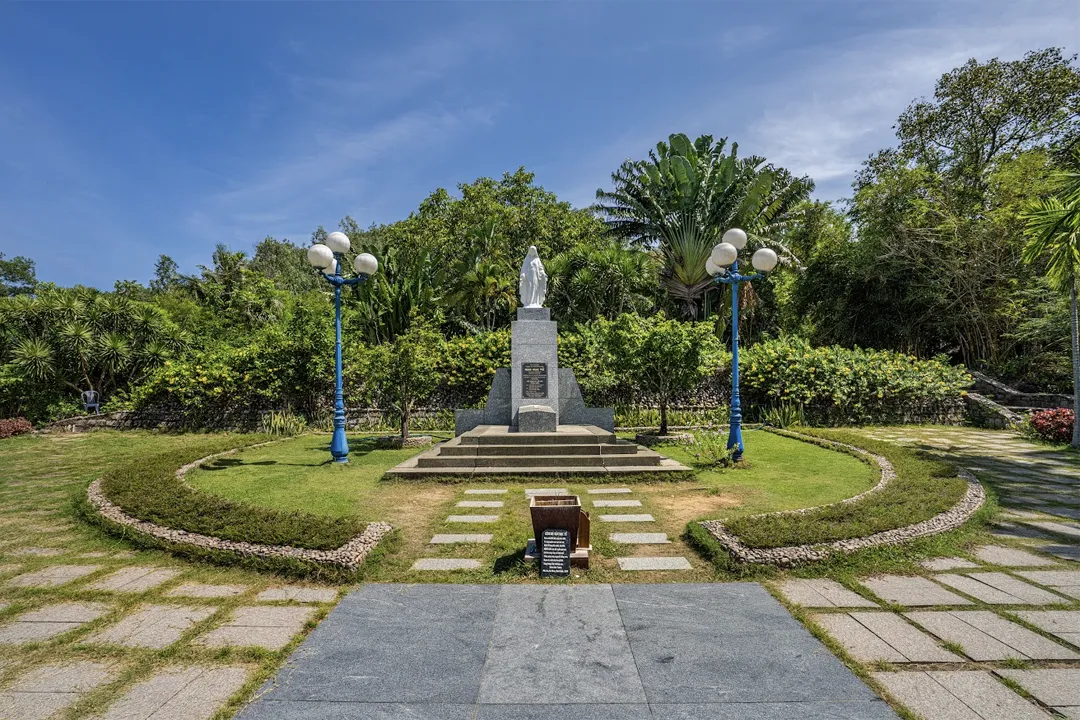
For many Vietnamese, Ghenh Rang is inseparable from the name Han Mac Tu (1912–1940), one of the country’s most beloved romantic poets. Stricken with leprosy in his twenties, he spent his final years in Quy Nhon, isolated and in pain, yet he wrote verses of extraordinary beauty – “Why don’t you come back to graze on my soul? / The moonlight is spilling like milk on the silk of the fields.” His grave sits on a gentle slope overlooking the sea, exactly where he wished to rest. The simple white tomb, shaded by a banyan tree, is a pilgrimage site for Vietnamese literature lovers. Beside it, a small pavilion displays photographs of the poet, some of his original letters, and a few personal belongings – a wooden pen, a tattered notebook, a pair of worn sandals. The atmosphere is hushed and reverent. Fresh flowers are almost always present, placed by visitors who have memorised his poems. For international travelers unfamiliar with Han Mac Tu, the site still resonates. There is something universally moving about a young genius who suffered so much yet created such light. From the tomb, the view across the bay is magnificent – the curve of the coastline, the distant Cham towers, and the endless blue of the South China Sea. Local guides often recite his most famous poem, “Đây thôn Vĩ Dạ” (Village Garden), in soft, melancholic tones. Even without understanding the words, you can feel the longing. This is not a conventional tourist attraction. There are no flashing lights or interactive displays. Just a grave, a view, and a story – but that story has the power to quiet the fastest of travellers.
Panoramic Views from Thi Nhan Hill
Above Han Mac Tu’s tomb, a paved path climbs a further 100 metres to the summit of Thi Nhan Hill. This is the highest point of Ghenh Rang, and the reward is a 360‑degree panorama that ranks among the finest in central Vietnam. To the north, the entire coastline of Quy Nhon city unfurls – white buildings, palm trees, the twin towers of the city’s cathedral, and the distant peak of Vung Chua Mountain. To the east, the sea stretches to the horizon, dotted with fishing boats and, on clear days, the outline of Hon Kho Island. To the south, the jagged rocks of Ghenh Rang continue for another kilometre, with small hidden coves that are only accessible by boat. And to the west, the green hills of Binh Dinh province roll inland, with the silver thread of the Con River cutting through them. The summit has several rough stone benches and a small pagoda – not ornate, but a quiet place to offer incense. Locals come here to watch the sunrise, and on weekend mornings you might see a dozen people sitting in silence, facing the light. For photographers, the golden hour before sunset (4:30–5:30 PM) is spectacular. The light turns the rocks a deep orange, and the sea becomes a sheet of polished gold. If you are lucky, the fishermen return to the bay just as the sun dips, their brown sails creating a perfect silhouette. The climb is not difficult – about 15 minutes at a leisurely pace – but wear sturdy sandals as the stone steps can be uneven. There is no shade on the summit, so bring a hat and water. Many visitors say the view from Thi Nhan Hill is the real reason to come to Ghenh Rang – the grave is the heart, but this is the soul.
Pro‑Traveler Experience Tips
For photographers, the best light at Ghenh Rang is early morning (5:30–7:00 AM) for soft, pastel colours over the sea, and late afternoon (3:30–5:30 PM) for dramatic rock textures and golden water. A polarising filter is essential to reduce glare on the waves and enhance the blue. A wide‑angle lens (16‑35mm) captures the boulders at Hoang Hau Beach; a 50mm or 85mm lens is perfect for intimate shots of the poet’s tomb. Drone operators: Ghenh Rang has no flight restrictions, but keep your drone below 120 metres and avoid disturbing other visitors – mornings are best for aerial shots of the coastline. For literature travellers, bring a translation of Han Mac Tu’s poems (available online or at the small souvenir stall near the entrance). Read a few verses while sitting at the tomb – it transforms the experience. There is no entrance fee for Ghenh Rang. Opening hours: the site is accessible from sunrise to sunset (approximately 5:00 AM to 6:00 PM). Wear comfortable walking shoes – the paths involve uneven stone steps and some slippery sections after rain. Bring drinking water and sunscreen; the only café is at Hoang Hau Beach, which may close by 5:00 PM. Restrooms are available near the tomb area (5,000 VND / ~0.20 USD, bring your own tissue). Avoid visiting at midday (11 AM–2 PM) when the heat is intense and there is little shade. For swimmers, Hoang Hau Beach is generally safe, but there are no lifeguards – check the wind condition; if the flag at the café is red, do not swim. The best months to visit are January to August; from September to December, occasional storms can make the rocks dangerously slippery. A guided walking tour (available through Quy Nhon tourist information, approx. 200,000 VND / ~8 USD for 1.5 hours) provides rich context about the poet and local legends.