Overview
Ba Be is more than just a park; it is a UNESCO Ramsar site and one of the 20 most special freshwater lakes in the world. Unlike the crowded waterways of Ninh Binh or the salty expanse of Ha Long Bay, Ba Be offers a freshwater "Price-to-Performance" sanctuary that remains largely untouched by mass tourism. Here, the landscape is defined by three interconnected lakes surrounded by the sheer cliffs of the Hoang Lien Son foothills, creating a unique microclimate that supports rare flora and fauna, including the elusive Francois' langur.
Ba Be is not just a park; it is the beating emerald heart of Bac Kan province. The name "Ba Be" (Three Lakes) refers to the interconnected basins of Pé Lầm, Pé Lù, and Pé Lèng, which together form Vietnam’s largest natural freshwater lake and be ranked by UNESCO as one of the 20 most beautiful natural freshwater lakes in the world that need to be protected and developed.
Why Ba Be National Park?
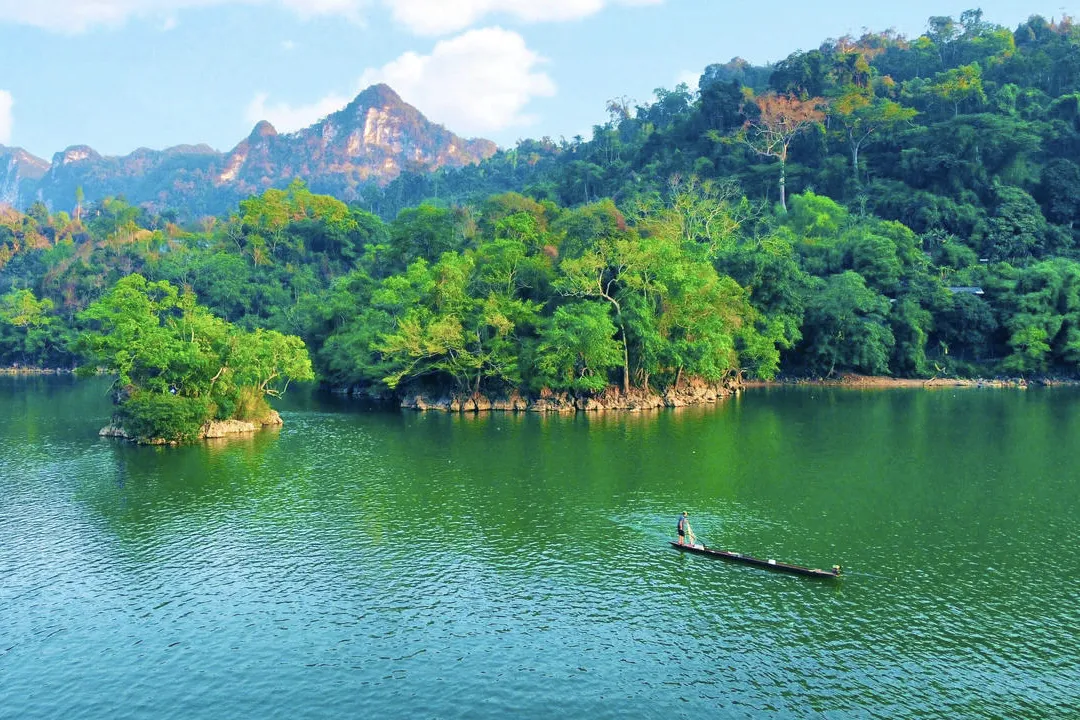
What elevates Ba Be beyond a standard scenic stop is its global ecological significance. In 2011, it was recognized as a Ramsar site—a wetland of international importance. At its heart lies Ba Be Lake, perched 145 meters above sea level and surrounded by steep limestone peaks. This "lake on the mountain" is one of the 20 largest natural freshwater lakes in the world, serving as a mechanical necessity for the survival of countless rare species.
Unlike the craggy, vertical drama of Ha Giang or the terraced symmetry of Sapa, Ba Be is defined by fluidity. It is a "complex of rivers-lakes-mountains" situated in an evergreen moist forest ecosystem. Here, the experience is travel-focused on the water—navigating through caves by boat and trekking through primary forests that have remained largely untouched by modern development.
Best Time To Visit?
Visitors can visit Ba Be Lake year-round, as each season has its own unique characteristics. The rainy season lasts from April to October, and the dry season from November to February of the following year, with very cold weather, temperatures dropping to 0°C in many places, and frost possible.
However, the best time to visit Ba Be Lake is from February to April, when the weather is cool and temperatures range from 25 to 30 degrees Celsius. On the 9th and 10th of January, many festivals showcasing the rich cultural identity of the local ethnic groups are held.
The Pristine Dry Season (October – April)
The period from October through April represents the classic “good weather window” in northern Vietnam, and it is the most reliable time for a Ba Be visit. During these months, rainfall drops significantly, skies are clearer, and daytime temperatures hover between a comfortable 20°C and 28°C, with cooler evenings that can dip to around 10°C in the depths of winter.
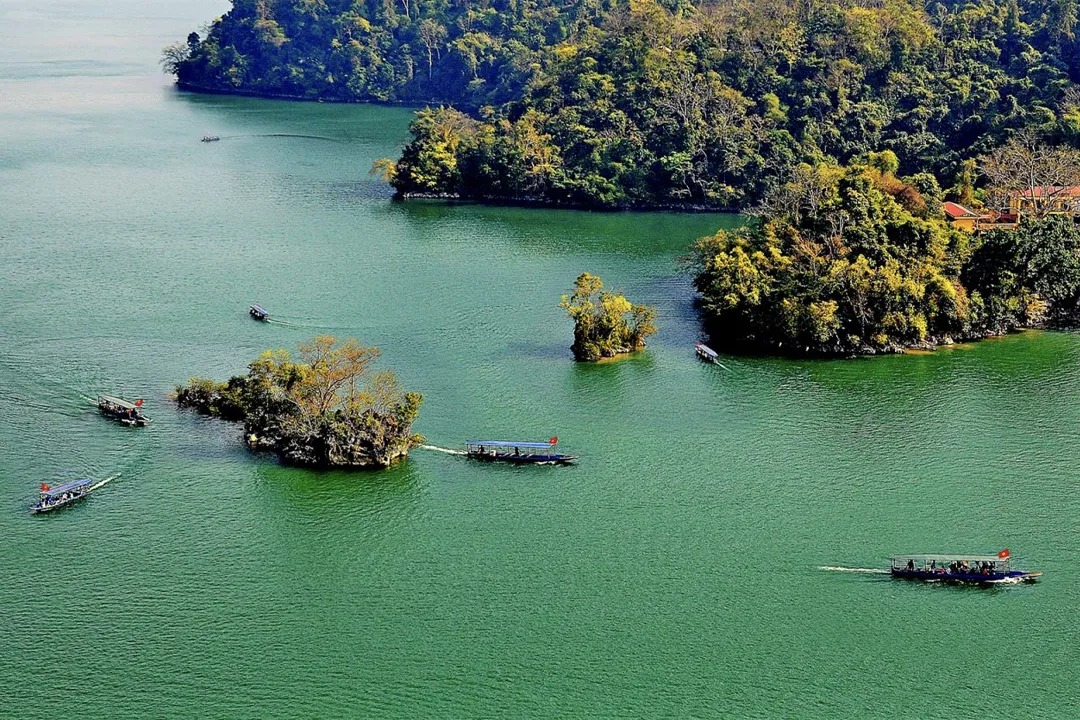
February through April is particularly fine: mild conditions (25–30°C), flower blooms, and clear skies make for optimal trekking and photography. The lake waters are calm and reflective, ideal for boat trips, and the cooler air keeps mosquitos less active than in summer. For those seeking accessibility and picture-perfect views, this is the window to aim for.
The Lush Wet Season (May – September)
From May through September, the tropical monsoon brings high humidity, temperatures that can climb into the low 30s Celsius, and — particularly in June and July — heavy afternoon downpours that can be brief but intense. This is not to suggest that the wet season should be avoided; it simply requires different expectations. The landscape transforms into a sensational, vivid green, and the waterfalls (Đau Đang above all) reach their thunderous peak volume. The lake swells and the forest looks intensely alive. Mornings are typically sunny, and with careful planning, outdoor activities remain perfectly feasible. However, some forest trails become muddy and slippery, certain remote hiking routes may be closed for safety, and boat trips can be interrupted or cancelled during storms. For the flexible traveller who does not mind occasional rain, the wet season offers the park at its lushest and least crowded.
Festivals & Local Calendar
The Long Tống Festival (also called the Going-to-the-Field Festival) is the most significant cultural event of the Ba Be calendar, typically held between the 9th and 11th days of the first lunar month, which translates to February or early March in the Gregorian calendar. This spring festival marks the beginning of the agricultural year, with shamans performing rituals to pray for good harvests, abundant rain, and prosperity, followed by folk games — ném còn (coloured cloth ball throwing), stilt-walking, tug-of-war, and boat races on the lake — that draw participants from villages across the district.
A second important Tay celebration is the Nang Hai Festival (Mother Moon Festival), held every two years from the first lunar month through to the third, involving an elaborate all-night ritual theatre performance that blends dance, music, and poetry in the Tay language. The more recently established Autumn Colours of Ba Be Lake festival, held in November, showcases local crafts, OCOP products, and cultural performances. Travellers fortunate enough to align their visit with any of these festivals will encounter a Ba Be that few package tourists ever see: not a quiet natural sanctuary but a vibrant cultural landscape in full celebratory voice.
Must-see places
Ba Be Lake: The Jade Mirror
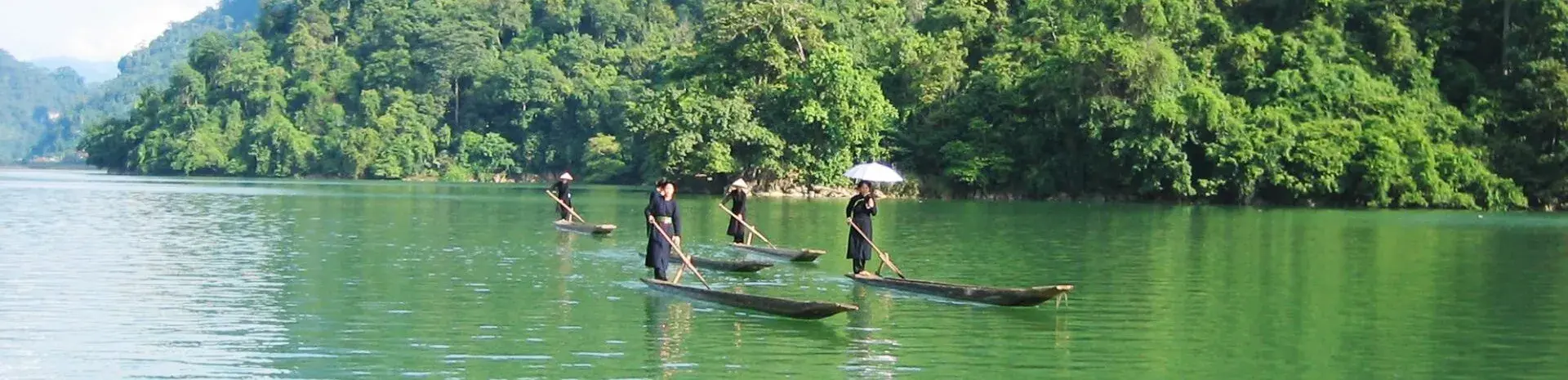
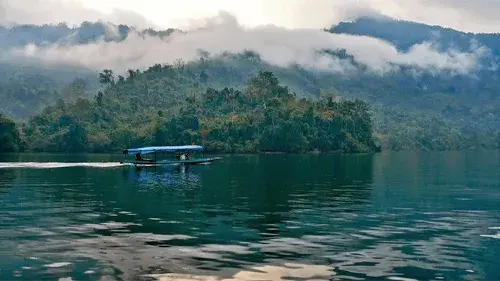
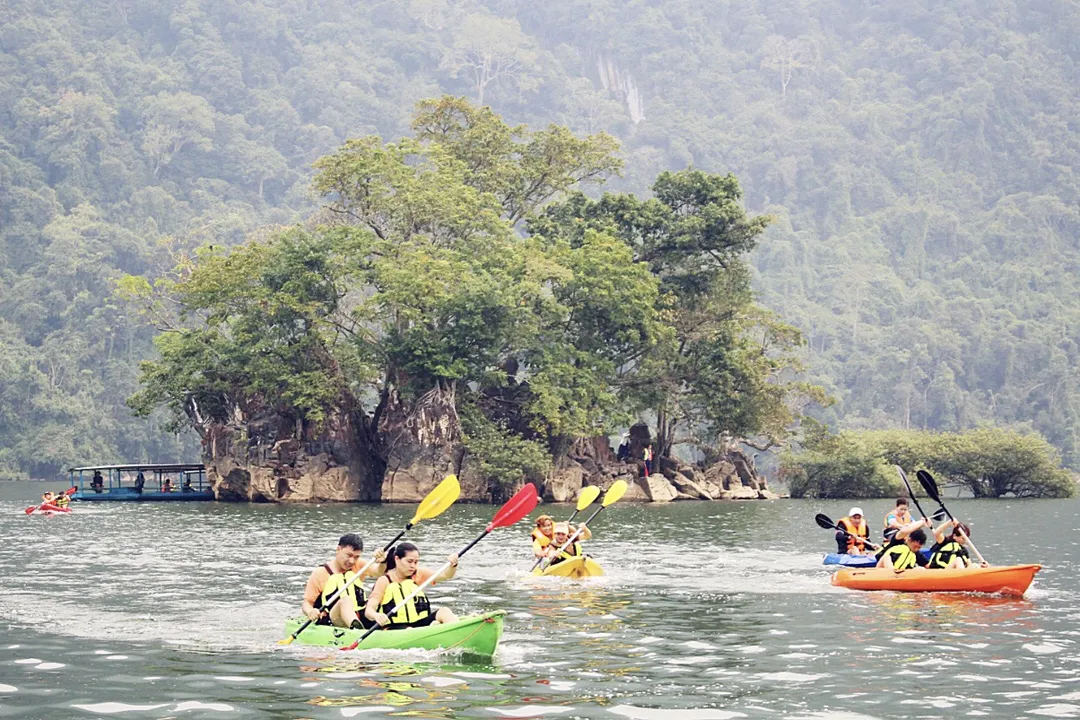
The lake is actually a series of three interconnected basins: Pe Lam, Pe Lu, and Pe Leng, stretching nearly 8 kilometers. In 2026, the boat experience remains the park's crowning jewel. A private motorboat tour (seating up to 10-12 people) allows you to glide across waters so clear they reflect the limestone giants above like a jade mirror. For the more adventurous, kayaking provides a sophisticated "Price-to-Performance" way to explore the lake's hidden inlets at your own professional pace.
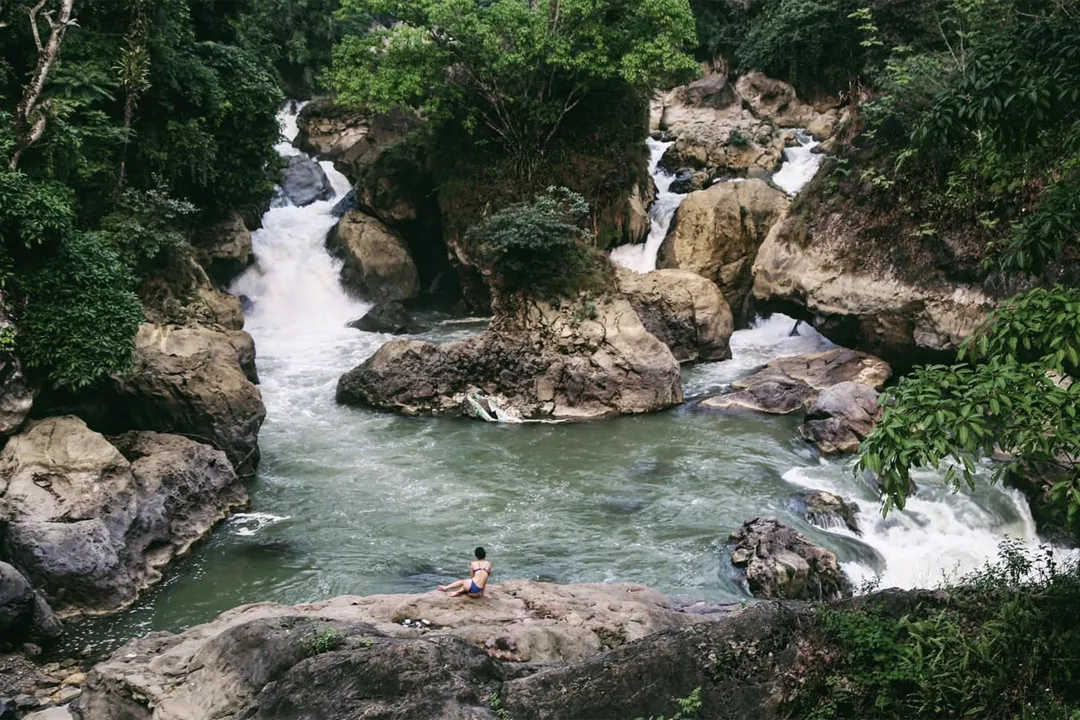
Dau Dang Waterfall: Power and Grace
Where the Nang River meets Tuyên Quang Province, the water cascades over a 2-kilometer stretch of stacked boulders, creating the magnificent Dau Dang Waterfall. Accessible via a scenic boat ride followed by a short jungle trek, the waterfall is a popular photo spot, especially when the light hits the mist to create rainbows. It is also home to the rare "Ca Chien" (devil fish), which can grow to significant sizes in these turbulent waters.
Puong Cave: The Giant Portal
A boat journey through Puong Cave is a travel-focused requirement. This massive tunnel, 300 meters long and 30 meters high, was carved by the Nang River through Lung Nham Mountain. It is home to a colony of thousands of bats, their echoes creating an otherworldly atmosphere. On the roof of the cave, you can still find traces of the Mac Dynasty battlements—a mechanical necessity for any history enthusiast's itinerary.
.webp)
Fairy Pond (Ao Tiên) & Nam Mau Village
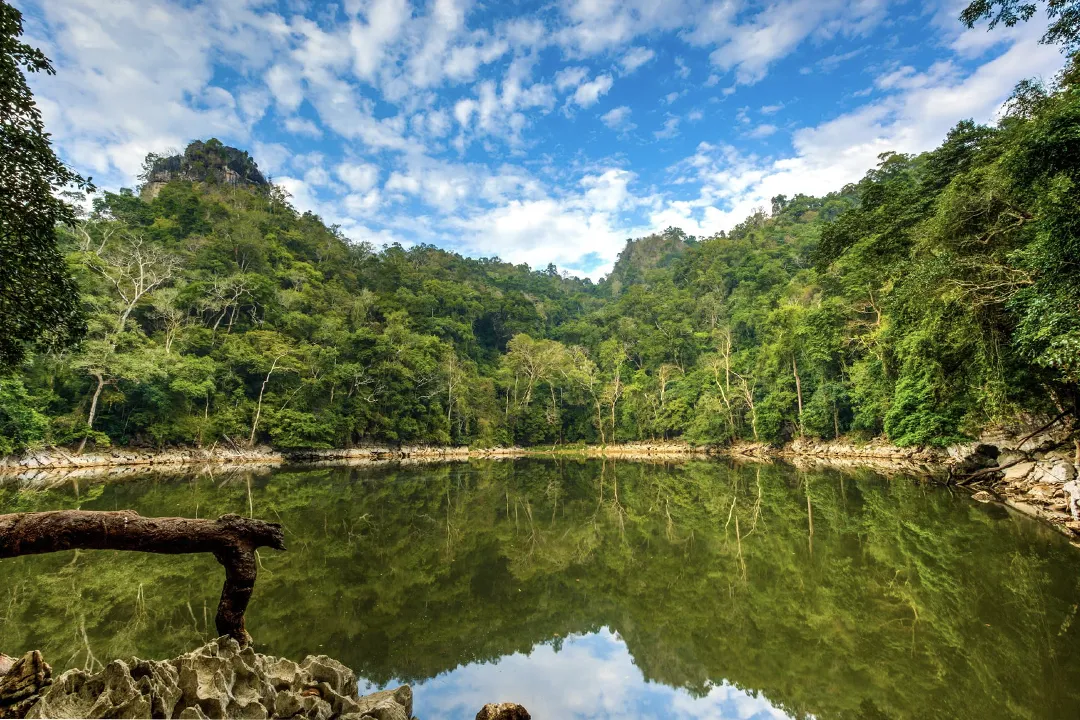
Isolated from the main lake by a wall of rock, Ao Tien is a pristine, mirror-like pond steeped in local legend. It is said that celestial beings once descended here to bathe. Nearby, Nam Mau Village serves as a cultural hub where the traditional stilt houses of the Tay people line the riverbanks, offering an appealing glimpse into a lifestyle dictated by the rhythms of the water.
Where to Stay: Authentic Sanctuary
Homestays Inside the Park (Bó Lù, Pác Ngòi Villages)
For an authentic, travel-focused experience, staying in a traditional Tay stilt house is essential. Villages like Pac Ngoi, Bo Lu, and Coc Toc offer high-quality homestays where you can sleep on the second floor of a wooden house overlooking the rice paddies. In 2026, many of these have been upgraded to provide private bathrooms while maintaining their rustic elegance. Typical room rates here range from approximately 300,000 VND to 600,000 VND ($12 - $24 USD) per night, including a lavish home-cooked dinner.
Generally, accommodations near Ba Be Lake with balconies or windows overlooking the lake are mostly homestays run by locals, often including communal rooms. Amenities here are only basic. If visitors want more fully equipped accommodations, they should choose places 1 to 2 km further from the lake, near the national park entrance. According to Tripadvisor suggestions, visitors can choose from the following: Thai Binh Hotel, Saigon Ba Be Hotel, Ba Be National Park Hotel, An Thao Ba Be Hotel, and homestays such as Huyen Hao, Tran Xuan, Hoang Nguyen, and Minh Quang.
Camping Options (Seasonal)
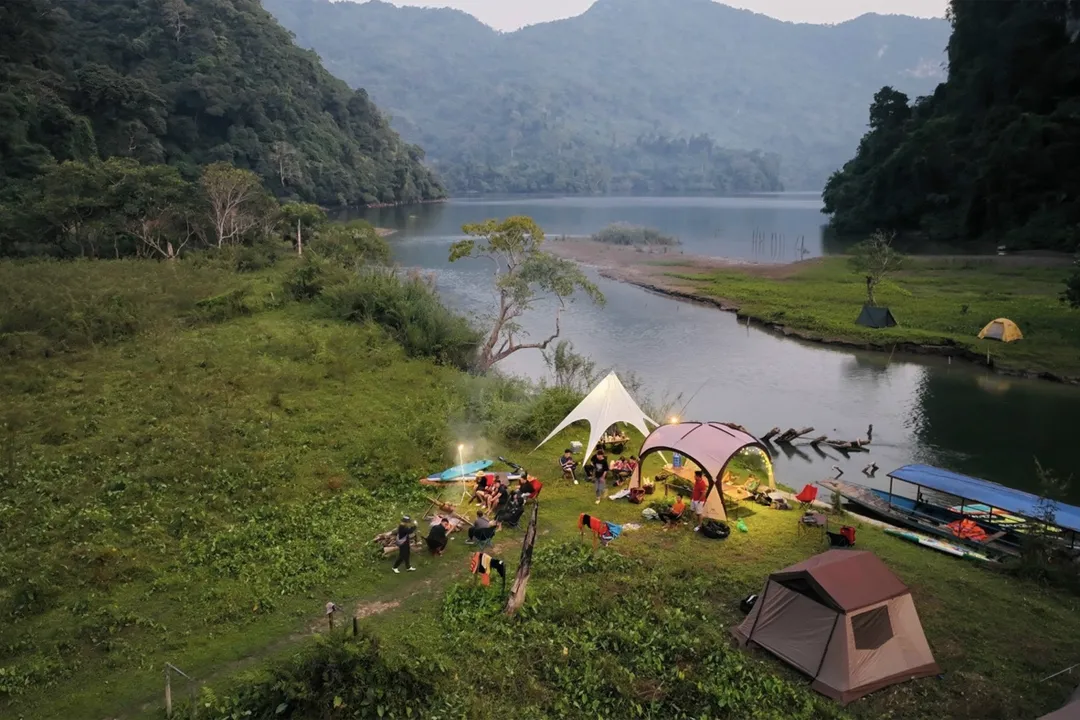
In addition, camping by the lake is a new experience that has recently become popular with many tourists. Ba Be National Park also offers opportunities for overnight camping, particularly for those on multi-day trekking or kayaking itineraries. Organised camping trips, typically booked through tour operators or local guides, allow small groups to spend a night in the dense tropical forest on the lake shore, with tents, dry bags, and cooking equipment provided. The experience involves campfire evenings, kayaking by day, and the unforgettable sensation of waking to the sound of the forest and the lapping of lake water.
Ba Be National Park also offers opportunities for overnight camping, particularly for those on multi-day trekking or kayaking itineraries. Organised camping trips, typically booked through tour operators or local guides, allow small groups to spend a night in the dense tropical forest on the lake shore, with tents, dry bags, and cooking equipment provided. The experience involves campfire evenings, kayaking by day, and the unforgettable sensation of waking to the sound of the forest and the lapping of lake water.
Beyond the lake shore, several grassland areas within the broader Bắc Kạn province — Bản Chang Lake, Tân An Grass Hill, Lủng Trảng Grass Hill, and Phiêng Chi Grass Hill — are identified as camping-viable locations for those seeking an even more remote experience. However, wild camping independently within the national park boundaries is not permitted; all camping should be arranged through registered operators or local guides who understand environmental regulations and safety protocols. Camping is most feasible and pleasant during the dry season (October to April), when lower humidity and minimal rainfall reduce both discomfort and risk.
Prices range from 1 to 2 million VND per person, depending on whether it's a full package or individual services.
Recommendations Itinerary
Currently, many travel agencies offer trekking tours in Ba Be National Park, with a wide variety of itineraries and starting locations (Hanoi or Ba Be). Here are some suggested different itineraries for you to consider.
1-Day Itinerary: Coc Toc village - Hmong Village - Ba Be Lake
A single day at Ba Be can be rewarding if planned efficiently. The ideal one-day itinerary is essentially the park’s classic boat circuit:
8:00: Begins on the lakeside trail, crossing streams to Coc Toc village, a Tay ethnic village whose inhabitants make their living by fishing on Ba Be Lake. From Coc Toc village, you will cross rice fields, follow the stream banks, and climb through the tropical forest – this is a system of primary forest canopy on limestone mountains.
10:00: Arrive at the Hmong village of "Khau Qua, Nam Dai," an ethnic group living on mountain peaks, cultivating corn and rice, and raising livestock on terraced fields.
12:00: Stop for a picnic lunch.
14:00: In the afternoon, descend the mountain through valleys and bamboo forests on the trail to Ba Be Lake.
17:00: The journey will end at the shore of Ba Be Lake, after which you will have time to freely explore the surrounding area or immerse yourself in the cool waters of the lake after a long day of trekking through the forest.
This compact itinerary covers the park’s essential highlights and is suitable for all ages and fitness levels.
2-Day Itinerary: Ba Be Lake - Nang River - Coc Coc Village - Dao Village - Dau Dang Waterfall - Puong Cave - Ba Be Lake
Day 1
07:30: Upon arriving at Ba Be Lake, continue along the lakeside trail. Crossing the Nang River, you will reach Coc Toc village - a fishing village. You will experience the simple life of the local ethnic people through their daily activities, such as fishing for Chien fish and feeding livestock.
09:00: Continues to cross the high mountain ranges to reach the village of the Dao ethnic group.
12:00: Upon arriving at the village, you will have the opportunity to learn about the culture and lifestyle of the Dao people. Enjoy a traditional lunch with local cuisine featuring the distinctive flavors of the Northwest mountainous region.
14:00: In the afternoon, you will have free time to explore the unique traditional houses that you may have only seen in books before. Admire the valleys and the vast terraced rice fields.
19:00: Dinner and overnight stay at a traditional Dao ethnic house.
Day 2
07:00: Traversing the tropical rainforest to reach Dau Dang Waterfall. This majestic waterfall also marks the intersection of Bac Kan and Tuyen Quang provinces.
12:00: Stop for a rest and lunch at a local restaurant. Afterward, continue by motorboat downstream on the Nang River, exploring the tunnel through the mountain. You will have the opportunity to admire the diverse and bizarre stalactite formations in Puong Cave – the cave with the largest underground water source in Ba Be National Park.
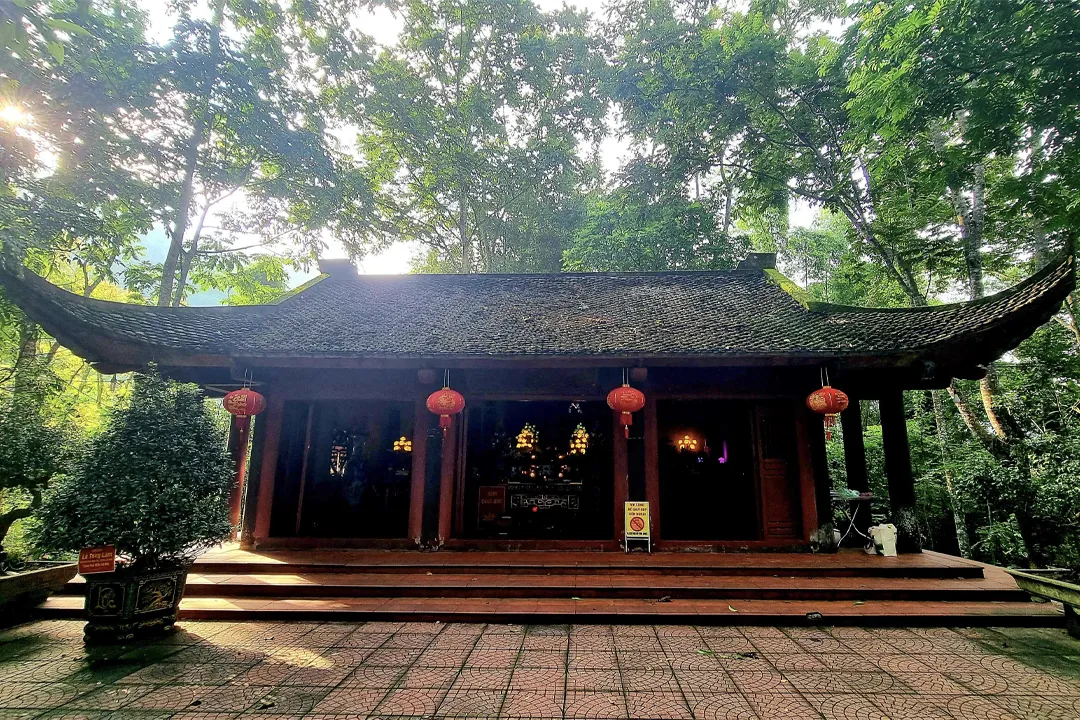
15:00: The final tourist attraction of the day is An Ma Temple. This is a place of worship for the loyal officials of the Mac Dynasty who sacrificed themselves in Puong Cave.
16:00: Back to the center of Ba Be Lake. At this point, you can immerse yourself in the cool waters of Ba Be Lake, or drift along in a traditional dugout canoe. This concludes your trekking tour of Ba Be Lake National Park.
3-Day Itinerary: Hanoi - Ba Be Lake - Boc Lom pier - Puong Cave - Widow's Island - Cam Village - Tham Phay Cave - Pac Ngoi village - Hua Ma Cave - Silver Waterfall - Bo Lu village - An Ma Temple - Hanoi
Day 1
7:00 - 8:00: Arrival from Hanoi to Ba Be Lake.
12:00: Along the way, you will stop for lunch at a local restaurant.
13:00: Upon arriving at Boc Lom pier then begin your kayaking journey down the Nang River begins. Along the way, you will discover Puong Cave, Widow's Island, and Cam Village.
18:00: Back to homestay nad enjoy your dinner with local foods.
Day 2
07:00 - 07:30: Begin your exploration of Tham Phay Cave. You will embark on a trekking journey through the forest before reaching the 5km-long river cave with its unique geological features.
12:30: Return to the homestay to rest and have lunch.
14:00: Board a boat to the southern shore of Ba Be Lake. You can cycle to Pac Ngoi village, a traditional Tay ethnic village famous for its ancient stilt houses and lush green rice fields, meet the locals, learn about their daily lives, and enjoy the peaceful atmosphere.
Continuing the journey, you will cycle to Hua Ma Cave, a stunning dry cave with unique stalactite formations resembling a rock forest. To enter the cave, you need to climb over 300 steps, offering an exciting sense of accomplishment. Afterward, the journey takes you to Silver Waterfall, about 5km from the cave.
18:00: Back to homestay nad enjoy your dinner with local foods.
Day 3
7:30: Enjoy breakfast at the homestay and begin your exploration of the southern part of Ba Be National Park from Bo Lu village.
8:30: Following the Tham Khit trail, you will reach an ancient cave, once home to prehistoric inhabitants. Walking another 2 km, the journey leads you to An Ma Temple, a sacred temple of the Tay people, dedicated to mountain gods, lake gods, and generals of the Mac Dynasty during the feudal period.
12:00: Return to the homestay to rest and have lunch.
15:00: Back to Hanoi
Quick comparison table
| Itinerary |
Route |
Recommended For |
| 1-Day |
Coc Toc village - Hmong Village - Ba Be Lake |
Tourists with limited time who consider Ba Be Lake as a stop on a longer journey (for example, on the Hanoi – Cao Bang route)
Families with elderly people or young children who need a gentle experience with minimal physical exertion.
First-time visitors to the northern mountainous region who want to experience the beauty of the lake and mountains without facing significant physical challenges.
|
| 2-Day |
Ba Be Lake - Nang River - Coc Coc Village - Dao Village - Dau Dang Waterfall - Puong Cave - Ba Be Lake |
Couples seeking a romantic, tranquil getaway, immersed in nature and enjoying privacy by the fireplace in a traditional stilt house.
Travelers who love exploring culture: this itinerary allows you to dine, chat, and immerse yourself in the daily life of the Tay ethnic group, something a one-day itinerary cannot offer.
Suitable for those with average fitness and a passion for moderate hiking (2-3 hours of gentle trekking through village paths and old-growth forests, not too steep or dangerous).
|
| 3-Day |
Hanoi - Ba Be Lake - Boc Lom pier - Puong Cave - Widow's Island - Cam Village - Tham Phay Cave - Pac Ngoi village - Hua Ma Cave - Silver Waterfall - Bo Lu village - An Ma Temple - Hanoi |
True adventure travelers and trekking enthusiasts: this is a journey for those with strong legs, allowing you to reach the most hidden corners of the primeval forest on limestone mountains, home to ancient, thousand-year-old ironwood trees.
Photographers and wildlife lovers: three days allow you to witness sunrises over the lake, photograph bats leaving their burrows in the late afternoon, and venture deep into the forest to hear gibbons and observe rare butterfly species.
Young travelers and groups of friends seeking a relaxing "survival camping" experience and a complete escape from urban life.
|
Practical Travel Tips
Park Entrance Fees & Boat Hire Costs
As of the latest available information for 2025–2026, the costs are as follows (prices are indicative and subject to change):
- Park entrance fee: 70,000 VND (approximately US$2.90) per adult.
- Hua Mà Cave entrance: 45,000 VND per adult.
- Boat hire on Ba Be Lake: between 300,000 VND and 1,200,000 VND per boat depending on route duration and group size, with the most popular full circuit (including Puong Cave and Đầu Đẳng Waterfall) typically in the range of 650,000–800,000 VND for a group.
- Kayak or SUP rental: approximately 1,200,000–1,500,000 VND for a group of three kayaks for a day, with life jackets included.
Boat tours can be booked through the Park Management Office or arranged by homestay hosts, who will liaise with the local boat cooperative on your behalf. It is advisable to confirm exact current rates and route details with your accommodation before arrival.
What to Pack (Weather, Terrain Considerations)
Weather at Ba Be can change rapidly, particularly during seasonal transitions. A recommended packing list includes:
- Clothing: lightweight, moisture-wicking base layers; a long-sleeved shirt for sun and insect protection; long trousers for trekking through vegetation; and a lightweight waterproof jacket, essential even during the dry season.
- Footwear: sturdy, comfortable walking shoes with good grip for slippery or uneven terrain on forest trails and cave paths.
- Health and comfort: strong insect repellent (DEET-based), sunscreen, sun hat, and a basic first-aid kit with plasters, antiseptic, pain relievers, and anti-diarrheal medication.
- Practical items: a reusable water bottle (tap water is not potable, so plan to treat or purchase boiled water), a small day pack for hiking, and a torch or headlamp for cave interiors.
- Documents: your passport, which is required for homestay registration.
- Cash: there are no ATMs within the park boundaries. Bring sufficient Vietnamese đồng for meals, boat hire, entrance fees, and incidentals, with the nearest banking facilities located in Chợ Rã town.
Responsible Tourism & Respect for Tay Culture
Ba Be’s relatively untouched character is not accidental. The slow, community-oriented development of tourism here has preserved what mass-market development has eroded elsewhere, and continued preservation depends on all visitors practising thoughtful travel:
- Dress modestly when walking through villages, especially when visiting temples or participating in festivals.
- Ask permission before photographing people, particularly elders and those engaged in ceremonial activities.
- Stick to marked trails: leaving designated paths damages fragile vegetation and can disturb wildlife habitats.
- Leave no trace: pack out all rubbish, including food scraps and biodegradable waste, which can attract wildlife and alter their natural behaviours.
- Bring reusable items (water bottle, shopping bag, utensils) to minimise single-use plastic waste.
- Support the local economy: purchase handmade crafts directly from artisans, eat at locally owned restaurants, and stay in locally operated homestays rather than international chains. Fair tips for guides, boatmen, and homestay hosts are customary and deeply appreciated.
- Respect the spiritual dimension of sites like Ao Tiên, An Mà Temple, and festival grounds by speaking quietly, not touching altar objects, and following any posted guidance.
Mobile Signal & Connectivity
Wi-Fi is generally available and reliable at most homestays throughout the park, including properties in Pác Ngòi and Bó Lù villages, and has been reported working even at sites like Hua Mà Cave. However, connectivity can weaken inside deep cave interiors or during prolonged heavy weather. Mobile phone signal is patchy on the lake itself and on some of the deeper forest trails. Travellers who need constant connectivity should set expectations accordingly and download offline maps and any essential information before arrival.
Combining Ba Be with Other Destinations?
Hanoi - Ba Be - Cao Bang Route
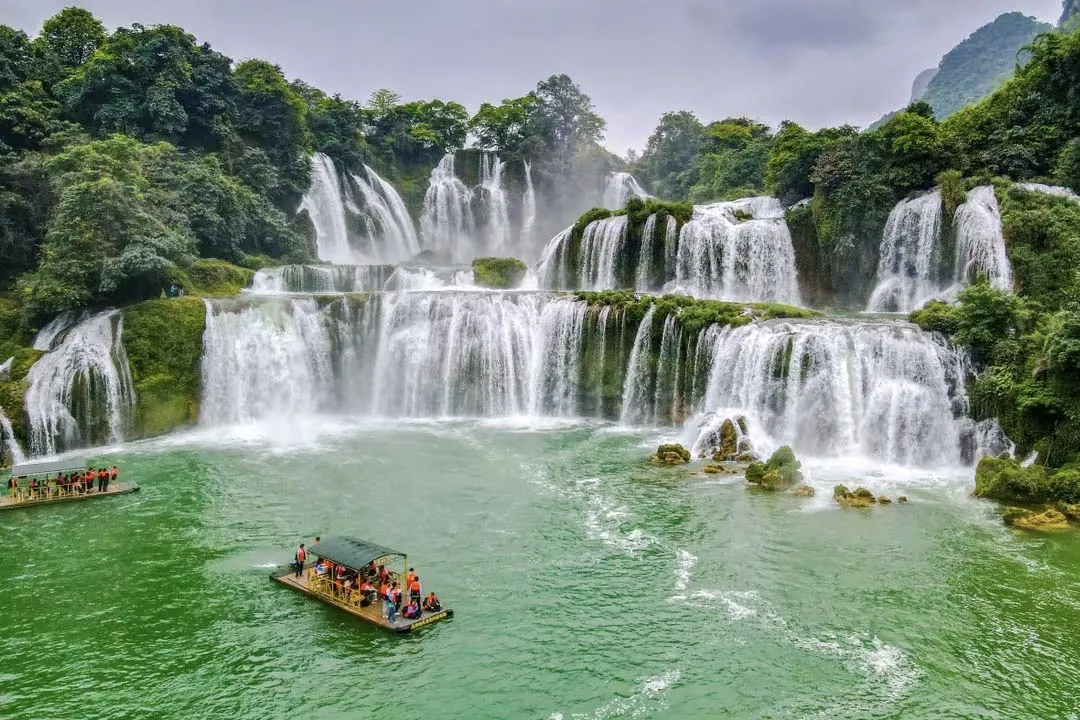
One of northern Vietnam’s most rewarding multi-day road trips connects Hanoi with Ba Be and then continues northeastward into Cao Bằng province — a route that grows progressively more dramatic as the landscape transitions from agricultural plains to karst peaks to the wild, deeply dissected limestone terrain around the Chinese border.
On this loop, travellers can journey from Hanoi to Ba Be (approximately 5 hours), spend one to two nights exploring the lake and park on foot and by boat, and then drive to Cao Bang (approximately 4–5 hours). The reward in Cao Bằng is the magnificent Ban Gioc Waterfall — one of the world’s largest transnational waterfalls, straddling the Vietnamese-Chinese border — alongside the massive Nguom Ngao Cave and the glassy waters of the Quay Son River. This 4-day itinerary (Hanoi–Ba Be–Cao Bang–Ban Gioc–Hanoi) is widely offered by tour operators, with a typical cost of between US300andUS300andUS500 per person, depending on accommodation level. It provides a logical and satisfying narrative arc, moving from the serene lake landscapes of Ba Be to the dramatic grandeur of Ban Giốc before returning to the capital.
Ha Giang - Thai Nguyen Route

For those with more time and a taste for adventure, Ba Be can serve as either an entry or exit point for a Ha Giang loop, the famed northernmost circuit that takes in the Dong Van Karst Plateau, the Ma Pi Leng Pass, and landscapes that rank among the most spectacular in all of Southeast Asia. Reaching Hà Giang from Ba Be requires a long driving day, but the transition from the gentle lake basin into the jagged limestone highlands of the border region is unforgettable.
Alternatively, for visitors seeking a gentler experience, the route southward through Thai Nguyen province offers a more culturally focused itinerary: Thái Nguyên is the centre of Vietnam’s tea-growing industry, with vast tea plantations, production cooperatives, and opportunities to learn about and taste the country’s finest green teas. Combining Ba Be’s natural serenity with a tea-country interlude — fragrant, green, and unhurried — before returning to Hanoi provides an altogether different kind of satisfaction.
Whichever route one chooses, the essential truth remains the same: Ba Be National Park rewards those who come with open eyes, quiet feet, and a willingness to let the lake’s rhythm set the pace. It is a place where nature and culture have shaped each other for centuries, and where visitors who arrive respectfully are welcomed into that harmony.