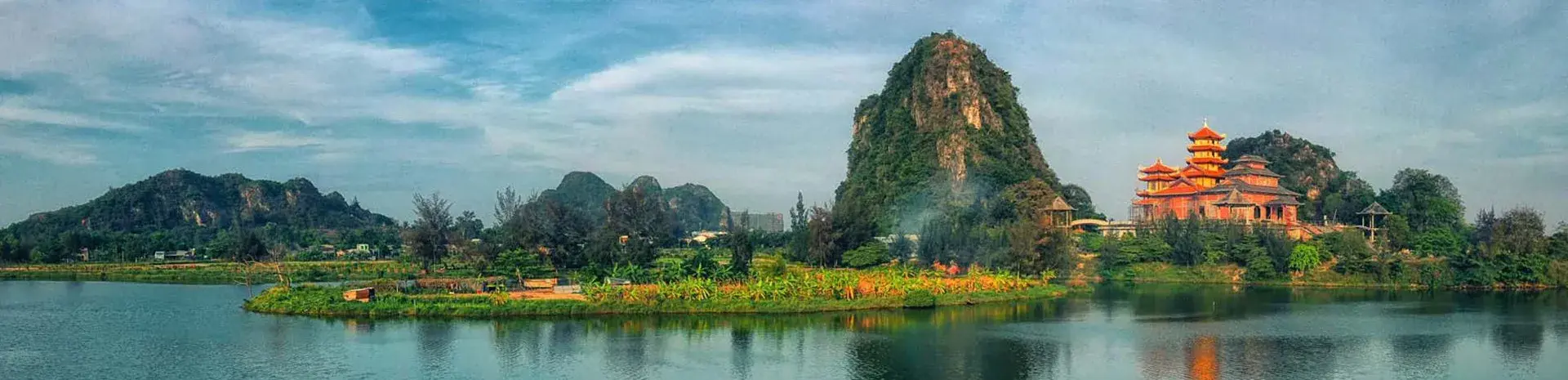
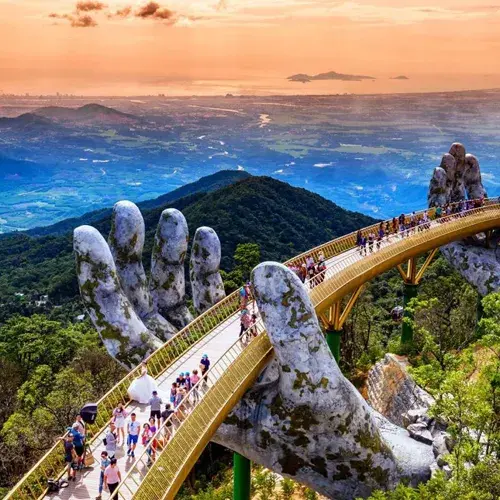
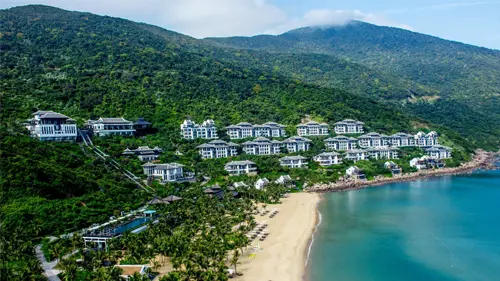
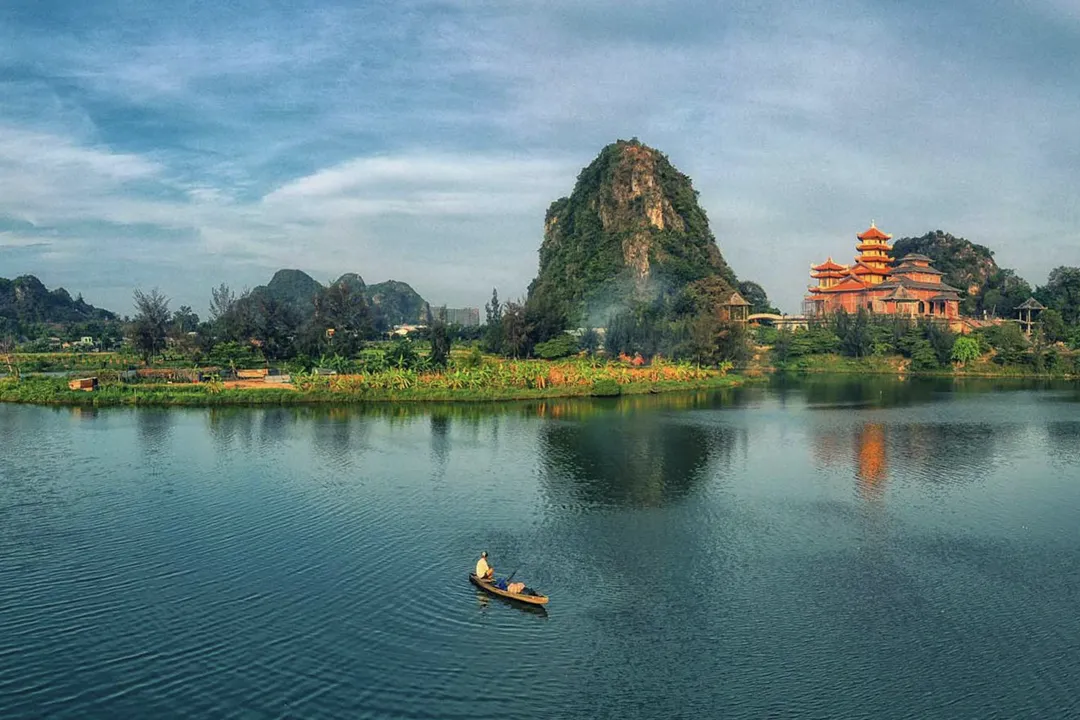
Just a few kilometres south of Da Nang’s bustling centre, five low limestone hills rise abruptly from the coastal plain. Known as Ngu Hanh Son – the Marble Mountains – they are named after the five elements: metal, wood, water, fire, and earth. For centuries, these peaks have been a sacred site for Vietnamese Buddhists, honeycombed with natural caves transformed into sanctuaries, and crowned with pagodas that have watched over the sea since the 17th century. A mesmerising blend of natural wonder, spiritual devotion, and breathtaking views, the Marble Mountains offer one of central Vietnam’s most unforgettable experiences.
The Five Elements: Spirituality Carved in Stone
Ngu Hanh Son translates as “Five Elements Mountains”, named after the five classical elements of Asian philosophy: Kim (Metal), Thuy (Water), Moc (Wood), Hoa (Fire), and Tho (Earth). Only two of the five hills are open to visitors – Thuy Son (Water Mountain), the largest and most developed, and occasionally Hoa Son (Fire Mountain) for the more adventurous. Thuy Son is where nearly all the famous pagodas and caves are found. To reach the main complex, you have a choice: climb 156 stone steps carved into the mountainside, or take a glass elevator (15,000 VND / ~0.60 USD each way). The climb is manageable for most, but the elevator saves energy for the exploration above.
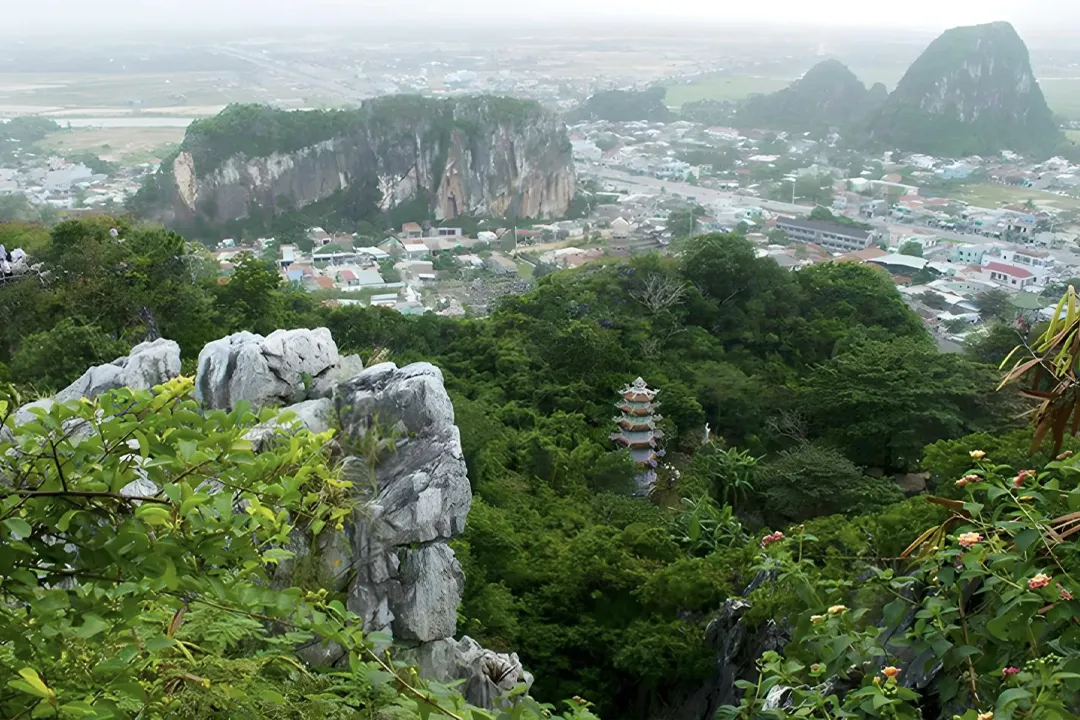
Once on the summit plateau, a network of stone paths connects multiple pagodas, viewpoint platforms, and cave entrances. The oldest structure is Linh Ung Pagoda, founded in the 17th century by a Buddhist monk who dreamed of a sacred mountain rising from the sea. Its main hall, built into a natural rock alcove, houses a serene white Buddha flanked by statues of the Bodhisattvas.
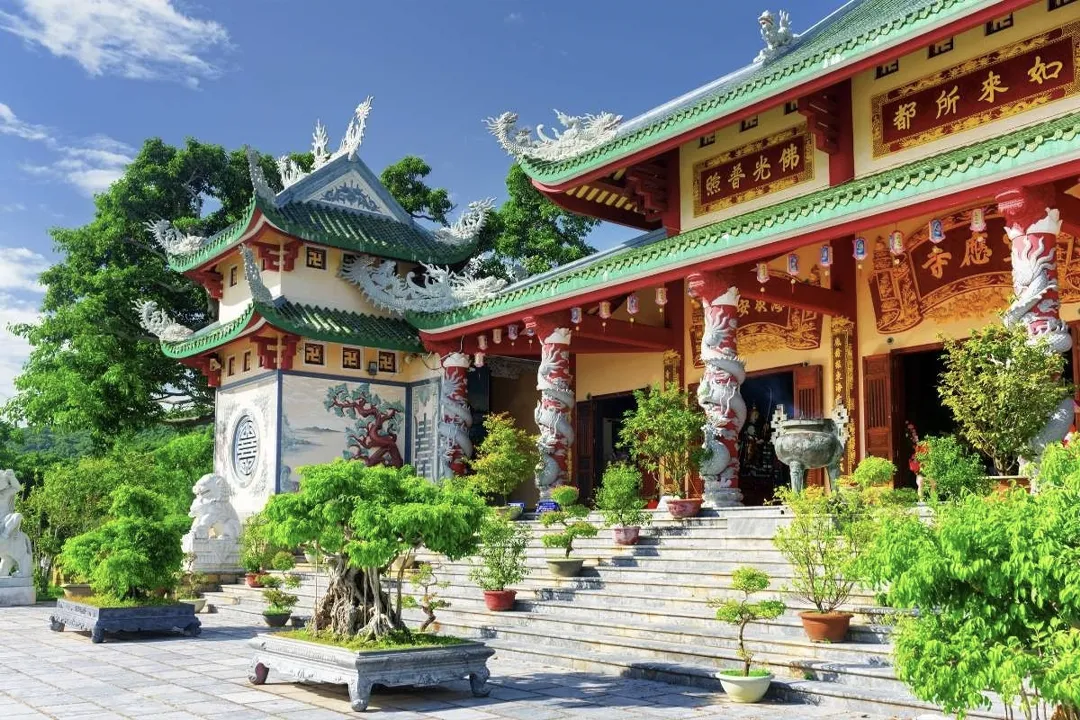
Behind the pagoda, a stone staircase descends into Huyen Khong Cave – the mountain’s most spectacular chamber. The ceiling opens to the sky in two places, allowing shafts of sunlight to illuminate the cave’s main altar. During the rainy season, thin waterfalls drop through these openings. The effect is cathedral‑like – a natural temple where generations of monks have meditated. For travelers, the contrast is striking: the heat and noise of Da Nang trade for the cool, echoing silence of the caves. The pagodas are still active; you may see monks offering incense or novices sweeping the stone floors. Unlike many tourist sites, Ngu Hanh Son does not feel staged. The devotion is real, and the atmosphere is genuinely peaceful.
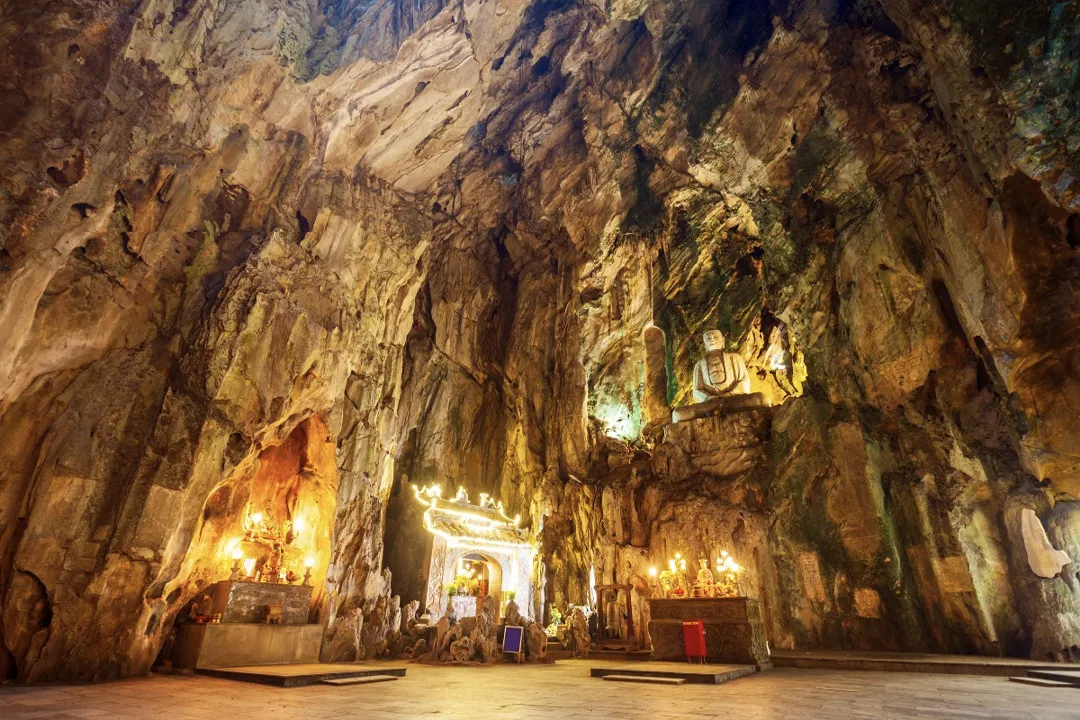
The Caves: Tang Chon, Van Khong, and the Secret Tunnels
Beyond Huyen Khong Cave, three other grottoes reward those who wander off the main path. Tang Chon Cave, reached by a steep staircase behind the Linh Ung Pagoda, is smaller but more intimate. A large stalactite here is said to resemble a dragon ascending to heaven. Local legend claims that if you touch the stone dragon and make a wish, it will come true within a year. The cave walls are blackened with centuries of incense smoke, and tiny bronze bells hang from the ceiling – pilgrims ring them to send prayers upward. Van Thong Cave, named for a Buddhist scholar who meditated here in the 19th century, contains a small library of stone tablets inscribed with sutras.
Further down the mountain, just above the main car park, Am Phu Cave is the most challenging to explore. The name means “Hell Cave”, and it is deliberately dark and narrow. A tunnel leads through a series of tight passages representing the Buddhist underworld, emerging at a small shrine dedicated to Ksitigarbha, the Bodhisattva who rescues suffering beings. A torch or headlamp is essential; the cave is unlit, and the floor can be wet.
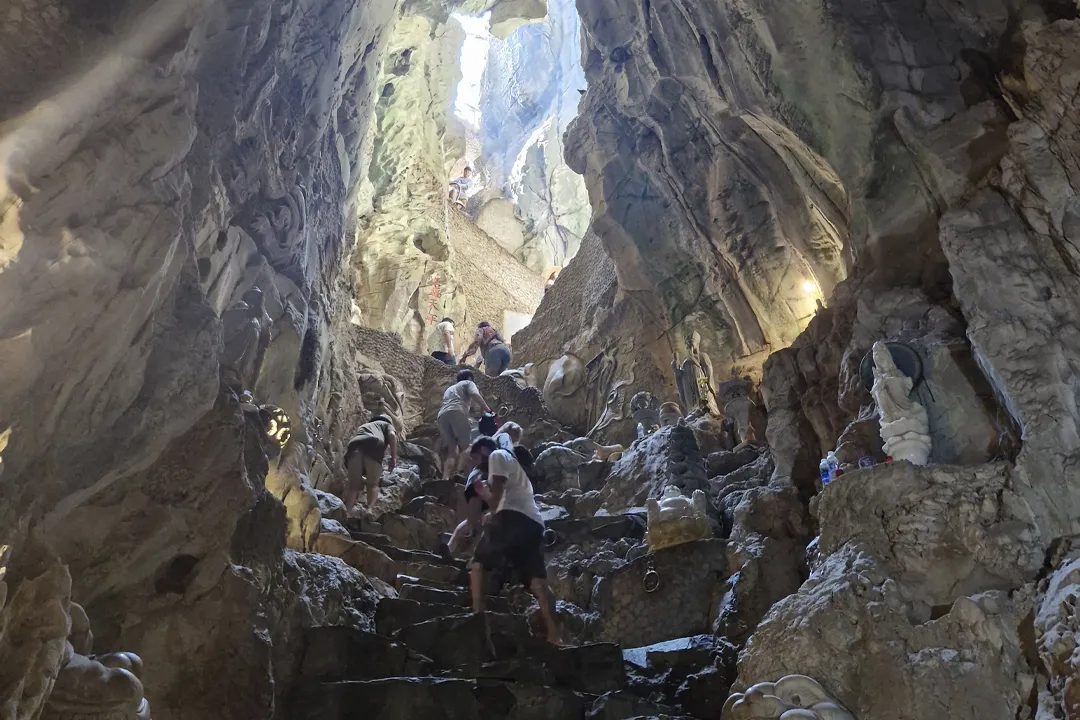
For photographers, Huyen Khong Cave’s light beams are best captured between 10:00 and 11:30 AM, when the sun is high enough to shine directly through the openings. A tripod is recommended – the contrast between the dark cave and the bright shafts of light requires bracketing or HDR techniques. A 16‑35mm wide‑angle lens captures the full scope of the chamber. For videographers, an audio recording of the cave’s dripping water and distant chanting makes a rich ambient track. Avoid weekends if you dislike crowds; the caves are popular with Vietnamese tourists, and narrow passages can become congested between 10 AM and 2 PM. The caves are cool even on hot days – a pleasant relief, but bring a light jacket if you stay longer than 30 minutes.
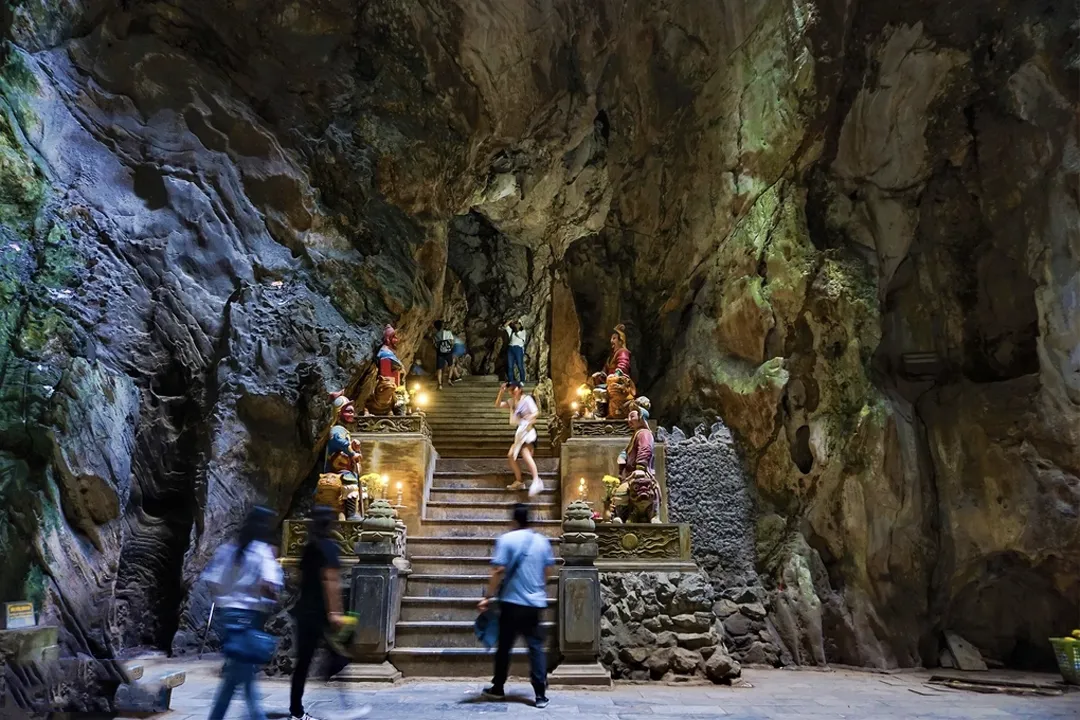
Tho Son boasts one tunnel and four temples
Tho Son impresses with its sheer cliffs. It has very few trees and is located north of Ngu Hanh Son (Marble Mountains). To the east of Tho Son lies a cave about 20 meters deep, but the entrance is very narrow. Additionally, there is the Bodhi Cave, also known as the "Da Chong Mountain Tunnel." It is a historical site, once a hiding place and operational base for revolutionary fighters in the past.
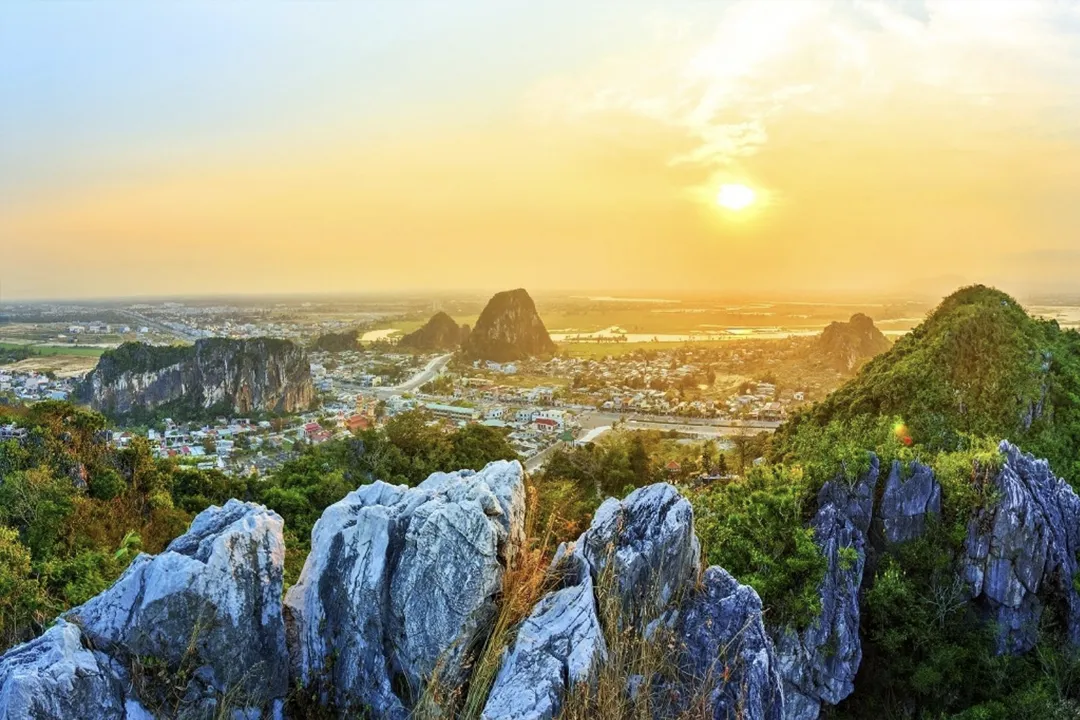
Summit Views and the Non Nuoc Stone Village
After exploring the caves and pagodas, climb the final stairs to the summit of Thuy Son. At 108 metres above sea level, the view is the reward. To the north, the entire coastline of Da Nang stretches to the Son Tra Peninsula, where the Lady Buddha statue stands white against the green mountain. Below, the beachfront resorts of Non Nuoc Beach gleam in the sun. To the south, the rice paddies of Quang Nam province extend to the horizon, punctuated by the dusty blue shapes of the Cham Islands. The summit has several small rest areas with stone benches – a perfect spot for a water break and a moment of reflection.
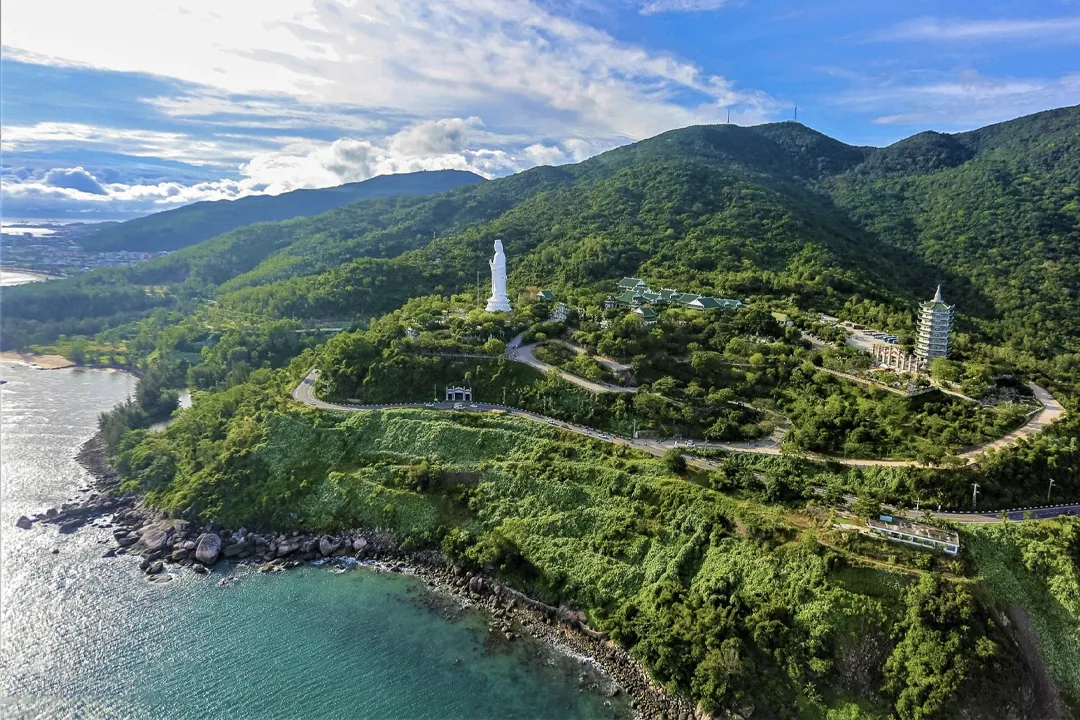
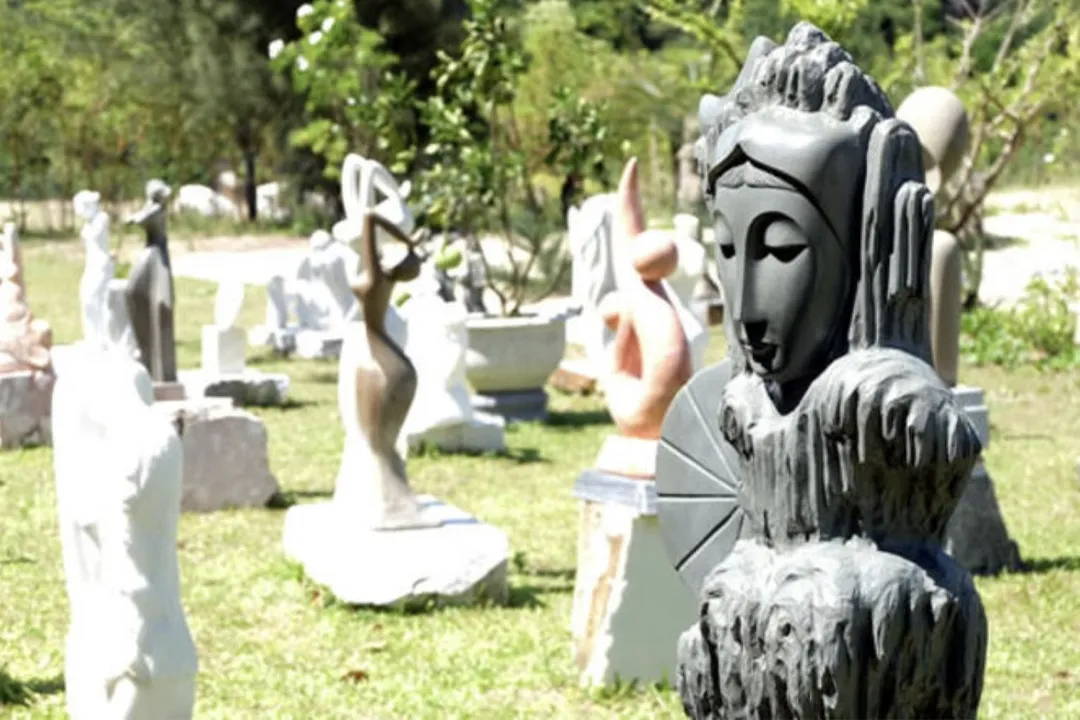
From the top, you can see why this mountain was chosen as a spiritual site. It rises abruptly from the flat plain, commanding the landscape like a natural fortress. At the base of the Marble Mountains, at the exit road, lies the Non Nuoc Stone Carving Village. For over 200 years, local artisans have worked the marble quarried from the mountains – though modern environmental restrictions now source stone from elsewhere. The village is a fascinating, if commercial, extension of the visit. You will see sculptors chiseling everything from miniature Buddha statues (50,000–200,000 VND / ~2–8 USD) to life‑size dragons destined for pagodas in Ho Chi Minh City.
Pro‑Traveler Experience Tips
Start your visit as early as possible – the gates open at 7:00 AM. Arriving at 7:15 AM gives you nearly two hours of cool temperatures, soft morning light, and minimal crowds. The elevator does not open until 7:30 AM; if you want to use it for the ascent, wait a few minutes. For photographers, the Huyen Khong Cave light beams are best between 10:00 and 11:30 AM – plan your route to reach the cave at that window. Wear sturdy walking shoes with good grip. The stone steps, especially inside the caves, are uneven and can be slippery. Bring a small torch or headlamp for Am Phu Cave – your phone’s light is insufficient. Carry at least one litre of water per person; there are no vendors on the mountain except at the base and summit (limited, with higher prices).
Dress modestly – the site is an active place of worship. Cover shoulders and knees before entering any pagoda. Sunscreen and a hat are essential for the exposed summit areas. The entire visit, including the stone village, takes 3–4 hours at a relaxed pace. For those with limited mobility, the elevator reaches the main plateau, and many cave entrances are accessible by short, level walks – but Huyen Khong and Am Phu Caves require steps. Opening hours: 7:00 AM to 5:30 PM daily. Entrance ticket: 40,000 VND (~1.70 USD) for adults, 20,000 VND (~0.80 USD) for children. The elevator costs an additional 15,000 VND (~0.60 USD) each way. Combo tickets with the nearby Cham Museum are not available. Avoid visiting during the rainy season (October–December) when caves can flood and steps are dangerously slippery. The best months are February to August. For a cultural deep dive, hire a guide at the ticket counter (250,000 VND / ~10 USD for one hour) – they can explain the symbolism of the carvings and identify the hidden statues most visitors miss. Restrooms are available at the base and near the elevator exit on the mountain (free, but bring your own tissue). There is no food inside the mountain complex; the cafes at the base offer simple noodles and rice dishes from 40,000–80,000 VND (~1.70–3.30 USD).