How to Travel from Da Nang to Quy Nhon: Transport Guide

Overview
As of early 2026, the travel corridor between Da Nang and Quy Nhon has seen a significant surge in volume, driven by Quy Nhon’s emergence as the "Maldives of Vietnam." While Da Nang remains the primary international gateway to Central Vietnam, travelers are increasingly seeking the raw, coastal beauty of Binh Dinh province. The demand is twofold: international tourists moving southward to complete their "Heritage and Coastal" circuit, and a growing segment of "lifestyle travelers" from Da Nang looking for weekend escapes to luxury resorts in Ky Co and Eo Gio. This shift has led to more frequent high-quality transport services focusing on comfort and time-efficiency.
The journey covers a distance of approximately 300 to 320 kilometers (185 to 200 miles) along the scenic central coast.
In 2026, the travel duration has stabilized due to infrastructure improvements:
- By Train: 5.5 to 6 hours.
- By Road (Private Car/Bus): 5 to 6 hours (depending on traffic and the use of the Da Nang - Quang Ngai Expressway).
- By Air: Technically 1 hour, though this route is rarely served by direct commercial flights due to the short distance.
.png)
Popular Modes of Transportation
Choosing the right transport from Da Nang to Quy Nhon in 2026 involves balancing the "price-to-performance" ratio, comfort, and the desire to witness the rugged coastline of the South Central region.
1. Private Car: The Choice for Flexibility and Privacy
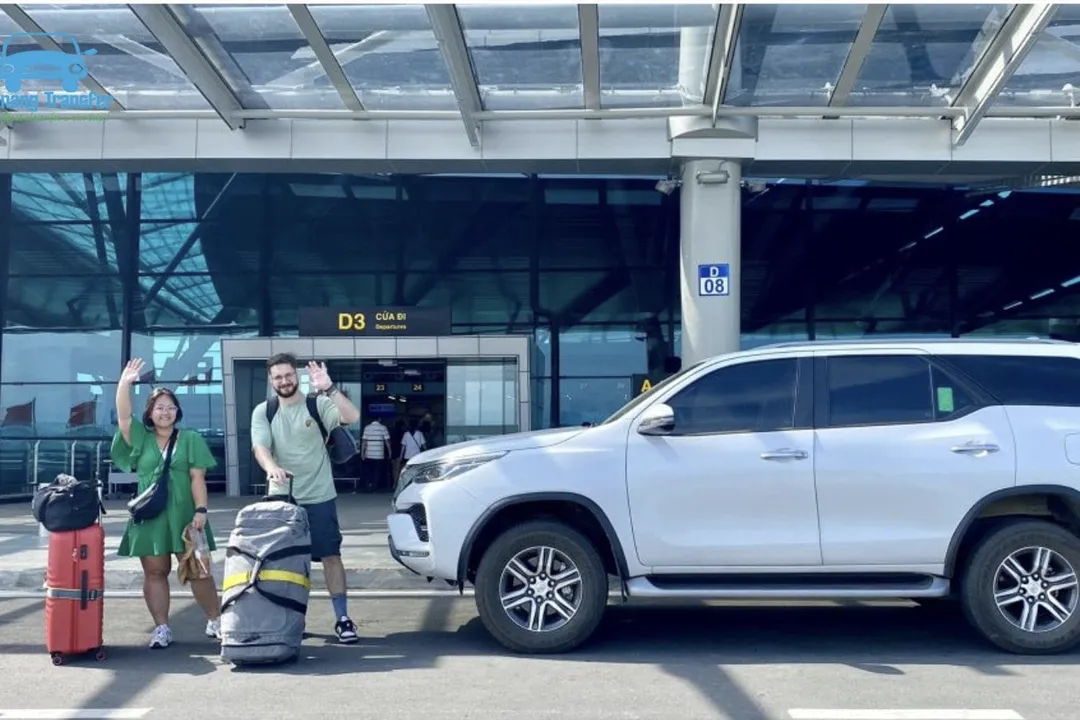
In 2026, the completion of modern bypasses around Quang Ngai and Binh Dinh has made the private car the most efficient "door-to-door" option.
Advantages:
- Customization: This is the only mode that allows for "spontaneous tourism." You can stop at the Sa Huynh Salt Fields or the Champa Towers in Binh Dinh for photos and lunch at your own pace.
- Efficiency: The car picks you up at your Da Nang resort and drops you directly at your destination in Quy Nhon, eliminating the need for taxis or luggage hauling.
- Comfort: Modern SUV and Limousine fleets in 2026 offer high-speed Wi-Fi, massage seats, and climate control, essentially serving as a mobile office or lounge.
Disadvantages:
- Cost: This is the most expensive option for solo travelers or couples.
- Road Fatigue: While the roads are improved, a 5-hour drive still requires focus (if driving yourself) or a high trust in your professional chauffeur.
2. Sleeper Bus: The High-End Budget Alternative
The sleeper bus—also known as the limousine bus—is the most popular and affordable way for Vietnamese travelers to journey between Da Nang and Quy Nhon. With over 111 daily trips operated by more than 20 bus companies, the frequency and variety of options are staggering.
At first, it’s important to distinguish between “sleeper bus”, "cabin bus" and a “limousine van.” Both are popular, but they offer very different experiences.
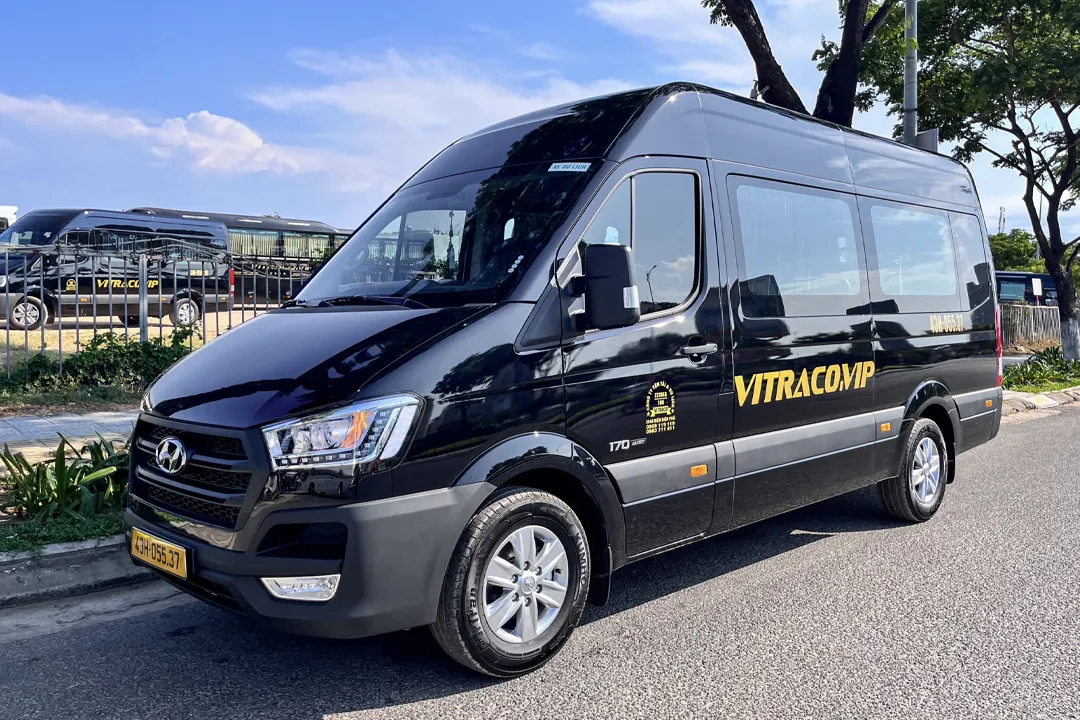
Limousine Van: A smaller vehicle (typically 9-16 seats) with wide, plush captain’s chairs that recline significantly. These offer much more personal space, USB charging ports, complimentary water and towels, and a smoother, quieter ride. Especially, if you book a shared limousine, there will be fewer seats, meaning fewer passengers will be traveling with you, and the vehicle won't need to stop to pick up or drop off passengers as often. Therefore, travel time will be shorter compared to sleeper buses.
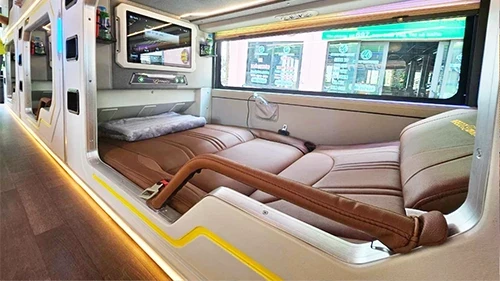
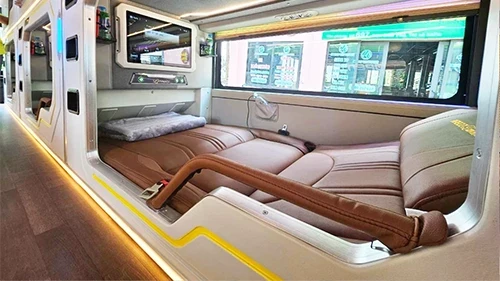
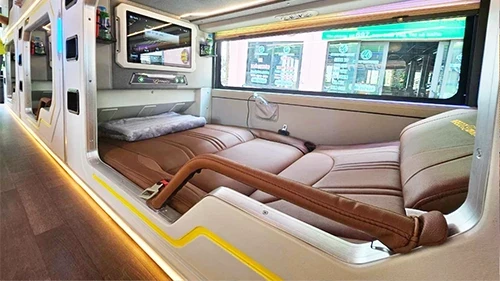
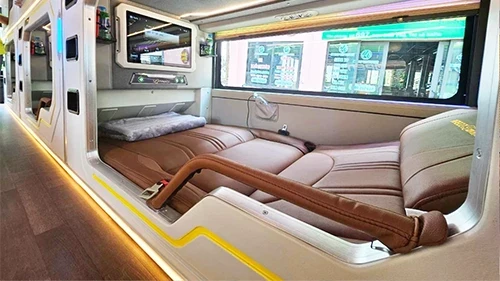
Sleeper bus: Come in 44-seat, 34-seat, and 32-seat configurations. The beds are typically arranged in three rows, two tiers, with one bed per passenger. The bed size is suitable for passengers under 180 cm tall. Basic amenities include curtains for each bed, blankets, and drinking water. Some buses also offer USB charging ports, LCD screens, and LED lights.
.webp)
Cabin bus: Divide into two types - Single Desk and Double Desk. Single desk are designed for one person, like a private "mini-room" right on the bus. This is a suitable option if you want a quiet, comfortable overnight sleep without being disturbed by others. Beside of that, double desk are considered a more premium version, designed for two people to share. The spacious interior, private curtains, and entertainment amenities make the journey much more comfortable than a regular sleeper cabin.
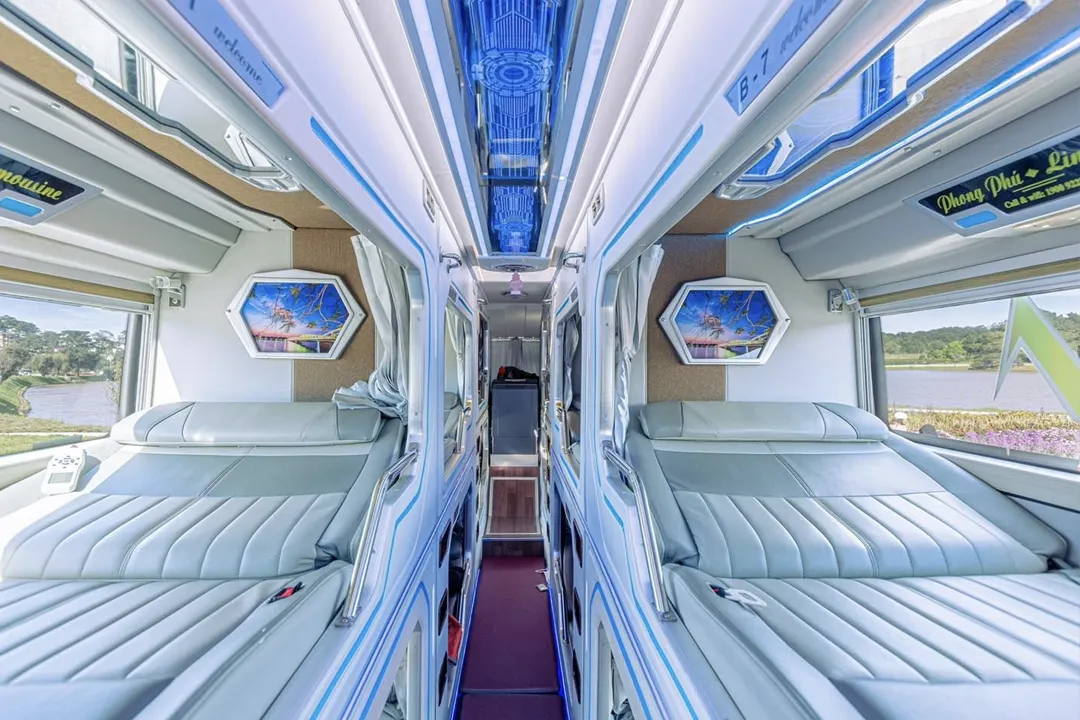
Basically, there isn't much difference in travel time between these types of buses (a difference of only about 20-30 minutes), largely depending on the size of the vehicle. Larger buses (cabin buses, sleeper buses) tend to travel slower, but are more comfortable due to their more spacious interiors. It's also worth noting that, in common usage, cabin buses are sometimes called sleeper buses because of their similar sleeping berths; however, cabin buses are distinguished by having physical partitions between passengers (creating independent 'cabins'). Therefore, it is very important to contact the service provider to confirm which type of vehicle you have chosen.
Advantages:
- Excellent Value: Tickets are remarkably affordable. Standard sleeper seats start at just VND 320,000–363,000 (USD $13–15), while VIP limousine cabins cost around VND 530,000–607,000 (USD $21–24).
- High Frequency: With departures running throughout the day and night, you can find a bus that fits almost any schedule. Companies like Tân Quang Dũng, Mai Quyen, and HT Travel operate multiple daily services.
- Overnight Convenience: Many sleeper buses depart Da Nang in the late afternoon or evening (e.g., 19:00, 20:30, 23:15) and arrive in Quy Nhon early the next morning (02:15–05:15). This allows you to sleep while you travel, saving both time and a night’s hotel cost.
- Modern Amenities: VIP and limousine buses feature reclining beds (around 45°), strong air conditioning, USB charging ports, WiFi (though quality varies), blankets, and pillows.
- Cleanliness Standards: Many newer operators maintain high hygiene standards. One reviewer noted: “The bus was impressively clean, and they are very strict about maintaining this standard – eating is not allowed on board. Everything inside the bus looked new and spotless”.
- Easy Booking: Tickets can be booked online via platforms like Vexere or 12Go, with instant confirmation and transparent pricing.
Disadvantages:
- Shared Space: You are in close quarters with 30–40 other passengers (sleeper bus/cabin bus). Noise from snoring, phone conversations, or the driver’s assistant is common.
- Variable Quality: While some operators are excellent, others have received poor reviews. Complaints include rude staff, defective seat adjustments, disgusting and stained blankets, and unannounced 45-minute stops.
- Cramped for Tall Travelers: Standard sleeper berths are designed for the average Vietnamese body type. Travelers over 170 cm (5’7”) may find the legroom insufficient. As one reviewer noted, “Sleeper buses aren’t made for older, bigger people”.
- Motion Sickness Risk: The combination of lying down and the motion of the bus on winding coastal roads can trigger nausea.
- Last-Minute Changes: Some operators have been known to change pickup locations just hours before departure, causing confusion and stress for passengers
- Not Ideal for Tall Travelers: Standard sleeper buses have beds designed for the average Vietnamese body type. If you’re over 175 cm (5’9”), you may find the berths cramped and uncomfortable.
If you are tall, we recommend that you choose a limousine and select the middle two rows of seats for the best experience.
3. Motorbike
The distance from Da Nang to Quy Nhon is approximately 320 km; you can travel via National Highway 1A or the coastal road. It cost 6–7 hours to travel. That route is one of the most beautiful in Central Vietnam, boasting many stunning landmarks such as Hoi An Ancient Town, Cua Dai Beach, An Khe Lagoon, Tam Thanh Mural Village, Sa Huynh Salt Fields, and Banh It Cham Towers. Therefore, many young people choose motorbikes as their mode of transportation to fully admire the picturesque scenery, explore beautiful architecture, and stop anywhere to capture unique photos.
Advantages:
- Unrivaled Freedom: If you're an adventurous person who wants to admire the scenery along one of the most beautiful routes in Central Vietnam, this would be the ideal mode of transportation.
- Lowest Cost: The only expenses are fuel and basic maintenance.
- Immersive Experience: You feel the temperature drop, smell the mountain air, and can stop at any ethnic minority market or waterfall along the way.
Disadvantages:
- High Physical Demand: Riding for 6–7 hours is exhausting and requires a high level of physical fitness and riding experience.
- Safety Risks: Although the route is relatively smooth, navigating it can be quite challenging if you're not a local and unfamiliar with the local traffic laws.
- Logistical Fatigue: Managing luggage on a bike for a multi-day trip requires careful packing and waterproofing.

Recommendation
For the 2026 traveler, the choice between Da Nang and Quy Nhon often comes down to the Train vs. the Private Car. If you want to soak in the coastal vistas without the stress of the road, the train is unbeatable. However, for families or those prioritizing a seamless "resort-to-resort" experience, the private car remains the gold standard for efficiency.
Regardless of your choice, the journey southward reveals a quieter, more poetic side of Vietnam that serves as the perfect palate cleanser after the bustling energy of Da Nang.