Hanoi Airport to Ha Giang Travel Tips (2026 Update)
Overview
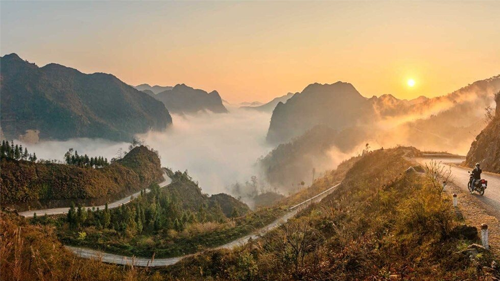
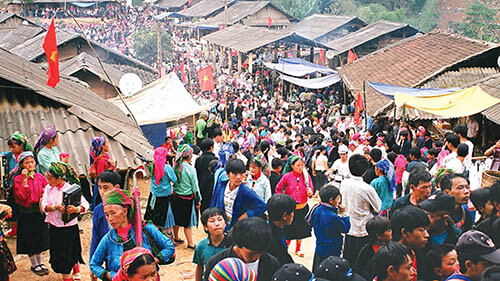
The first glimpse of Ha Giang always arrives in the imagination long before the body follows. It lives in photographs of the Ma Pi Leng Pass, where the road clings to a vertical cliff and the Nho Que River threads silently through the canyon depths. It whispers in tales of the Sunday markets of Dong Van, where the indigo-clad Hmong and the scarlet-turbaned Dao still gather as they have for generations. And so you book the flight, drawn irresistibly to this frontier of limestone and legend. Then comes the practical reckoning. You step out of the climate-controlled hush of Noi Bai International Airport, blinking in the thick northern Vietnamese air, and the question crystallises: how, precisely, do you travel from Hanoi Airport to Ha Giang in a way that is safe, comfortable, and worthy of the odyssey that awaits? The journey spans over three hundred kilometres, threading through the Red River Delta and climbing into the Tonkinese Alps. This guide, crafted with care and unflinching honesty, will equip you to make that journey with elegance, confidence, and a deep sense of place.

The pilgrimage north from Hanoi to Ha Giang has, in the space of a decade, transformed from a niche pursuit of the intrepid into one of Southeast Asia’s essential overland journeys. In 2026, the demand is not merely sustained — it is evolving. Ha Giang now calls to a diverse congregation: the digital nomad seeking a long weekend of clarity among the karst, the couple on a honeymoon of adventure rather than resort, the photographer chasing the ephemeral pink blush of the buckwheat flower season, and the mature traveler who remembers Sapa before the cables and crowds. The infrastructure has adapted. New expressways have shaved time off the journey, VIP cabin buses have brought a new standard of comfort to long-haul road travel, and a network of private drivers now offers a bespoke, door-to-terminal service. Your choice is no longer simply between “bus or bike”, but between four distinct modes of transport, each carrying its own philosophy of travel.
How long does it take to travel from Hanoi airport to Ha Giang?
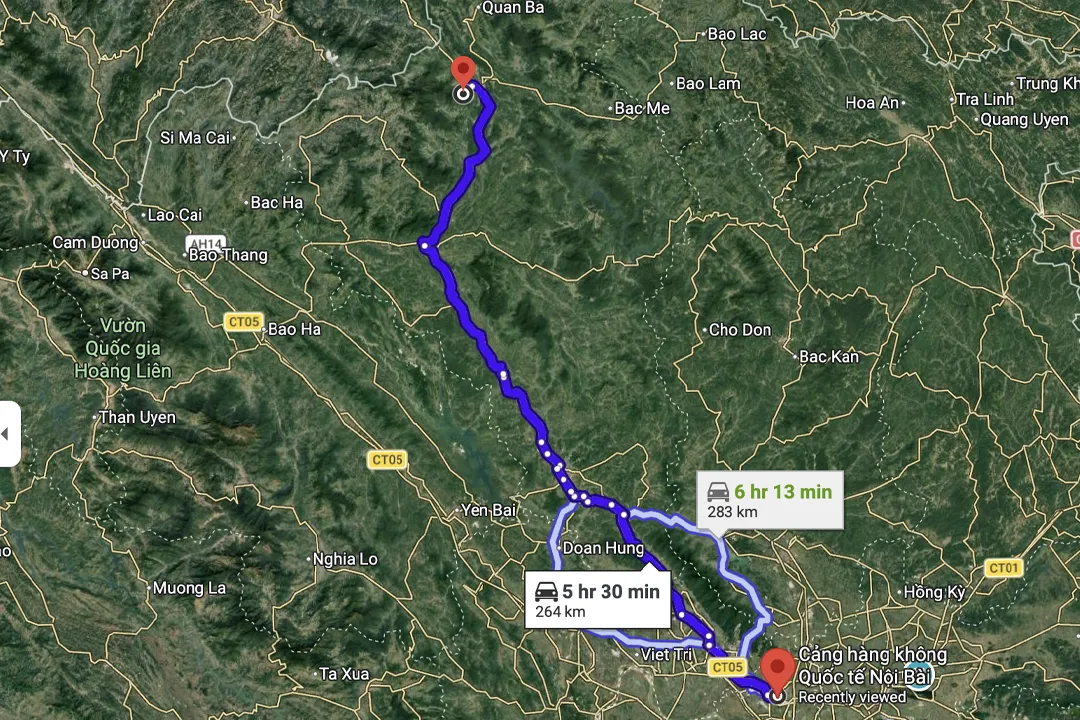
The distance from Noi Bai Airport to Ha Giang City, the provincial capital and the gateway to the celebrated Loop, is approximately 320 to 340 kilometers, depending on your final drop-off and any minor detours. Depending on your choice of means of transport, travel time will also vary between types of means. Understanding these temporal rhythms is the first step in selecting the vehicle that matches not only your budget, but your spirit.
- Private Car: 5.5-6.5 hours
- Sleeper Car (VIP Limousine)/Cabin Bus: 6.5-7 hours
- Motorbike: 8-10 hours (continuously)
The Popular Route
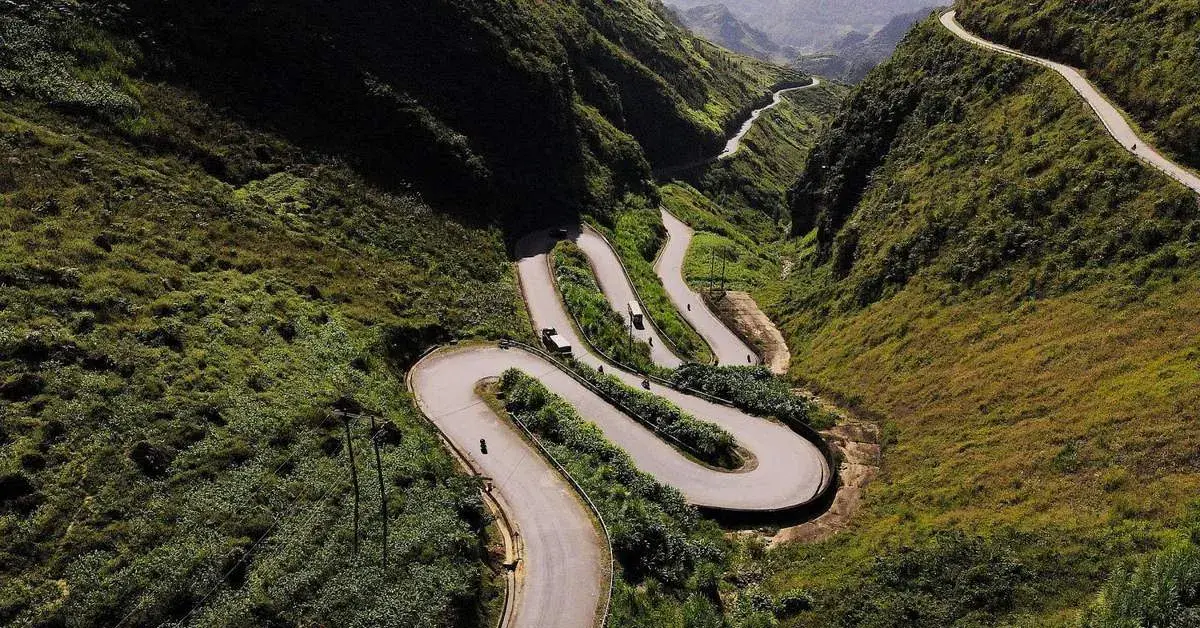
The most popular and efficient corridor connecting the capital to the highlands is National Highway 2 (QL2). From the airport, a private car or limousine will bypass the congestion of central Hanoi by slipping onto the Hanoi–Lao Cai Expressway, then peeling away at Viet Tri to join QL2 proper. The road then traces a gentle northwesterly trajectory through the provinces of Phu Tho and Tuyen Quang. This midland section is a prelude of tea-coloured hills, acacia plantations, and riverside towns where the pace of life already feels slower than the delta’s frantic pulse. At the town of Bac Quang, the landscape begins its dramatic metamorphosis. The asphalt narrows, the valley walls close in, and for the final eighty kilometres, the serpentine ascent into the Dong Van Karst Plateau begins in earnest.
There is an alternative, less-travelled detour exists for those who prize solitude over speed: a route that branches through the Thanh Son district, offering a quieter weave of rural hamlets and forested hills before rejoining the main artery near Tuyen Quang. While this path adds roughly forty minutes to the journey, it rewards with a deeper immersion into the northern countryside’s unhurried rhythm. For the first-time traveller, however, the classic QL2 route remains the gold standard — a smooth, well-maintained ribbon of road that delivers a masterclass in Vietnam’s topographical drama.
Popular Modes of Transportation: Advantages and Disadvantages
Limousine Van/Sleeper Bus (The Balanced Choice)
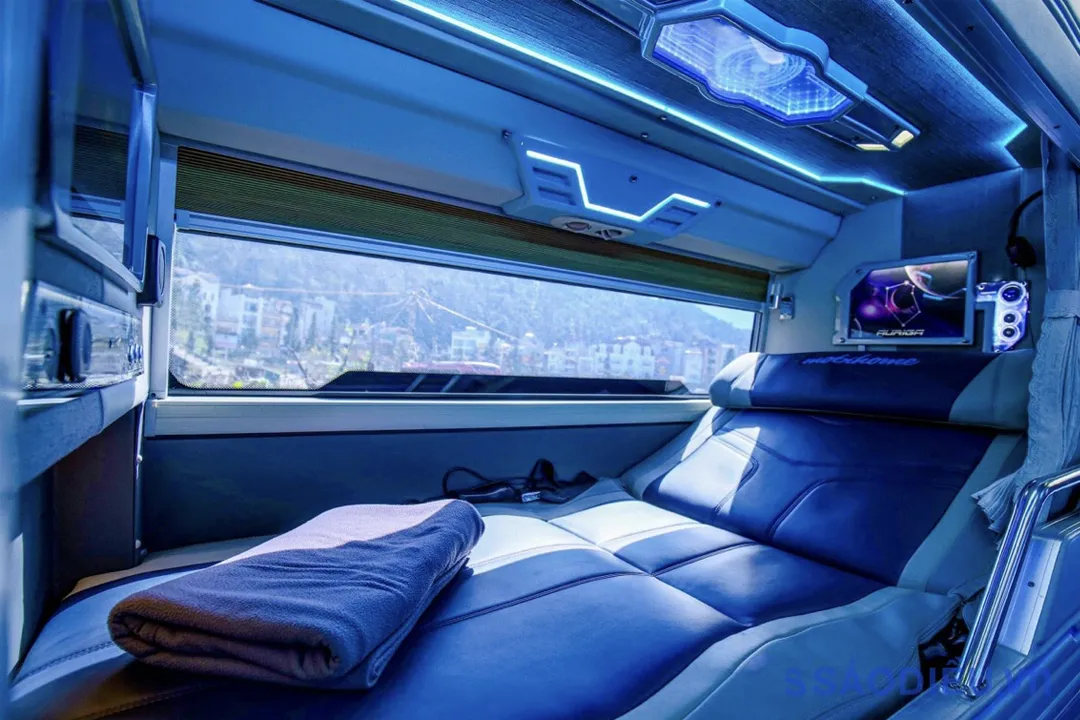
If you arrive late in the evening, the Sleeper Bus is a revelation. These aren't your standard "sleeper" buses; they feature private, curtained compartments with flat-lay beds, individual TV screens, and even massage functions in some "Royal" classes.
Sleeper Bus and Limousine Bus
For budget-conscious travelers and backpackers, the overnight sleeper bus is the most popular and cost-effective way to get from Hanoi to Sapa. Many services now run direct from Noi Bai Airport, saving you the hassle of a transfer in Hanoi.
It’s important to distinguish between a standard “sleeper bus” and a “limousine van.” Both are popular, but they offer very different experiences.
-
Sleeper Bus: A large coach with 2-3 tiers of reclining “beds.” These are the classic budget option. Comfort varies widely; some are adequate, others can feel cramped - especially for tall travelers. Modern fleets feature individual, enclosed "cabins" with curtains, massage seats, personal TVs, and high-speed Wi-Fi.
-
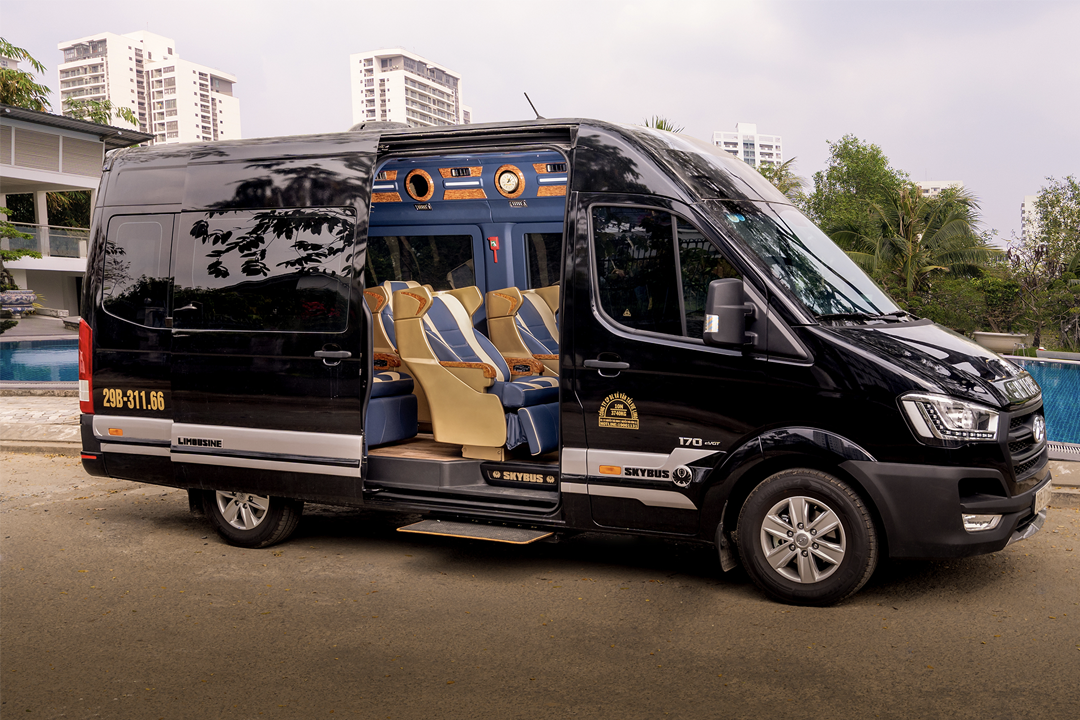
Limousine Van: A smaller vehicle (typically 9-16 seats) with wide, plush captain’s chairs that recline significantly. These offer much more personal space, USB charging ports, complimentary water and towels, and a smoother, quieter ride. Especially, if you book a shared limousine, there will be fewer seats, meaning fewer passengers will be traveling with you, and the vehicle won't need to stop to pick up or drop off passengers as often. Therefore, travel time will be shorter compared to sleeper buses.
- Pros: Extremely affordable; saves you a night's accommodation cost; maximum privacy, direct pickup at the airport terminal
- Cons: Can be difficult to navigate if you are claustrophobic; arrival times in Ha Giang are often very early (3:00 AM – 4:00 AM), limited luggage space (usually one large suitcase per person).
Note that: If you are tall, we recommend that you choose a limousine and select the middle two rows of seats for the best experience.
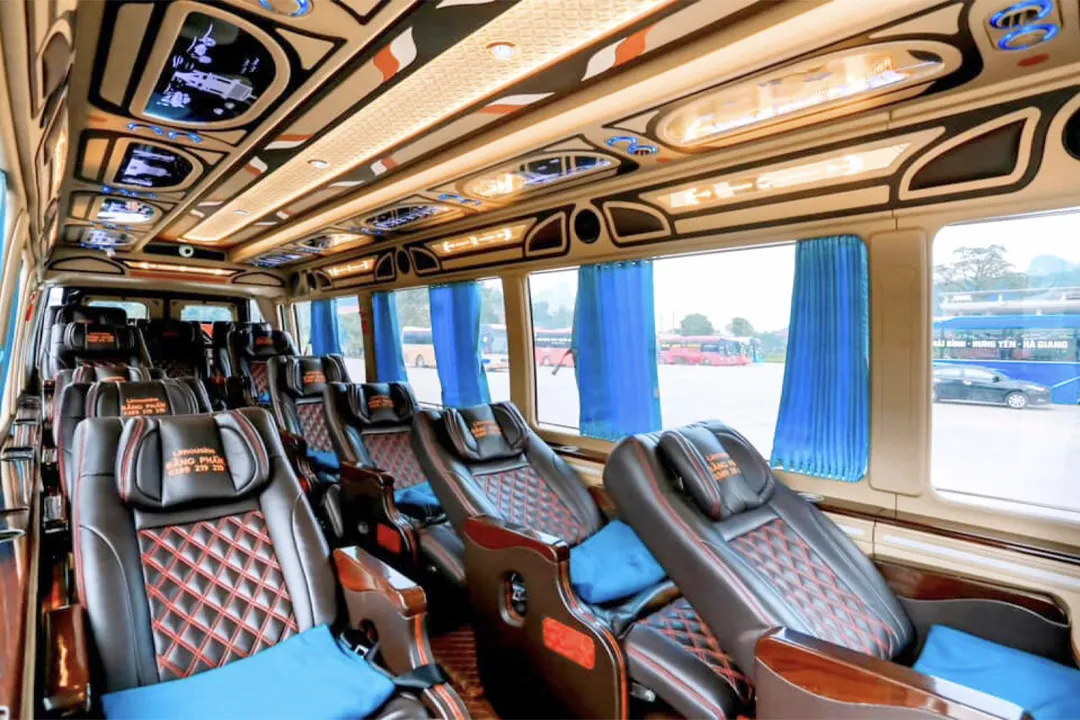
Below is a comparison table of some popular limousine/sleeper bus companies departing from Noi Bai Airport for reference (Bang Phan, Hai Phu, Dang Quang). Most have similar prices, so you can choose based on the type of car and time slot you prefer.
| Factor | Bang Phan | Hai Phu | Dang Quang |
|---|---|---|---|
| Price Range (VND) | 250,000 – 550,000 | 250,000 – 550,000 | 250,000 – 550,000 |
| Price Range (USD) | $12-25USD | $12-25USD | $12-25USD |
| Vehicle Types | 44-bed sleeper, 13-seat limousine, 24-cabin VIP, 34-cabin single hotel bus | VIP 24-cabin bus, high-quality sleeper, limousine | Limousine 24-cabin, 30-cabin limousine sleeper, 40-bed sleeper |
| Daily Departures | 18–25 trips | 5–8 trips | 2–5 trips |
| Key Departure Times from Noi Bai | 07:30, 08:00, 10:30, 12:20, 12:30, 14:00, 16:30, 16:40, 20:30, 21:30, 21:35, 21:45, 22:00, 22:45, 23:00 | 06:00, 09:00, 12:00, 15:30, 19:30, 20:30, 21:30, 23:30 | 11:30, 12:00, 12:30, 21:00, 21:30, 23:00 |
| Travel Time | 5.5 – 7 hours | 6 – 6.5 hours | 5.5 – 7 hours |
| Airport Pickup Points | Domestic Terminal (T1), International Terminal (T2), Noi Bai intersection (Hai Yen Restaurant) | Noi Bai intersection (Hai Yen Restaurant) | Noi Bai intersection (Hai Yen Restaurant), Domestic Terminal (upon request) |
| Drop-off in Ha Giang | Ha Giang Bus Station, No. 100 Tran Phu, Hotel drop-off in Ha Giang City (select services) | Ha Giang Bus Station, Hải Phú Hotel, select hotel drop-off | Ha Giang Bus Station, No. 60 Minh Khai, select hotel drop-off |
| Key Amenities | Wi-Fi, USB charger, TV screen, blanket & pillow, air-conditioning, cold towel, water, electric adjustable bed, massage function | Wi-Fi, USB charger, TV screen, blanket & pillow, air-conditioning, cold towel, water | Wi-Fi, USB charger, private curtain, reading light, air-conditioning, cold towel, water |
| Best For | Travelers who want maximum schedule flexibility, direct terminal pickup, and a proven, high-frequency service | Travelers seeking a premium mid-range experience with drivers noted for cautious mountain driving | Solo travelers or couples wanting a quiet, private cabin experience on a late-evening departure |
Private Car Transfer (The Elite Experience)
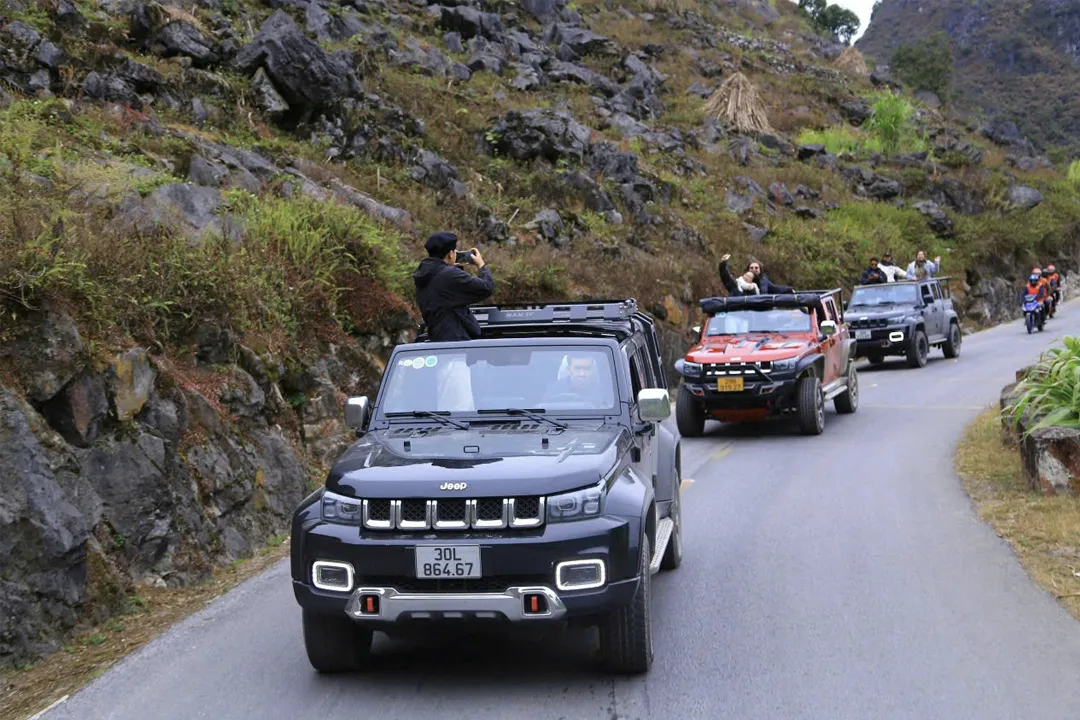
For families or small groups, hiring a private driver is the pinnacle of convenience. You dictate the pace, the stops for photos, and the exact drop-off point at your homestay. A private car is the quiet aristocrat of the Ha Giang transfer. The moment you clear customs, a professional driver stands at the arrival barrier, your name on a sign, ready to help you and your luggage into a clean, air-conditioned vehicle. The best part is you can stop anywhere along your journey – your schedule is entirely up to you. Maximum privacy is also guaranteed with this option.
For groups, families, or those with a lot of luggage, booking a private car is advantageous because you have fewer luggage restrictions. However, in return for these conveniences, this is the most expensive option.
- Pros: Total flexibility; door-to-door service; safest for those unfamiliar with local driving habits, no limit on luggage
- Cons: The most expensive option.
For a standard 4-seater sedan such as a Toyota Vios or Honda City, expect to pay between 3,300,000 - 3,500,000 VND ($128-130 USD). A 7-seater SUV or MPV, suitable for a family with substantial luggage, ranges from 1,600,000 to 2,000,000 VND ($140-145 USD), while a luxury van or high-end vehicle can run to 4,800,000 VND ($145USD) or more. For the most premium options, designed for larger groups such as a 10-seat Commuter van or a 9-seat limousine, prices can range from approximately $235-245 USD. These prices are all-inclusive of tolls, fuel, and driver waiting time. Booking is straightforward through reputable transport companies, hotel concierges, or ride-hailing apps. Please note that you should carefully inquire with the provider about the type of vehicle and any additional fees before booking to avoid potential legal problems later on during the service.
Check more detail of Hanoi airport to Ha Giang private car
Motorbike Rental (The Adventurer's Path)
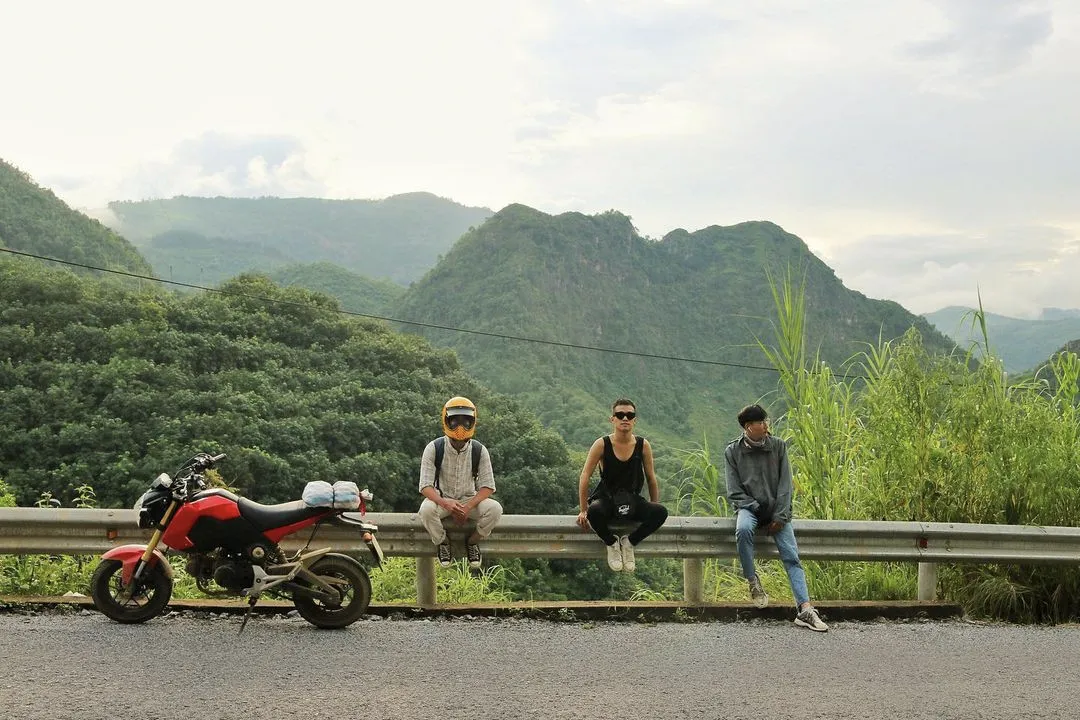
This is clearly the most liberating option, as you have complete control over your schedule and vehicle. The route from Hanoi Airport to Ha Giang is quite scenic, and if you're lucky enough to arrange a motorbike rental with a provider at Noi Bai Airport, you'll have the chance to embark on one of the longest but most enjoyable journeys, satisfying all your senses, towards one of the most beautiful regions in Northern Vietnam.
This freedom is purchased at a high price. National Highway 2 is a thundering artery of container trucks and buses, statistically the most dangerous way to make this trip. It requires a valid International Driving Permit, a well-maintained motorcycle of at least 150cc, and serious defensive riding skill. Physical toll is substantial—eight hours of vibration, wind fatigue, and concentration. Luggage must be pared to essentials. Yet, for a specific breed of traveler, none of this outweighs the allure of two wheels, a full tank, and the open road climbing into the mountains. It is a pilgrimage, not a transfer.
- Pros: Unrivaled freedom, immersive experience, lowest cost
- Cons: High physical demand needed, safety risks, logistical fatigue problems, high risk of getting lost, strongly affected by weather
Conclusion
Which mode of transportation is best suited for you?
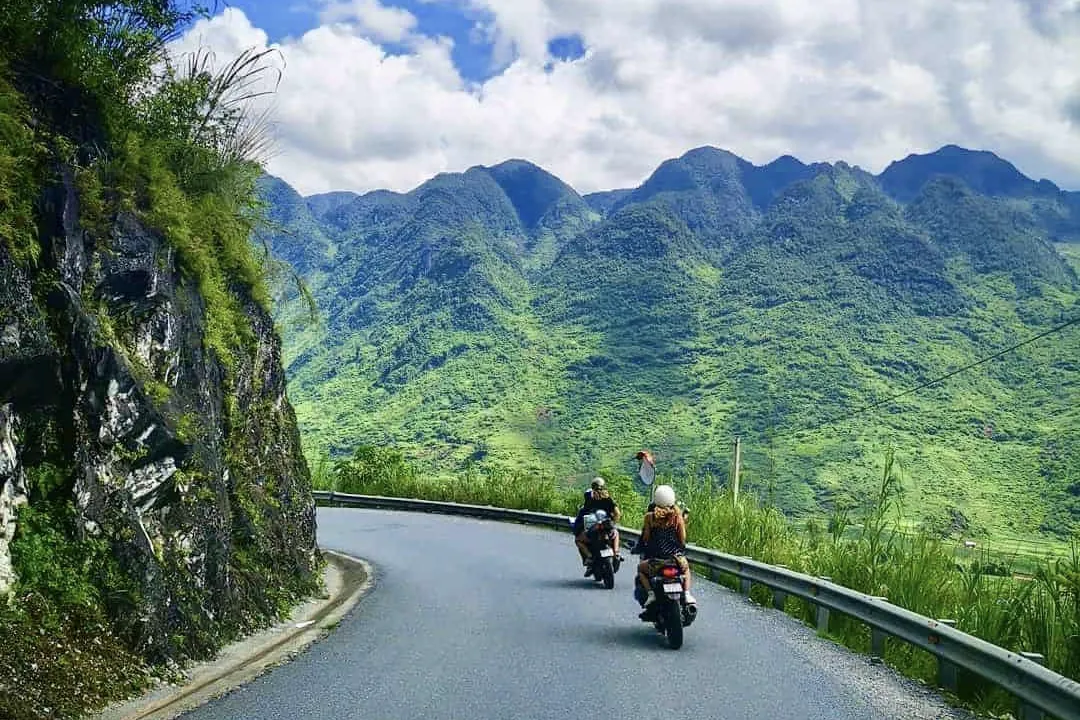
The journey from Noi Bai Airport to Ha Giang is a time-consuming one and requires careful consideration, especially after a long flight. A pleasant trip will ensure you're in top physical condition to complete your journey. Below is a quick comparison based on common criteria, helping you choose the most suitable mode of transportation for your needs more quickly and accurately.
| Factor | Private Car | Sleeper Bus/Limousine Van | Motorbike Rental |
|---|---|---|---|
| Cost | $129 - $235 | $15 - $22 | rental + fuel |
| Duration (Door-to-Door) | 5.5 - 6.5 hours | 6.5–7.5 hours (plus station transfer) | 8–10 hours riding time |
| Comfort | Very High (private, AC) | High (private pod, lie-flat) | Low (physical, exposed) |
| Luggage | Excellent (secure trunk) | Moderate (bus hold) | Very Poor (backpack only) |
| Door-to-Door | Yes, direct from terminal | Yes, direct from terminal | No (rental shop off-airport) |
| Safety | High (vetted driver, small vehicle) | Medium (large coach, night travel) | Low (dangerous mountain roads) |
| Best for Whom | Groups, families, gear-heavy travellers | Solo budget travellers, night travellers | Highly experienced riders, adventurers |
Traveler Tips for a Flawless Journey
To ensure your transition from the tarmac to the mountains is as elegant as the scenery you’re about to witness, keep these professional tips in mind:
- The "Airport Pickup" Nuance: Most buses and vans do not park directly at the arrivals curb due to airport regulations. Usually, a representative will meet you at a designated pole (typically Column 10 or 12 at Terminal 2) and take you via a short 2-minute shuttle to the vehicle's waiting area.
- Booking in Advance: In 2026, Ha Giang is a year-round destination. For weekend travel or travel during the "Buckwheat Flower Season" (Oct–Dec), book your transport at least 72 hours in advance.
- Cash is King: While you can book transport online with a credit card, ensure you have Vietnamese Dong (VND) for rest-stop snacks and local tips. ATMs are available at Noi Bai Airport, but become sparse once you leave Ha Giang City.
- Connectivity: Purchase a SIM card at the airport (Viettel is recommended for the best mountain coverage) so you can track your location on Google Maps during the drive.
- Motion Sickness: Even the luxury vans face winding roads as they approach Ha Giang. If you are prone to motion sickness, opt for a seat in the middle of the vehicle and keep some ginger candy handy.
- Heed the Sacred Rule of Night Driving: If your flight lands after 3:00 PM, do not attempt to reach Ha Giang the same day. By the time you exit the airport, you will be driving the most treacherous mountain section in total darkness. Even the finest driver cannot make unlit cliff edges, wandering livestock, or trucks without taillights disappear. Book a modest hotel near the airport or in the Old Quarter or airport nearby, enjoy a restorative bowl of pho, and depart at first light.
- Understand Your Insurance, Before You Need It: Open your travel insurance policy before you board. Confirm, ideally in an email from the provider, that a long-distance road journey in a licensed private hire vehicle is fully covered. If you plan to ride a motorbike — even as a passenger — verify that your policy covers this, and that you possess a valid motorcycle licence from your home country alongside an International Driving Permit.