The Ultimate Guide from Hanoi to Hoi An

Overview
The route from the bustling capital of Hanoi in the north to the lantern-lit Ancient Town of Hoi An in central Vietnam is perhaps the most beloved travel corridor in the country. It’s a journey that takes you from the thousand-year-old streets filled with motorbikes and steaming street food stalls to the tranquil, yellow-walled alleys where the Thu Bon River reflects centuries of merchant history. For many travelers, this connection is the essential link between the iconic sites of the north, like Ha Long Bay, and the coastal gems of central Vietnam.
In 2025 and 2026, travel along this route has reached record-breaking levels. Vietnam’s tourism industry has experienced an extraordinary boom, with over 21.2 million international arrivals in 2025, marking a staggering 20.4% increase compared to the previous year. Hoi An, along with Hanoi, has been a primary anchor of this surge, with travelers spending multiple nights in each destination to immerse themselves in the culture.
Hoi An - World Heritage Site by UNESCO
Why should you choose Hoi An Ancient Town?
Hoi An Ancient Town is located in Quang Nam province, central Vietnam, on the northern bank near the mouth of the Thu Bon River. The heritage site covers an area of 30 hectares with a buffer zone of 280 hectares. It is a particularly well-preserved example of a small-scale trading port that operated from the 15th to the 19th centuries, trading extensively with Southeast Asia, East Asia, and the rest of the world. Its decline in the late 19th century ensured that it retained its traditional urban structure remarkably well.
The town reflects the intermingling of indigenous and foreign cultures (primarily Chinese and Japanese, followed by European influences), creating a unique character that endures to this day.
The town comprises a well-preserved complex of 1,107 timber-framed buildings, with brick or wooden walls, including architectural monuments, commercial buildings, and folk houses, notably an open-air market and a ferry terminal, and religious structures such as temples and ancestral churches. The houses are tiled and the wooden parts are carved with traditional motifs. They are arranged closely together in seamless rows along narrow pedestrian streets. There is also a beautiful Japanese-style wooden bridge, with a pagoda on it, dating from the 18th century.

What is the best time to visit Hoi An Ancient Town?
Hoi An's climate is a blend of Southern and Northern Vietnamese climates, with distinct rainy and dry seasons. Each season in the ancient town offers its own unique beauty.
The first three months of the year are ideal for exploring Hoi An, with mild sunshine, cool weather, and occasional light rain. From April to June is the peak of the dry season, but Hoi An's weather is quite pleasant due to its location south of the Truong Son mountain range. This is also the peak tourist season. July is still part of the dry season. August and September mark the transition period, with mild sunshine, occasional light rain, and cool nights. The last three months of the year are the rainy season in Hoi An, with little sunshine, heavy rain, and sometimes flooding. Tourists from the South visiting Hoi An during the cold season should prepare appropriate clothing to avoid health problems.

How to Get from Hanoi to Hoi An in 2026: Every Option Compared
| Transport Mode | Travel Time | Estimated Cost (USD) | Target Customer |
| Airplane | 1.5h (Flight) + 1h (Transfer) | $45 – $120 | Time-sensitive travelers & families. |
| Luxury Train | 15 – 17 hours | $85 – $170 | "Slow travelers," couples, & rail enthusiasts. |
| Standard Train | 15 – 17 hours | $35 – $65 | Budget travelers seeking safety over speed. |
| Sleeper Bus | 14 – 17 hours | $20 – $35 | Backpackers & solo budget travelers. |
| Private Car | 1 – 2 Days | $280 – $450 (Trip total) | History buffs & groups wanting a road trip. |
In 2026, travelers can choose between four primary modes, each offering a distinct "price-to-performance" ratio. However, depending on the chosen mode of transportation, travel time can range from 2.5 hours to 1-2 days.
1. Plane: The "Time Hack"
Flying is the default for most 2026 travelers, with Vietravel Airlines and Vietjet offering the most competitive rates starting at around $35, while Vietnam Airlines and Bamboo Airways provide full-service comfort from about $65 onward. To avoid fees, note that VietJet and Bamboo are strict on the 7 kg carry-on limit, so booking "Deluxe" or "Plus" fares in advance to include 20 kg of checked baggage is always cheaper than paying at the counter. For better prices, you should book your tickets at least three months in advance, ideally around six months; or follow the airlines' fan pages for the latest fare promotions.
Flying is by far the fastest way to bridge the gap between Hanoi and Hoi An. Since Hoi An doesn’t have its own airport, you will book a flight from Hanoi’s Noi Bai International Airport (HAN) to Da Nang International Airport (DAD). From Da Nang, it’s a straightforward 45-minute drive by private car, taxi, or shuttle to your hotel in Hoi An. A Grab car costs about $12–$15, but for a better price-to-performance ratio, you can book a private shuttle for a flat $10. Note that if you want to take a bus from Da Nang airport, you have to go to the bus station outside the airport to catch a bus, as buses are not allowed inside the airport.

| Transport Type | Travel Time | Estimated Price (USD) | Best For... | Note: |
| Private Car (Agency) | 45 – 60 mins | $12 – $16 (300,000 – 425,000VND) | Families & groups; fixed, reliable pricing. |
Da Nang Airport – Duy Tan – Nguyen Huu Tho – Tran Dai Nghia – Nam Ky Khoi Nghia – Truong Sa Sa – Vo Nguyen Giap – Truong Sa – Lac Long Quan – An Duong Vuong – Nguyen Tat Thanh This is a coastal route, allowing you to enjoy the scenery along the way. |
| Taxi | 45 – 60 mins | $13 – $20 (325,000 – 500,000VND) | Instant booking; price fluctuates with demand. | |
| Shared Shuttle | 60 – 75 mins | $5 – $8 (120,000 – 180,000VND) | Solo travelers or couples on a budget. |
Route: Domestic Terminal (Gate A4) – Da Nang Station – Da Nang Tourist Support Center (18 Hung Vuong Street) – Cham Museum (parking lot) – Hiyori Garden Tower (2 Vo Van Kiet Street) – A La Carte Hotel Da Nang (200 Vo Nguyen Giap Street) – Holiday Beach Hotel Da Nang (300 Vo Nguyen Giap Street) – Dahan Spa (130 Lac Long Quan St.) – Esco Beach Hoi An (26 Nguyen Phan Vinh) – Hoi An Beach Resort (No. 01 Cua Dai) – Agribank ATM (255 Cua Dai St.) – Silk Village The Tourist (28 Nguyen Tat Thanh St.) – 35 Dao Duy Tu St. – Barri Ann Travel office – 30/2 Tran Hung Dao St. The operator will provide you with the exact departure time within 24 hours before departure. |
| Public Bus (Route 01) | 70 – 80 mins | $1.50 (35,000VND) | Extreme budget; local experience (no A/C). | Route: Da Nang Central Bus Station – Ton Duc Thang – Dien Bien Phu – Ha Huy Tap – Ha Khe – Nguyen Tat Thanh – Ong Ich Khiem – Le Duan – Chi Lang – Hung Vuong – Tran Phu – Trung Nu Vuong – Nui Thanh – Duy Tan – Tran Thi Ly Bridge – Ngu Hanh Son – Le Van Hien – Tran Dai Nghia – Hoi An Bus Station. There will be a bus every 20 minutes. |
(This route is for reference only and may change depending on the service provider or weather conditions.)
Advantages:
- Speed: The direct flight itself takes only 1 hour and 15 to 20 minutes, making it the undisputed champion for saving time.
- High Frequency: There are dozens of daily flights operated by national carriers, providing excellent flexibility.
- Multiple Airlines: You can choose from Vietnam Airlines (full-service), VietJet Air (budget), Bamboo Airways, and Vietravel Airlines.
- Comfort: Modern, air-conditioned aircraft with the option to purchase food and beverages.
Disadvantages:
- No Direct Route: You cannot fly directly into Hoi An. You must factor in the time and cost of a transfer from Da Nang.
- Cost: While budget carriers offer promotions, prices can surge dramatically during peak seasons or last-minute bookings.
- Hidden Fees: Low-cost airlines often charge extra for checked luggage, seat selection, and onboard meals.
- Airport Commute: Noi Bai Airport is located about 45 minutes outside of central Hanoi, which adds to your total travel time
2. The Train: The Romantic Scenery
Similar to air travel, you will have a stopover at either Da Nang or Tra Kieu station. The train journey from Hanoi to Hoi An takes approximately 15 to 20 hours, with prices ranging from VND 230,000 to VND 2,224,000, depending on the type of seat and route you choose.
The train is for those who believe the journey is the destination, and for a premium experience, look for private companies that attach luxury cars to the national SE trains—such as Lotus Express, Laman Express, or Violette Train. Among standard SE trains, SE3 (the fastest) and SE19 (popular schedule) are the top picks, and for class selection, always choose "4-Berth Soft Sleeper" for the best balance of comfort and privacy. A key window tip: ensure you are awake for the Hải Vân Pass segment between Hue and Da Nang, as this is arguably the most beautiful stretch of rail in Southeast Asia.
The train will stop at Da Nang station, and from there you can choose other means of transportation to travel to Hoi An (refer to the transportation suggestions in the "Travel by plane" section above).
Advantages:
- Safety & Stability: Trains are the safest way to travel overland; you can walk around, visit the canteen, or chat with locals.
- The "Hai Van" Views: The segment between Hue and Da Nang is a world-class scenic route that buses and planes simply cannot replicate.
- Community: The 4-berth cabins are a great way to meet fellow travelers and share stories.
Disadvantages:
- The Noise Factor: The "click-clack" of the rails is romantic for an hour, but can be a challenge for light sleepers over a 16-hour stretch.
- Logistics Gap: The train stops in Da Nang, meaning you still have to navigate a 30km taxi or shuttle ride to reach Hoi An.
- Restroom Quality: While 2026 "Luxury Carriages" are clean, standard SE carriages can become "less than fresh" by the end of a long journey.

3. Sleeper Bus and Limousine Bus: The Budget King
For budget-conscious travelers and backpackers, the overnight sleeper bus is the most popular and cost-effective way to get from Hanoi to Hoi An. Many services now run direct from the capital to the Ancient Town, saving you the hassle of a transfer in Da Nang.
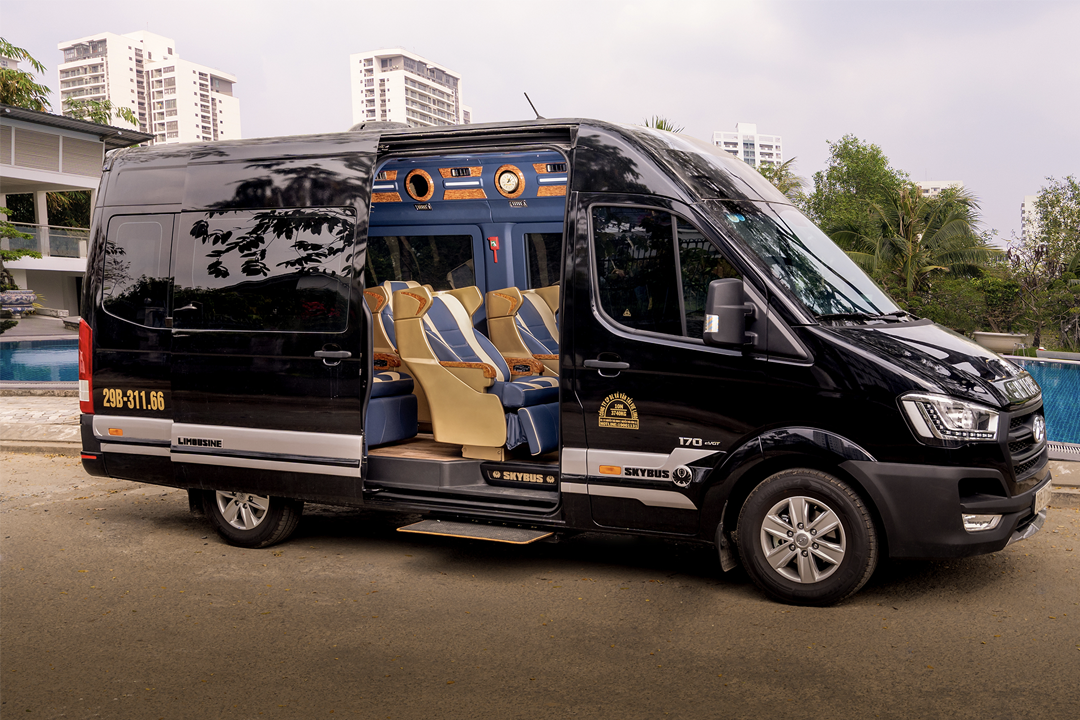
It’s important to distinguish between a standard “sleeper bus” and a “limousine van.” Both are popular, but they offer very different experiences.
- Standard Sleeper Bus: A large coach with 2-3 tiers of reclining “beds.” These are the classic budget option. Comfort varies widely; some are adequate, others can feel cramped - especially for tall travelers.
- Limousine Van: A smaller vehicle (typically 9-16 seats) with wide, plush captain’s chairs that recline significantly. These offer much more personal space, USB charging ports, complimentary water and towels, and a smoother, quieter ride. Especially, if you book a shared limousine, there will be fewer seats, meaning fewer passengers will be traveling with you, and the vehicle won't need to stop to pick up or drop off passengers as often. Therefore, travel time will be shorter compared to sleeper buses.
.webp)
Advantages:
- Excellent Value: Tickets are a fraction of the cost of flying or hiring a private car.
- Direct to Hoi An: Many buses now travel directly to Hoi An, dropping you off near the Old Town.
- Overnight Convenience: Buses typically depart Hanoi in the late afternoon or evening (between 5:00 PM and 6:30 PM) and arrive in Hoi An the next morning (around 10:00 AM to 11:00 AM), saving you a night’s hotel cost.
- Variety of Comfort Levels: You can choose from standard sleeper buses, VIP cabin buses with private compartments, or high-end limousine buses.
- Amenities: Modern buses are equipped with air conditioning, WiFi, USB charging ports, blankets, and pillows.
Disadvantages:
- Cramped Conditions: Space is limited, especially on older or fully booked buses. Standard sleeper berths can feel narrow, particularly for tall travelers.
- Shared Environment: You are in close quarters with 30-40 other passengers. Noise from snoring, phone calls, or the bus’s horn is common.
- Hygiene: Cleanliness can vary significantly between operators. While some are spotless, others may have less-than-fresh bedding.
- Motion Sickness: The winding roads and the motion of the bus can cause nausea. It’s advisable to take medication beforehand.
- Bumpy Ride: Vietnam’s National Highway 1A can be bumpy, making for a less-than-smooth sleep.
- Not Ideal for Tall Travelers: Standard sleeper buses have beds designed for the average Vietnamese body type. If you’re over 175 cm (5’9”), you may find the berths cramped and uncomfortable.
If you are tall, we recommend that you choose a limousine and select the middle two rows of seats for the best experience.
4. Private Car
Traveling by private car is the ultimate door-to-door service. For those who value comfort, privacy, and flexibility, it is an excellent choice. This option is perfect for families, small groups, or anyone wanting to turn the long drive into a multi-day road trip.
You can choose to stop for a few hours or even stay overnight at some famous landmarks to rest and combine sightseeing. Suggested destinations include Ninh Binh, Quang Tri, Hue Imperial City, or Hai Van Pass photo stop. We recommend a two-day route to truly appreciate the scenery: Day 1 takes you from Hanoi to Ninh Binh for a morning boat trip, then onward to Dong Hoi to explore Phong Nha; Day 2 continues from Phong Nha to Hue for a Citadel tour, followed by the stunning Hai Van Pass before arriving in Hoi An. The key highlight of having a private driver is the freedom to stop at the Hai Van Pass summit for photos or grab a bowl of Bun Bo Hue in the old capital without ever checking a bus schedule.
You should carefully review the service contract before confirming to rule out any hidden fees (extra mileage, one-way travel, etc.), understand liability for damages, and insurance coverage (if any). Also, carefully check the vehicle and driver. The driver should have a valid and current license and a good attitude during service.

Advantages:
- Complete Flexibility: You control the schedule and the route. You can break up the 14+ hour drive into a scenic 2 or 3-day journey, with stops in UNESCO World Heritage sites like Phong Nha-Ke Bang National Park (home to the world’s largest caves) or the Imperial City of Huế.
- Door-to-Door Convenience: Your driver picks you up directly from your hotel in Hanoi and drops you off at your exact accommodation in Hoi An.
- Comfort and Privacy: Modern, air-conditioned sedans or SUVs with no other passengers. You can relax, sleep, or listen to music in peace.
- Ideal for Groups: When the cost is split among 4–5 people, it becomes a very competitive option.
- Scenic Coastal Drive: You’ll have the chance to traverse the famous Hai Van Pass, a stunning mountain road with breathtaking views of the coastline.
Disadvantages:
- High Cost: For a solo traveler or a couple, this is the most expensive transport option.
- Long Travel Time: Driving straight takes 14–16 hours, which is exhausting for one driver. An overnight stop is highly recommended.
- Driver Dependence: Finding a reputable, English-speaking driver for such a long route requires research.
- Parking: Once you arrive in Hoi An, parking a car can be challenging, especially in the pedestrian-only Ancient Town area.
Conclusion
Which mode of transportation is best suited for you?
The journey from Hanoi to Hoi An is relatively long, and there are many transportation options available. If you have only one day to travel, flying is the only way to avoid losing over 15 hours to the road. With two to three days and a group of four or more, a private car via Hue offers a surprisingly reasonable cost per person, and the memories of the Hai Van Pass are priceless. Solo travelers on a budget should consider a limousine van or sleeper bus—direct, cheap, and it saves one night of accommodation costs. For romantics or slow travelers, the SE19 luxury cabin provides the rhythmic click-clack of the rails and a bottle of wine while the Vietnamese countryside rolls by. However, if you have kids under ten, avoid the sleeper bus entirely, as the lack of space and frequent stops can make for a very long night; stick to the train or plane instead.
Pro-Traveler Tips
When packing for the bus or train in Vietnam, be sure to bring an eye mask, earplugs, and a light sweater, as the air conditioning on Vietnamese transport is notoriously "arctic"; also, avoid the "Old Quarter" scam by never buying bus tickets from random "Tourist Info" street stalls—only book through official websites, reputable apps like 12Go or Baolau, or directly through your hotel. You also should download essential apps such as Grab for local transport and have a 5G SIM ready to track your location on Google Maps during long hauls.