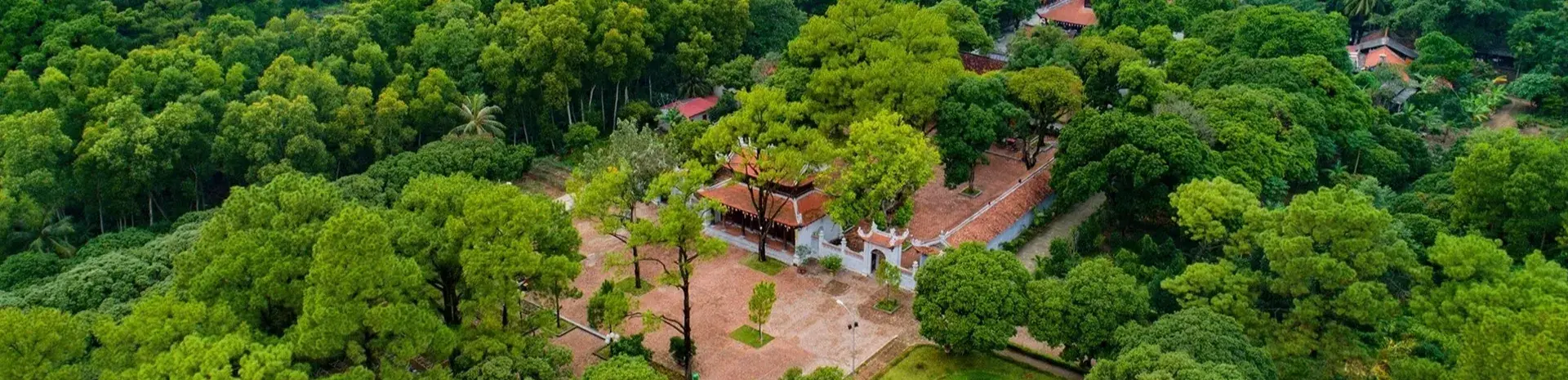
Nestled among whispering pine forests and the winding Luc Dau River in old Hai Duong province (now is Hai Phong province), the Con Son Kiep Bac complex is one of Vietnam’s most revered spiritual and historical landscapes. Spanning over 8 hectares, this special national relic intertwines the stories of two towering national heroes — the military genius Tran Hung Dao, who thrice vanquished the Mongol Empire, and the world-renowned poet-strategist Nguyen Trai. It is also a cradle of Truc Lam Zen Buddhism, Vietnam’s uniquely indigenous meditative tradition. In 2025, UNESCO inscribed the Yen Tu – Vinh Nghiem – Con Son Kiep Bac complex as a World Cultural Heritage, sealing its global significance as a place where divine inspiration, patriotic fervor, and serene nature converge.
The Valley of Two Legends: Tran Hung Dao and Nguyen Trai
To walk through Con Son Kiep Bac is to trace the footsteps of giants. The site is fundamentally entwined with two of Vietnam’s most venerated figures. Tran Hung Dao (1228–1300), born Tran Quoc Tuan, was the Supreme Commander who masterminded the astonishing defeat of Kublai Khan’s Mongol armies in the 13th century. His strategic brilliance at the nearby Bach Dang River and his choice of this valley as a military headquarters cemented his deification as Saint Tran, a protector of the nation. Kiep Bac Temple, nestled where six rivers converge into the Luc Dau, stands on the very ground where he drilled his troops and built the defensive line protecting the Thang Long Imperial Citadel.
Just five kilometers away through tranquil countryside, the Con Son Pagoda and the adjacent Nguyen Trai Temple celebrate a different kind of hero. Nguyen Trai (1380–1442) was a Renaissance man centuries before the term existed — a political strategist, a diplomat, a geographer, and one of Vietnam’s greatest poets. Born at the foot of Con Son Mountain, he retreated here to write and meditate, authoring some of the most beautiful nature poetry in Vietnamese literature. UNESCO recognized him as a Great Man of Culture of the World in 1980, and his spirit of humanism and love for the land permeates every ancient pine and mossy stone at Con Son.
A Sacred Cradle of Truc Lam Zen Buddhism
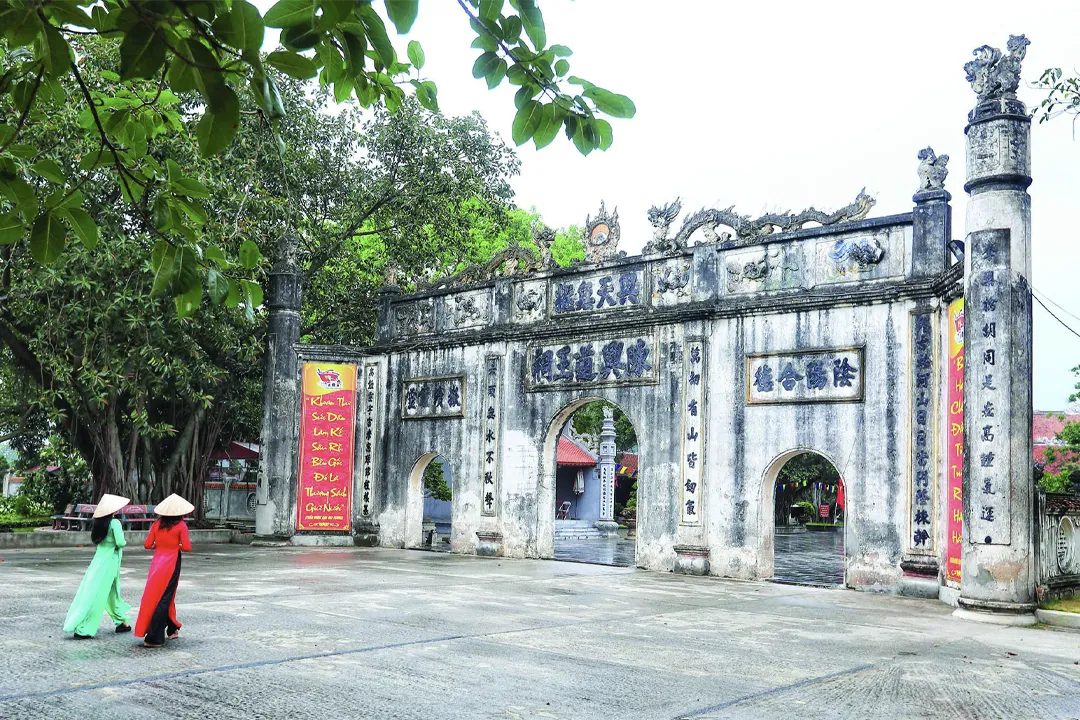
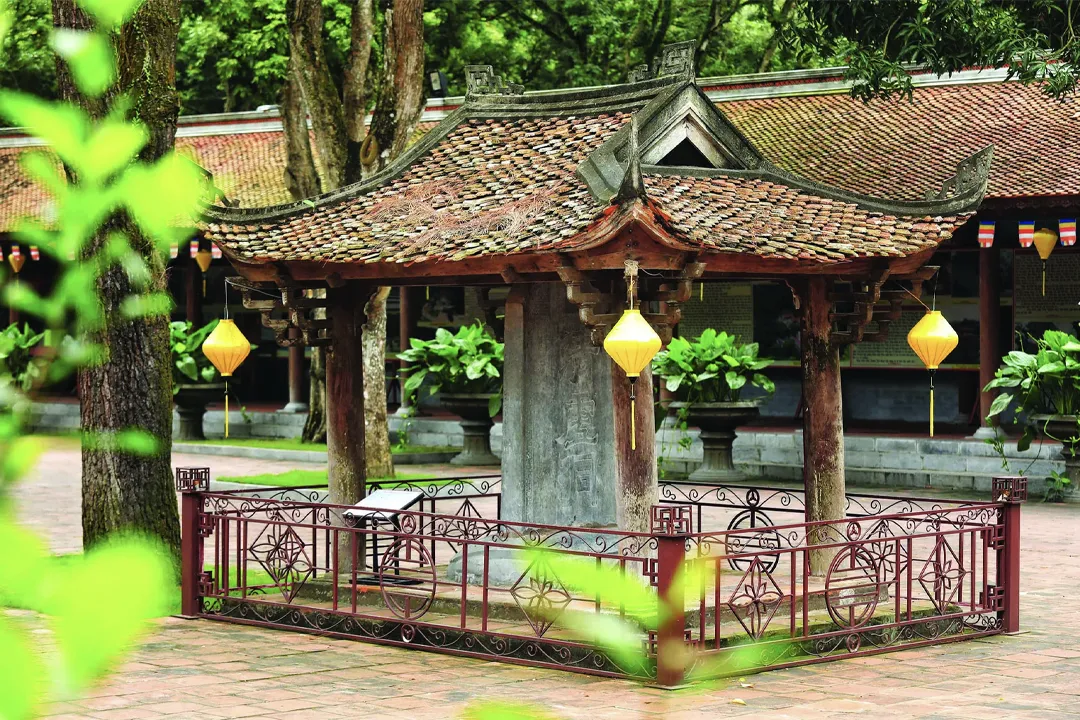
Beyond the martial legends, Con Son Pagoda is one of the three original centers of Truc Lam Zen Buddhism (alongside Yen Tu and Quynh Lam), a uniquely Vietnamese school of meditation founded in the 13th century by King-Monk Tran Nhan Tong. Unlike imported Buddhist traditions, Truc Lam sought to harmonize Mahayana Buddhism with Confucian ethics, Taoist cosmology, and indigenous Vietnamese beliefs, creating a spiritual philosophy that emphasized engagement with daily life, patriotism, and inner peace. The pagoda’s three-gate entrance, semicircular lotus lake, bell tower, and ancient stone steles — including the Thanh Hu Cave Stele recognized as a National Treasure in 2015 — date from the Tran and Le dynasties and remain places of active pilgrimage today. Monks still chant sutras at dawn in the same halls where Huyen Quang, the third patriarch of Truc Lam, meditated over 700 years ago.
.webp)
Kiep Bac Temple: The Sanctuary of Saint Tran
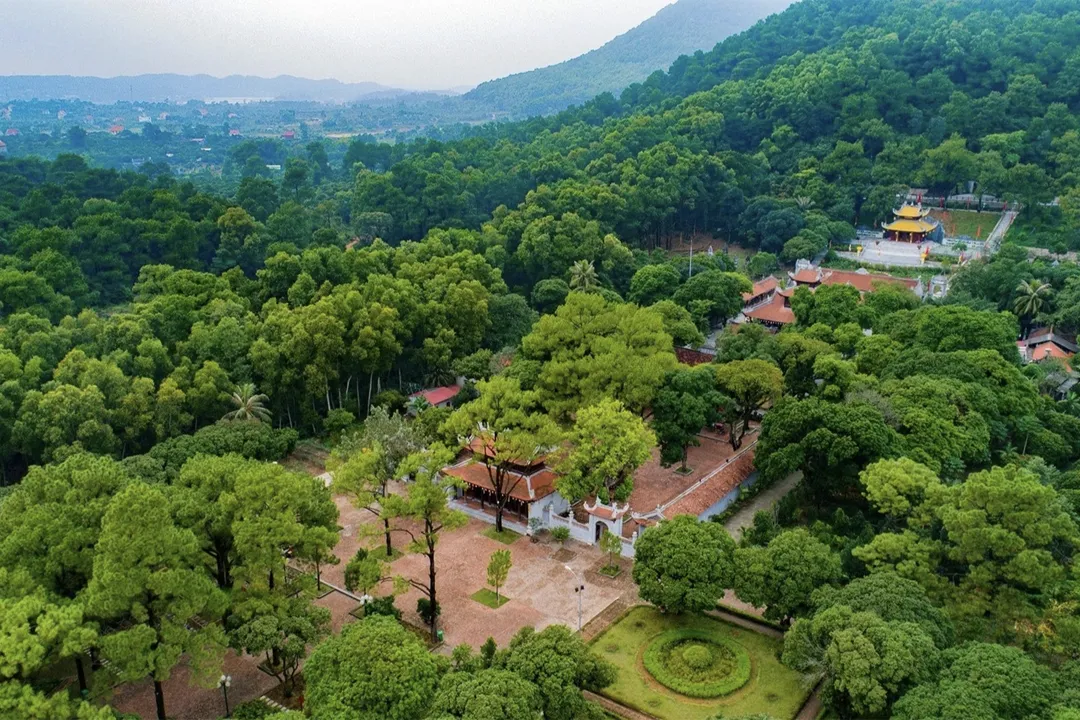
Kiep Bac Temple is the ceremonial heart of the valley and one of the most potent spiritual sites in northern Vietnam. Approached through an avenue of ancient trees, the temple complex features a series of gates, courtyards, and shrines that culminate in the inner sanctum, where a statue of Tran Hung Dao sits in commanding stillness. The surrounding geography is breathtaking and strategic: the temple is embraced by the Dragon Mountain range and overlooks the Luc Dau Giang, where six rivers — Cau, Thuong, Luc Nam, Duong, Kinh Thay, and Thai Binh — knit together in a shimmering aquatic junction. The military rationale for Tran Hung Dao’s choice of this location is immediately apparent, but so too is its profound natural beauty. In the rear hall, visitors can see an ancient sword and a collection of artifacts tied to the Tran Dynasty’s resistance wars, reminders that this is as much a shrine to national sovereignty as to spiritual devotion.
The Ascension of Con Son Mountain: The Fairy Chessboard and the Jade Well
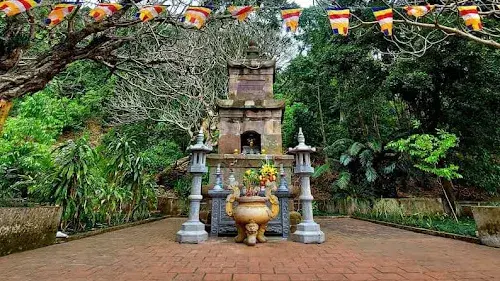
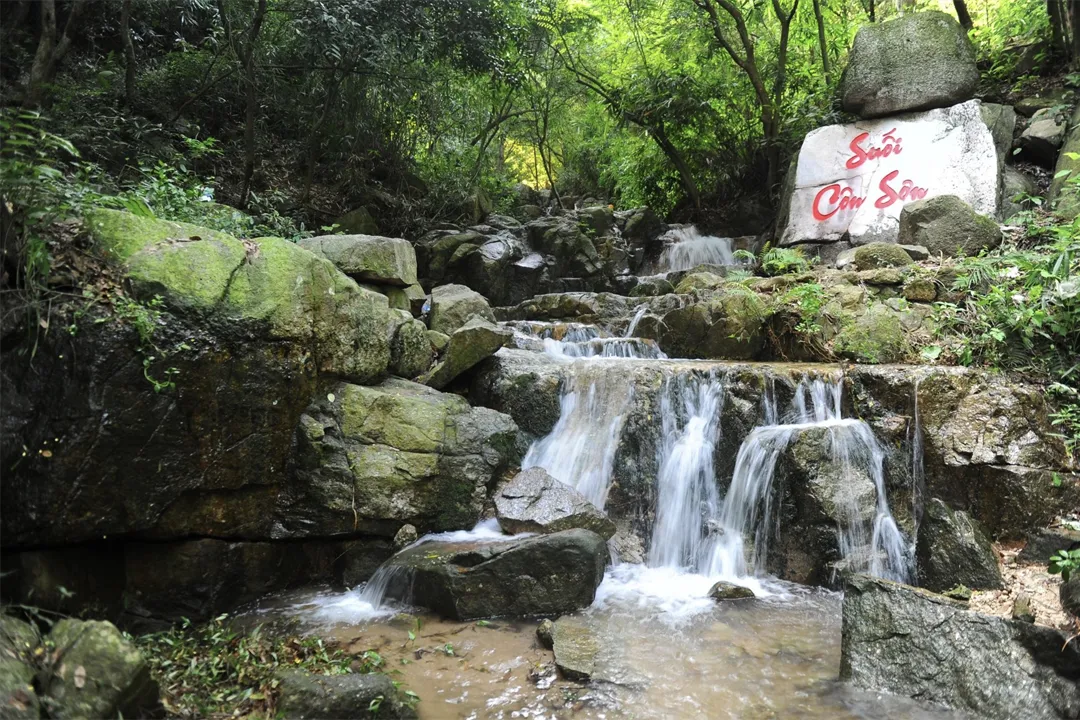
For those who believe that a temple visit should engage the body as well as the spirit, the climb up Con Son Mountain offers a gentle but rewarding pilgrimage. A stone stairway of roughly 600 steps leads upward through a fragrant pine forest, the path accompanied by the soft music of Con Son Spring flowing alongside. Midway up, pilgrims pause at Gieng Ngoc — the Jade Well — a perpetually clear natural spring that locals believe holds the mountain’s breath of life.
At the summit, a flat, weathered stone platform opens onto the sky: Ban Co Tien, the Fairy Chessboard. Legend tells of celestial beings who descended to this very spot to play chess, their divine strategies echoing the military genius of the valley below. A small, two-story watchtower crowns the peak, offering panoramic views that stretch across the patchwork of rice paddies, river confluences, and the distant blue silhouettes of the Yen Tu range. Sunrise hikers are rewarded with a sea of mist that fills the valley, turning the temple rooftops below into floating islands of gold and crimson.
The Spring and Autumn Festivals: Vietnam’s Living Heritage
Twice a year, the quiet valley erupts into magnificent celebration. The Con Son Kiep Bac Spring Festival (15th to 20th day of the first lunar month) honors the death anniversary of monk Huyen Quang and the founding patriarchs of Truc Lam. Over 50,000 pilgrims flood the complex for incense offerings, water processions on Ngu Nhac Mountain, folk games — wrestling, human chess, chung cake-making contests — and quan ho folk singing that echoes across the pine-covered slopes.
The Autumn Festival (15th to 20th day of the eighth lunar month) is darker, more solemn, and deeply majestic. Centered on Kiep Bac Temple, it commemorates the death anniversary of Tran Hung Dao. The ritual highlight is the midnight Seal Opening Ceremony, an intensely sacred event where four seals of Saint Tran are opened to grant spiritual protection to the faithful. What makes this festival unique in all of Vietnam, however, is the Army Festival on the Luc Dau River — a dramatic reenactment of medieval naval pageantry with hundreds of decorated boats, restored in 2006 and unmatched anywhere in the country. A requiem and lantern-floating ceremony on the river concludes the rites, praying for the souls of soldiers from all sides who perished in the Mongol wars. Both festivals were inscribed as National Intangible Cultural Heritage in 2013.
UNESCO Recognition: A Chain of Sacred Landscapes
In July 2025, the Yen Tu – Vinh Nghiem – Con Son Kiep Bac complex was officially inscribed on UNESCO’s World Cultural Heritage list, marking Vietnam’s ninth World Heritage designation and its first "chain-type" inter-provincial heritage nomination. The complex encompasses 20 interconnected sites across Quang Ninh, Bac Giang, and Hai Duong provinces, with Con Son Kiep Bac contributing five core components: Con Son Pagoda, Kiep Bac Temple, Thanh Mai Pagoda, Kinh Chu Cave, and Nham Duong Pagoda. UNESCO recognized the complex under Criteria III and VI, citing its unique cultural tradition of integrating state, religion, and community through Truc Lam Buddhism, and its role as a globally significant example of a religion fostering peaceful dialogue and national identity. For travelers, this inscription confirms what pilgrims have known for centuries: this valley is a treasure not merely of Vietnam, but of humanity.
Pro-Traveler Experience Tips
Arrive early — ideally by 7:30 AM — to experience Con Son Pagoda in its most transcendent state, when the morning mist still lingers over the lotus lake and the only sound is the rhythmic tapping of the wooden fish from the main hall. The complex is open daily from approximately 7:00 AM to 5:00 PM, and there is no official entrance fee, though small parking fees of around 10,000 VND (0.40 USD) for motorbikes and 30,000 VND (1.20 USD) for cars are collected by local attendants. Voluntary donations inside the temples are appreciated but never obligatory.
Dress modestly with covered shoulders and knees, and wear comfortable walking shoes suitable for the 600-step ascent of Con Son Mountain. If you plan to attend the Seal Opening Ceremony during the Autumn Festival, be prepared for enormous crowds — this is one of the most anticipated spiritual events in northern Vietnam — and arrive several hours early to secure a position. Binoculars or a zoom lens are invaluable for appreciating the high roof carvings at Kiep Bac Temple and for panoramic views from the Fairy Chessboard. Photography is permitted in outdoor areas, but always avoid flash inside the temple sanctuaries, and ask permission before photographing monks or worshippers in prayer.
For the fullest experience, time your visit with either the Spring or Autumn Festival; for solitude, choose a quiet weekday morning outside festival dates. A private car from Hanoi is the most seamless option (approximately 1.5–2 hours each way), allowing you to linger without rushing. Carry drinking water during warmer months, a small offering of 20,000–50,000 VND (0.80–2 USD) if you wish to light incense, and a spirit of quiet reverence — Con Son Kiep Bac is not a museum but a living sanctuary, and the depth of your experience will mirror the respectfulness of your approach. Combining this visit with nearby Thanh Mai Pagoda, Kinh Chu Cave, or the Yen Tu complex further north creates a richly layered two-day spiritual journey through the heartland of Vietnamese Buddhism.