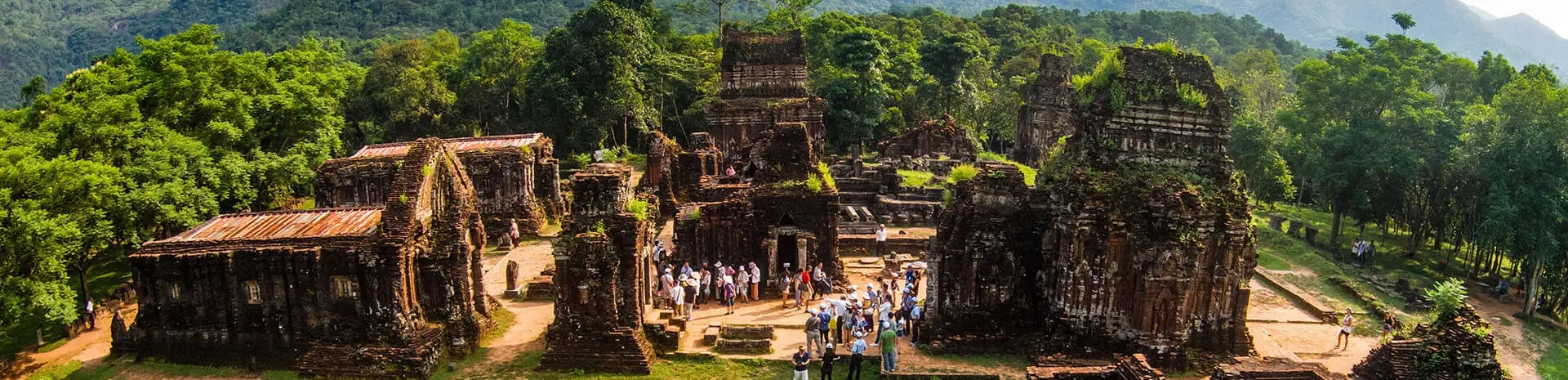
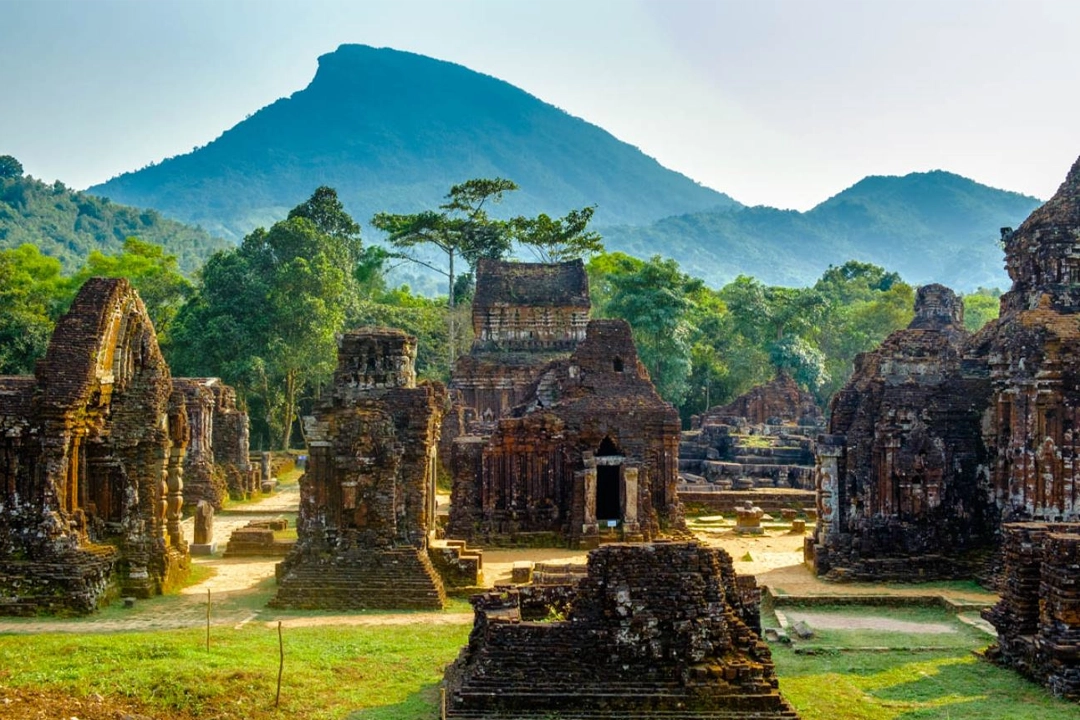
My Son Sanctuary is a UNESCO World Heritage site that serves as a profound testament to the Champa Kingdom's spiritual and architectural legacy. Tucked away in a lush valley in Quang Nam, these red-brick ruins, dating from the 4th to the 14th century, were dedicated to the Hindu deity Shiva. Despite the scars of time and conflict, the sanctuary remains an evocative complex of atmospheric temples and intricate bas-reliefs. It is a must-visit for those seeking to understand the deep-rooted cultural tapestry of Central Vietnam, offering a silent, powerful contrast to the bustling streets of nearby Hoi An.
A Journey Through Champa Time: The Temple Clusters
.webp)
Exploring My Son is a lesson in architectural genius. The Champa people used a mysterious firing and bonding technique that allowed these structures to stand for centuries without visible mortar. As you walk through clusters A, B, C, and D, pay close attention to the sandstone carvings of dancers, lions, and deities. Each cluster represents a different era of Champa history, from the soaring heights of early religious fervor to the smaller, more defensive structures of later centuries. The site isn't just a graveyard of stones; it’s a narrative of a kingdom that once dominated the coastal trade routes of Southeast Asia.
The Soul of the Valley: Champa Cultural Performances
Your visit shouldn't just be about the architecture. One of the most unique experiences is the traditional Cham dance performance held at the central stage. Accompanied by the haunting sounds of the Saranai flute and the Ginang drum, the performers bring ancient myths to life through graceful, fluid movements. Watching these dancers amidst the backdrop of the ruins bridges the gap between the past and present, reminding us that while the empire fell, its artistic pulse remains very much alive in the local community.
Pro-Traveler Experience Tips
The "Golden Hour" here is early morning. Most large tour groups from Da Nang don't arrive until 9:30 AM or 10:00 AM. To have the ruins to yourself, you need to be at the gate right as it opens at 6:00 AM. This means leaving Hoi An by 5:15 AM, but the reward of a sunrise glow on the red bricks—without a sea of selfie sticks—is incomparable.
From our personal experience, don't just stick to the main paved paths. There are small, shaded perimeter trails that offer fantastic "frame-within-a-frame" photo opportunities of the temples through the jungle trees. Also, hydration is your best friend. The valley is a natural heat trap; even at 8:00 AM, the humidity can be intense. While there are kiosks near the entrance, prices are higher—bring your own refillable bottle. Lastly, if you have a choice, visit on a weekday. Weekends often see a surge of local domestic travelers, which can make the narrow temple entrances quite congested. If you're a photography enthusiast, a polarizing filter is essential to handle the glare on the weathered brick surfaces during the midday sun.