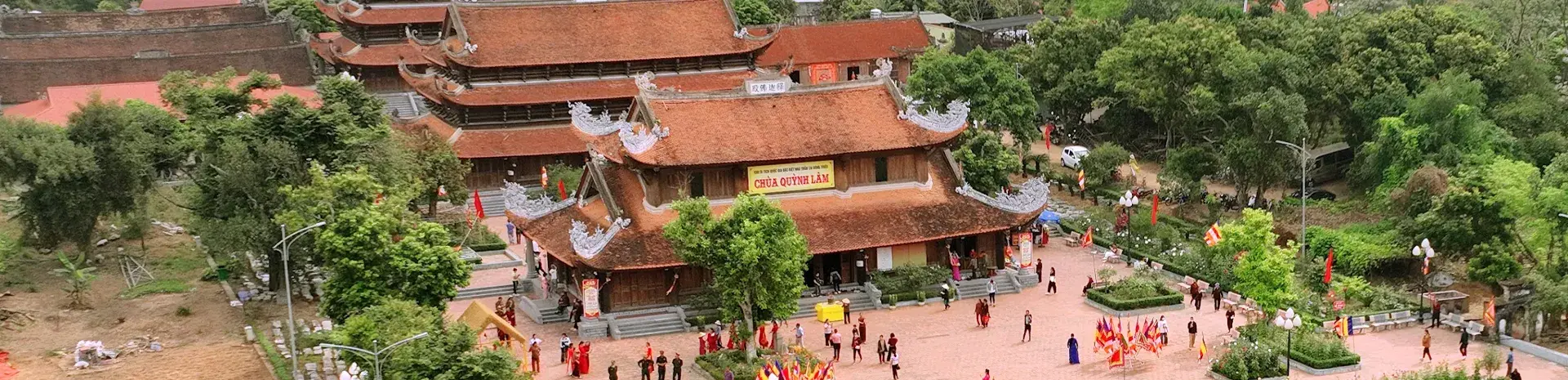
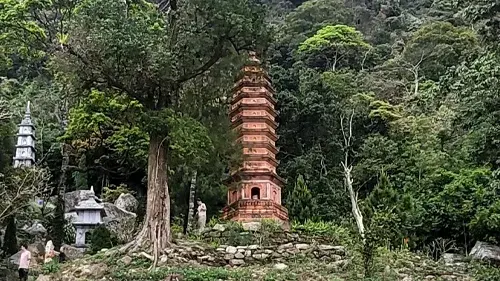
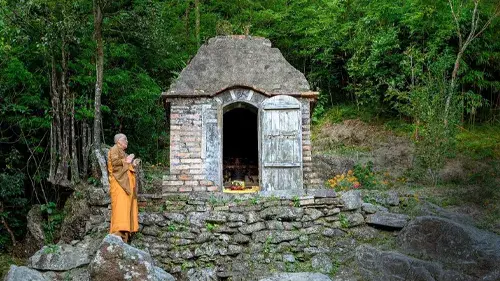
Along the ancient road connecting Thang Long to the northeastern frontier, Quynh Lam Pagoda has stood for nearly ten centuries as a silent witness to the unfolding of Dai Viet’s spiritual and intellectual history. Located in present-day Binh Khe ward in the Dong Trieu region of Quang Ninh province, its earliest foundations are traced to the reign of King Ly Than Tong (r. 1116–1138) and the revered monk-scholar Nguyen Minh Khong. But it was during the Tran Dynasty—under the dynamic leadership of the Second Truc Lam Patriarch, Zen Master Phap Loa—that the pagoda was transformed into the largest and most influential Buddhist training monastery in the land: a place where monks were educated, scriptures printed, and the soul of a flourishing nation nurtured. Recognized as a National Historical and Artistic Site and now part of a UNESCO-inscribed World Heritage complex, Quynh Lam’s profound stillness and monumental history continue to draw pilgrims, poets, and travelers seeking a connection to the deepest roots of Vietnamese civilization.
The First Buddhist Academy of Dai Viet
Under the visionary guidance of Zen Master Phap Loa (1284–1330), Quynh Lam Pagoda transcended its role as a local temple to become something far greater: the nation's first Buddhist academy. In 1317, Phap Loa officially founded the Quynh Lam Monastery, transforming the site into a truly vast monastic complex that served as the supreme training centre for the elite monks of the Truc Lam Zen sect.The scale of its operation was immense and sophisticated. It was not merely a place for meditation, but a bustling centre for sacred scholarship. In 1319, Phap Loa organized a remarkable community effort—a mass blood donation by devout Buddhists, whose essence was mixed with ink to print over 5,000 copies of the Dai Tang Sutras, a sacred library kept in situ at the Quynh Lam Buddhist Institute. The pagoda’s role was therefore both religious and profoundly cultural, establishing it as the beating heart of intellectual and spiritual life in the Tran Dynasty.
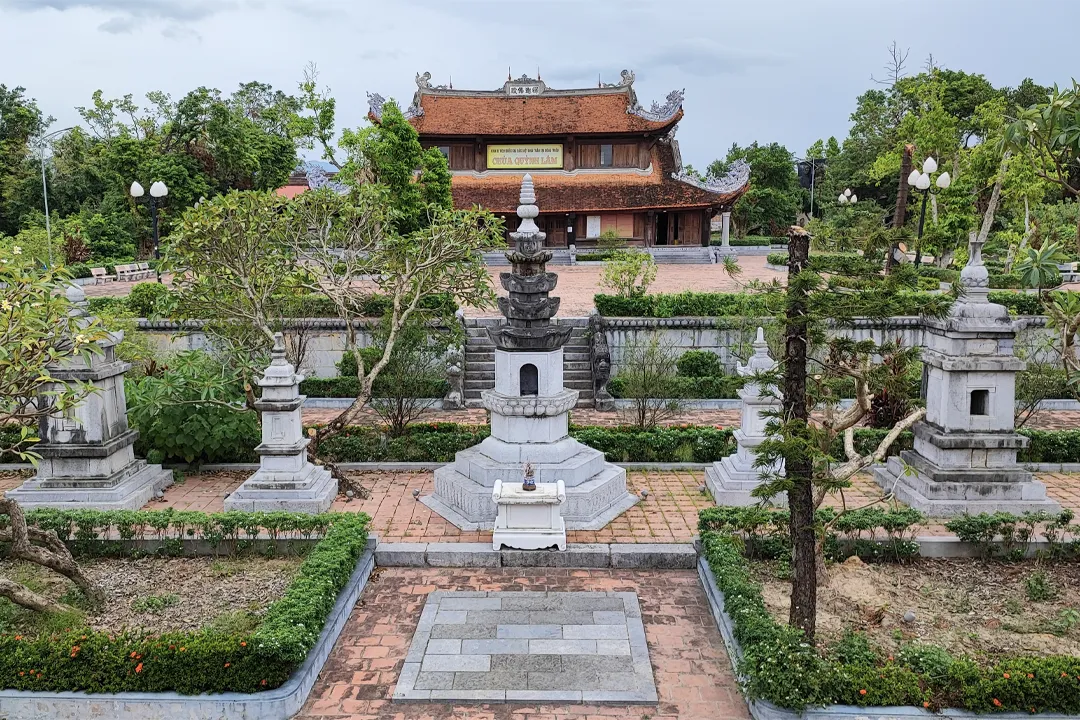
The Four Great Treasures of An Nam and the Giant Maitreya Statue
In the pantheon of Vietnam’s medieval artistic achievements, none are more legendary than the "An Nam Tu Dai Khi"—the Four Great Treasures of Annam.These four colossal bronzes stood as symbols of the power, wealth, and sophisticated artistry of the Ly and Tran dynasties. The national treasures included the towering Bao Thien stupa, the immense Quy Dien bell, the great Pho Minh cauldron, and, at their heart, the giant statue of Maitreya Buddha enshrined at Quynh Lam Pagoda. Cast in bronze in 1328 under the direct patronage of Phap Loa, the Quynh Lam Buddha was a masterpiece of its age, a figure so revered that pilgrims traveled from across the kingdom to offer veneration. Tragically, many of these treasures were destroyed during a devastating Ming invasion in the early 15th century, when the pagoda itself was reduced to ruins.Yet the very memory of the giant statue, preserved in historical annals and local lore, continues to symbolize the artistic zenith and spiritual ambition of Quynh Lam at its most glorious.
A Landscape of Geomantic Perfection
Like all of Vietnam's most sacred sites, the location of Quynh Lam was chosen with profound geomantic care. The pagoda sits gracefully on the slopes of Tien Du Mountain, part of a majestic ridgeline that rolls down from the holy peaks of Yen Tu and Ngoa Van towards the plains. Its setting is a masterclass in feng shui: to the left, the protective form of the Azure Dragon rises, while to the right, the White Tiger rests in balance. In front of the temple, a large, placid lake serves as a gathering point for water, spiritual energy, and blessings from the surrounding green mountains and hills. To the north lies a great riverbank, and to the west, a winding river flows, completing a propitious configuration that embodies the Eastern belief in harmony between the built shrine and the natural world. The pagoda is even marked at its four corners by four high mounds considered the "Four Eyes of the Dragon," which, according to local belief, represent the four guardian spirits that penetrate the heart and gather spiritual energy for the temple.
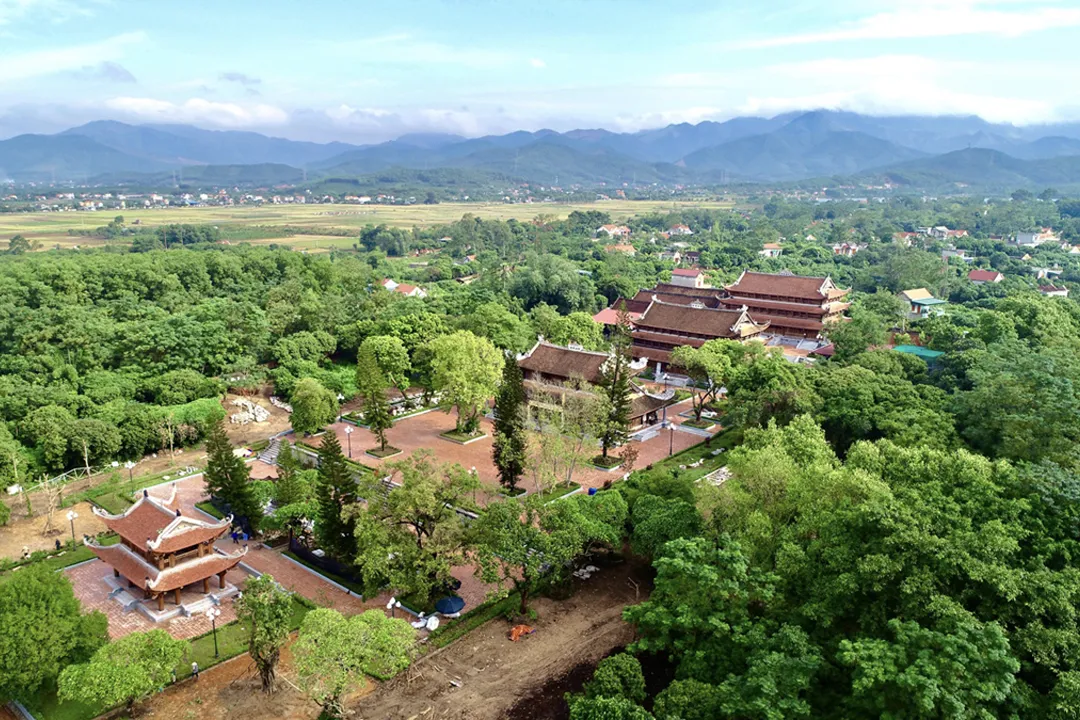
The Quynh Lam Pagoda Spring Festival
Each spring, the silent stones of Quynh Lam are animated by the sound of drums, chanting, and communal celebration. The official Quynh Lam Pagoda Traditional Spring Festival takes place annually from the 1st to the 3rd day of the second lunar month (typically February or March). The three-day event is a beautiful tapestry of the sacred and the secular. It commences with solemn Buddhist rituals, including the stirring water procession—a deeply symbolic act of purification and prayer for rain and bounty—followed by incense offerings to pray for national prosperity and peace. The ceremonial drumming and resonant ringing of bells give way to a joyful communal atmosphere, with vibrant cultural performances, artistic shows, and a host of folk games such as tug-of-war, stick-pushing, and chess that engage the entire community. Attending the festival offers an unparalleled opportunity for travelers to witness the living, breathing folk Buddhism of Vietnam, where ancient sutras and village games exist in happy, colorful harmony.
Pro-Traveler Experience Tips
A visit to Quynh Lam Pagoda rewards planning and a spirit of quiet contemplation. The sanctuary is open daily, and while formal hours are from early morning until late afternoon, arriving before 9:00 AM is the best way to experience the complex at its most serene, when morning mist often still clings to the lake and the resident monks chant their first sutras of the day. Pilgrims are welcome freely, and there is no mandatory entrance fee, embodying the Buddhist spirit of open doors. A voluntary donation of 20,000–50,000 VND (0.80–2.00 USD) placed in the temple's offering boxes is a deeply customary and graceful gesture that supports the ongoing upkeep of this vast sanctuary. Parking for motorbikes costs around 10,000 VND (0.40 USD), and for cars, 30,000 VND (1.20 USD).
Dress modestly, with shoulders and knees covered, as a sign of respect in this active monastery, and wear comfortable slip-on shoes, as you will be required to remove your footwear before stepping onto the polished wooden floors of the three main halls. The interior lighting is characteristically dim and atmospheric, making it the perfect setting for a moment of seated meditation but requiring a steady hand for any photography; always avoid using flash near the ancient agarwood columns and altar statues. The landscaped gardens of ancient steles and the great courtyard between the main halls offer stunning compositions, especially in the soft golden light of late afternoon. An English-speaking guide is strongly recommended to fully unlock the pagoda's 1,000 years of stories—from Phap Loa's academy to the poetry society of Prince Tran Quang Trieu—and can be arranged a day or two in advance through a local tour operator.
The most culturally immersive time to visit is during the Quynh Lam Pagoda Spring Festival (1st to 3rd of the second lunar month, usually March), when the site is filled with joyful, colorful crowds. For solitude, a quiet weekday morning in the dry season, from October to April, is ideal. This pilgrimage is most perfectly combined with a multi-stop journey through the Tran Dynasty's sacred landscape; visiting nearby Ngoa Van Am, Ho Thien Pagoda, and the Yen Tu complex as part of an elegant 2- or 3-day private car tour from Hanoi creates an utterly profound immersion into the heart of Vietnamese Zen Buddhism.