Vietnam Weather by Month: Where to Go and When

Overview

Vietnam stretches more than 1,600 kilometers from its northern border with China to the southern tip of the Mekong Delta. Because the country spans so many latitudes and elevations, there is no single best time to visit Vietnam as a whole.
Many first-time visitors book flights without checking regional patterns, landing in Da Nang during October typhoon floods or arriving in Phu Quoc during August monsoon rains. These practical Vietnam travel tips help you match your travel dates to the right part of the country.
Below, you will find a quick-pick climate table, a region-by-region weather breakdown, a 12-month calendar, and multi-region itineraries. Use this guide to dodge severe weather and plan a smoother trip.
Vietnam’s climate at a glance
Understanding Vietnam weather by region starts with realizing that three distinct weather systems operate across the country at the same time. While one coast basks in dry sunshine, another may face heavy monsoon storms or chilly mountain fog. Weather patterns also shift slightly from year to year, so treat all seasonal ranges below as reliable averages rather than strict guarantees.
| Region | Best season | Season to avoid or plan around | Typical temperature range |
|---|---|---|---|
| North | Autumn (Sep–Nov) & Spring (Mar–Apr) | June–August for heat and downpours, December–February for mountain cold | About 15–35°C / 59–95°F in the lowlands across seasons, colder at elevation |
| Central | Late Winter to Summer (Feb–Aug) | September–December for storms and flooding, particularly October–November around Hue and Hoi An | About 20–35°C / 68–95°F on the coast |
| Central Highlands | Dry Season (Nov–Apr) | May–October for muddy trails and afternoon rain | About 15–25°C / 59–77°F in higher towns, warmer on lower plateaus |
| South | Dry Season (Nov–Apr) | May–October for downpours and exposed island crossings | About 24–35°C / 75–95°F in the lowlands |
Elevation, exposure and weather that year can put a particular stop outside the range. When you look up Vietnam weather by region, don't forget check the town where you will sleep as well as the highest point you plan to visit.
Northern Vietnam: Hanoi, Sapa, Ha Long Bay, Ha Giang, and Ninh Binh
Northern Vietnam anchors most first-time itineraries, connecting the capital city of Hanoi with dramatic mountain and coastal landscapes. Key destinations include Sapa, a hill station in the Hoang Lien Son mountains, and Ha Giang, a rugged northern province bordering China. Travelers also visit Ha Long Bay, famous for limestone islands in the Gulf of Tonkin, and Ninh Binh, an inland area of limestone karsts and rivers south of Hanoi.
Spring (March to April)
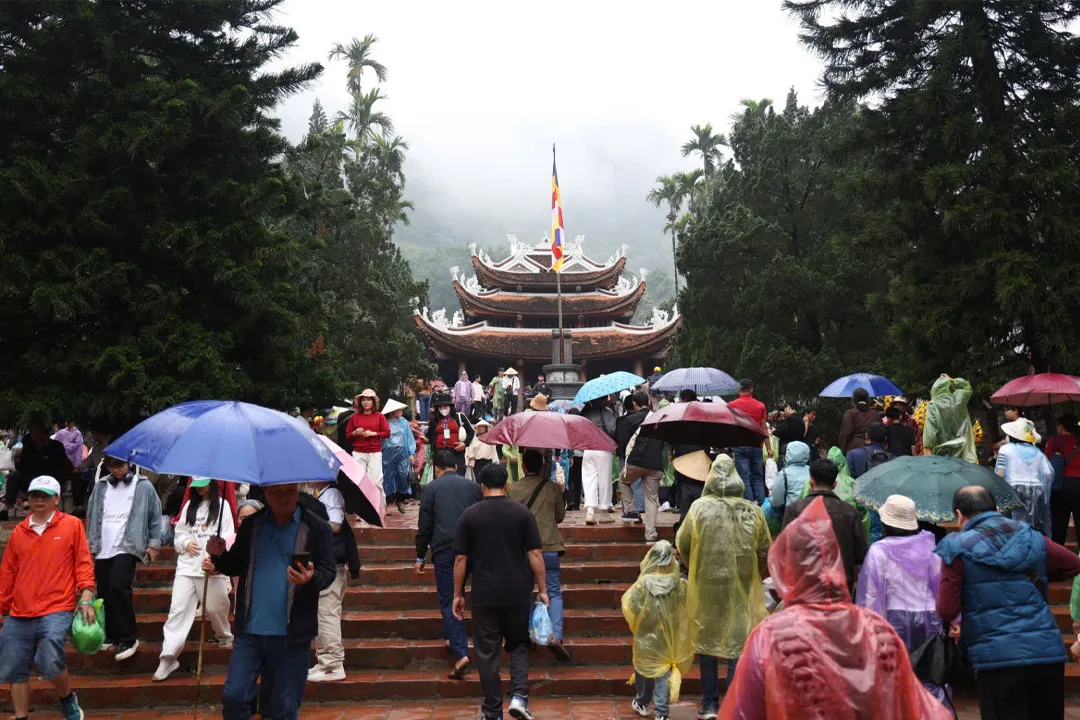
Temperatures sit comfortably around 18–25°C / 64–77°F, though March often brings a fine mist known locally as mua phun. Peach and plum blossoms color the northern valleys in early spring, and local temple festivals draw crowds around Ninh Binh and Hanoi. Light drizzle rarely cancels overnight cruises in Ha Long Bay, making spring a strong shoulder-season choice.
From May through August, heat and humidity build, and heavy rain can interrupt an otherwise sunny week. The heat in northern Vietnam can be particularly uncomfortable, with temperatures reaching up to 36–40°C. Tourists are advised to bring sunglasses, an umbrella, or sun-protective clothing and to avoid sightseeing activities during midday or early afternoon. Nevertheless, Ha Long Bay and neighboring Cat Ba Island are still possible summer stops. Ask your cruise operator what happens if the port suspends departures and whether you can move your reservation by a day.
On the mountain roads around Sapa and Ha Giang, several days of rain matter even if the morning looks clear. Landslides can block a pass after the rain stops. Ask your host or driver about the actual road that morning, travel in daylight, and change your overnight stop if local authorities close the route.

Autumn rice terraces and winter cold
September through November is the North’s most rewarding stretch for many first-time visitors, but the three months offer different trips. Mu Cang Chai, a mountain district northwest of Hanoi, typically harvests its terraced rice in September and October. One valley may already be cut while the next still has gold fields. Ask a homestay which slopes are ripening before committing to a long drive.

Later in autumn, Ha Giang’s buckwheat flowers give the rocky northern plateau patches of pink. In Hanoi, cooler afternoons make it easier to walk between the Old Quarter and the lakes. Look for com, young green rice sold in small portions, while it is in season. September can still bring storms, so give a mountain route more flexibility than a city stay.

December through February is a different proposition, especially in Sapa, a highland town near the Chinese border. Northern cold spells can bring temperatures around 5–15°C / 41–59°F, and Sapa can get frost. Take a fleece, a wind-resistant jacket, warm socks and a dry change of clothes. If you get cold easily, ask whether your mountain accommodation has heating before you book.
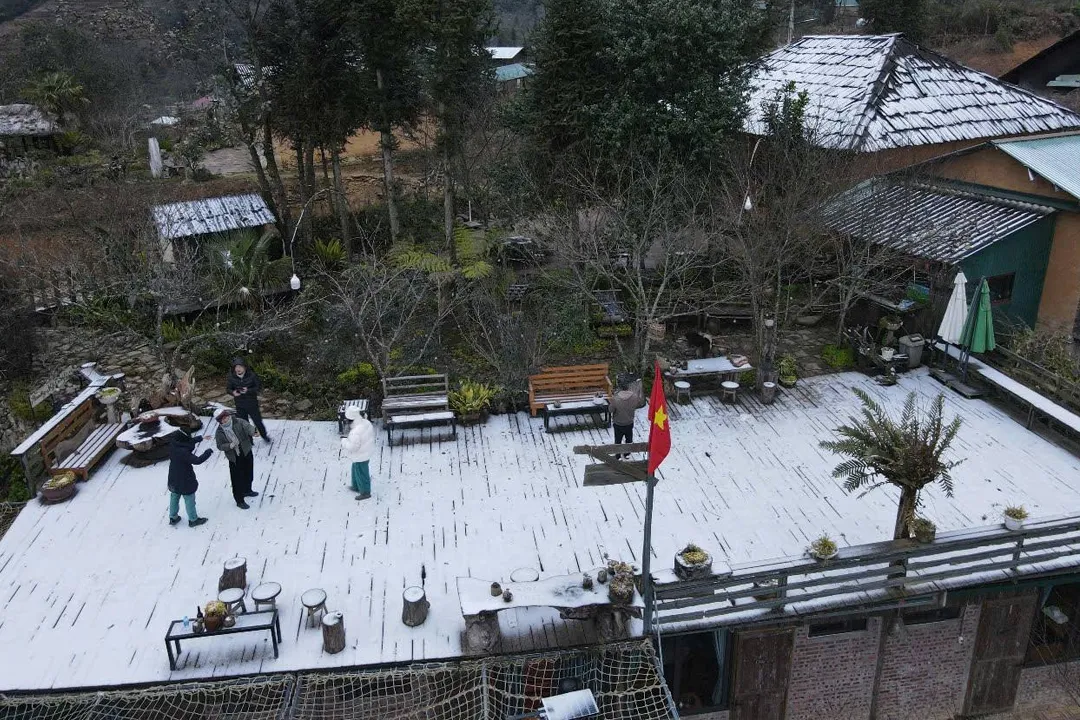
Central Vietnam: Hue, Da Nang, Hoi An, Nha Trang, Quy Nhon, and Phong Nha
Central Vietnam sits between two mountain passes, creating a microclimate that runs opposite to the north and south. This stretch includes Hue, Vietnam's former imperial capital, Da Nang, a modern coastal hub, and Hoi An, a UNESCO-listed old town near Da Nang. Further north lies Phong Nha, home to massive cave systems in Quang Binh province, while Nha Trang and Quy Nhon anchor the sunnier south-central coast.
Best Period (February to August)
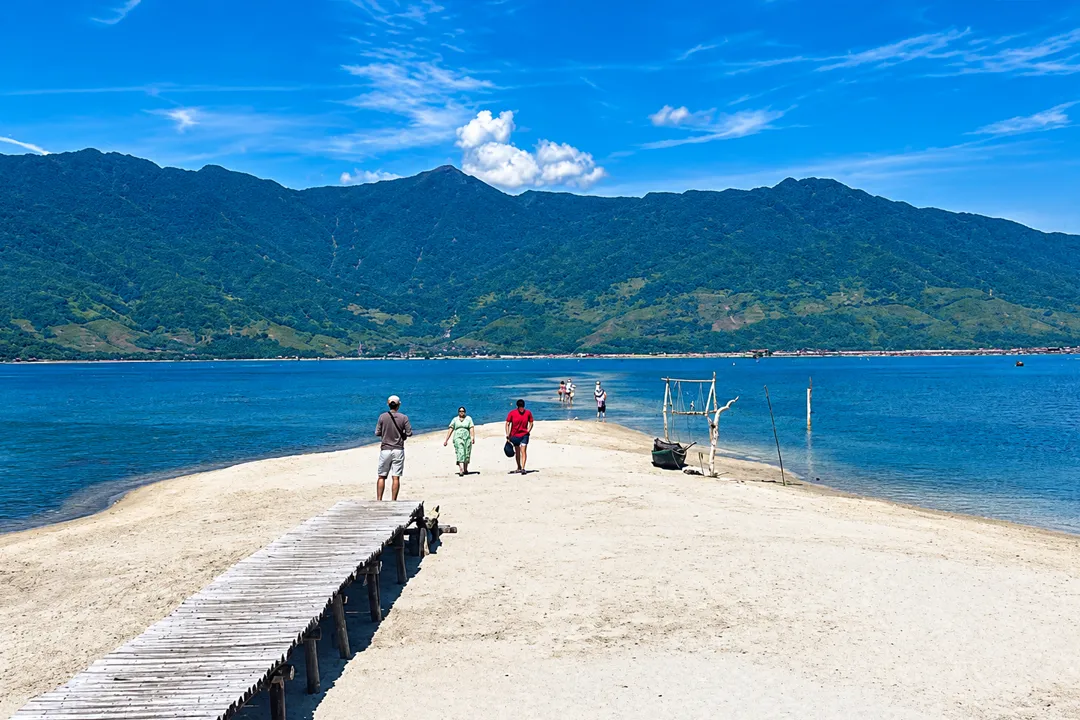
Dry, sunny weather dominates from February through August, with temperatures climbing from 22–28°C / 72–82°F in spring to 30–37°C / 86–99°F in midsummer. Calm seas and clear skies make March through July the prime window for beach days in Da Nang, Hoi An, and Quy Nhon. February to May is also ideal for exploring caves in Phong Nha before summer water levels rise inside river caverns.
Rainy and Typhoon Season (September to December)
Understanding Vietnam typhoon season in central Vietnam is critical for avoiding disrupted plans. Heavy rains and tropical storms peak between September and December, bringing temperatures down to 20–26°C / 68–79°F. Low-lying neighborhoods in Hoi An and Hue frequently flood in October and November, while rough seas close coastal boat trips.

The South-Central Shift: Nha Trang and Quy Nhon
Weather shifts noticeably as you travel south toward Quy Nhon, a quieter coastal city, and Nha Trang, a lively beach city on the south-central coast. Both cities enjoy a longer dry stretch that often runs from January through August, with peak rainfall arriving later between October and December. Even during the wet months, Nha Trang tends to experience less severe flooding than Hue or Hoi An.

Central Highlands: Da Lat, Mang Den, and Buon Ma Thuot
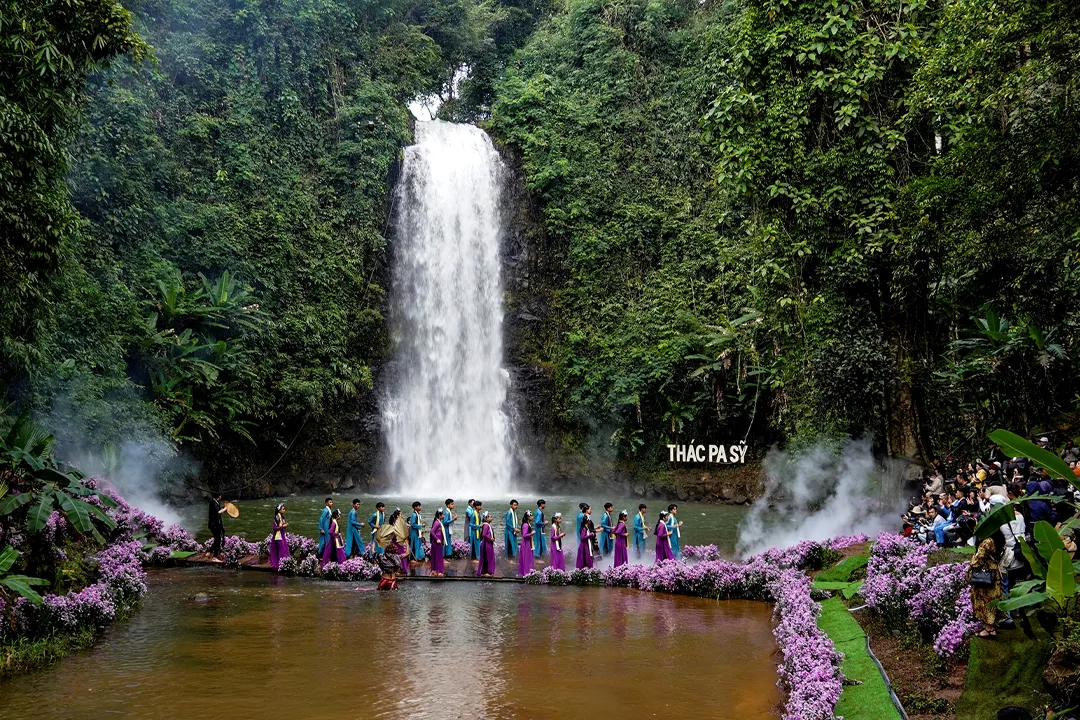
Rising onto wooded plateaus inland from the south-central coast, the Central Highlands offer an immediate escape from tropical humidity. Most travelers head to Da Lat, a highland town built around pine hills, waterfalls, and lakes. Those seeking quieter roads often add Mang Den, a quiet mountain town in Kon Tum province, or Buon Ma Thuot, the coffee capital of Dak Lak province.
Dry Season (November to April)
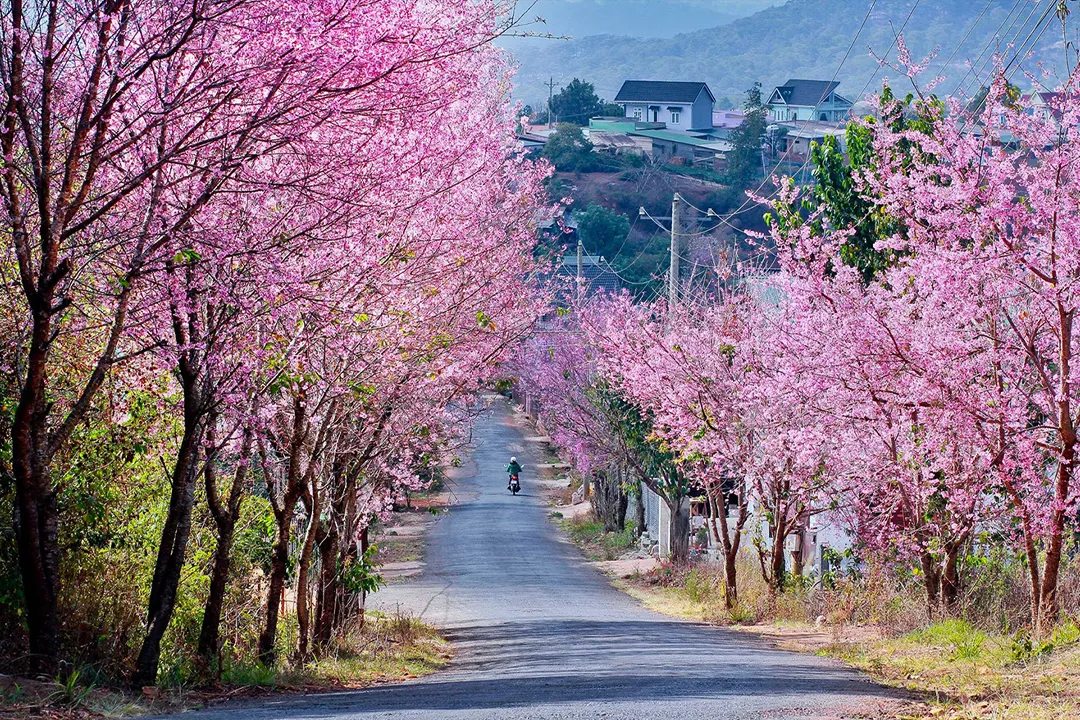
Crisp mornings, bright blue skies, and low rainfall define the dry season, with daytime highs of 20–25°C / 68–77°F and nighttime lows dropping to 12–16°C / 54–61°F. Wild yellow sunflowers bloom along roadside hills from late October through December, making this the best time to visit Da Lat for outdoor photography and trekking. Early risers also head to surrounding hilltops between November and March for "cloud hunting," when thick mist fills the valleys below sunny peaks.

Rainy Season (May to October)
Afternoon showers arrive almost daily from May through October, keeping daytime temperatures around 18–24°C / 64–75°F. Rain usually falls in sharp bursts after 2:00 PM, leaving mornings clear for visiting coffee plantations in Buon Ma Thuot or waterfalls around Mang Den. Hotel rates drop noticeably during these months, and forests turn a deep, saturated green.
Practical Tips for the Central Highlands
- Pack layers for chilly evenings: Bring a windbreaker, sweater, and long pants regardless of the month, as temperatures drop quickly after sunset.
- Start outdoor activities early in wet months: Schedule waterfall hikes, canyon tours, and scooter rides before noon from May to October, and pack a waterproof poncho and quick-dry footwear.
- Watch for slippery red-clay roads: Rural backroads around Mang Den and Buon Ma Thuot turn slick after afternoon downpours, so ride cautiously and avoid night driving on unlit mountain routes.
Southern Vietnam: Ho Chi Minh City, Mekong Delta, Phu Quoc, Con Dao, and Vung Tau
Southern Vietnam delivers consistent tropical warmth all year, making it the easiest region to pack for. Travelers typically start in Ho Chi Minh City before branching out to the Mekong Delta, the river-crossed agricultural region to the southwest, or Vung Tau, a coastal city two hours east. For island time, the region features Phu Quoc, an island off the southwest coast in the Gulf of Thailand, and Con Dao, an archipelago off the southern coast.
Dry Season (November to April)

Low humidity, clear skies, and calm seas make November through April the best time to visit Phu Quoc and Con Dao. Daytime temperatures sit between 27–33°C / 81–91°F, peaking in March and April when Ho Chi Minh City feels noticeably hot. Boat ferries to Con Dao run smoothly during these months, and underwater visibility is at its best for snorkeling and diving.

Rainy Season (May to October)

The southern monsoon brings predictable afternoon downpours that usually last one to two hours before skies clear again, with temperatures hovering around 26–32°C / 79–90°F. Rather than ruining a trip, wet-season rhythms create two distinct highlights in the Mekong Delta: summer fruit season (May–August), when orchards overflow with durian, mangosteen, and rambutan, and the floating water season (September–November), when high river levels bring flooded forests and busy boat markets to life. However, rough seas between July and September can occasionally disrupt ferries to Phu Quoc and Con Dao.

Practical Tips for Southern Vietnam
- Avoid midday sun exposure: Step indoors between 11:00 AM and 3:00 PM for lunch or museum visits, and apply high-SPF sunscreen and mosquito repellent daily.
- Carry a compact umbrella or light poncho: Even in the dry season, stray showers occur, and sudden afternoon storms in May–October can flood low-lying streets in Ho Chi Minh City for an hour.
- Plan around Tet holiday closures: During the Lunar New Year (usually late January or February), domestic crowds pack beaches in Vung Tau and Phu Quoc while many family-run restaurants in Ho Chi Minh City close for several days.
Vietnam travel calendar by month
Use this calendar to shortlist two or three places for your dates.
| Month | Regional Weather Snapshot | Best Destinations to Visit |
| January | Dry and sunny in the South and Central Highlands; cool to cold and often foggy in the North. | Phu Quoc, Con Dao, Ho Chi Minh City, Da Lat |
| February | Dry weather expands into Central Vietnam; mild spring temperatures begin in the North. | Hoi An, Da Nang, Phu Quoc, Mekong Delta |
| March | Low rainfall nationwide; mild warmth in the North and prime beach conditions in Central Vietnam. | Hanoi, Ninh Binh, Da Nang, Quy Nhon |
| April | Warm and sunny across most of the country; hotter temperatures build in the South. | Hue, Hoi An, Phong Nha, Ha Long Bay |
| May | Summer heat and afternoon rain begin in the North and South; Central beaches stay dry and sunny. | Da Nang, Nha Trang, Quy Nhon, Mekong Delta (fruit season) |
| June | Peak beach season in Central Vietnam; hot and wet in the North and South. | Hoi An, Quy Nhon, Phong Nha, Da Lat |
| July | Sunny and hot on the central coast; typhoon risk rises in the North and rough seas hit southern islands. | Nha Trang, Quy Nhon, Da Nang, Mang Den |
| August | Late summer sun in south-central beaches; heavy rain in the North and wet afternoons in the South. | Nha Trang, Quy Nhon, Da Lat |
| September | Autumn arrives in northern mountains; rainy season begins in Central Vietnam. | Mu Cang Chai, Sapa, Hanoi, Mekong Delta |
| October | Crisp, dry air in the North; heavy rain and flood risk peak in Hue and Hoi An. | Hanoi, Ha Giang, Ninh Binh, Mekong Delta |
| November | Dry season returns to the South and Central Highlands; cool, clear days continue in the North. | Ha Giang, Hanoi, Da Lat, Phu Quoc |
| December | Sunny and calm across the South and Central Highlands; chilly winter weather sets into the North. | Phu Quoc, Con Dao, Ho Chi Minh City, Da Lat |
Sample Itineraries by Season
Spring in Hanoi, Da Nang and Hoi An • 6 days

Spend days 1–2 in Hanoi, where spring temperatures suit a walking tour even if you need a light jacket. Fly to Da Nang on day 3 and stay by the beach. Transfer to Hoi An on day 4, explore the old town that evening, and leave day 5 for cycling or swimming according to the forecast. Return to Da Nang for departure on day 6. March or April gives the northern and central portions a good seasonal overlap.
Summer in Ho Chi Minh City, Can Tho and Nha Trang • 7 days

Start with two nights in Ho Chi Minh City, then travel by road to Can Tho on day 3. Visit an orchard on day 4 and return to the city that evening. On day 5, fly to Cam Ranh, the airport serving Nha Trang, and spend the last two nights on the coast. This June route gives you delta fruit in season and better beach prospects than a west-coast island, with a night between the long drive and flight.
Fall in Hanoi, Ninh Binh and Da Lat • 7 days

For October, spend days 1–2 in Hanoi and days 3–4 in Ninh Binh. Take a morning boat ride through the limestone valleys before returning to Hanoi on day 5. Take an evening flight to Da Lat if the schedule allows. Spend days 6–7 looking for wild sunflowers and visiting coffee farms as the highland rains begin to ease. Keep a café afternoon in reserve for showers. For buckwheat flowers instead, spend the full week in Hanoi and Ha Giang.
Winter in Da Lat, Ho Chi Minh City and Phu Quoc • 7 days

Spend days 1–2 in Da Lat, with one early start for a viewpoint and a slower second morning for coffee. Travel to Ho Chi Minh City on day 3, explore on day 4, then fly to Phu Quoc on day 5. Allow two nights on the island and depart on day 7. December usually pairs drier highland walks with beach weather. If you fly home from the mainland early the next morning, return there on day 7.
Practical Vietnam travel tips for any season
- Pack for the wettest activity. A light rain jacket is easy to carry on foot. Put your passport and phone in a separate waterproof pouch, and keep one dry shirt for the ride back. Add sunscreen, insect repellent and a refillable water bottle.
- Book the scarce connection first. Around Tet (Lunar New Year), April 30–May 1, September 2 and summer school holidays, reserve the train berth, flight or island room that the rest of your route depends on. As a planning target, start six to eight weeks ahead for Tet and other major holidays, earlier for fixed dates. Check holiday schedules directly.
- Read warnings and check departures separately. Use a weather app for hourly rain, then consult Vietnam’s National Center for Hydro-Meteorological Forecasting for storm and heavy-rain bulletins. Ask the port, railway or airline about your specific departure. Never walk or drive into floodwater to reach a booking.
- Check entry and transport details before paying. Verify visa exemptions or e-visa requirements for your passport, travel dates and intended border crossing. Domestic flights save time between distant regions, while rail works well between coastal cities. Recheck schedules, attraction access and insurance cover before departure.