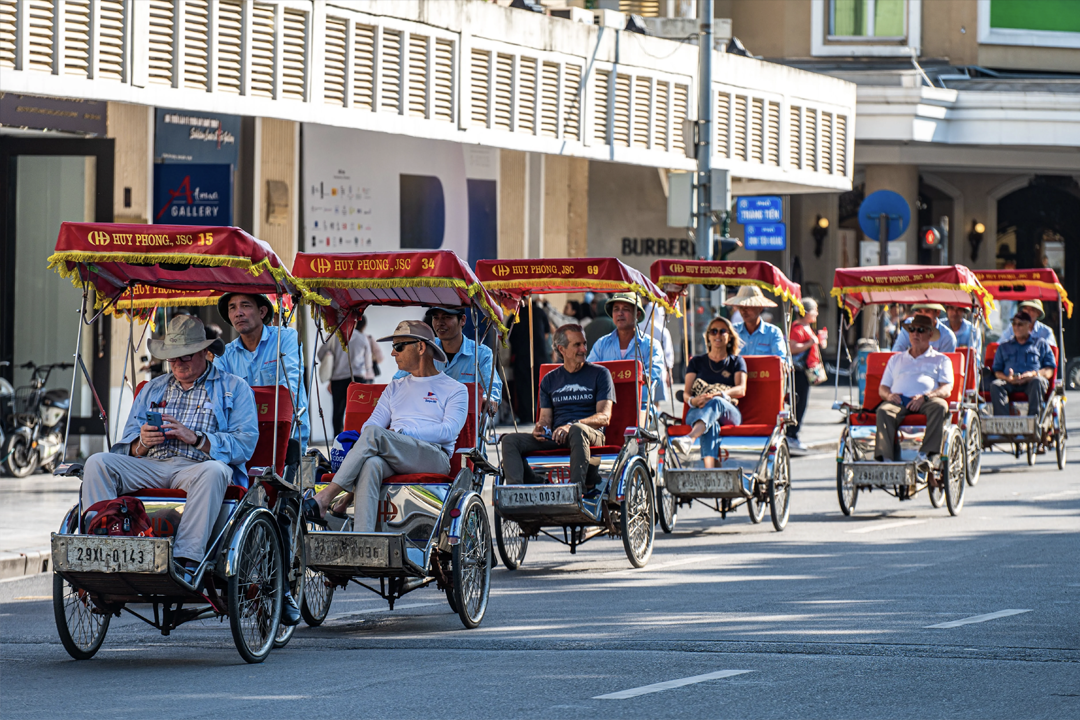
Hanoi Cyclo Tour: Which route is ideal for you?
There is a specific frequency to Hanoi—a chaotic, high-pitched hum of millions of motorbikes weaving through narrow corridors like a school of fish. It is exhilarating, but it can also be exhausting. To truly understand the soul of this thousand-year-old city, you have to downshift. You have to trade the internal combustion engine for the rhythmic creak of a bicycle chain and the steady breathing of a man who knows these streets better than any GPS ever could.
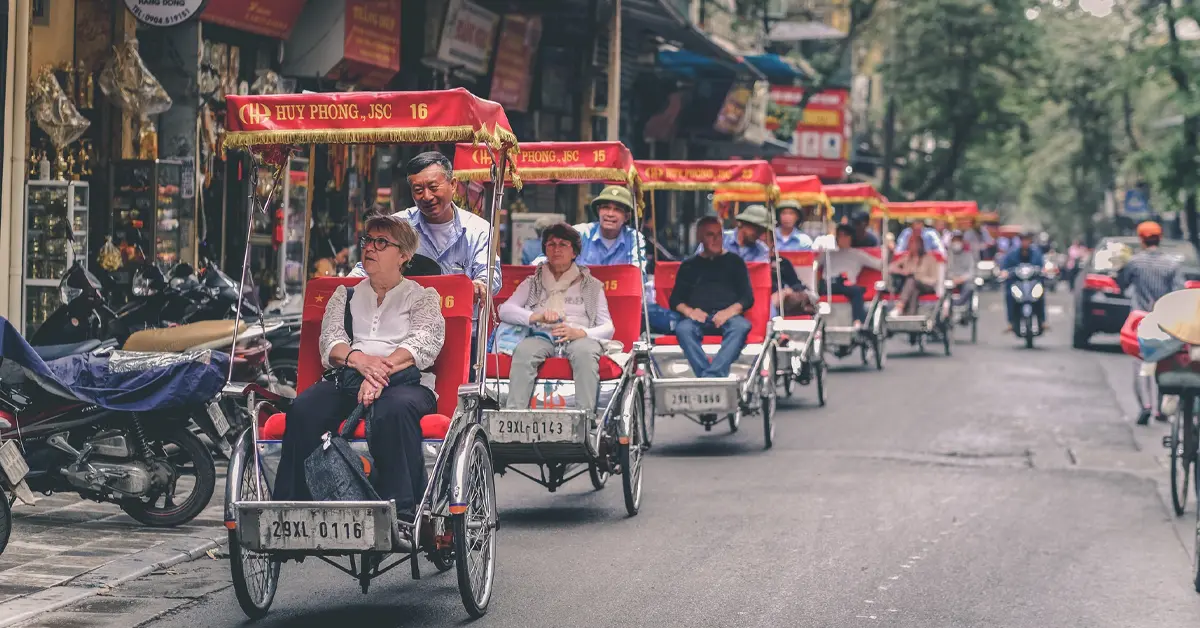
Entering a cyclo (xích lô) is like stepping into a time machine. As you settle into the cushioned seat, positioned ahead of the driver, the city opens up in a panoramic view that no car window can replicate. Here, the journey isn't about the destination; it’s about the vignettes of life that unfold at three miles per hour.
The Soul of the Streets: A Brief History of the Cyclo
The cyclo is more than just a novelty for travelers; it is a vestige of Vietnam’s complex history. Originally appearing in the late 1930s during the French colonial era, the xích lô (derived from the French cyclo-pousse) replaced the man-powered rickshaw. While the rickshaw required a runner to pull the passenger, the cyclo allowed the operator to pedal from behind, a design that was considered more "modern" and humane at the time.
By the mid-20th century, cyclos were the primary mode of transport for Hanoians. They hauled everything from wedding dowries and bags of rice to weary office workers and excited children. However, as motorbikes and taxis flooded the streets in the 1990s, the cyclo faced the threat of extinction. Today, it survives as a protected cultural icon.
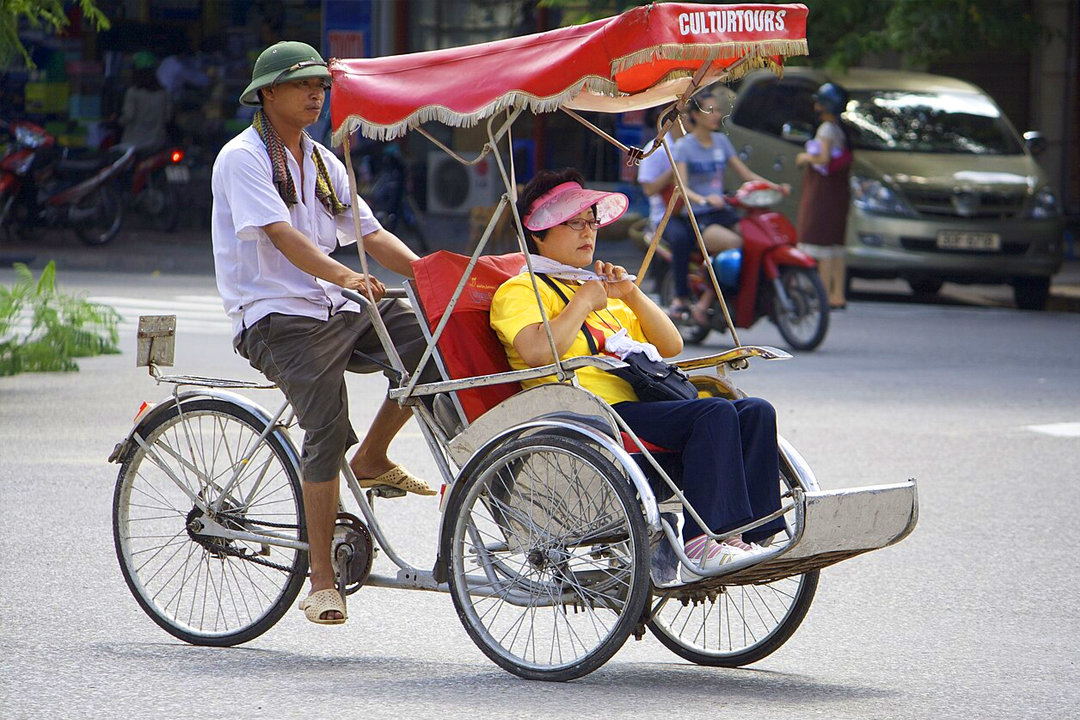
- The Front-Seat Perspective: Unlike a traditional trishaw where the driver is in front, the Vietnamese cyclo places the passenger at the very tip of the vehicle. This creates an immersive—and occasionally heart-racing—experience where you feel as though you are floating directly into the traffic.
- The "Slow-Mo" Filter: In a city that is modernizing at breakneck speed, the cyclo enforces a mandatory pace of reflection. It allows you to notice the yellowing plaster of a colonial villa or the specific scent of bún chả grilling on a street corner.
- Mechanical Simplicity: These are sturdy, heavy frames often decorated with polished chrome and colorful canopies to shield passengers from the erratic Hanoi sun or sudden tropical drizzles.
Choosing Your Path: Two Ways to See the City
Hanoi is a city of layers. Depending on which route you choose, you will see a completely different version of its history. Here are two curated routes that offer distinct perspectives on the capital.
Note: The above is a suggested itinerary from A21 Tours; the information is for reference only. The actual itinerary will change depending on customer needs and actual traffic conditions.
Route 1: The Imperial Path (Citadel & Grand Boulevards)
Route: Yen Phu – Cua Bac – Nguyen Tri Phuong – Hanoi Citadel – Ho Chi Minh Mausoleum - Thanh Nien - Yen Phu
This route is designed for those who appreciate space, greenery, and the weight of history. As you move away from the dense residential pockets of Yen Phu and head toward the Citadel, the streets widen significantly. This is a tranquil route. Moving down Nguyen Tri Phuong, you are flanked by towering rows of ancient trees and grand colonial architecture. It is the best way to see the Imperial Citadel of Thang Long, a UNESCO World Heritage site, without the claustrophobia of the downtown core. The air feels cooler here, and the traffic is noticeably lighter. You will also have the opportunity to admire one of the largest squares in Hanoi and the famous landmark - the Ho Chi Minh Mausoleum. Finally, you will travel along the most picturesque route in Hanoi, situated between the city's two famous lakes - Truc Bach Lake and West Lake. We especially recommend choosing this route in the afternoon to witness the spectacular sunset. If you are looking for the vibrant street life, the vendors, and the chaotic charm of the markets, this route might feel a bit too sanitized or quiet.
Route 2: The Heartbeat of the Old Quarter
Route: Yen Phu – Tran Nhat Duat – Tran Quang Khai – Le Phung Hieu – Ngo Quyen – Trang Tien – Dinh Tien Hoang – Le Thai To – Hang Khay – Dinh Tien Hoang – Hang Dau – Cau Go – Tran Quang Khai.
If you want the quintessential Hanoi experience, this is the route to take. It loops through the most famous landmarks and the bustling Old Quarter. This route is a sensory explosion. You will glide past the iconic Trang Tien Ice Cream shop, navigate the perimeter of Hoan Kiem Lake, and dive into the labyrinth of the Old Quarter. Streets like Hang Khay and Cau Go provide a front-row seat to the daily theater of Hanoi: vendors balancing poles of fruit, locals sipping coffee on tiny plastic stools, and the intricate architecture of the "tube houses." But compare to Route 1, it's busier much. You will be surrounded by motorbikes, and the noise levels are high. Because it passes through the primary tourist hubs, the pace can occasionally be slowed by traffic congestion.
While the prices for these routes are often comparable, your choice depends on your mood. Choose Route 1 for a peaceful, historical survey; choose Route 2 if you want to feel the city's pulse.
Navigating the Logistics: Pricing and Negotiation
One of the most common questions travelers have is: How much should this cost?
In Hanoi, cyclo prices are rarely fixed. They operate on a sliding scale influenced by several factors:
- Duration: Most drivers charge by the hour or by a specific pre-agreed loop.
- Location: If you pick up a cyclo directly in front of Hoan Kiem Lake or in the upscale Yen Phu area, expect to pay a premium. These are high-demand zones.
- Negotiation Skills: This is where things get tricky.
For international visitors, negotiating can be a daunting task. Most cyclo drivers are of an older generation; they are incredibly hardworking and kind, but many do not speak fluent English. Misunderstandings regarding the final price or the exact destination are common.
To avoid the "sticker shock" or the awkwardness of a mid-trip price dispute, many travelers now book their cyclo tours through reputable travel agencies.
Why choose an agency?
- Price Transparency: You pay a fixed fee upfront, which usually covers the driver's tip and the booking fee.
- Quality Control: Agencies typically vet their drivers to ensure they follow safe routes and maintain their vehicles well.
- Ease of Communication: The agency acts as the translator, ensuring the driver knows exactly where you want to go and how long you want to spend there.
A21 Tours currently offers a one-hour cyclo tour specifically for international tourists. With an optimally designed itinerary, professional drivers, and 24/7 messaging support, the tour will provide a fantastic experience for customers wishing to explore Hanoi. You can also contact us anytime for further advice if you would like a personalized tour itinerary. Check it out here
Finnaly, the cyclo offers something that no other transport can: a chance to belong to the city rather than just passing through it. You aren't shielded by glass or pushed by a motor; you are part of the breeze, the noise, and the history. If you find yourself in Hanoi, take an hour. Put your phone away, sit back, and let the city reveal itself to you, one pedal stroke at a time.