Ho Chi Minh City to Phu Quoc Travel Guide: Flights, Ferries & VIP Sleeper Tips
Overview
In 2026, Phu Quoc has solidified its status as a "Special Economic Zone," attracting a record-breaking volume of both domestic and international tourists. Travel demand from HCMC—the primary transit hub—is at an all-time high, driven by the island’s visa-free policy for foreigners and the opening of several "mega-resorts" in the North and South.
The route is no longer just for weekenders; it has become a staple for digital nomads and "bleisure" (business + leisure) travelers. During peak months (November to April), airlines operate nearly 30 flights daily, while the land-to-sea routes via Rach Gia and Ha Tien have seen a 25% increase in capacity thanks to the deployment of larger, "double-deck" high-speed ferries.
The logistical challenge of reaching Phu Quoc lies in its location in the Gulf of Thailand.
- By Air: The direct flight covers approximately 300 km (186 miles) with duration is about 1 hour.
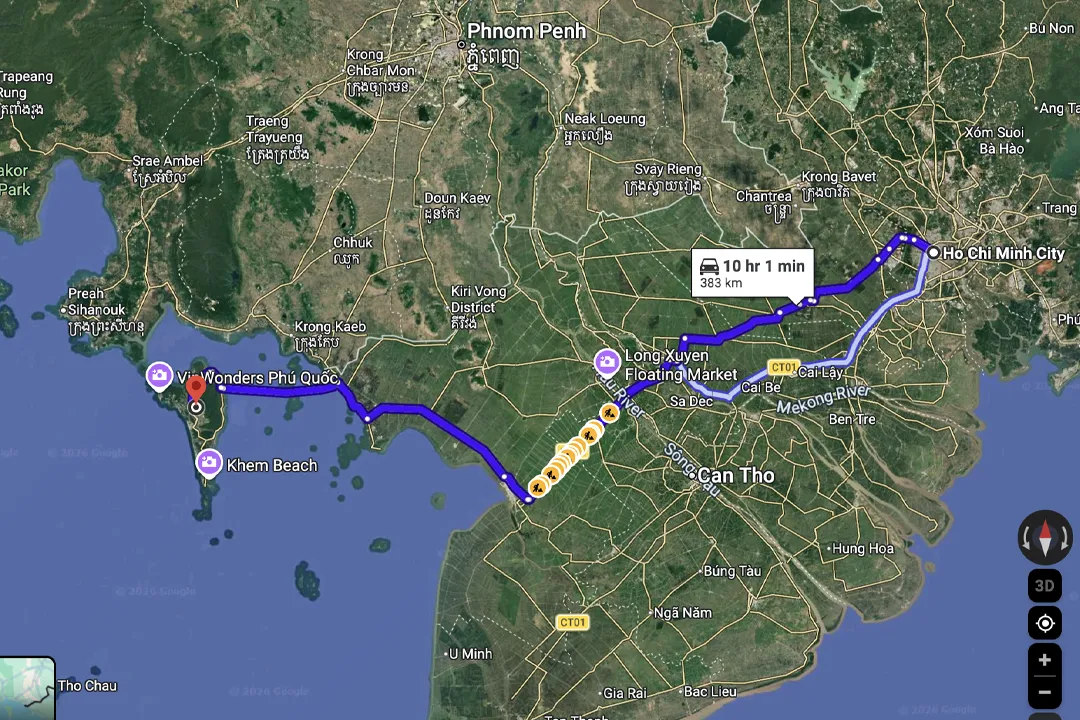
- By Land & Sea: The road journey to the coastal ports of Kien Giang province covers 270 km to 340 km, followed by a ferry crossing.
Popular Modes of Transportation
1. Airplane: The Premium Shortcut
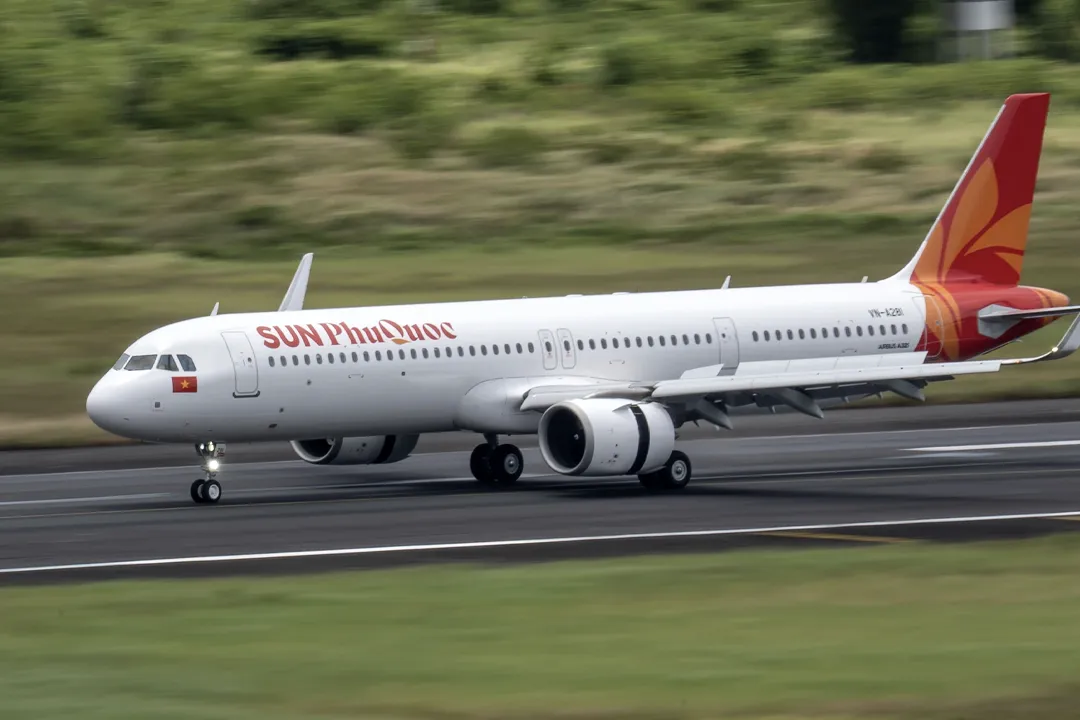
Flying remains the most efficient way to travel. Phu Quoc International Airport (PQC) is now one of the most modern in Vietnam, capable of handling large-scale international arrivals. You can choose between Vietnam Airlines (Offers the most consistent schedule and "full-service" experience), VietJet Air & Vietravel Airlines (Ideal for budget travelers; frequent promotions make tickets highly competitive), Bamboo Airways (Known for premium service at a mid-range price point).
Advantages: It is the only way to get from the city center to the beach in under 4 hours door-to-door. In 2026, with the high frequency of carriers like Vietnam Airlines and VietJet, you have a flight option almost every hour.
Disadvantages: It is significantly more expensive, especially during peak seasons like Tet or summer. You also miss out on the shifting scenery of the Mekong Delta.
2. Private Car + Ferry: The Flexible Road Trip
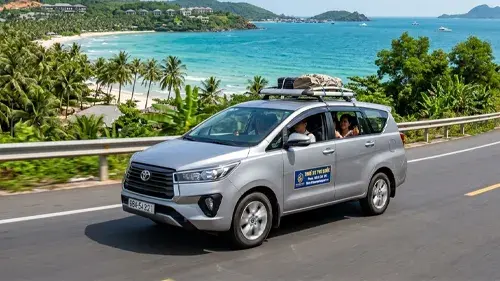
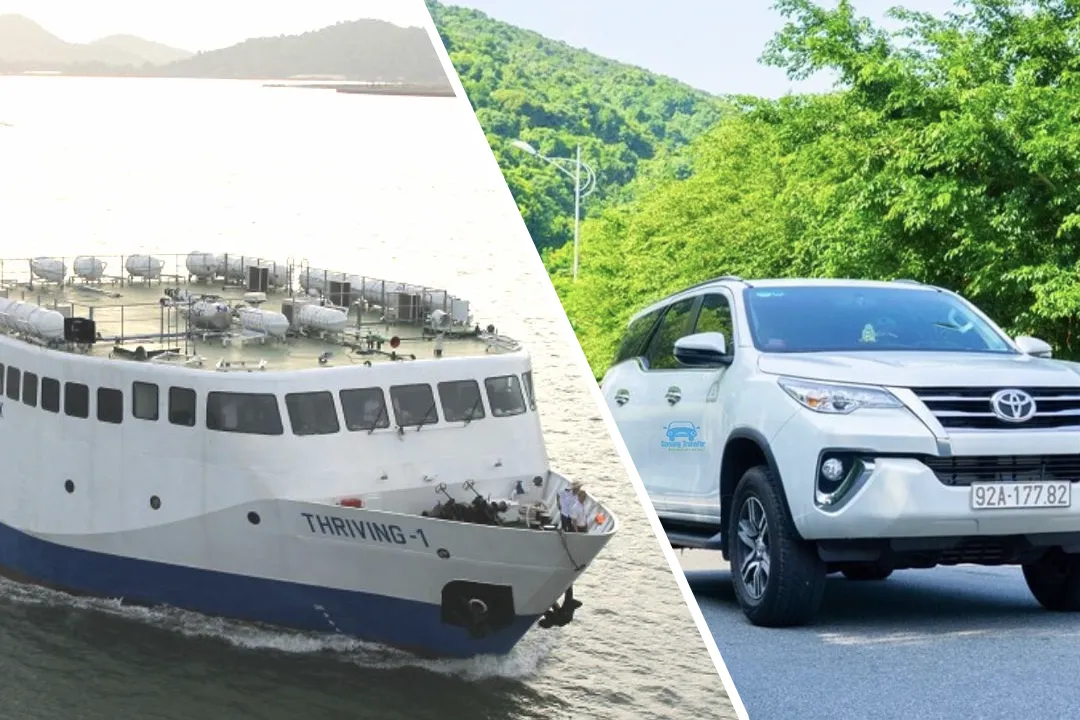
For families or groups who enjoy the journey as much as the destination, hiring a private car or self-driving is the "Gold Standard" for autonomy. Most private cars now utilize the My Thuan - Can Tho Expressway and the Lo Te - Rach Soi highway, which has dramatically reduced the travel time to the Rach Gia ferry terminal.
The distance from the center of Ho Chi Minh City to Rach Gia ferry terminal is approximately 240km, taking about 4-5 hours to travel, while the distance from the center of Ho Chi Minh City to Ha Tien ferry terminal is approximately 300km, taking about 6-6.5 hours to travel. Then, depending on which route you choose, the ferry-travel time will range from 1 to 2.5 hours.
Advantages: This is a popular option among passengers due to its flexibility. Hiring a private car allows you to control your departure time and saves travel time as the vehicle will travel directly to the ferry terminal, enabling you to catch the earliest ferry of the day. Private cars also offer door-to-door service, making them ideal if you have a lot of luggage or are traveling with your children. Privacy is also a major advantage.
Disadvantages: However, private car rentals are more expensive and not suitable for solo travelers.
3. Sleeper Car (VIP Limousine) + Ferry: The Modern Nomad's Choice
Please note that there is currently no direct road connection to Phu Quoc Island. Therefore, the journey usually involves traveling by bus or private car to Rach Gia/Ha Tien, then continuing by speedboat or ferry to the island, resulting in significantly longer travel times compared to flying. From Saigon to Phu Quoc by road, you can choose from two popular routes: Saigon – Rach Gia – Phu Quoc or Saigon – Ha Tien – Phu Quoc. The Ha Tien route is often preferred by tourists due to the shorter ferry/boat leg to the island.
Saigon - Rach Gia - Phu Quoc Route
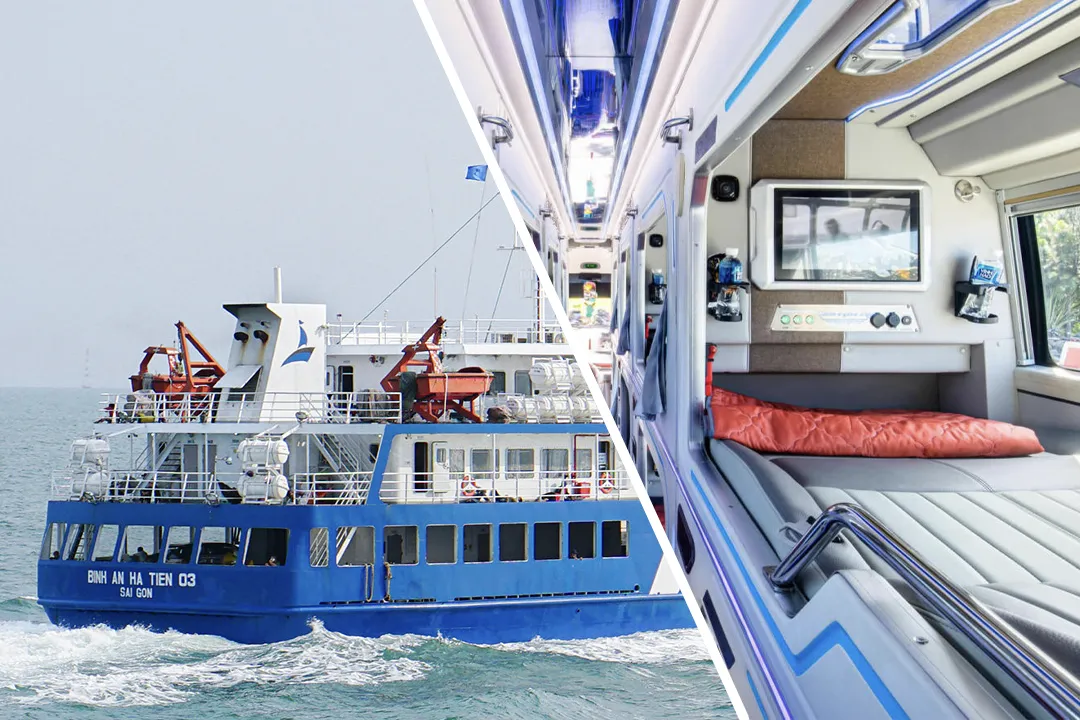
The distance from Saigon to Rach Gia is approximately 230km, and the travel time is usually 5-6 hours. The most common mode of transport on this route is by bus, with estimated ticket prices around $10~12 USD (200,000 to 300,000VND) per trip. For a more comfortable journey, you should prioritize choosing a sleeper bus/cabin bus for easier rest and consider departing at a suitable time to conveniently connect to the ferry to the island. At the same time, you should inquire in advance with the bus company about transfer services to Rach Gia ferry terminal to save time and avoid extra costs. Upon arriving in Rach Gia, you need to continue your journey by high-speed ferry or boat to Phu Quoc Island. At Rach Gia ferry terminal, several companies operate this route, such as Phu Quoc Express, Superdong, Hoa Binh Ship, and Thanh Thoi ferry, allowing travelers to easily choose a suitable schedule.
The high-speed ferry journey from Rach Gia to Phu Quoc usually takes about 2-2.5 hours. Estimated ticket prices range from $12-15USD (270,000 to 340,000VND) per trip, depending on the ferry company and the time of booking.
Saigon - Ha Tien - Phu Quoc Route
Traveling the Saigon - Ha Tien - Phu Quoc route beginning with a 6 to 7-hour bus journey that typically costs between $9.50 and $11.40 (250,000 – 300,000 VND) depending on the operator and booking time. Upon arrival at the Ha Tien terminal, the sea crossing to the island is notably shorter than other routes, taking only 1 to 2 hours. Travelers opting for a speedboat with reputable companies like Superdong or Ngoc Thanh can expect to pay approximately $8.15 to $8.75 (215,000 – 230,000 VND) per trip. Alternatively, the ferry departing from Thanh Thoi terminal to Da Chong port is an excellent choice for those wishing to bring a personal car or motorbike due to its larger capacity; these ferry fares are estimated at $7.00 (185,000 VND) for adults and $4.75 (125,000 VND) for children.
Advantages: It is extremely budget-friendly. By taking an overnight sleeper bus, you also save the cost of one night’s hotel accommodation. If you travel via Ha Tien, you can even bring your own motorbike or car on a large ferry.
Disadvantages: It is extremely budget-friendly. By taking an overnight sleeper bus, you also save the cost of one night’s hotel accommodation. If you travel via Ha Tien, you can even bring your own motorbike or car on a large ferry.
In 2026, a few standout operators have perfected the logistics of the HCMC-to-ferry trek. Futa Bus Lines (Phuong Trang) continues to be the most reliable network in the region, largely thanks to their dedicated shuttle service that ensures you aren't left stranded at the terminal when your ferry is about to depart. For those prioritizing the Ha Tien route, Kumho Samco remains a popular pick for their modern limousine cabins, while Thien Thanh and Khai Nam have carved out a niche for the "luxury-first" crowd with specialized formats featuring only 20–22 pods per bus, offering a level of privacy that makes the long-haul feel like a private suite.
Conclusion: Which Should You Choose?
Choosing between air travel and bus/ferry travel for the Ho Chi Minh City – Phu Quoc route in 2026 largely depends on your priorities regarding time, budget, and experience.
Below is a detailed comparison table:
| Airplane | Bus + Ferry | Private Car + Ferry | |
| Total Travel Time | ~4 hours (including airport time) | 10 – 12 hours | 8-8.5 hours |
| Directness | Direct to Phu Quoc (PQC) | Requires transfer at Rach Gia or Ha Tien | Requires transfer at Rach Gia or Ha Tien |
| Est. Cost (USD) | $45 – $110 (One-way) | $20 – $30 (Total per person) | $150 + $15 (ferry tickets) |
| (Comfort Level | High (Quick & modern) | Moderate (budget friendly, but longer travel time) | Moderate (private, longer travel time) |
| Best For | Families, short vacations, business. | Backpackers, budget travelers, road-trippers. | Families, short vacations, business, want to bring personal vehicle to Phu Quoc |