Ho Chi Minh City Landmarks Guide: Opening Hours, Tickets ad more (2026)
Overview
Visiting the top sights in Saigon (the common local name for Ho Chi Minh City, especially District 1) looks simple on a map. However, the four most famous stops follow very different schedules. One closes in the late afternoon, another runs into the night, and one remains under long-term repair. Many travelers walk up to locked gates because they do not check the Ho Chi Minh City landmarks opening hours first. This guide gives you the exact schedule ranges, ticket costs, walking times, and best route order for 2026. Opening hours and ticket prices change, so check them before you go.
Quick Reference: Opening Hours, Tickets & Visit Times
Use this quick table on your phone to check the daily schedule and entry rules for each landmark before you leave your hotel.
| Landmark | Opening hours | Entry ticket | Time needed | Notes |
| Ben Thanh Market | Early morning to early evening (day); evening (night market) | Free to enter | 1 to 1.5 hours | Bring cash in VND; bargain politely at stalls. |
| Saigon Central Post Office | Early morning to evening, most days | Free | 20 to 30 minutes | Still a working post office; buy postcards inside. |
| Notre-Dame Cathedral Basilica | Exterior visible 24/7; interior access is limited | Free outside | 15 to 20 minutes | Under long-term restoration; scaffolding is common . |
| War Remnants Museum | Early morning to late afternoon, daily | Low-cost (around 40,000 VND) | 1.5 to 2 hours | Check for any midday lunch break ; strong war photos inside. |
How the Four Landmarks Connect
All four sights sit inside District 1, the central area of Saigon. You can easily see all of them in a single day if you group them by location.
The Notre-Dame Cathedral Basilica of Saigon and the Saigon Central Post Office stand right next to each other on Paris Commune Square. You only need two or three minutes to walk from the front doors of the post office to the church plaza. Because they share the same corner, you should always visit them together.
From that central square, Ben Thanh Market sits about 1.5 kilometers to the south. This walk takes around 20 minutes. The War Remnants Museum sits about 1.5 kilometers to the west of the post office, which takes around 20 to 25 minutes on foot. Between the market and the museum, the distance is about 2 kilometers, or a 25 to 30 minute walk.
The smartest route follows a straight line or a simple loop. Start at the War Remnants Museum in the morning, move to the Central Post Office and Notre-Dame Cathedral at midday, and finish at Ben Thanh Market in the late afternoon. You can also book a [Ho Chi Minh City private car tour] to skip the midday heat between stops.
Ben Thanh Market
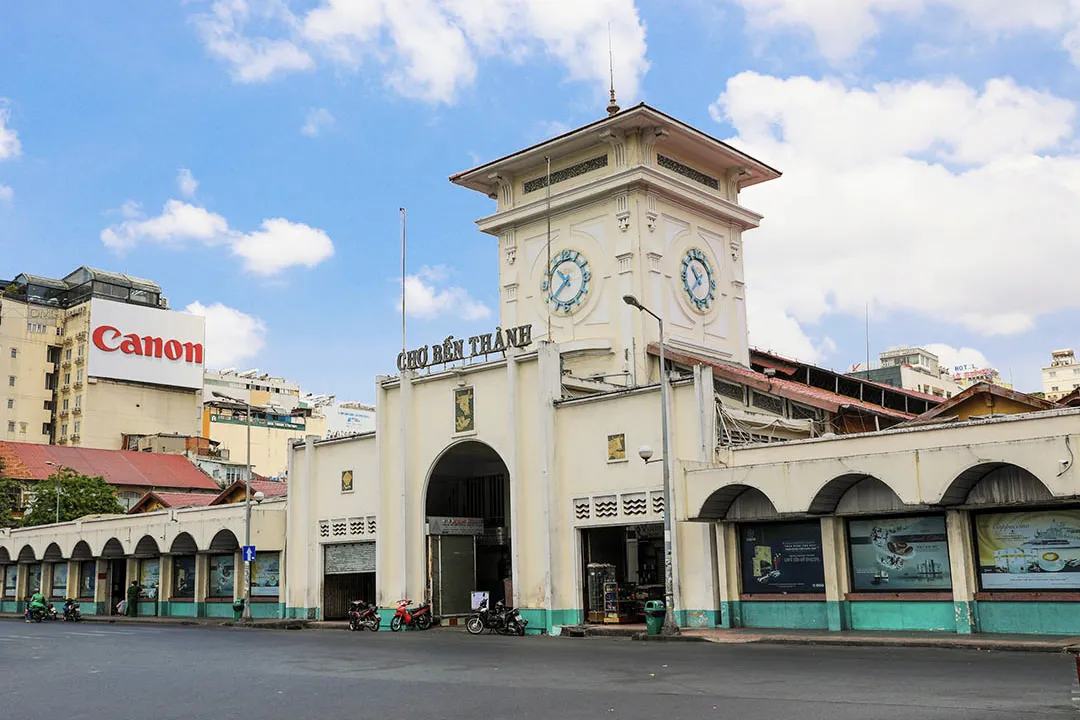
Located at a busy roundabout in the heart of District 1, Ben Thanh Market—known in Vietnamese as cho Ben Thanh ("cho" means market)—is the most famous shopping hall in the city. Built in the early 20th century, its large clock tower serves as a classic meeting point for travelers.
Opening hours
The market runs on two separate schedules every day. Understanding both helps you pick the right time for your visit.
- Day market: Vendors inside the main covered hall open from early morning to early evening . Most stalls start setting up around 7:00 AM and begin packing away around 6:00 PM . Morning is the best time for fresh coffee, local breakfast dishes, and quiet aisles.
- Night market: After the indoor hall closes, outdoor stalls open along the side streets next to the building. This night market runs in the evening and focuses on street food, cold drinks, t-shirts, and small souvenirs.
What to buy and eat, and how to bargain politely
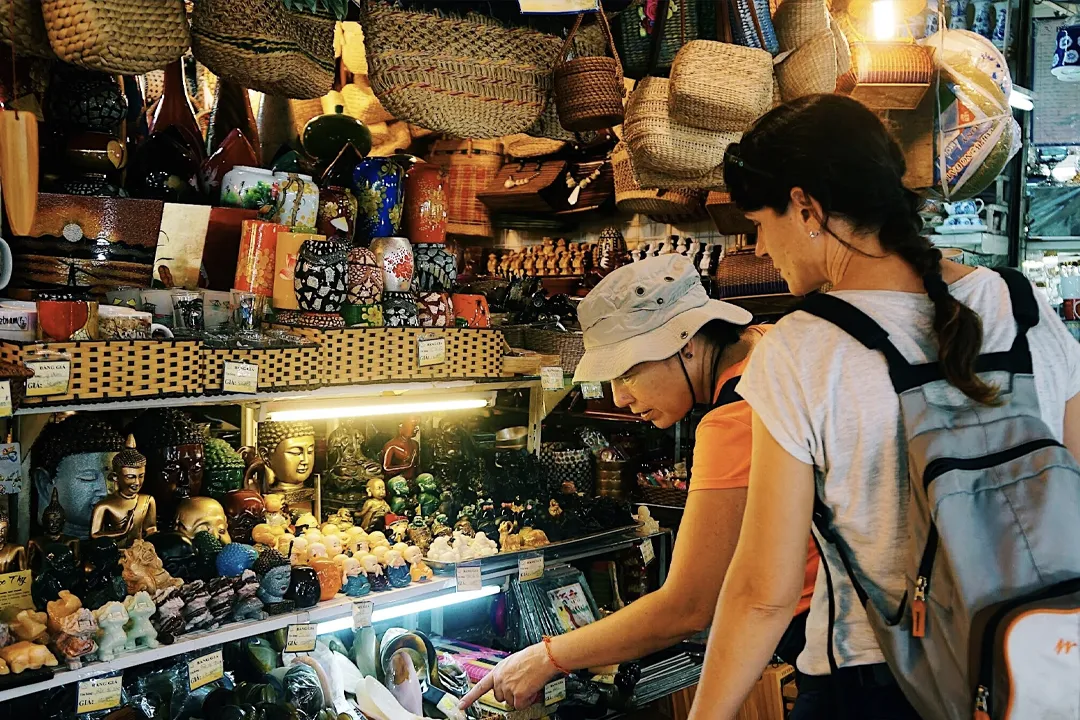
Inside cho Ben Thanh, narrow aisles hold hundreds of small stalls. You can buy roasted Vietnamese coffee beans, dried mango, cashews, lacquerware, conical hats, and custom-made clothing. Toward the back of the hall, a busy food section serves classic noodle soups, spring rolls, and iced milk coffee.
Prices inside the main hall are rarely fixed. Sellers expect polite bargaining, especially for clothes, bags, and souvenirs. Follow these simple steps to get a fair price:
- Ask for the price first before you touch or try on an item.
- Offer about 50% to 60% of the first price the seller gives you.
- Smile, stay friendly, and move slowly toward a middle price.
- Walk away calmly if the price stays too high; another stall two aisles away usually sells the exact same item.
Saigon Central Post Office
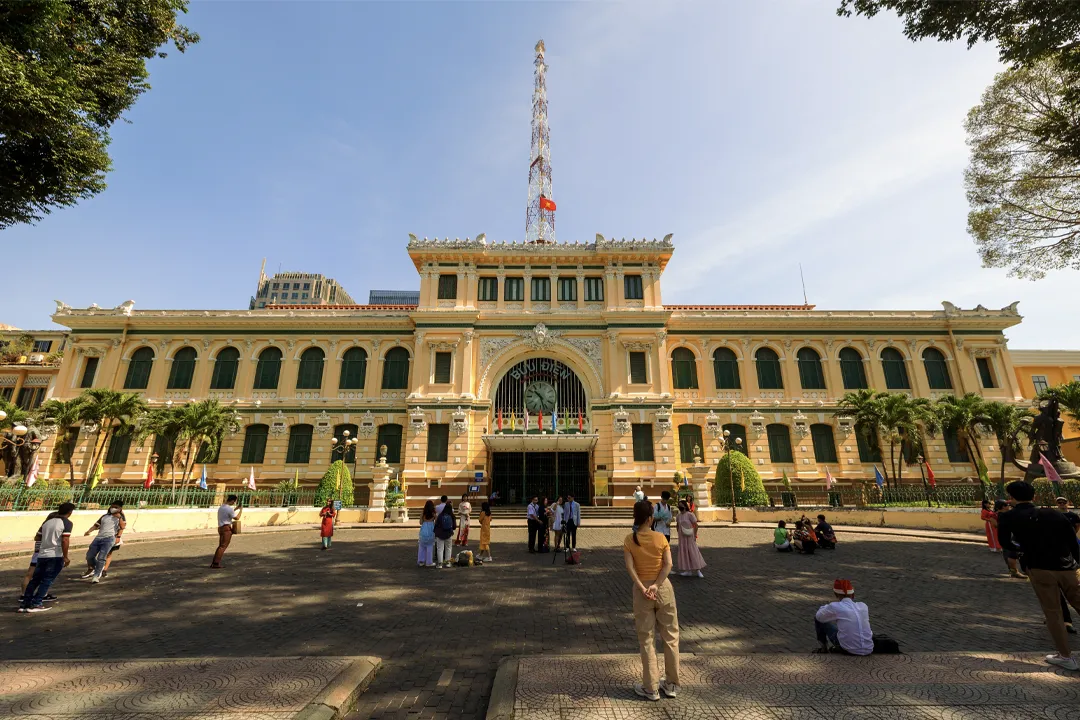
Just across the street from the cathedral stands the Saigon Central Post Office. Built in the late 19th century with a bright yellow facade and green shutters, this building is one of the finest examples of historic architecture in Vietnam.
Opening hours and entry ticket
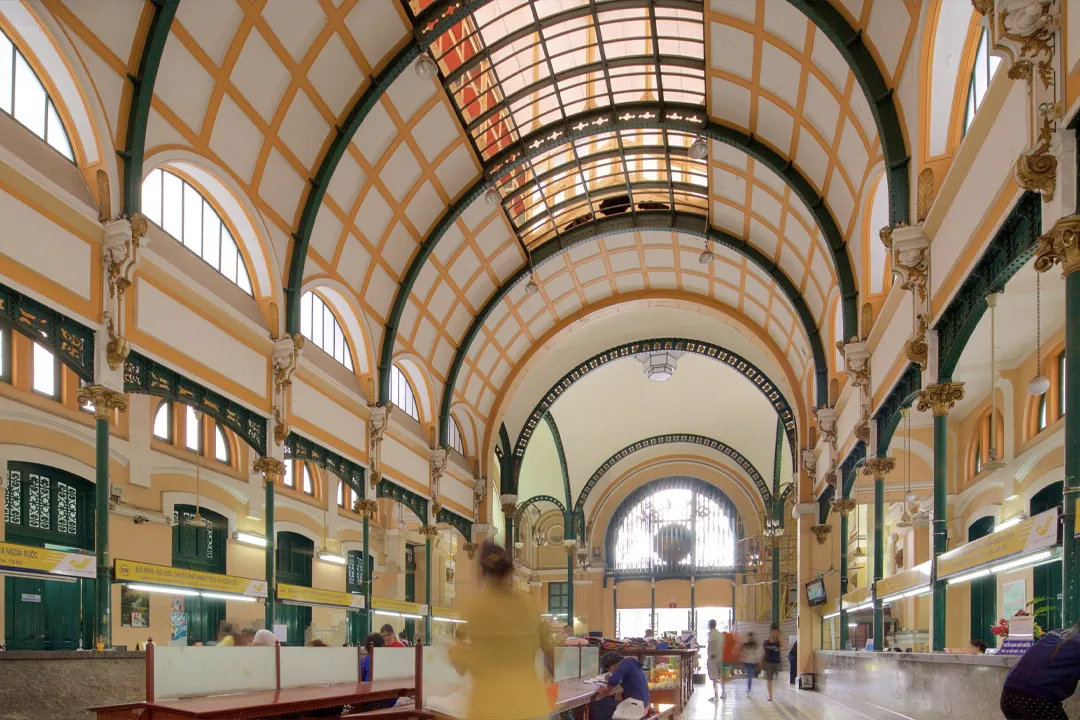
The Central Post Office stays open most days from early morning to evening . Because it operates as an active government service building rather than a private museum, hours can shift slightly on weekends or public holidays.
Entry into the main hall is completely free. You do not need to buy a ticket or stand in an entry line. Just walk through the open front doors and look around.
What to see inside this working post office
When you step inside the Central Post Office, look up at the high arched iron roof and wide tiled floor. Two large painted historical maps hang on the side walls near the entrance, showing old telegraph lines and regional routes from southern Vietnam.
In the center of the hall, long wooden writing desks sit beneath classic brass lamps and old telephone booths. While tourists take photos in the middle aisle, local residents still line up at the side counters to mail letters, send parcels, and pay bills.
Before you leave, walk to the postal counter on the right side to buy a few postcards and local postage stamps. You can sit at the central wooden tables, write a quick note to your family back home, and drop it into the mail slot right there. Small souvenir stalls along the inside walls also sell magnets, paper models, and Vietnamese coins.
Notre Dame Cathedral of Sai Gon
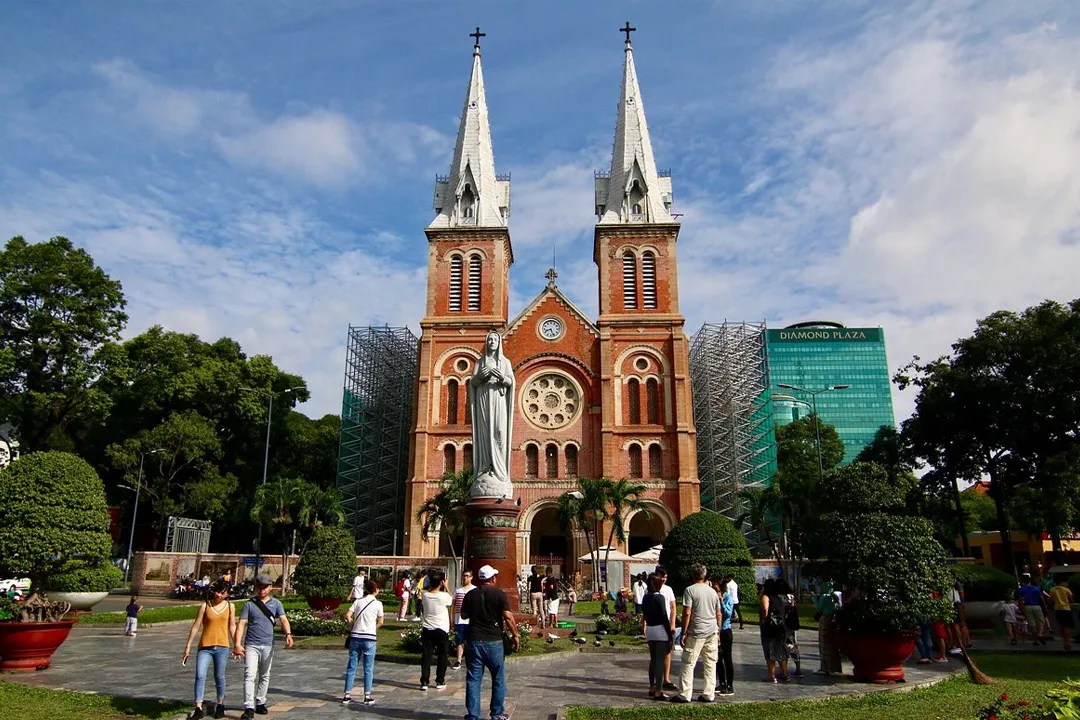
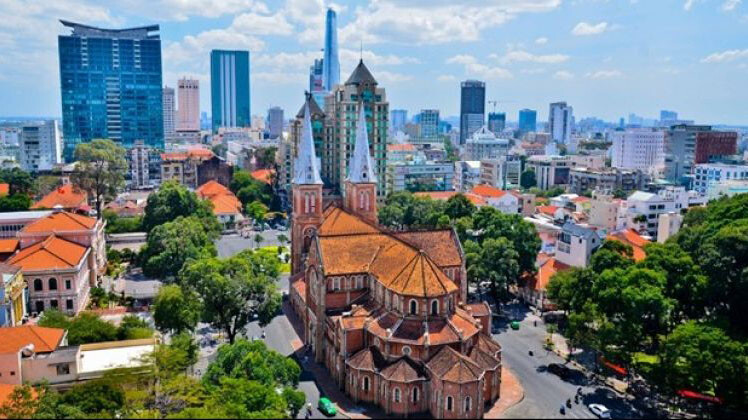
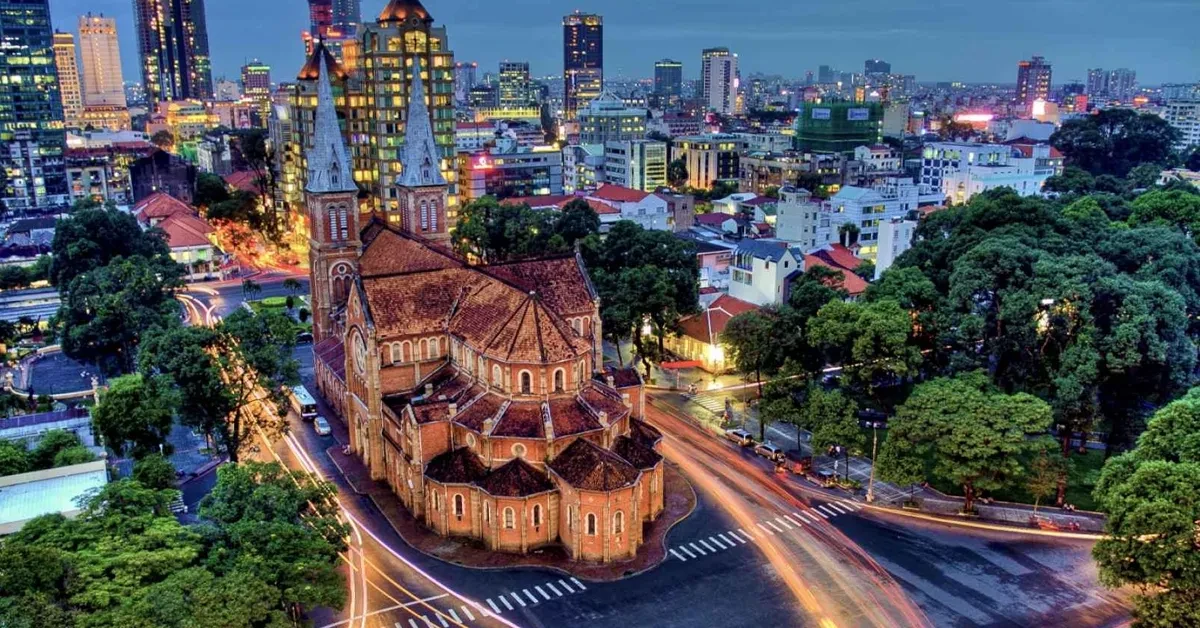
Standing directly beside the post office, the Notre-Dame Cathedral Basilica of Saigon is famous for its twin red-brick bell towers. French builders constructed the church in the late 1800s using bricks imported from Marseille.
Opening hours and entry ticket
Travelers must plan carefully for this landmark. The cathedral has been under long-term restoration for several years, and metal scaffolding often covers the towers and roof . Because of this ongoing repair work, interior access is frequently closed or limited to visitors
If the doors are open for special services or limited viewing, schedules are posted on a sign outside the main gate. You should check the official notice at the gate when you arrive . Even when the inside is closed, the exterior square is open 24 hours a day and costs nothing to visit.
War Remnants Museum
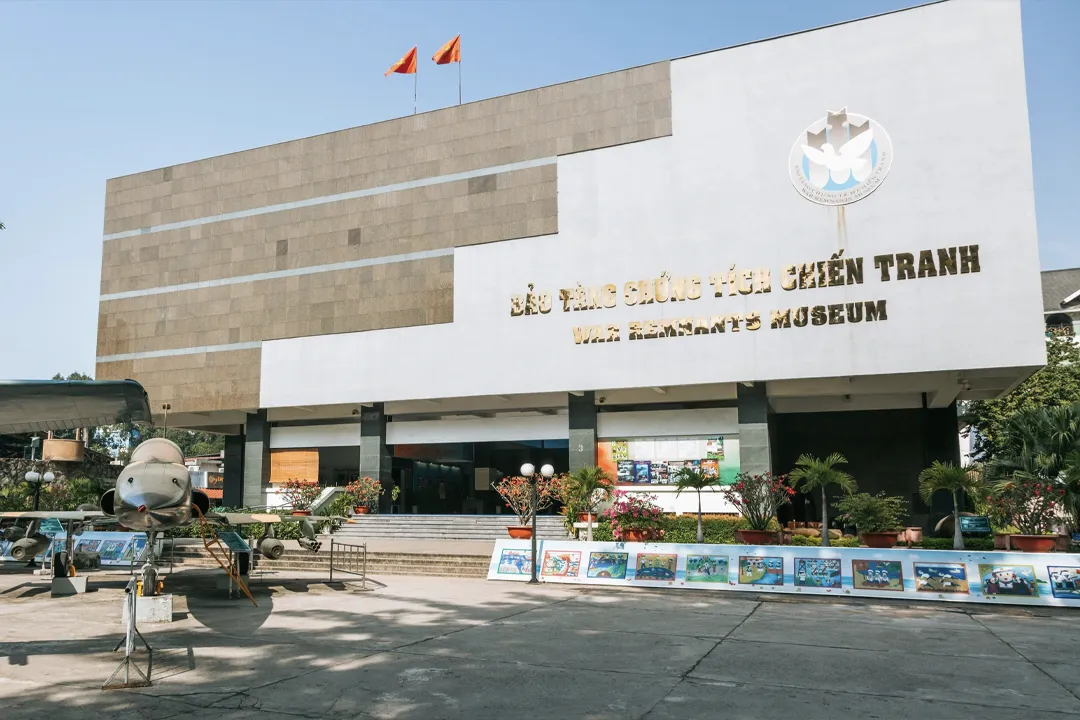
Located a short ride northwest of the cathedral, the War Remnants Museum is the most visited history museum in southern Vietnam. It documents the Vietnam War from the Vietnamese perspective through photographs, artifacts, and military equipment.
Opening hours and ticket price
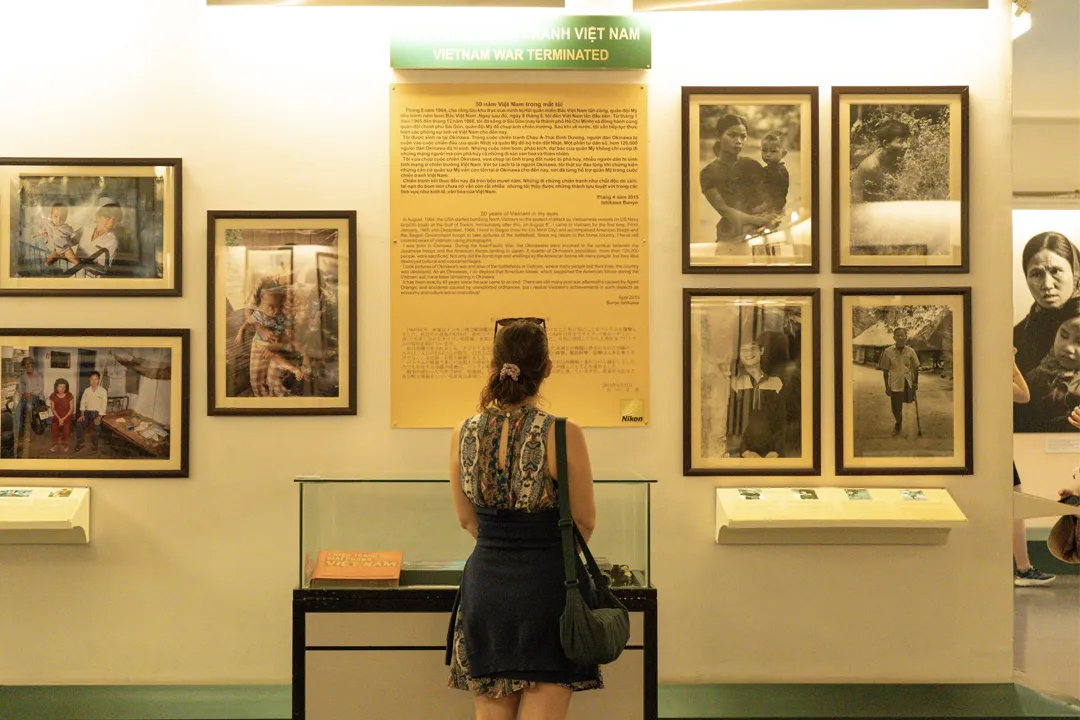
The museum opens daily from early morning to late afternoon . In past years, the ticket counter closed briefly around midday for a lunch break, so check the current schedule before arriving between 11:30 AM and 1:30 PM.
The War Remnants Museum ticket price is low-cost, usually around 40,000 VND per adult . Children and students often get a reduced rate or free entry . You buy paper tickets at the small booth just inside the main courtyard gate, and cash in VND is the easiest way to pay.
What you will see and how to prepare
Your visit starts in the large outdoor courtyard, which displays real American military planes, helicopters, tanks, and artillery pieces. Inside the main three-story building, different rooms cover the history of the conflict, international anti-war protests, and the long-term effects of Agent Orange.
A calm note for visitors: Many photo exhibits inside the Vietnam War Museum show graphic scenes of war injuries and chemical damage. These images are powerful and can upset young children or sensitive travelers.
Plan to spend 1.5 to 2 hours here so you do not have to rush. If the indoor galleries feel heavy, step outside into the shaded courtyard garden or visit the quiet coffee shop near the exit for a cold drink before moving on to your next stop. Many travelers pair this morning visit with a [Cu Chi Tunnels half-day tour] to get a fuller view of the region's history.
Can You Walk Between the Landmarks?
Yes, you can walk between all four landmarks, as the total loop covers less than 5 kilometers on flat city streets. However, Saigon is hot and humid all year, and traffic moves fast. Knowing the exact distances helps you decide when to walk and when to book a ride.
| Route | Approx. distance | Walking time | Best way to travel |
| Notre-Dame ↔ Central Post Office | 50 meters | 2 to 3 minutes | Walk — they sit side by side on the same square. |
| Post Office / Notre-Dame ↔ War Remnants Museum | 1.5 km | 20 to 25 minutes | Walk in the cool morning; use Grab after 10:00 AM. |
| Post Office / Notre-Dame ↔ Ben Thanh Market | 1.5 km | 20 minutes | Walk along shaded tree-lined streets like Dong Khoi or Pasteur. |
| Ben Thanh Market ↔ War Remnants Museum | 2 km | 25 to 30 minutes | Grab or taxi — this is the longest stretch with fewer shaded sidewalks. |
When to take a Grab or taxi instead
Grab is the main ride-hailing app in Vietnam, similar to Uber. You can book a clean, air-conditioned car or a motorbike taxi in seconds, and the app shows the fixed price in VND before you ride. A short trip between any of these landmarks usually costs very little and takes only 5 to 10 minutes depending on traffic.
Choose a Grab car over walking if it is raining, if the midday sun feels too strong between 11:00 AM and 3:00 PM, or if you are traveling with young kids or older family members. If you prefer traditional taxis, stick to trusted green or white metered brands like Mai Linh or Vinasun.
How to cross the street safely
Motorbikes fill every street in District 1, and crosswalks rarely stop traffic. To cross safely, wait for a small gap in the cars, step off the curb, and walk at a slow, steady pace. Never run, jump backward, or stop suddenly in the middle of the lane. Motorbike riders watch your path and will steer smoothly around you as long as your speed stays predictable.
Sample Day Plans for Your Visit
Because each landmark has different peak hours, ordering your stops well saves energy and keeps you out of the worst heat. Here are three simple schedules you can follow.
1. Half-day morning plan (finish before lunch)
This route works best if you have a flight later in the day or want to join a [Mekong Delta day trip] the next morning.
- Around 8:00 AM: Start at the War Remnants Museum right after it opens to beat the large tour buses. Spend about 90 minutes exploring the courtyard and main halls.
- Around 9:45 AM: Take a 5-minute Grab ride or walk 20 minutes to Notre-Dame Cathedral. Walk around the square and take photos of the red-brick towers.
- Around 10:15 AM: Step next door into the Saigon Central Post Office. Admire the arched roof, look at the old maps, and mail a postcard.
- Around 11:00 AM: Walk 10 minutes to a nearby cafe for Vietnamese iced coffee and banh mi before the lunch rush begins.
2. Half-day afternoon and evening plan
Pick this plan if you arrive in Saigon around lunchtime and want to enjoy the cooler evening air.
- Around 3:00 PM: Begin at the Central Post Office when the afternoon sun starts to soften. Spend 30 minutes inside the main hall.
- Around 3:30 PM: Walk across the plaza to see Notre-Dame Cathedral in the warm late-afternoon light.
- Around 4:00 PM: Stroll 20 minutes down toward Ben Thanh Market. Browse the indoor stalls for coffee, dried fruit, and souvenirs before the day market packs up.
- Around 6:00 PM: Step outside as the indoor hall closes and grab dinner at the Ben Thanh night market food stalls.
Still haven’t decided on the right itinerary? Check out the half-day Ho Chi Minh City sightseeing tour from A21 Tours now!3. Full-day relaxed plan
If you have a full day in District 1, spread the stops out with a long lunch break indoors.
- Around 8:30 AM: Visit the War Remnants Museum first while the air is still fresh.
- Around 10:30 AM: Walk or ride to the Central Post Office and Notre-Dame Cathedral for photos and a quick look inside the post office.
- Around 12:00 PM: Enjoy a relaxed sit-down lunch in an air-conditioned restaurant near Dong Khoi Street to escape the peak midday heat.
- Around 3:30 PM: Head to Ben Thanh Market in the late afternoon to shop, bargain politely, and try local street snacks.
Want to visit more places throughout the day? Check out A21 Tours' Ho Chi Minh all-day car rental service.
Practical tips for exploring Ho Chi Minh City
- Pick the right time of day: Early morning (7:30 AM to 10:00 AM) and late afternoon (after 3:30 PM) offer the best light for photos and much cooler temperatures for walking.
- Dress respectfully: Wear light, breathable cotton clothes for the heat, but bring a light scarf or shirt with sleeves if you plan to enter the cathedral or show respect at the war museum.
- Carry small cash bills: Keep 10,000, 20,000, and 50,000 VND notes handy for museum tickets, bottled water, postcards, and market snacks. Many street vendors cannot break a 500,000 VND note.
- Protect yourself from sun and rain: Bring sunscreen, sunglasses, a refillable water bottle, and a compact umbrella. Saigon has a tropical rainy season (roughly May to November ), when short, heavy afternoon showers happen almost daily.
- Keep valuables secure: District 1 is generally safe, but phone snatching can happen near busy curbs. Hold your phone with two hands when checking maps on the sidewalk, and step away from the road edge.
- Consider a private car: If you are traveling with seniors, young children, or heavy luggage before a flight, arranging a [Saigon airport transfer] or half-day car keeps everyone cool and comfortable.
FAQs
What are the opening hours of the main landmarks in Ho Chi Minh City?
How much is the War Remnants Museum ticket?
Is the Central Post Office free to enter?
Can you go inside Notre-Dame Cathedral in Ho Chi Minh City now?
What time does Ben Thanh Market close, and when does the night market start?
Can you walk between Ben Thanh Market, the Post Office, Notre-Dame and the War Remnants Museum?
Plan Your Saigon Sightseeing Route
Checking the Ho Chi Minh City landmarks opening hours before you step out of your hotel prevents wasted trips and helps you beat the afternoon heat. Start your morning at the War Remnants Museum, move next door between the Central Post Office and Notre-Dame Cathedral at midday, and save Ben Thanh Market for late-afternoon shopping and dinner. If you want a stress-free schedule with an English-speaking driver or local guide, take a look at the itineraries from A21 Tours below.