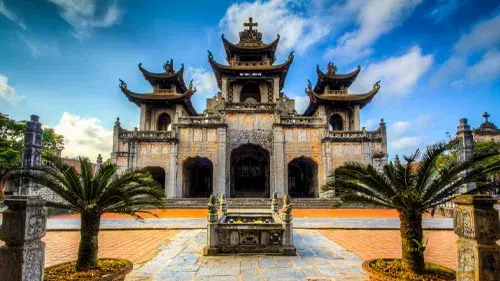
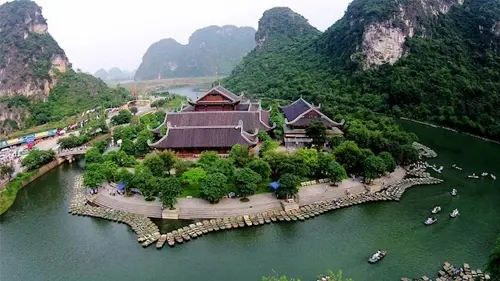
The rhythmic footsteps echo along a kilometer‑long corridor lined with 500 stone Arhats, each frozen in a unique expression of peace, laughter, or meditation. Overhead, the sound of a 36‑ton bronze bell drifts across the valley, calling pilgrims to prayer. In the distance, a 100‑ton bronze Buddha sits on a lotus throne, gazing serenely over the rice fields and limestone peaks.
This is Bai Dinh Pagoda, the largest Buddhist complex not only in Vietnam but in all of Southeast Asia. Located in the heart of the UNESCO‑listed Trang An Scenic Landscape Complex, just 100 kilometers south of Hanoi, Bai Dinh is a world where ancient faith and modern ambition meet on an epic scale. From the colossal golden statues to the ancient cave pagoda hidden in the cliffs, Bai Dinh is a place that overwhelms the senses and calms the spirit. If you've never set foot here, here are the reasons to change that.
Overview
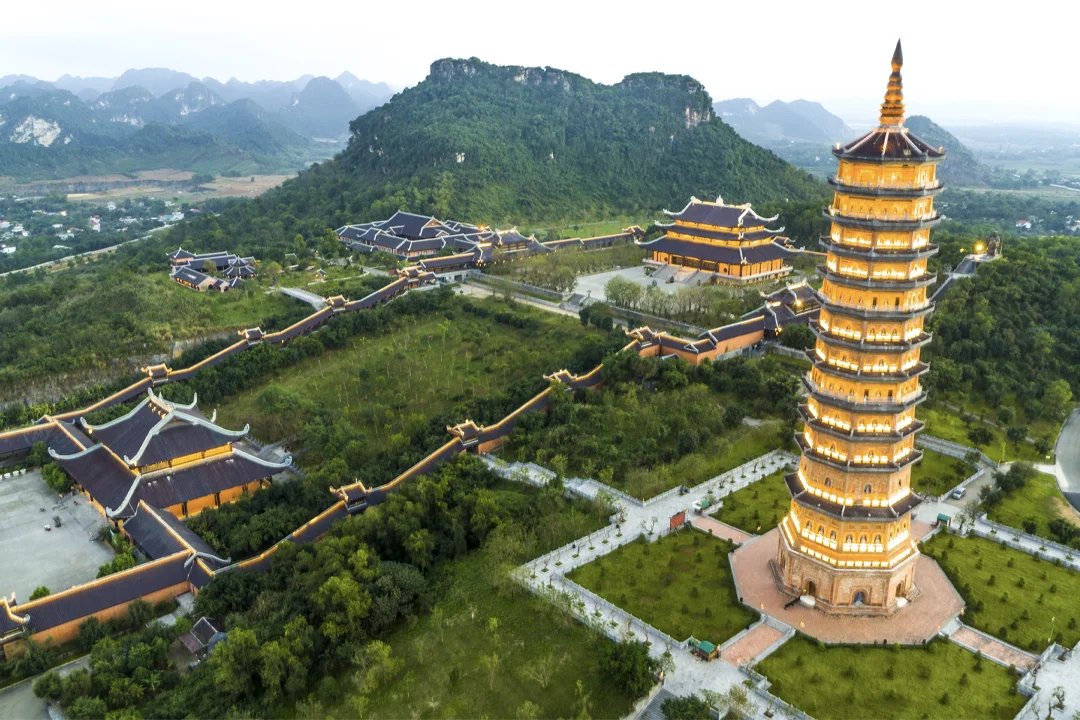
Bai Dinh Pagoda is located in Gia Sinh Commune, Gia Vien District, Ninh Binh Province, approximately 95–100 kilometers south of Hanoi, 12–15 kilometers from Ninh Binh City, and just 5 kilometers from the Hoa Lu Ancient Capital.
The climate is typical of northern Vietnam. The best time to visit is from January to March, during the dry spring season, when the weather is mild, clear, and perfect for climbing the many steps and exploring the vast grounds. This period also coincides with the Bai Dinh Festival, which begins on the sixth day of the Lunar New Year. For those seeking tranquility, weekdays or early mornings (before 9:00 AM) offer a more peaceful experience.
What makes this place truly unique is its dual identity. Unlike most pagodas, Bai Dinh consists of two separate complexes. The New Bai Dinh Pagoda, built between 2003 and 2010, is a sprawling, monumental complex covering 700–1,000 hectares. Approximately 800 meters to the south lies the Ancient Bai Dinh Pagoda (Bai Dinh Co Tu) , a 1,000‑year‑old temple hidden in a mountain cave, founded by the legendary Zen master Nguyen Minh Khong. Bai Dinh is a place where the past and the present stand side by side, each offering a different kind of spiritual encounter.
Top Attractions
The New Bai Dinh Pagoda: A "City of Temples"
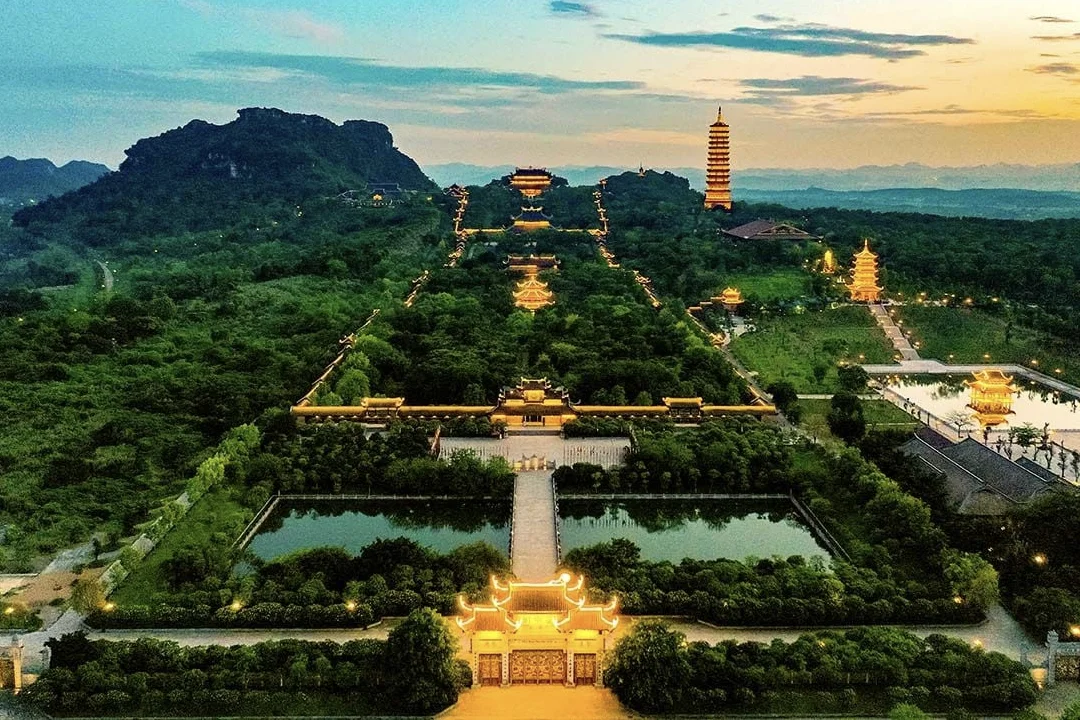
The new pagoda is an ambitious architectural vision. It was designed by the Xuan Truong Construction Company on the foundation of the ancient temple and opened in 2010. The experience begins long before you reach the main halls, as the complex is so vast that most visitors take an electric buggy from the entrance.
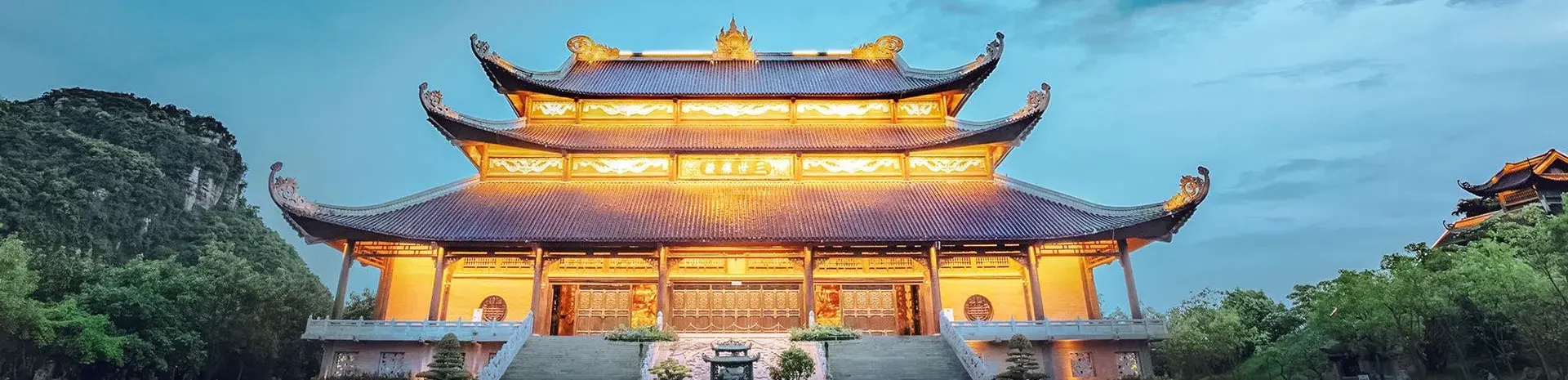
Tam The Hall (Tam The Palace): This is the spiritual heart of the new pagoda. It is a massive three‑chambered building perched on a high hill at 76 meters above sea level. Inside, three colossal bronze statues represent the Buddhas of the Past, Present, and Future. Each statue is 10 meters high and weighs a staggering 50 tons. The hall is decorated with intricate gilded carvings of dragons and lotus flowers.
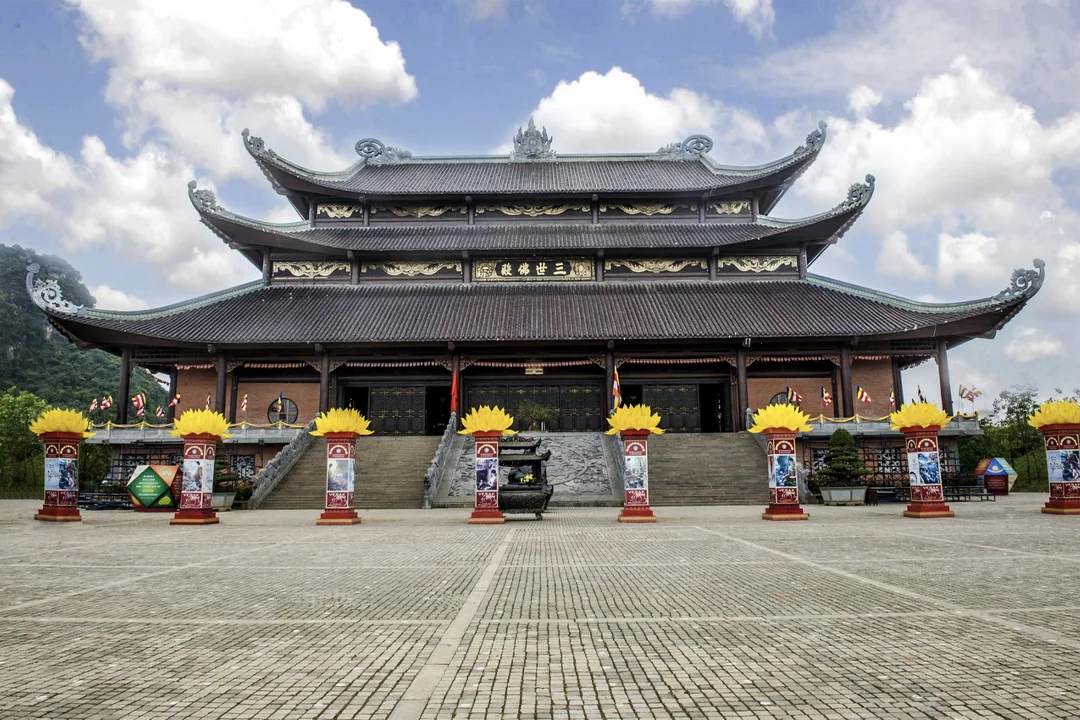
Phap Chu Hall (Shakyamuni Buddha Hall): This is an imposing imitation‑wooden building with a curved two‑layer roof. It houses the largest bronze Buddha statue in Vietnam. The statue is 10 meters tall and weighs 100 tons, recognized by the Vietnam Guinness Book of Records in 2006 as the tallest and heaviest bronze depiction of Shakyamuni Buddha in the country.
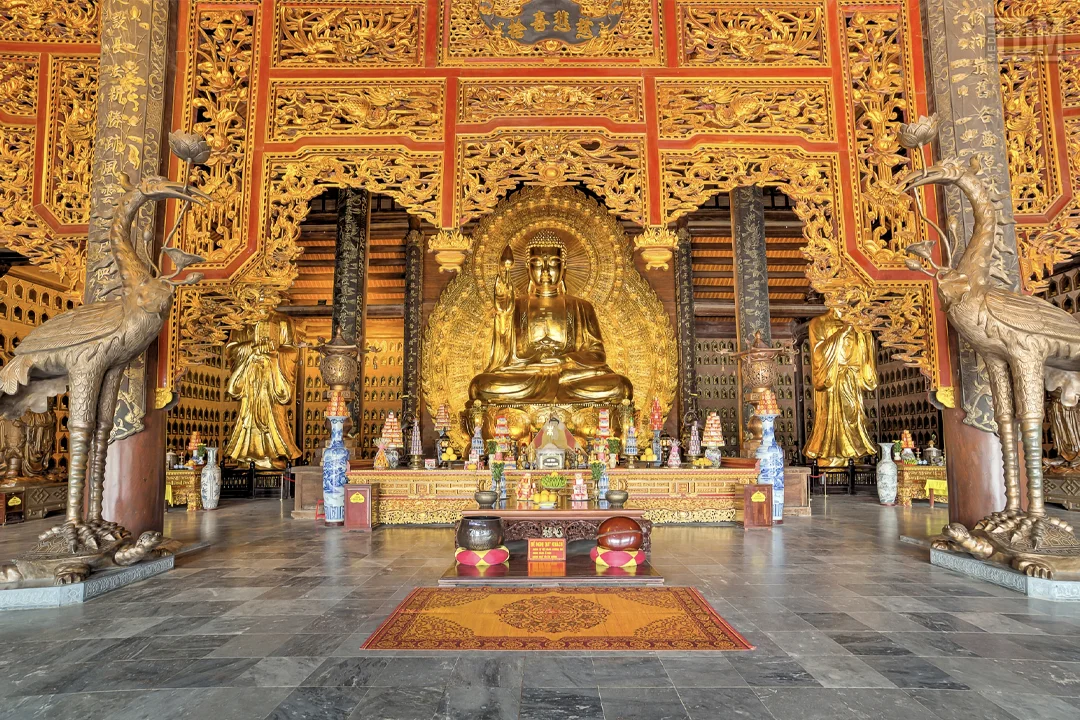
Bodhisattva Avalokitesvara Temple: A wooden building with five main chambers containing a stunning 10‑meter‑high bronze statue of the Bodhisattva of Compassion, depicted with a thousand eyes and a thousand arms. This 40‑ton statue is considered the largest of its kind in Vietnam.
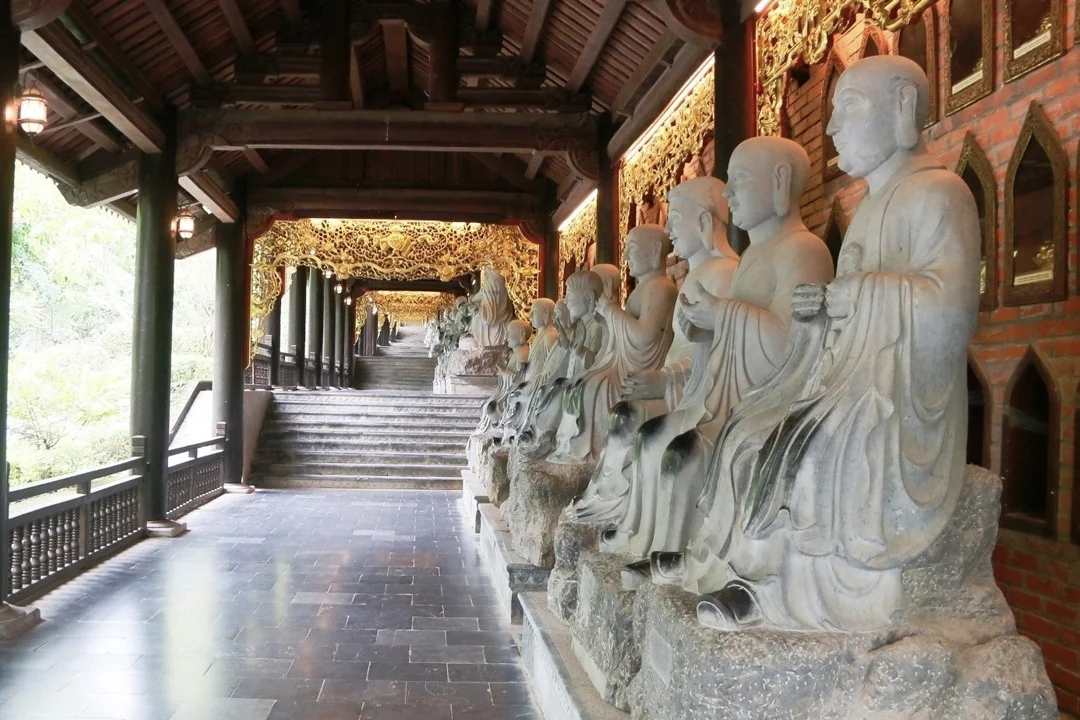
The Arhat Corridor: One of the most memorable features of the new pagoda is the 1‑kilometer‑long covered corridor. Along both sides are 500 white‑stone Arhat statues. Each statue is 2–2.5 meters high, weighs 2–2.5 tons, and was carved from a single monolithic stone. The real artistry is that each statue has a unique expression and posture — a testament to the skill of the artisans, who took about one month to complete each figure.
The Bronze Bell, Stupa, and Golden Gate
The Bell Tower: The bell tower houses a massive 36‑ton bronze bell. Its deep, resonant tone can be heard across the entire complex.
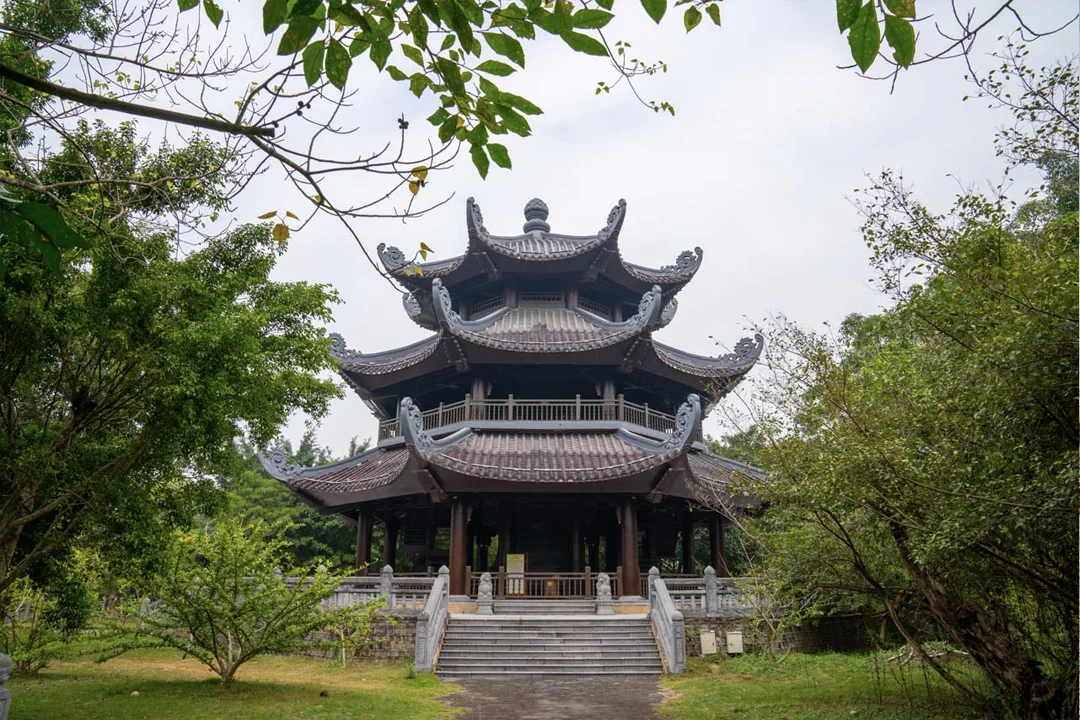
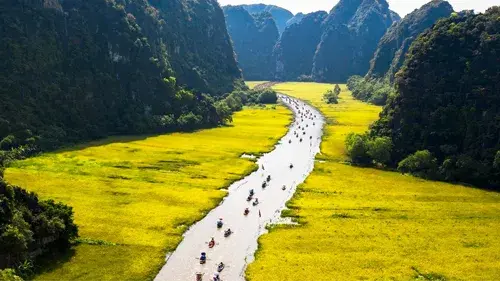
Bao Thap Stupa (Precious Tower): Rising high above the complex, this 13‑storey tower is a landmark visible from all over the valley. For a fee (50,000 VND / $2 USD), visitors can climb to the top for panoramic views of the limestone mountains and the winding Hoang Long River.
Tam Quan Gate (Three‑Gate Entrance): At the main entrance, you are greeted by the largest three‑gate structure in Vietnam. It was constructed using 550 tonnes of ironwood. At the sides stand two 5.5‑meter‑high solid bronze guard statues (Ho Phap), each weighing 12 tonnes.
The Ancient Bai Dinh Pagoda (Bai Dinh Co Tu)
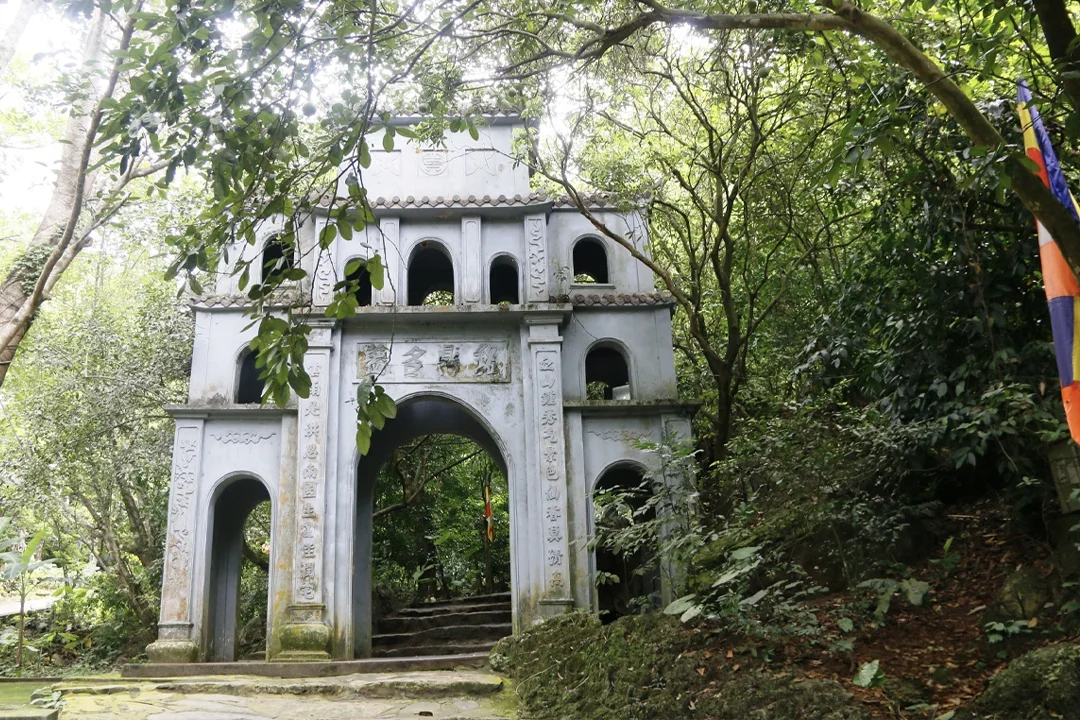
The ancient pagoda is the soul of the complex. Unlike the golden opulence of the new pagoda, this is a humble, mystical place where the temples are built inside natural caves. To reach it, you must climb 300 stone steps up the mountain.
According to legend, the pagoda was founded in 1136 by the revered Zen master Nguyen Minh Khong. He discovered the site while searching the mountain for medicinal herbs to cure the king's illness and felt it was a sacred land. The pagoda complex consists of two main caves on the mountain:
The Bright Cave (Hang Sang): This is the larger of the two caves, about 25 meters long, 5 meters wide, and over 2 meters high. Inside, a natural shrine is dedicated to Shakyamuni Buddha and other deities. Above the entrance, four Chinese characters carved by King Le Thanh Tong read: "Minh Dinh Danh Lam" — "This Beautiful Place's Glorious Name". Behind the cave is an altar dedicated to Saint Cao Son, the mountain deity of the ancient Hoa Lu region. Legend has it that a jackfruit wood statue of the saint cannot be moved, despite multiple attempts.
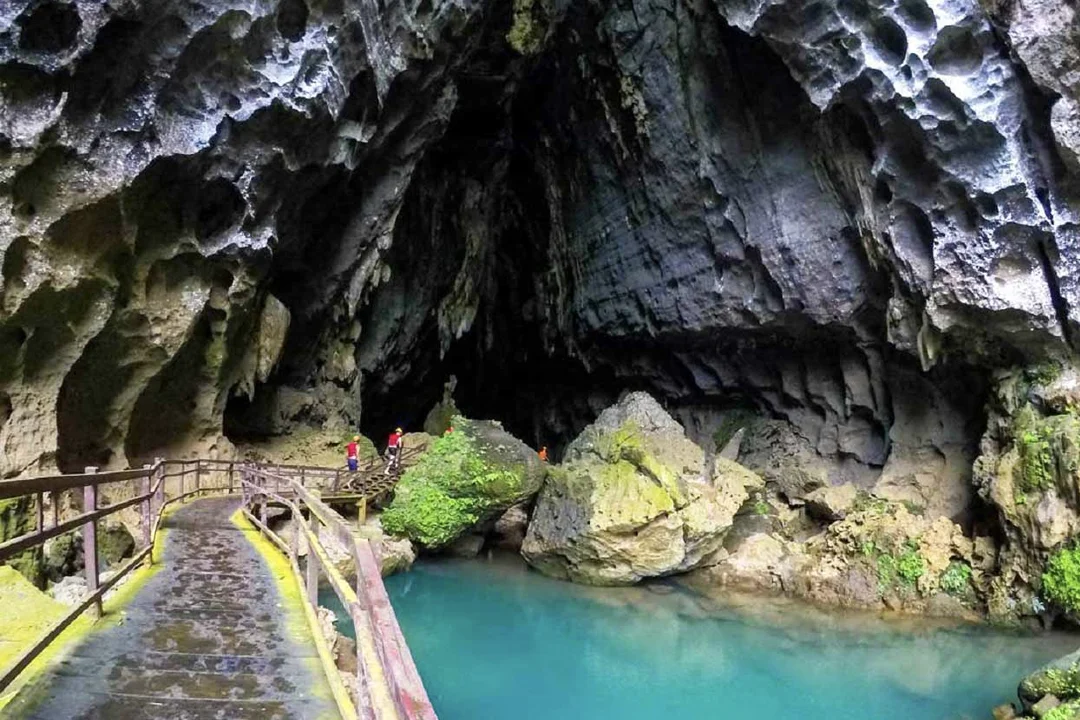
The Dark Cave (Hang Toi): Also known as Mother Cave, this shrine is dedicated to the Mother Goddess (Mau), an important figure in Vietnamese folk religion. The cave is deeper and quieter, offering a completely different atmospheric experience.
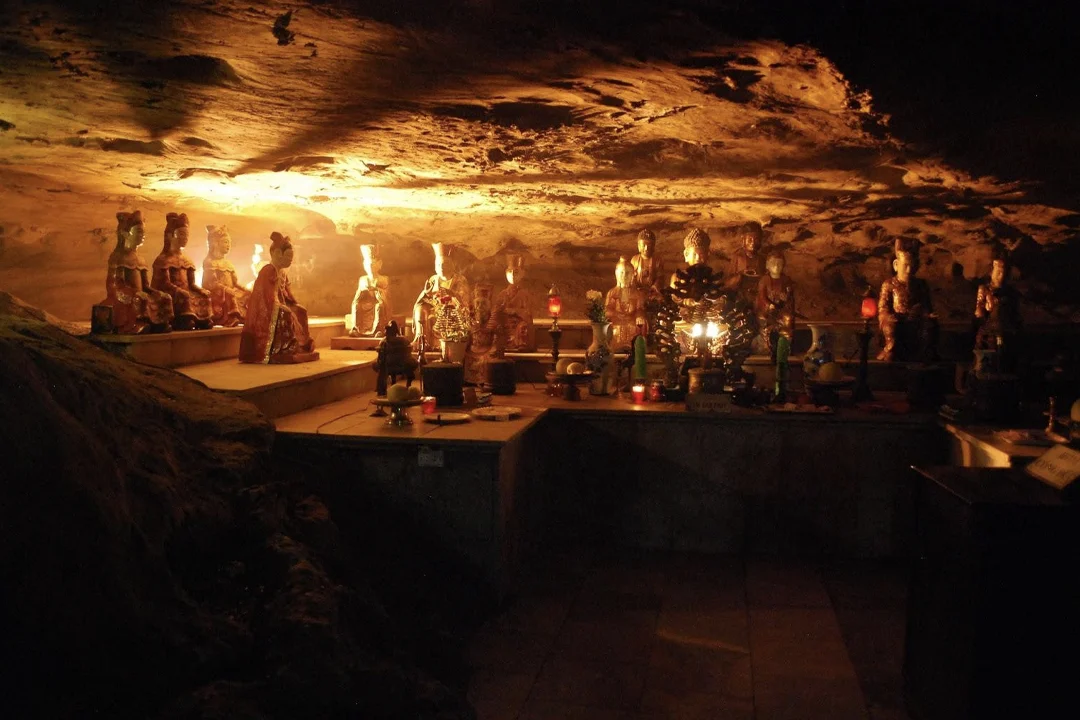
There is also a temple dedicated to the Mountain God, the temple of Saint Nguyen, and the Ngoc Well (Jade Well) at the base of the mountain.
Practical Tips & Notes
When planning your visit, spring from January to March is the ideal time to experience pleasant weather and a vibrant festival atmosphere, while weekday mornings between 7:00 and 9:00 AM offer the best natural light for photography and far fewer crowds. For a solo traveler spending a full day at the complex, the average budget is highly reasonable at approximately 460,000 VND (~$17.50 USD), which covers transport for around 200,000 VND (~$7.60 USD), an electric buggy ride for 60,000 VND (~$2.30 USD), the stupa entrance fee for 50,000 VND (~$1.90 USD), and a local lunch for 150,000 VND (~$5.70 USD). When packing, it is essential to bring sturdy walking shoes to comfortably navigate the many steps, sunscreen, a hat, a light jacket for the cooler temperatures inside the caves, and an umbrella if traveling during the rainy season. To ensure a comfortable and smooth experience, be sure to bring cash since the shops at the entrance do not accept cards, and take the electric car rather than walking, as the 3.5-kilometer distance from the main gate to the central complex under the hot sun can quickly drain your energy. Finally, remember to practice proper cultural etiquette out of respect for this sacred Vietnamese Buddhist pilgrimage site by wearing modest clothing that covers your knees and shoulders, keeping your voice low, never climbing on the statues, and removing your hat before entering any of the main halls.
Suggested multi‑point one‑day itinerary:
- Morning (7:30 – 10:00): Explore the New Bai Dinh Pagoda, including the Arhat corridor, bronze Buddhas, and Bell Tower.
- Late morning (10:00 – 11:30): Climb to the Ancient Bai Dinh Pagoda in the mountain cave.
- Lunch (12:00 – 13:00): Goat meat lunch in Tam Coc.
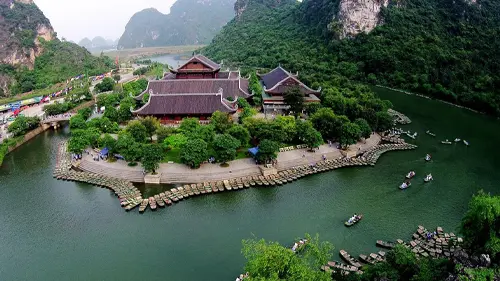
- Afternoon (13:30 – 16:00): Visit Trang An for a 2‑hour boat trip through the cave system, or climb the 500 steps of Mua Cave for the famous dragon viewpoint.
- Late afternoon (16:00 – 17:30): Take a short drive to Bich Dong Pagoda or the Thung Ui Ancient Town.