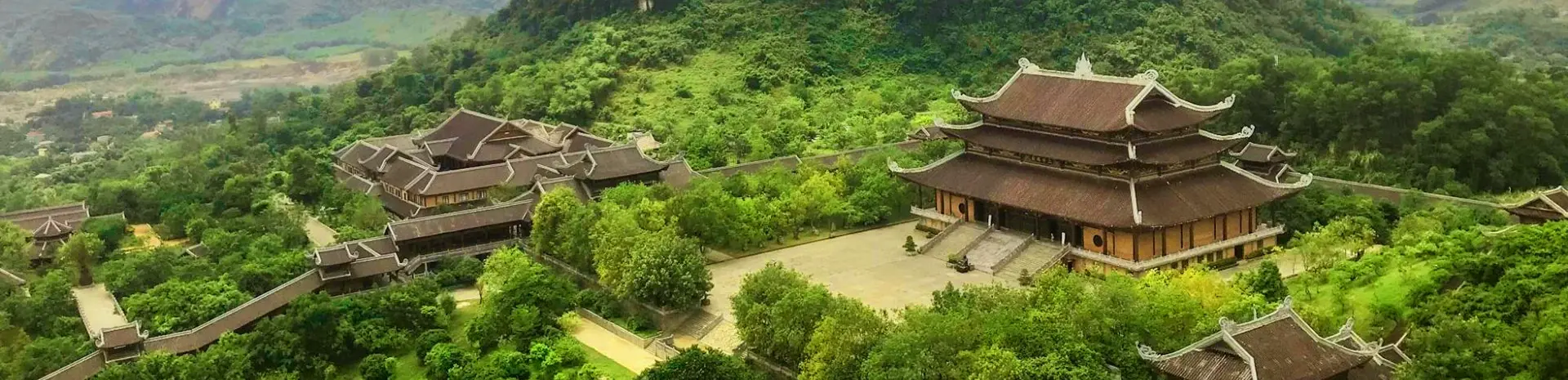
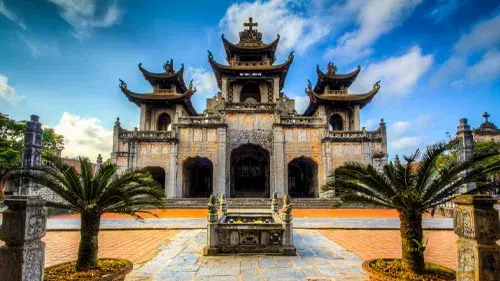
Hoa Lu Ancient Capital is a profound historical site nestled in the heart of the Ninh Binh province, serving as Vietnam's political center during the 10th and 11th centuries. Surrounded by a natural fortress of jagged limestone mountains and the Hoang Long River, this UNESCO-recognized site offers a serene escape into the nation’s foundational era. Visitors can explore the exquisitely preserved temples dedicated to King Dinh Tien Hoang and King Le Dai Hanh, admiring the intricate woodcarvings and stone architecture that have survived for a millennium. It is an essential stop for travelers seeking to connect with the majestic roots of Vietnamese independence.
Walking Through the Halls of Kings: The Royal Temples
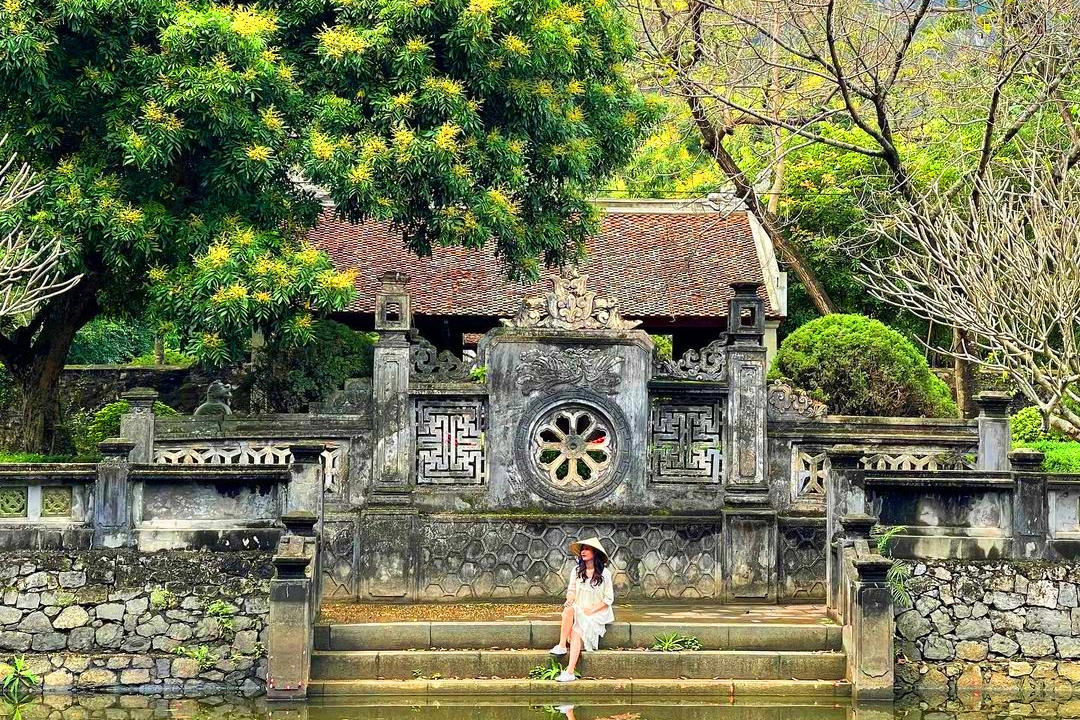
The centerpiece of any visit to Hoa Lu is the duo of temples dedicated to the Dinh and Le dynasties. The Temple of King Dinh Tien Hoang features a unique "Dragon Bed" carved from monolithic stone in the main courtyard, a masterpiece of 17th-century craftsmanship. Inside, the dim light catches the golden statues of the King and his sons, surrounded by the scent of burning incense. A short walk away is the Temple of King Le Dai Hanh, where you can still see fragments of 10th-century palace floor tiles protected under glass—a rare, tangible link to the original citadel that once stood here.
The Ma Yen Mountain Ascent: A View for the Meticulous

For those willing to exert a bit of energy, the 265-step climb up Ma Yen Mountain offers the most rewarding perspective of the capital. Halfway up, you will find the tomb of King Dinh, but it is at the summit where the true magic happens. From this height, the layout of the ancient capital becomes clear: you can see how the mountains provided a natural defense against invaders. The panoramic view of the winding rivers and lush rice paddies framed by the karst landscape is, in my opinion, the most accurate way to visualize why this location was chosen as a seat of power.
Pro-Traveler Experience Tips
As someone who pays close attention to detail, I recommend arriving at Hoa Lu no later than 8:30 AM. Most day-trip buses from Hanoi arrive between 10:30 AM and 11:30 AM, which can quickly turn a meditative historical site into a crowded courtyard. Early morning offers the softest light for photographing the weathered red-lacquered gates and the "Dragon Bed" without other tourists in your frame. Accuracy is key when it comes to the dress code. Because these are active places of worship, you must cover your shoulders and knees. If you are wearing shorts, bring a lightweight sarong in your bag. I have seen many travelers turned away at the gate of the inner sanctuary, and while there are local vendors selling "temple pants," the quality is often poor and the prices are inflated. Another nuance many miss: look for the Nhat Tru Pagoda located just outside the main temple complex. It houses a 10th-century stone pillar inscribed with Buddhist scriptures. It is rarely visited by large tour groups, offering a much quieter atmosphere for reflection. Lastly, if you are cycling from Tam Coc, use the "back road" through the limestone valleys rather than the main highway. It adds 15 minutes to your journey, but the scenery is far more breathtaking and the traffic is non-existent. Always carry a 20,000 VND ($0.80 USD) bill in your pocket for the official parking fee at the gate to avoid being overcharged by unofficial "helpers" on the road leading in.