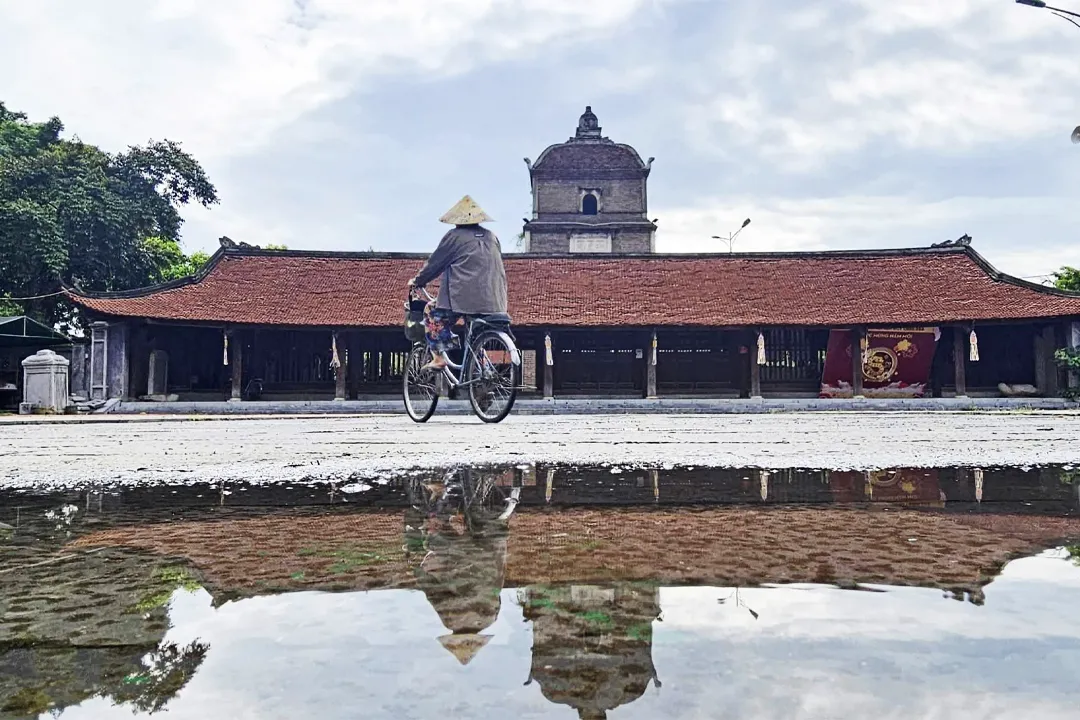
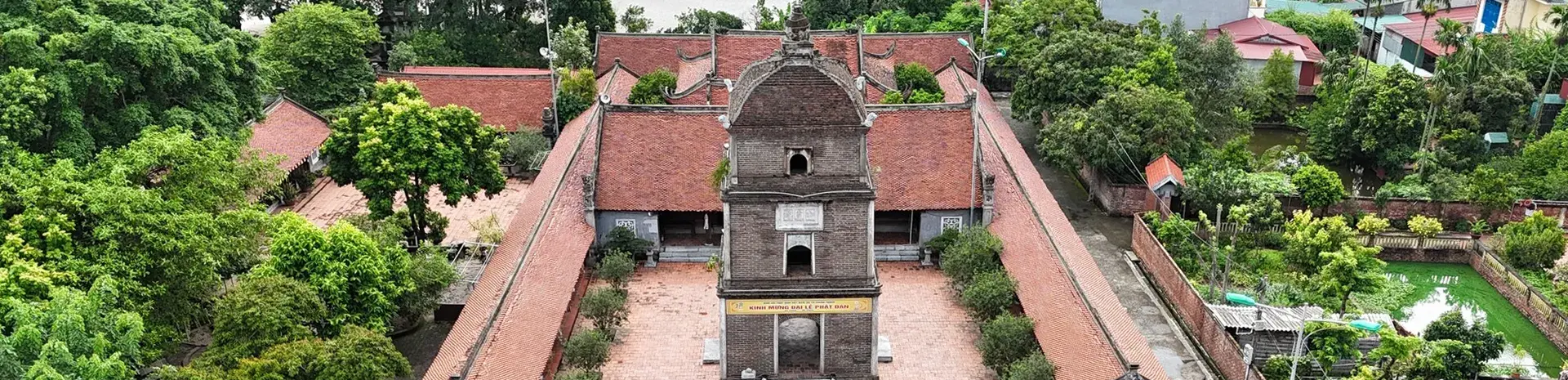
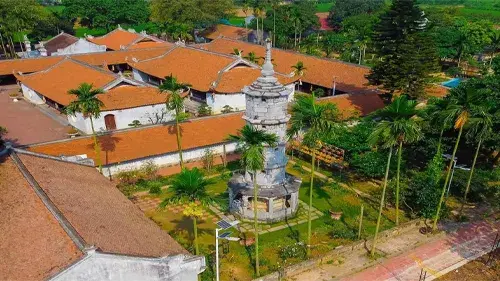
Dau Pagoda (Chua Dau), located in the ancient Luy Lau region of Bac Ninh, is recognized as the oldest Buddhist pagoda in Vietnam, with origins dating back to the 2nd century AD. As the historical epicenter of the Luy Lau Buddhist Center, it represents a unique synthesis of indigenous Vietnamese beliefs and early Indian Buddhist teachings. For the 2026 traveler, the pagoda offers a sophisticated look at ancient architecture, notably the three-story Hoa Phong Tower, and the legendary Tu Phap (Four Dharmas) statues. It serves as a tranquil, travel-focused sanctuary for those seeking a deep connection with Vietnam's millennial heritage.
A Journey Through Two Millennia
To step through the weathered wooden gate of Dau Pagoda is to cross a threshold into the very dawn of Vietnamese Buddhism. Historical records and ancient stelae trace the temple’s foundation to the 2nd century, during the Chinese Han occupation, when the Indian monk K’sudra — known locally as Khau Da La — arrived in the Luy Lau citadel, then the political and cultural heart of Giao Chi, and planted the first seeds of the Buddhist faith. The pagoda that rose here, originally named “Thien Dinh Tu”, became the centre of a powerful spiritual movement that would eventually embrace the entire nation. Subsequent dynasties each left their mark: the Ly rebuilt magnificently, the Tran expanded, and the Le and Nguyen meticulously restored. Yet the essential character of Dau remains archaic, unpretentious, and deeply rooted in the soil of the Red River Delta. Unlike the soaring, gilded pagodas of later eras, Dau feels grounded, almost elemental — a place where prayer has been accumulating in the wood and stone for nearly twenty centuries.
The Legend of Man Nuong and the Four Goddesses
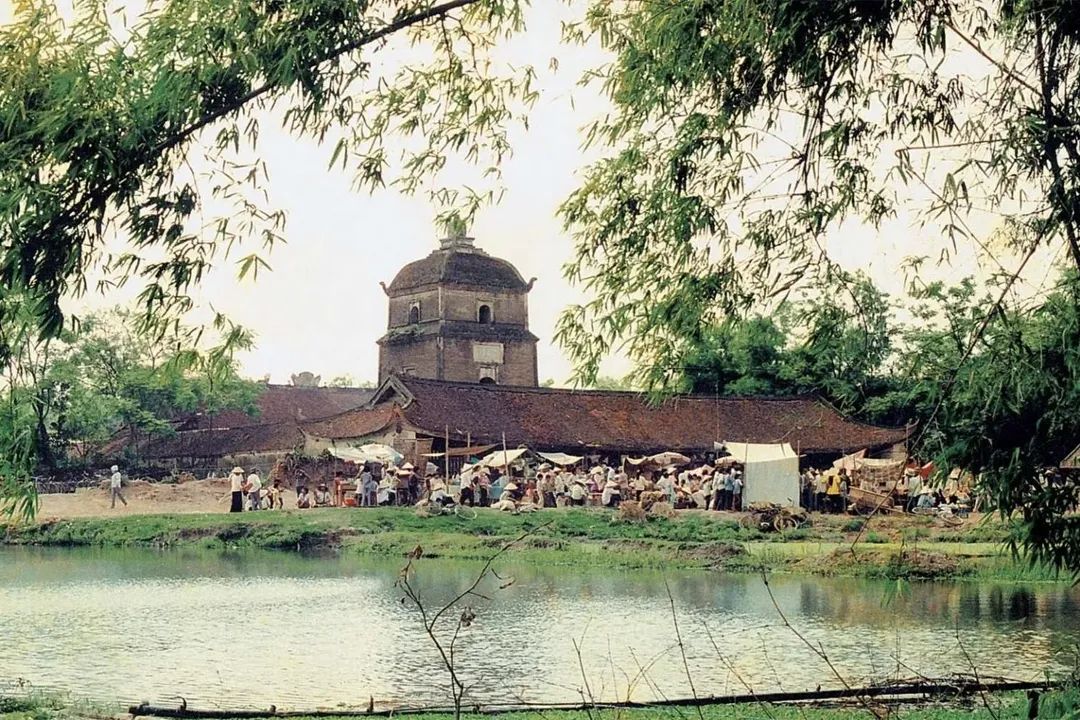
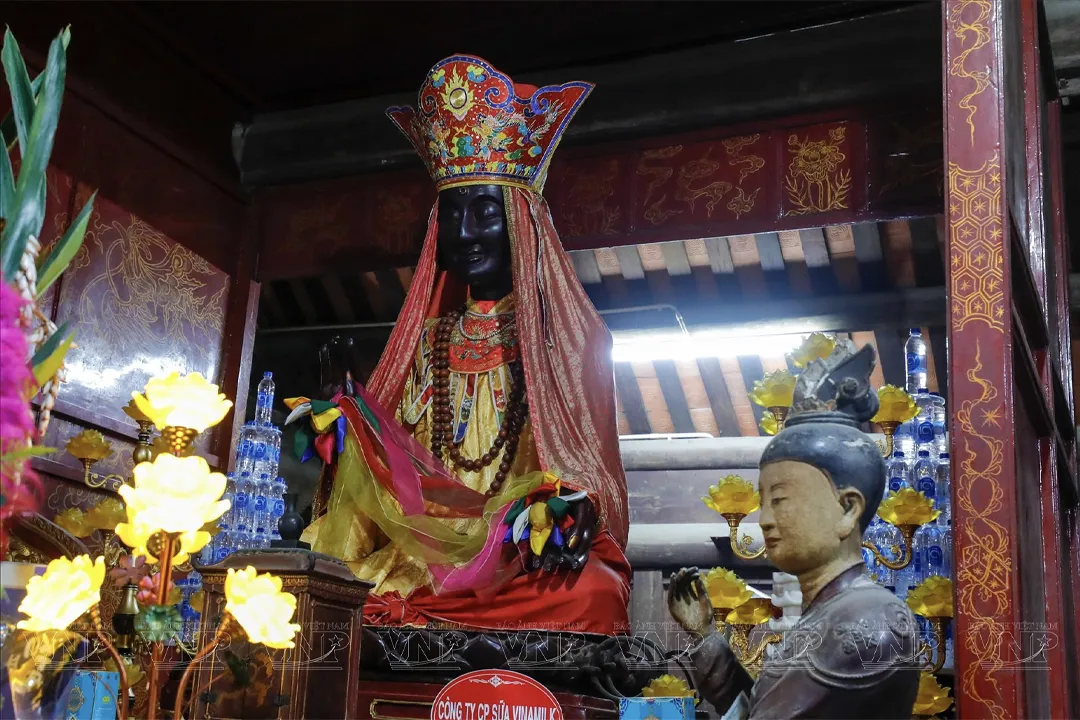
No visit to Dau Pagoda is complete without hearing the legend of Man Nuong, a tale that weaves together Buddhism, indigenous Vietnamese animism, and the universal human longing for rain. Man Nuong, a young peasant girl, was taken into the monastery of Khau Da La, where through a miracle she bore a daughter named Phat Mau (Buddha-Mother). When a catastrophic drought gripped the land, Man Nuong prayed fervently, and the Four Goddesses — Cloud (Phap Van), Rain (Phap Vu), Thunder (Phap Loi), and Lightning (Phap Dien) — manifested, each governing a vital element of the monsoon cycle. Their sacred wooden statues, housed respectively at Dau, Dan, Tuong, and Dan Pagodas in the surrounding villages, became objects of intense veneration. Dau Pagoda, as the seat of Phap Van, the Goddess of Cloud, became the mother temple — the place where pilgrims from across the delta come to petition for gentle rains and abundant harvests. The statues themselves, carved in the 18th century from jackfruit wood, are masterpieces of Vietnamese folk sculpture, their serene features radiating a maternal compassion that still draws women seeking fertility and family blessings to kneel before them in the soft candlelight.
Architectural Splendour: Wood and Stone in Harmony
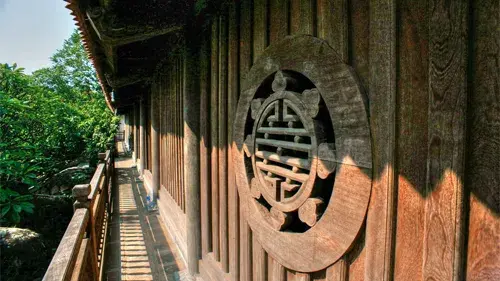
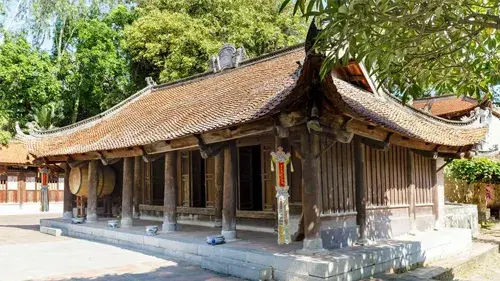
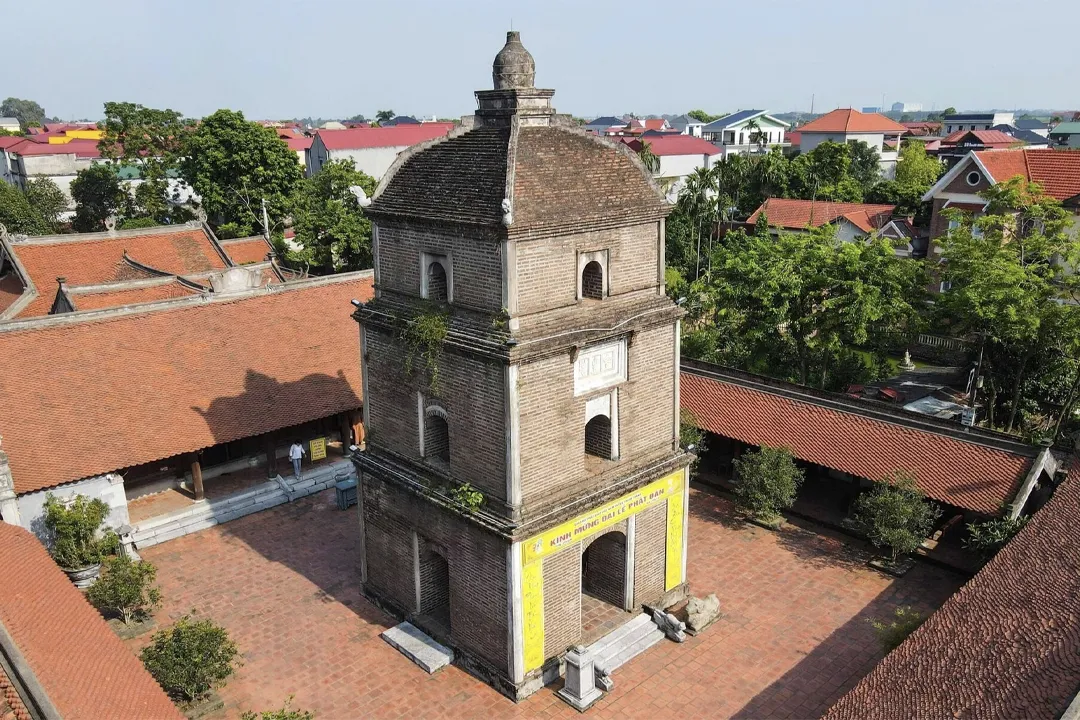
The pagoda complex unfolds in a traditional layout of Tam Quan entrance gate, front hall, main sanctuary, and rear ancestral house, all shaded by ancient trees and connected by stone-paved courtyards worn smooth by countless prayerful feet. The main hall, reconstructed in the 18th century, showcases the elegant proportions and restrained decoration characteristic of northern Vietnamese temple architecture — massive ironwood pillars lacquered deep brown, carved beams depicting dragons and phoenixes, and an atmosphere of cool, filtered half-light that encourages the eye to adjust slowly and the mind to settle. The tiled roofs curve upward at the corners like gentle wings, and the walls are adorned with parallel sentences in classical Chinese script extolling Buddhist virtues. In front of the main hall stands an ancient stone lotus pedestal from the Ly Dynasty, a rare surviving link to the temple’s golden age. Looking closely, visitors can discern the fine carvings of lotus petals, a reminder that Dau was once one of the grandest monastic centres in an empire where Buddhism reigned as state philosophy.
The Sacred Bodhi Tree and the Ancient Well of Dau
Beyond the sanctuary buildings, in a quieter corner of the pagoda grounds, stands a living miracle: a magnificent bodhi tree believed to have been propagated from the original tree in Bodh Gaya, India, under which the Buddha attained enlightenment. Its vast canopy of heart-shaped leaves rustles with the slightest breeze, creating a natural meditation space where visitors often sit in silence, watching the interplay of light and shadow on the temple’s mossy walls. Nearby, the ancient well of Dau reflects the sky like a dark, still mirror. According to local tradition, this well holds water that never dries, even in the deepest drought, and was the very place where Man Nuong’s daughter Phat Mau was found in a floating hollow tree — a motif that echoes the ancient Vietnamese reverence for water and fertility. The well’s stone rim is polished to a gleam by centuries of hands, and pilgrims still draw water in the belief that it carries blessings of health and renewal.
The Dau Pagoda Festival – A Rite of Spring and Rain
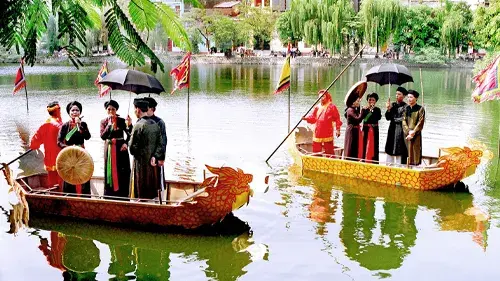
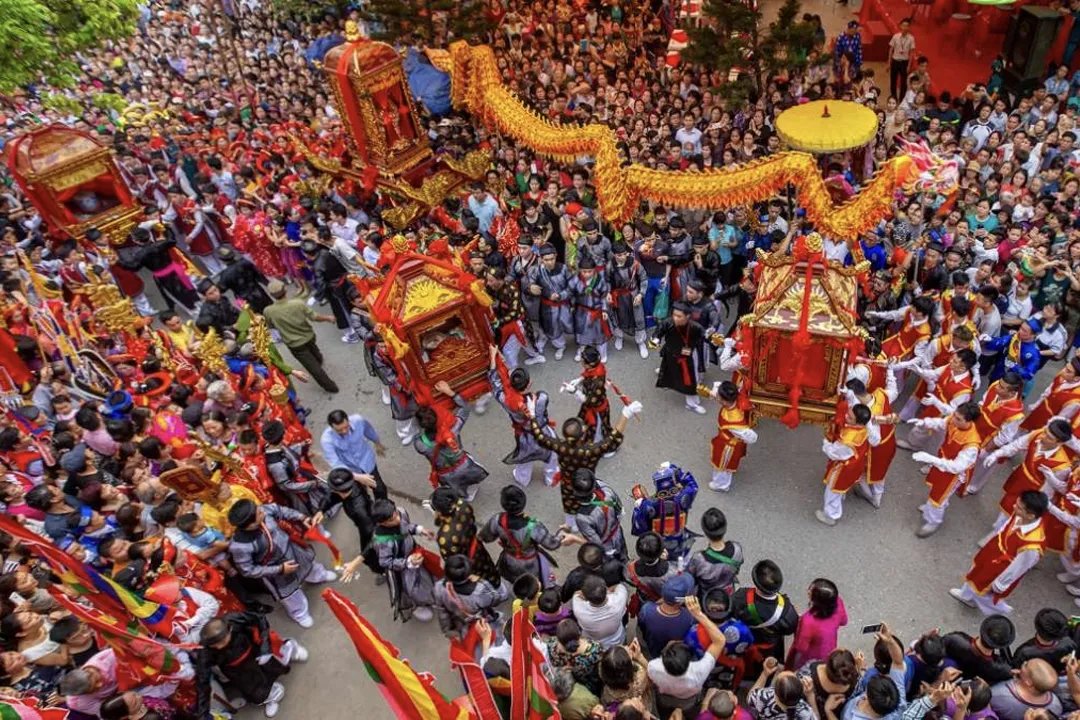
The Dau Pagoda Festival, held annually on the 8th day of the 4th lunar month (typically falling in May), is one of the most vibrant and authentic religious celebrations in northern Vietnam. The festival opens with a solemn procession of the statue of Pháp Vân from Dau Pagoda through the neighbouring villages of the ancient Dau region to the ancient Dàn Pagoda, symbolising the goddess’s journey to bless the land. Thousands of pilgrims follow in their finest traditional attire, accompanied by the crash of cymbals, the boom of ceremonial drums, and the hypnotic chanting of monks. The ceremony includes elaborate rain-making rituals involving sacred water from the ancient well, reflecting the pagoda’s deep connection to agricultural cycles. For the traveller, the Dau Festival offers an extraordinary window into a syncretic faith that blends Buddhism, folk belief, and the elemental worship of nature — a living tradition, not a staged performance, where the tears of joy on an elderly farmer’s face speak of a devotion that has sustained this community for nearly two thousand years.
Masterpieces in Wood: The Statues of the Ancestral House
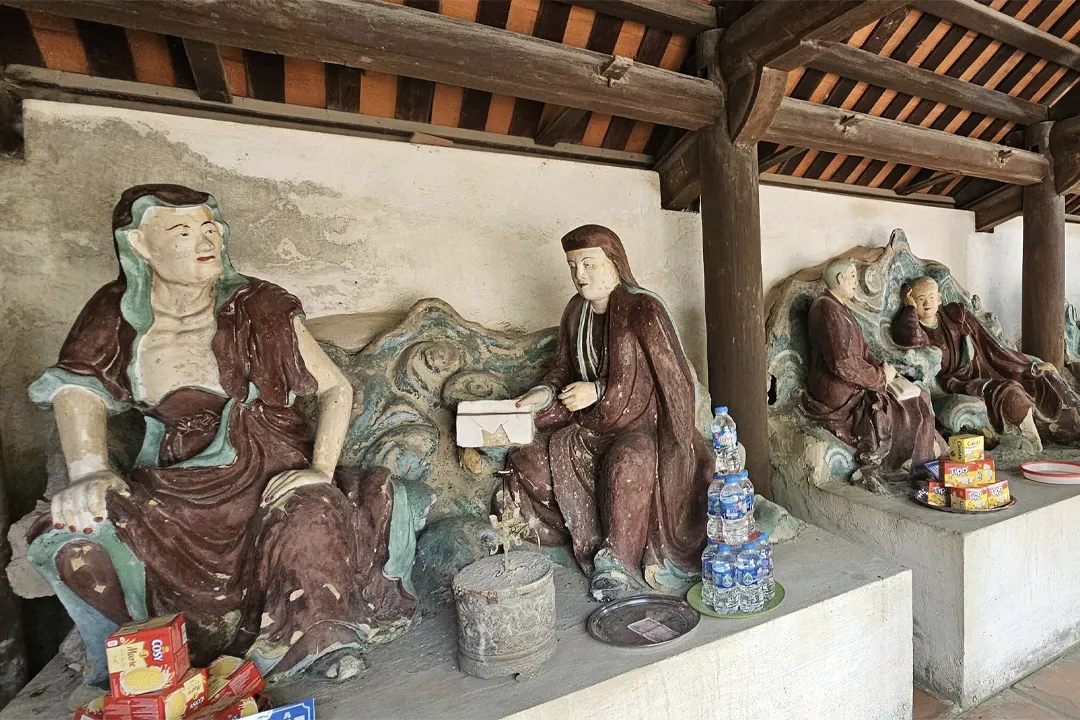
The rear ancestral house, or Nha To, guards Dau Pagoda’s greatest artistic treasures — the full assembly of wooden statues that form a silent pantheon of Vietnamese Buddhist iconography. Among them, the Eighteen Arhats (Thap Bat La Han) stand in vivid, almost theatrical poses, each face uniquely carved to express a different spiritual temperament. The Four Heavenly Kings (Tu Dai Thien Vuong) brandish their swords and lutes with fierce protectiveness. But the most revered are the Four Goddesses themselves, their wooden bodies darkened by incense and time, draped in embroidered silk robes that the temple’s caretakers change with the seasons. The craftsmanship is remarkable: the unknown 18th-century artisans achieved a softness of feature and a subtlety of expression that rival the finest Buddhist sculpture of East Asia. To stand before these figures in the hushed, amber-lit interior is to feel in the presence of something sacred and very old, a continuity of faith that has outlasted empires, wars, and the erosion of the centuries.
Pro-Traveler Experience Tips
Arrive early in the morning, ideally by 8:00 AM, to experience the pagoda’s profound quiet before tour buses appear and the light is at its most luminous slanting through the frangipani trees.
Dress with care: shoulders and knees covered, and shoes easily slipped off at the temple door — this is an active place of worship, and your respectful appearance will be deeply appreciated by the resident monks.
Binoculars or a zoom lens are useful for admiring the fine details of the high roof carvings and the altar’s intricate giltwork, which can be hard to appreciate from floor level. Photography is generally permitted outdoors and in the courtyard, but always ask permission before photographing worshippers or the interior sanctums, and never use flash near the statues.
If you visit during the Dau Festival, allow extra time for crowds, and consider positioning yourself near the well or the bodhi tree for a moment of calm away from the procession’s intensity. A small offering of flowers, fruit, or a donation of 20,000–50,000 VND (0.80–2 USD) placed in the donation box is a graceful gesture, though entirely voluntary.
You also can combine your visit with nearby But Thap Pagoda, Dong Ho painting village, and Phat Tich Pagoda for a richly layered one-day or two-day exploration of the Kinh Bac heartland; a private car makes this circuit seamless.