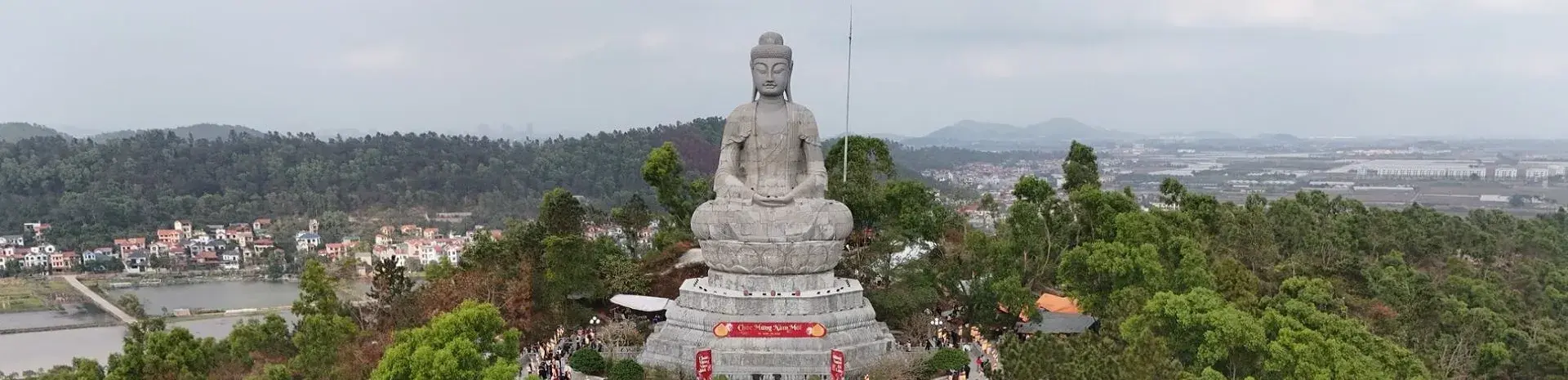
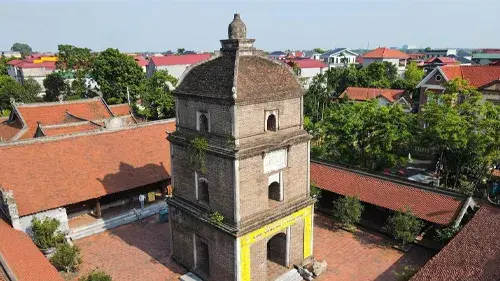
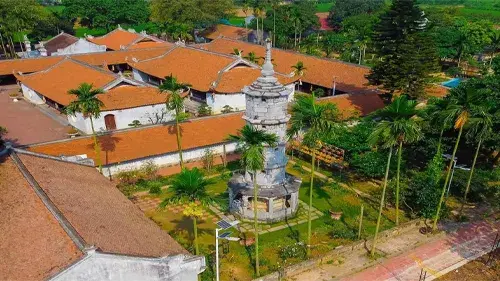
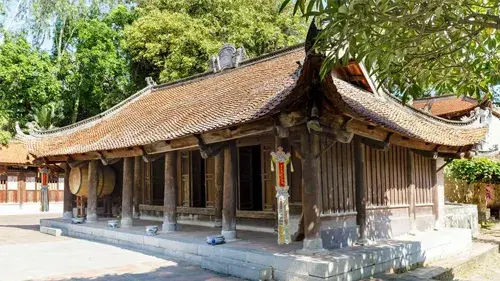
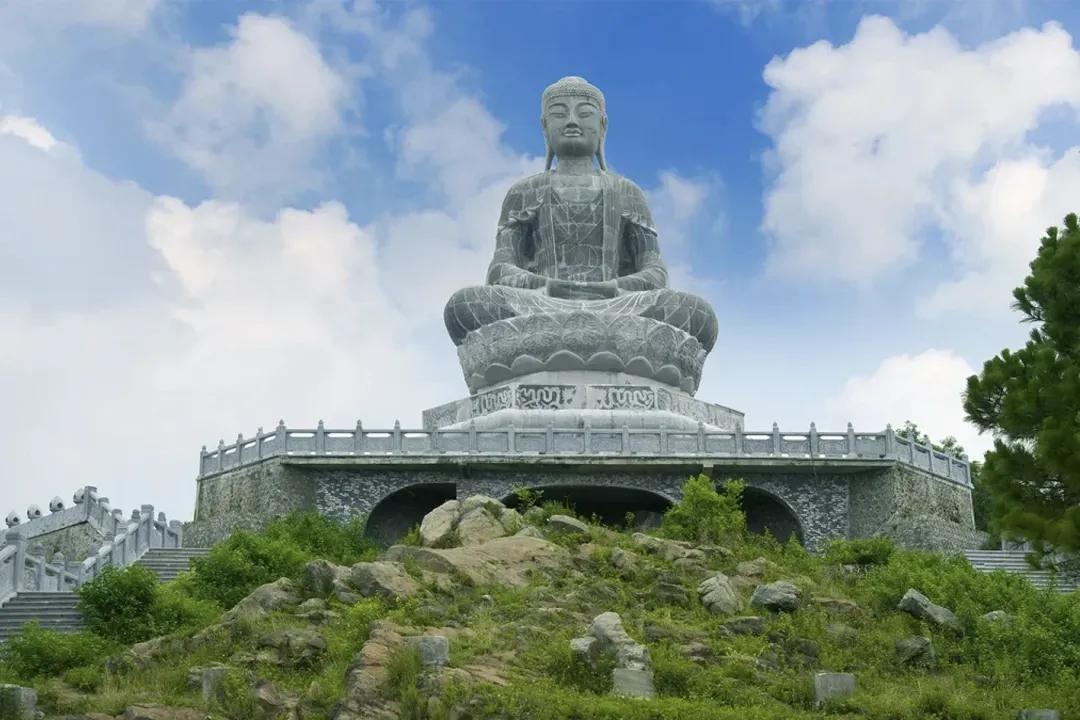
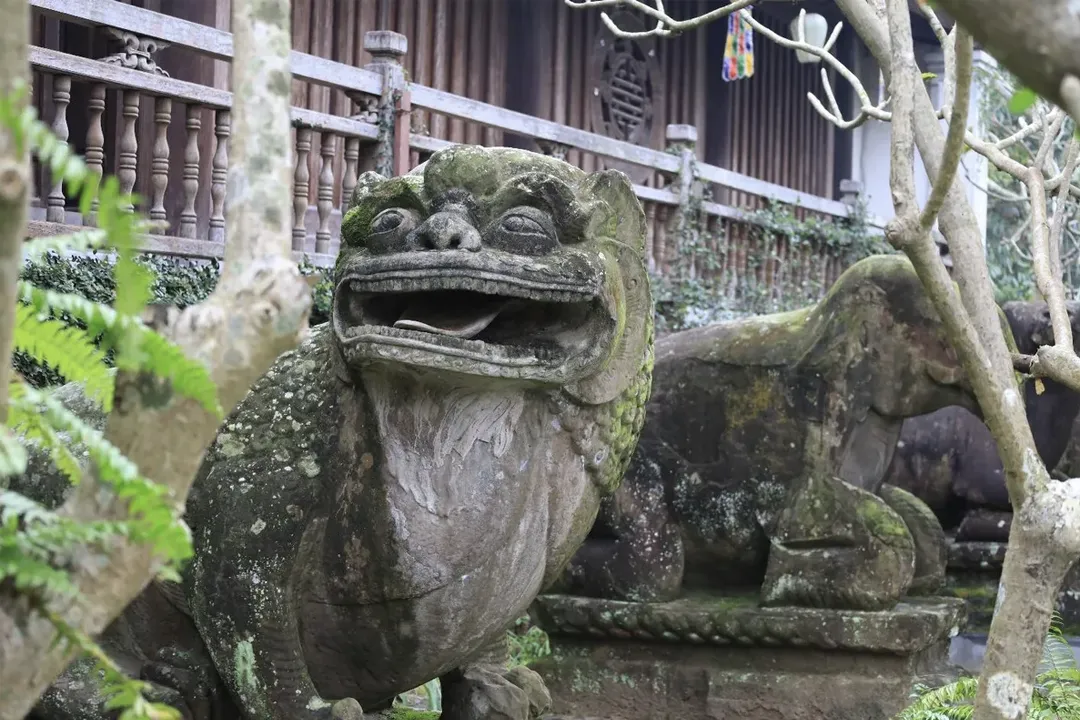
Phat Tich Pagoda, nestled on the scenic slopes of Lan Kha Mountain in Bac Ninh, is one of Vietnam's most revered national treasures. Dating back to the 7th century and flourishing during the Ly Dynasty (1057), it serves as a cradle of Vietnamese Buddhism. Famous for its 27-meter-tall giant Amitabha Buddha statue and rare 11th-century stone mascots, the pagoda offers a sophisticated journey through a millennium of art and faith. For the 2026 traveler, Phat Tich represents a restorative sanctuary, providing a peaceful retreat from Hanoi while showcasing the professional craftsmanship and enduring spiritual soul of the Northern highlands.
A Sacred Mountain Sanctuary
The approach to Phat Tich Pagoda is a pilgrimage in itself. Rising above the flat delta landscape, Phat Tich Mountain — whose name means “Buddha’s Trace” — stands as a gentle green sentinel visible from miles away. As visitors pass through the triple-arched entrance gate and begin the ascent, the noise of the world gradually dissolves. Ancient frangipani trees line the stone pathways, their gnarled trunks sheltering weathered stelae inscribed with verses from centuries past. The air here carries the scent of incense, damp stone, and tropical foliage, while temple bells echo softly across the hillside. This is not a museum piece preserved behind glass but a living, breathing place of worship where saffron-robed monks chant sutras at dawn and elderly women in brown áo dài light joss sticks with unhurried reverence.
The Colossal Stone Amitabha Buddha
At the heart of the pagoda complex, crowning the highest terrace on the mountain’s shoulder, sits a masterpiece of Vietnamese Buddhist art: the monumental stone statue of Amitabha Buddha. Carved during the Ly Dynasty — likely between 1057 and 1066 — from a single block of sandstone, the figure rises nearly 2.7 metres in height and 3.7 metres including its intricate lotus pedestal, making it the largest ancient stone Buddha in Vietnam. The statue’s expression is exquisitely serene, its hooded eyes gazing gently downward as if contemplating the landscape spreading to the horizon. The flowing robes, the delicate curls of the hair, and the elongated earlobes characteristic of Ly-era sculpture are carved with a refinement that remains breathtaking after a thousand years of exposure to the elements. It is, quite simply, one of the most important surviving works of art from Vietnam’s golden age of Buddhism.
The Architecture of Devotion
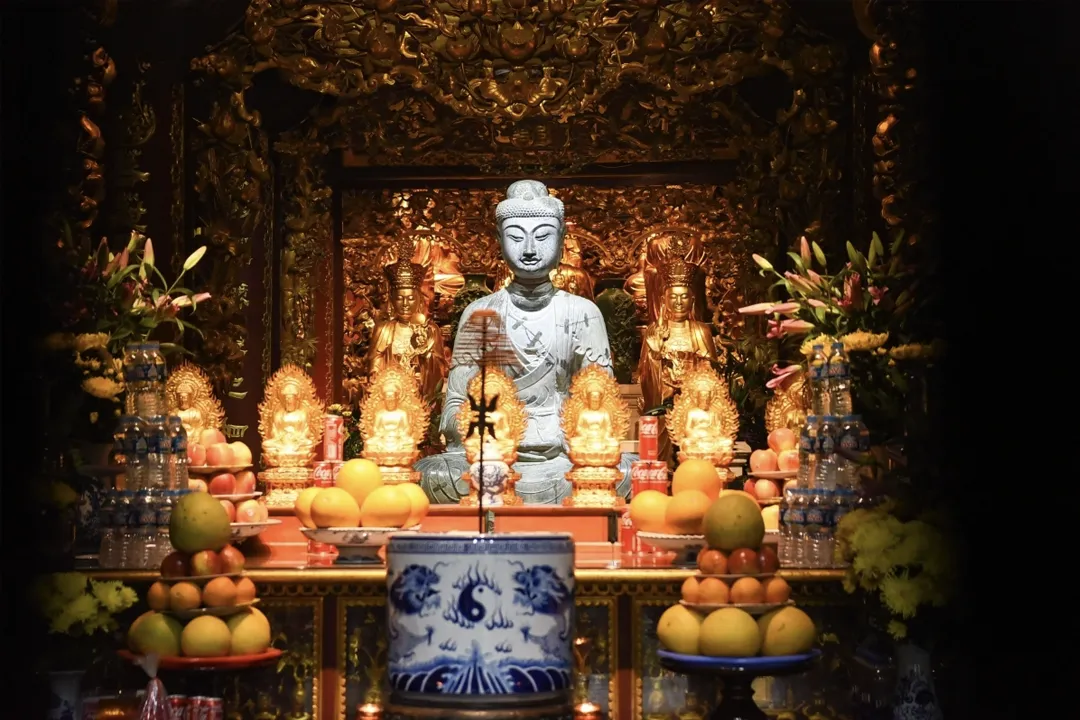
The pagoda complex cascades elegantly down the mountainside in a series of terraced levels connected by stone stairways, following the traditional “nội công ngoại quốc” layout — inner sanctuary, outer courtyard — that characterises Vietnam’s most important Buddhist sites. At the summit level stands the newly reconstructed main hall, or Tam Bảo, a magnificent structure of ironwood columns and curved tiled roofs adorned with dragon motifs. Inside, gilded statues of the Three Jewels shimmer in the dim lamplight. Descending further, visitors encounter the ancestral house, the bell tower, and the drum tower, followed by the monks’ quarters and meditation halls. The lowest terrace opens into a serene garden courtyard graced by an ancient bodhi tree and a stone lotus pond that mirrors the sky. The entire composition feels less constructed than grown from the mountain itself, each element in harmonious dialogue with the landscape.
The Legend of the Fairy’s Footprint
Phat Tich is steeped in folklore as beautiful as its physical setting. Local legend tells of a young woodcutter who, wandering these hills long ago, came upon a fairy maiden bathing in a mountain stream. Entranced, he hid her wings, and she remained on earth to become his wife and raise a family. One day, while the woodcutter was away, their child found the hidden wings, and the fairy — suddenly remembering her celestial origins — placed a final footstep on the mountain’s highest stone before ascending back to the heavens. It is this mythical footprint that gives Phat Tich its name. Standing on the peak and gazing out at the patchwork of rice paddies and winding rivers below, it is easy to imagine such a tale unfolding here, where the boundary between the earthly and the transcendent feels perpetually thin.
The Peony Garden and Seasonal Splendour
Each spring, Phat Tich Pagoda transforms into one of northern Vietnam’s most enchanting floral destinations. The terraced gardens burst into colour as thousands of peonies — the flower most deeply associated with the Ly Dynasty’s Buddhist aesthetic — unfurl their extravagant petals in shades of blush, coral, and pure white. This tradition is rooted in history: the Phat Tich Peony Festival, revived in recent years, commemorates the discovery in the 11th century of a miraculous peony blooming in five colours on this very site, an event that prompted Emperor Lý Thái Tông to order the construction of a grand temple. Today, the festival (typically in late February or early March) draws pilgrims and photographers in equal measure. Even outside festival season, the gardens offer moments of quiet beauty, with jasmine and wild orchids scenting the paths, making any visit a sensory delight.
Panoramic Views of the Red River Delta
Climbing to the pagoda’s highest point rewards the visitor with an unforgettable panorama. From the terrace beside the giant Buddha, the entire Red River Delta unfolds in a vast patchwork of verdant fields, meandering waterways, and distant village clusters. On clear winter mornings, the view stretches for dozens of kilometres, the Duong River glinting like a silver ribbon far below. Sunrise is particularly magical: the first rays illuminate the Buddha’s face while the lowlands remain shrouded in mist, creating an almost supernatural tableau. A set of recently installed stone benches invites travellers to sit, breathe, and simply absorb the scale and tranquillity of the landscape, an experience that remains an enduring highlight of any visit.
The Ancient Stone Stelae and Archaeological Treasures
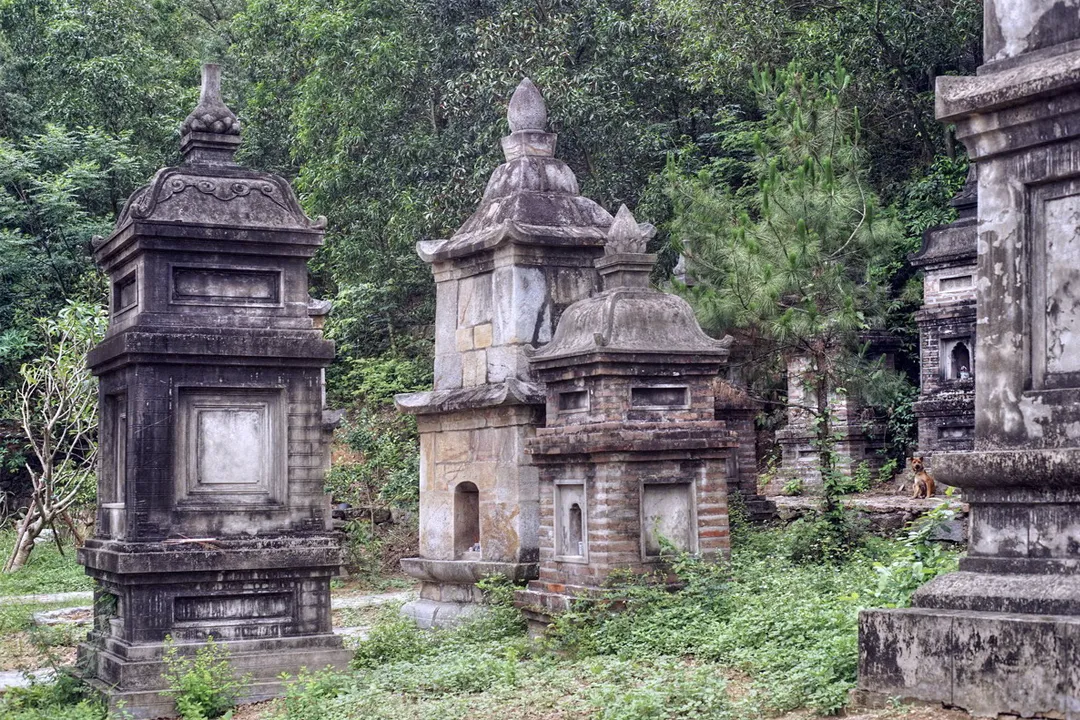
Phat Tich has yielded remarkable archaeological discoveries that deepen its historical significance. During restoration work, stone stelae dating from the 14th and 17th centuries were unearthed, recording the pagoda’s expansions and the donations of successive dynasties. The most celebrated find came in 2008 when archaeologists uncovered a solid stone lotus pedestal weighing several tonnes and a collection of intricately carved guardian statues — lions, elephants, and celestial dancers — now preserved in a small on-site exhibition hall. These remnants, along with the original foundation stones visible in the lower courtyard, offer a tangible connection to the Ly Dynasty’s sophisticated civilisation and its profound patronage of Buddhism as a state philosophy. Walking among these relics is like turning the pages of a history book written in stone.
Meditation and Mindfulness in a Living Monastery
Unlike some heritage sites that have become primarily tourist attractions, Phat Tich remains an active monastery housing a resident community of monks and nuns. The sound of the wooden fish and the rhythmic chanting of sutras are part of the daily fabric of life here. Visitors are welcome to observe ceremonies in the main hall, to sit quietly in the meditation gardens, or to participate in the vegetarian meals occasionally offered to the public. Several times a year, the pagoda hosts meditation retreats and Dharma talks that draw lay practitioners from across the country. For the traveller seeking more than a photo opportunity, this living spiritual dimension is the pagoda’s most profound gift — a chance to experience Vietnamese Buddhism not as an abstraction but as a breathing, contemporary practice.
Pro-Traveler Experience Tips
For the most atmospheric visit, arrive shortly after the pagoda opens, ideally around 7:30 AM, when the morning mist still clings to the mountain and you may have the gardens nearly to yourself. Climbing the 300 or so stone steps to the summit terrace is not strenuous, but comfortable walking shoes are recommended as some stones can be uneven, especially after rain. The peony bloom season from late February through March is breathtaking but also the busiest; if you prefer solitude, weekday mornings outside festival weekends offer the ideal compromise. Photography enthusiasts should bring a wide-angle lens to capture the panoramic delta views and a zoom for architectural details, while the Buddha statue itself is best photographed in the soft light of early morning or late afternoon when shadows lend depth to the carved robes. A small donation box is placed near the main altar; contributing 20,000–50,000 VND (0.80–2 USD) is a respectful gesture, though entirely voluntary. For a deeper experience, consider coordinating with the pagoda office if you wish to stay for a short mindfulness session — while formal retreats require advance registration, respectful visitors are often welcomed to join the daily chanting at dawn. Carry drinking water and a hand towel during the warmer months, as the climb can be warm, and note that the pagoda’s tranquil atmosphere depends on each visitor’s respectful conduct: speak softly, dress modestly with shoulders and knees covered, and avoid loud mobile phone conversations. Combining this visit with nearby But Thap Pagoda and Dong Ho painting village makes for a richly rewarding one-day cultural itinerary.