If you are looking for multiple transfers around Vietnam, Cambodia, Laos and Thailand – simply send us your travel request.
Standing in serene grandeur at the confluence of the Luc Nam and Thuong rivers, Vinh Nghiem Pagoda is a sanctuary where nearly a thousand years of Vietnamese Buddhist history is preserved in wood, stone, and living practice. Known affectionately as Duc La Pagoda, this immense complex was the first major Buddhist academy of the Tran Dynasty, the intellectual cradle that nurtured the three founding patriarchs of the Truc Lam Zen school. Today, it safeguards a treasure of global significance: 3,050 wooden printing blocks inscribed with sacred sutras, recognised by UNESCO as a World Documentary Heritage. For the culturally curious traveller, Vinh Nghiem is an essential, profoundly moving destination—a place where the intellectual and spiritual life of medieval Vietnam remains breathtakingly alive.
To understand the significance of Vinh Nghiem Pagoda, one must first travel back to the golden age of Vietnamese Buddhism—the Ly and Tran dynasties, from the 11th to the 14th centuries. During this period, Buddhism was not merely a religion; it was the guiding philosophy of the state, deeply intertwined with governance, education, and national identity. While Emperor-Monk Tran Nhan Tong is celebrated as the founder of the Truc Lam Zen school at Yen Tu Mountain, the intellectual and institutional foundations of this uniquely Vietnamese tradition were laid here at Vinh Nghiem. The pagoda was established as a grand monastic university, a centre of advanced Buddhist learning where monks from across the kingdom gathered to study scriptures, debate doctrine, and train under the most erudite masters of the age. It was at Vinh Nghiem that the three patriarchs—Tran Nhan Tong, Phap Loa, and Huyen Quang—taught and composed the texts that would form the canonical basis of Truc Lam Zen. This was not a retreat from the world but a place where the spiritual and the temporal met, where young monks prepared to become abbots, teachers, and advisors to the royal court. Walking through its vast courtyards today, one can almost hear the echoes of centuries of scholarly discourse carried on the breeze that rustles through the ancient pine trees.
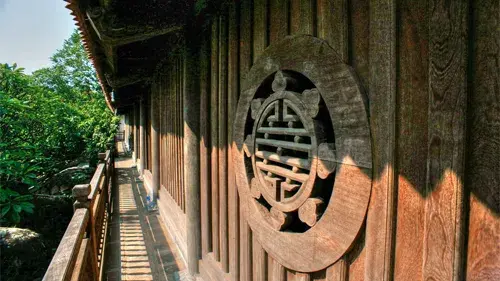
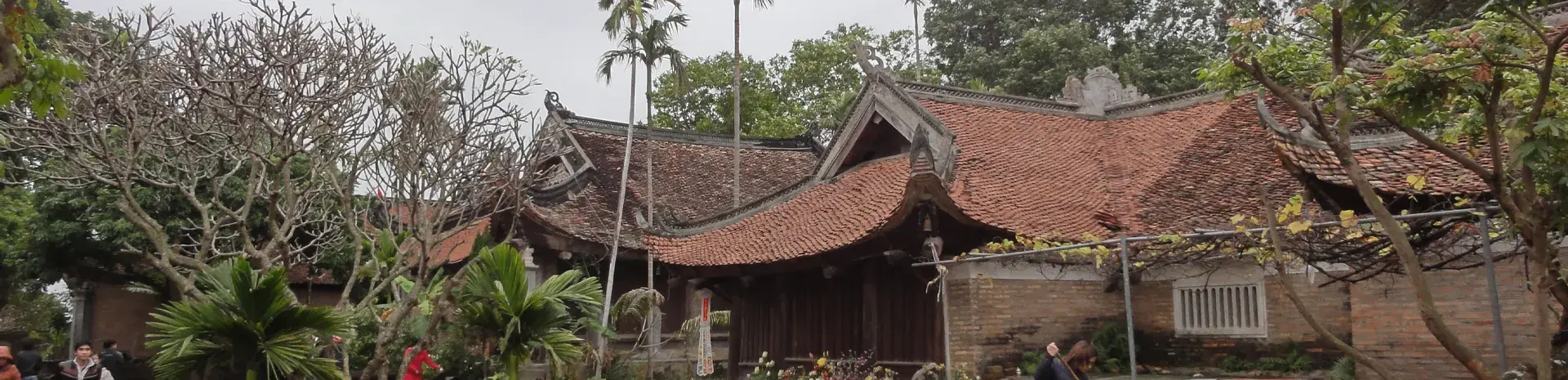
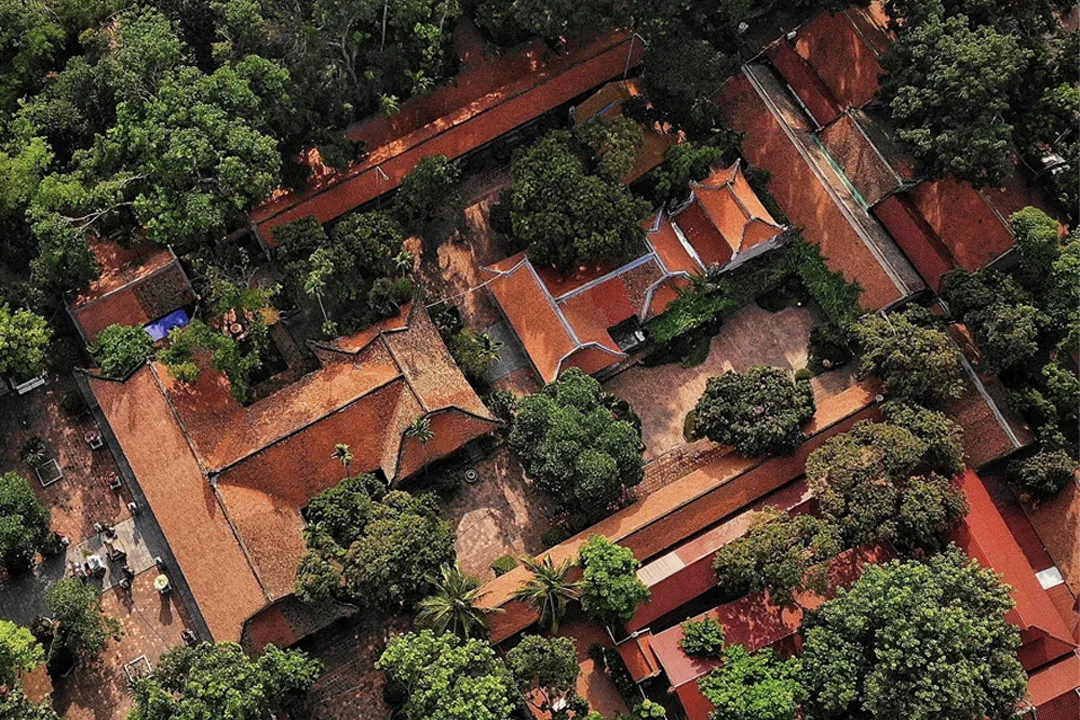
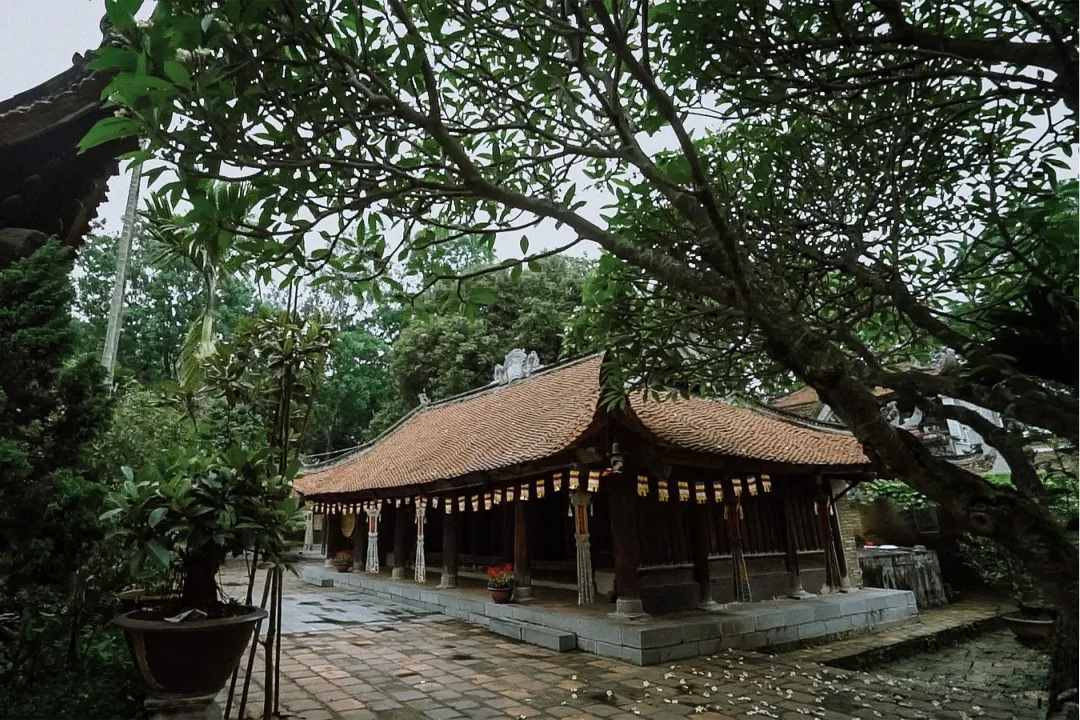
The architectural language of Vinh Nghiem Pagoda is an eloquent expression of traditional Vietnamese Buddhist principles, executed on a scale befitting its historical stature. The complex occupies a 10,000-square-metre plateau and follows the classic "Noi Cong Ngoai Quoc" layout—literally "Internally Open, Externally Closed"—a design that creates a self-contained sacred universe behind imposing outer walls. Entering through the majestic Tam Quan Gate, a striking wooden structure with three doors and elegantly curved roofs, visitors step into a world of harmonious spatial choreography. The path leads across a broad courtyard, past tranquil lotus ponds, to the Tien Duong, or Front Hall. Beyond this lies the Thieu Huong, the Incense Burning Hall, and finally the Tam Bao, the Main Sanctuary of the Three Jewels. This tripartite arrangement draws the pilgrim progressively deeper into sacred space, each threshold marking a transition from the profane to the more deeply holy. The buildings themselves are constructed from massive ironwood columns and feature the intricate "stacked beams and buckets" structural system characteristic of medieval Vietnamese carpentry. The roofs are covered in traditional "mui hai" tiles, their curved eaves adorned with dragons, phoenixes, and lotus motifs. Despite several restorations over the centuries—most significantly during the Nguyen Dynasty—the pagoda retains the austere grandeur of its Tran-era origins, a testament to the enduring sophistication of Vietnamese religious architecture.
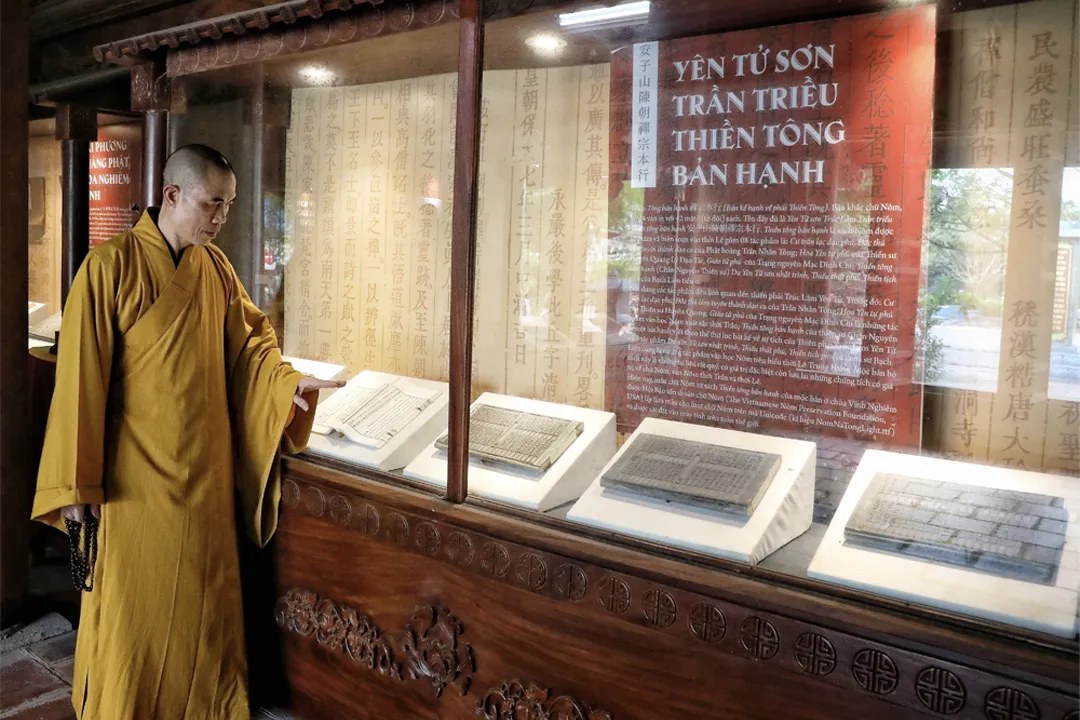
Vinh Nghiem's most extraordinary treasure, however, is not its architecture but the silent library of wisdom it has guarded for centuries. Preserved within the pagoda is a collection of 3,050 original woodblocks, hand-carved between the 17th and early 20th centuries. These blocks were used to print sacred Buddhist sutras, philosophical treatises, monastic regulations, and even medical texts—the canonical library of a great spiritual university. Carved with painstaking precision on the pale, fine-grained wood of the thi tree, each block is inscribed on both sides with classical Chinese or Nom characters in meticulous reverse—a mirror image destined to transfer sacred words onto paper. The subjects covered are astonishingly diverse: the Prajnaparamita sutras, the teachings of the Truc Lam patriarchs, codes of monastic discipline, instructions for meditation, and even pharmacological recipes for treating common ailments. In 2012, UNESCO recognised this collection as a World Documentary Heritage in the Asia-Pacific region, and it has since been proposed for global Memory of the World status. In 2020, the Government of Vietnam formally designated the entire collection a National Treasure—the first and most significant of four such treasures housed at Vinh Nghiem. To stand before these blocks, to see the delicate characters still sharp after centuries, is to feel a direct, tangible connection to the intellectual life of medieval Vietnam and the devoted monks who spent their lives copying, preserving, and transmitting the Dharma.
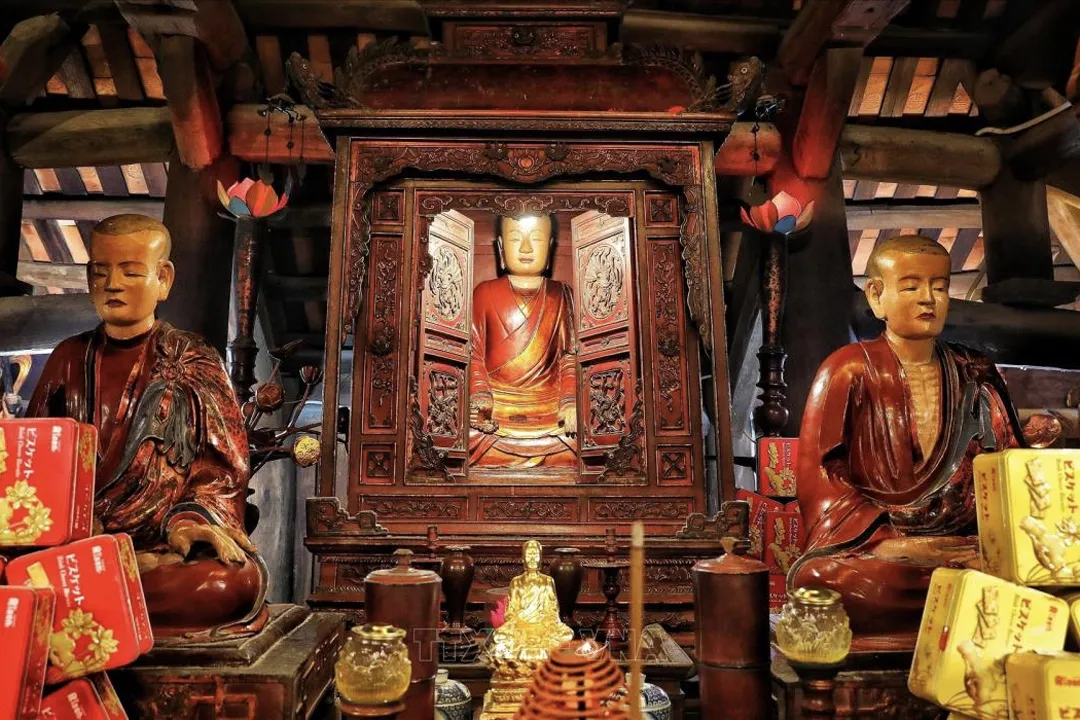
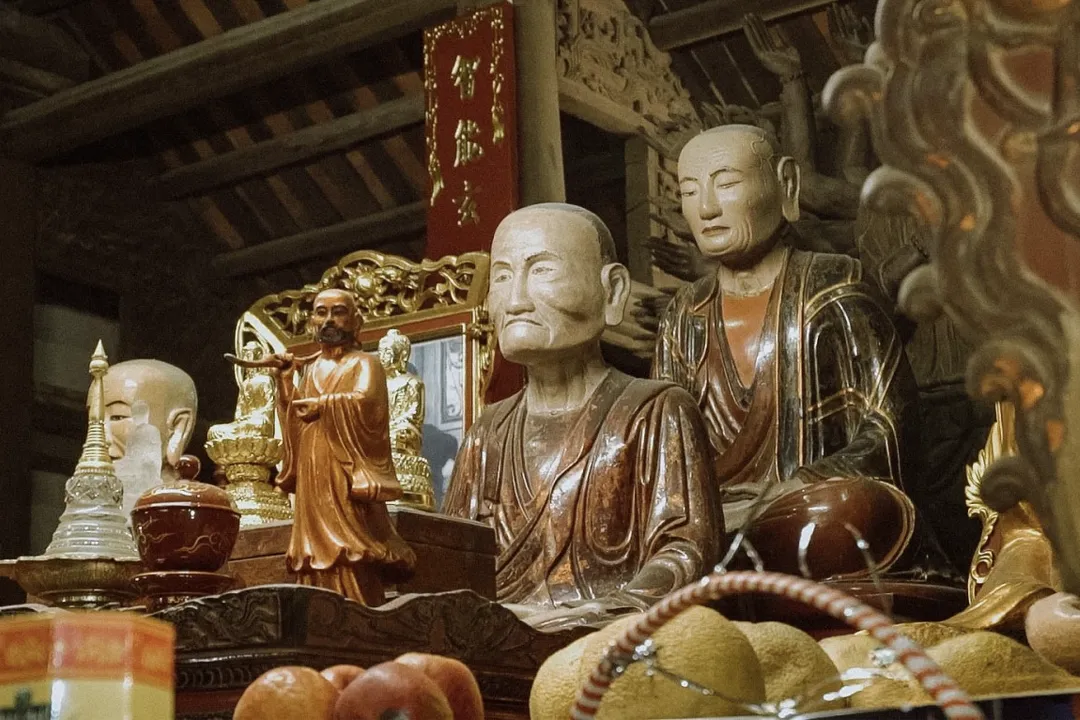
The 3,050 woodblocks are not the only priceless artifacts sheltered within Vinh Nghiem's walls. The pagoda is the custodian of a remarkable ensemble of National Treasures that together narrate the evolution of Vietnamese Buddhist art. In the incense-scented dimness of the Tam Bao sanctuary stands the magnificent statue of the "Buddha Entering Nirvana"—a 14th-century masterpiece carved from a single block of jackfruit wood. The statue depicts the reclining Buddha with an expression of sublime peace, his head resting on his hand, the flowing robes rendered with a softness that belies the hardness of the wood. Alongside this, a set of Arhat statues, also dating from the Tran Dynasty, displays the vivid individualism characteristic of Vietnamese Buddhist sculpture—each face a distinct study in spiritual contemplation. A second set of National Treasure woodblocks, from the Nguyen Dynasty, complements the main collection. The most architecturally dramatic treasure is the 10-tiered Nine-Storey Lotus Tower, a soaring wooden stupa intricately carved with lotus petals and Buddhist iconography, which rises like a prayer made visible against the green backdrop of the mountain. Together, these artifacts make Vinh Nghiem not merely a temple but one of Vietnam's most significant museums of sacred art, where masterworks of sculpture, carpentry, and printmaking are still housed in the sacred spaces for which they were created.
The spiritual energy of Vinh Nghiem reaches its most magnificent expression during the annual Vinh Nghiem Pagoda Festival, held from the 14th to the 16th days of the second lunar month (usually March or April). Designated a National Intangible Cultural Heritage in 2013, this festival is a vibrant three-day immersion into the living faith of the Red River Delta. The opening day features a solemn incense-offering ceremony, with monks processing in saffron robes and local officials paying homage to the Truc Lam patriarchs. The heart of the festival, however, lies in the folk traditions that animate the pagoda grounds: water puppet performances on the lotus pond, quan ho folk singing, human chess games, and wrestling competitions. The most sacred event is the ritual bathing of the pagoda's ancient stone stelae, a purification rite accompanied by the chanting of esoteric mantras that is believed to bring blessings of rain and prosperity. For the traveller fortunate enough to align their visit with this festival, Vinh Nghiem offers not a staged performance but an authentic window into a faith that has sustained communities for nearly a thousand years.
In July 2025, Vinh Nghiem Pagoda received the ultimate international recognition when it was inscribed as a core component of the UNESCO World Cultural Heritage "Yen Tu – Vinh Nghiem – Con Son, Kiep Bac Complex." This transnational serial nomination encompasses the complete sacred geography of the Truc Lam Zen tradition, stretching from the founding hermitages at Yen Tu Mountain, through the monastic university at Vinh Nghiem, to the temples of national heroes at Con Son and Kiep Bac. Vinh Nghiem's inclusion in this prestigious listing affirms its exceptional universal value as the intellectual and educational heart of a Buddhist tradition that uniquely integrated spirituality, scholarship, and patriotic service. For the discerning traveller, visiting Vinh Nghiem is no longer merely a cultural excursion; it is an encounter with a site that humanity has collectively recognised as irreplaceable—a place where wisdom was cultivated and disseminated across centuries, shaping the moral and philosophical foundations of an entire civilisation.
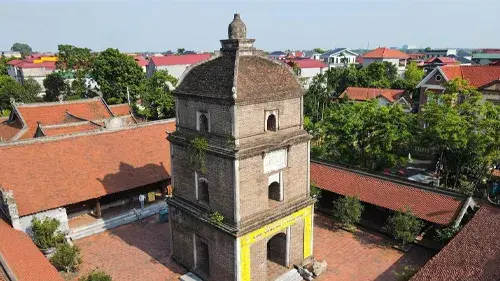
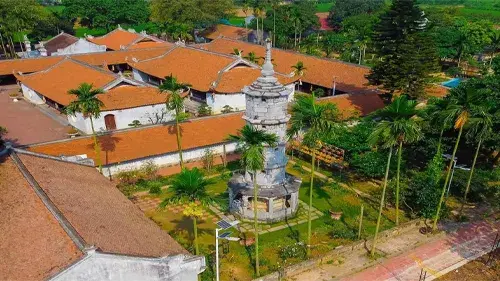
Behind the main architectural complex, a winding path leads to a quieter realm of profound stillness. The stupa garden of Vinh Nghiem, spread across a hillside shaded by ancient pines, is a necropolis of monastic devotion. Here, brick and stone towers of varying sizes—some simple and severe, others adorned with carved lotus petals—mark the final resting places of abbots and eminent monks who served the pagoda through the centuries. The most significant among them house the sarira, or cremated relics, of the Truc Lam patriarchs themselves, making this ground sacred in the deepest sense. Walking among these weathered monuments, with only birdsong and the whisper of wind for company, one feels a profound continuity—century upon century of devoted practice, an unbroken lineage of teachers and students stretching back to the 13th century. For many visitors, it is here, in this garden of the eternal sangha, that the true peace of Vinh Nghiem is most deeply felt.
A visit to Vinh Nghiem Pagoda is a deeply rewarding experience that benefits greatly from thoughtful preparation and an unhurried approach. The pagoda is open daily from approximately 7:00 AM to 6:00 PM, and arriving at opening time, around 7:30 AM, is the surest way to experience its vast courtyards and silent sanctuaries in a state of profound, almost mystical tranquility. There is an entrance fee of 10,000 VND (0.40 USD) per person, a modest contribution toward the preservation of this Special National Monument. Parking is available on-site for an additional small fee: 10,000 VND (0.40 USD) for motorbikes and 30,000 VND (1.20 USD) for cars.
Dress modestly and respectfully, as Vinh Nghiem is a living monastery with an active monastic community; shoulders and knees should be comfortably covered, and a scarf or shawl is a versatile accessory for covering up when entering the main shrines. Comfortable, slip-on shoes are a wise choice, as you will be required to remove your footwear before stepping into the sanctums, though you may wish to bring a pair of socks if visiting during cooler months when the stone floors can be cold. The pagoda's true treasures—the 3,050 UNESCO-recognised woodblocks—are precious and fragile, preserved in a secure library that is not on permanent casual display. To view these extraordinary artifacts, it is essential to make a respectful request; this can be done through a monk or caretaker at the main hall, though access is never absolutely guaranteed. For the most reliable and intellectually enriching experience, particularly for those with a deep scholarly or spiritual interest, arranging an English-speaking guide through a local tour operator a day or two in advance is strongly recommended; the guide can facilitate access and illuminate the profound historical context of the collection. Photography is generally welcomed in the courtyards, the stupa garden, and the outdoor areas, where the morning light creates spectacular compositions, but always refrain from using camera flash near the ancient statues, the painted altars, and the fragile woodblocks, as intense light can damage their centuries-old surfaces. Always ask permission before photographing monks engaged in prayer or ceremony.
The dry season, from October to April, is the most pleasant time for a visit, with mild temperatures and clear skies that allow the pagoda's architectural details to be appreciated in brilliant natural light. The most culturally vibrant period, however, is the Vinh Nghiem Pagoda Festival from the 14th to the 16th days of the second lunar month (typically late March or early April), a nationally recognised Intangible Cultural Heritage. During these three days, the complex is filled with pilgrims, the air is thick with incense, and folk performances animate the courtyards—an unforgettable immersion for those who delight in the energy of living faith, though those seeking solitude may prefer a quiet weekday morning instead. Combining Vinh Nghiem with a visit to nearby Bo Da Pagoda, another profound centre of Lam Te Zen Buddhism with a labyrinth of over 100 interconnected rooms and its own stupa garden, creates a sublime single-day cultural pilgrimage through the spiritual heartland of Bac Giang province—a journey that reveals the depth and diversity of Vietnamese Buddhist architecture and devotion.