Overview
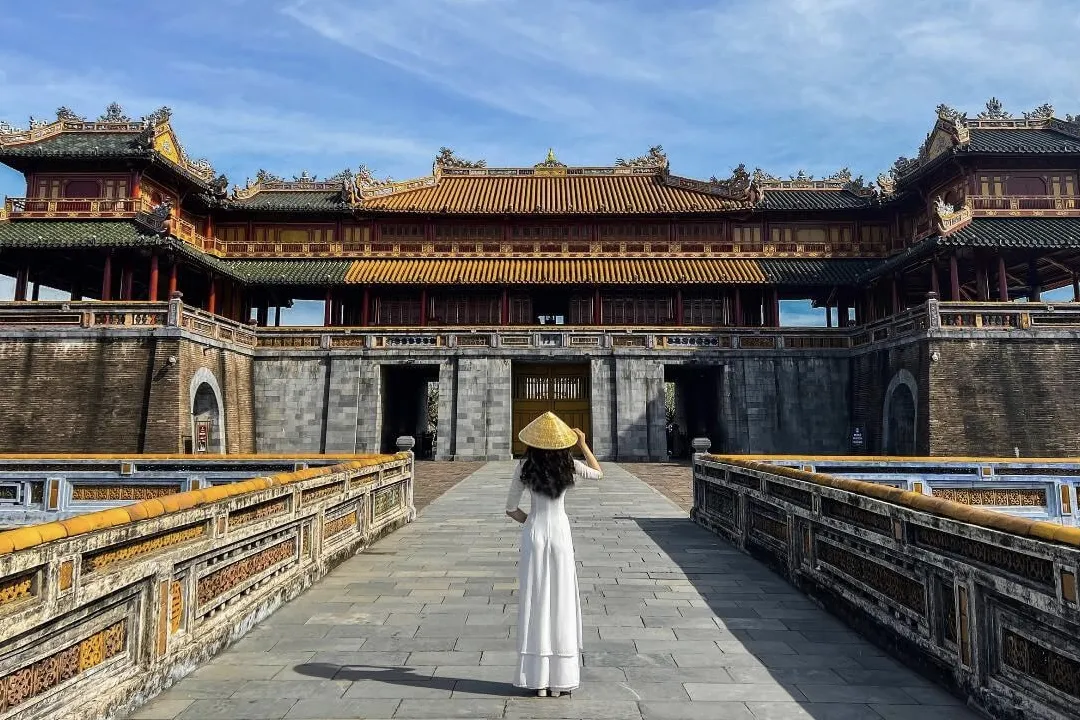
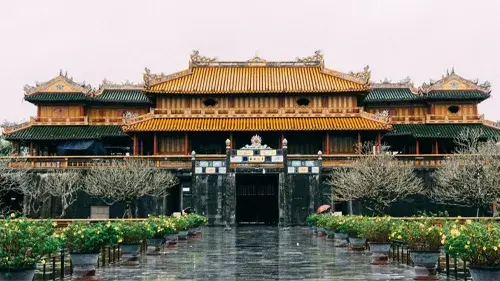
The Imperial Citadel of Hue is a magnificent historical landmark located in central Vietnam. It sits gracefully on the northern bank of the famous Perfume River in Hue City. This massive complex served as the capital of the Nguyen Dynasty, which was the last royal family of Vietnam, from 1802 until 1945.
What makes this destination unique is its incredible architecture and deep cultural value. The site is a huge fortress protected by thick stone walls and wide water moats. Inside, you can explore hundreds of ancient monuments, grand temples, and colorful royal palaces. The most special area is the Forbidden Purple City, which was built exclusively for the emperor and his private family. Because of its great global importance, it is recognized as a UNESCO World Heritage Site.
The ideal time to visit the Imperial Citadel is from January to April. During these spring months, the weather is cool, dry, and very comfortable for walking outdoors. You should try to avoid the heavy rainy season, which usually lasts from October to December, as it can make outdoor sightseeing difficult.
Ticket and Service Prices
| Ticket Type |
Price (VND) |
Price (USD) |
Included Access |
| Adults |
200,000 VND |
~$7.90 |
Hue Imperial Citadel & Hue Museum of Royal Antiquities |
| Children (7–12 years) |
40,000 VND |
~$1.60 |
Hue Imperial Citadel & Hue Museum of Royal Antiquities |
| Children (Under 7 years) |
Free |
Free |
Full entry |
Money-Saving Combo Tickets
If you plan on exploring the iconic imperial tombs scattered around Hue alongside the Citadel, purchasing a combo ticket is highly recommended. These multi-site tickets are valid for 2 days from the date of purchase.
| Route / Package |
Adult Price (VND) |
Adult Price (USD) |
Child Price (VND) |
Child Price (USD) |
|
3-Site Combo
(Citadel + Minh Mang Tomb + Khai Dinh Tomb)
|
420,000 VND |
~$16.50 |
80,000 VND |
~$3.15 |
|
3-Site Combo (Alternative)
(Citadel + Minh Mang Tomb + Tu Duc Tomb)
|
420,000 VND |
~$16.50 |
80,000 VND |
~$3.15 |
|
4-Site Combo
(Citadel + Minh Mang + Tu Duc + Khai Dinh)
|
530,000 VND |
~$20.80 |
100,000 VND |
~$3.90 |
Add-on Services (Optional)
- On-site Tour Guide: 200,000 VND (~$7.90) per guide for a group within the Citadel.
- Audio Guide: 150,000 VND (~$5.90) per device.
- Sightseeing Electric Cars: 70,000 VND to 500,000 VND (~$2.75 to $19.60) depending entirely on your chosen route and duration.
What to see in Hue Imperial City
Imperial Citadel
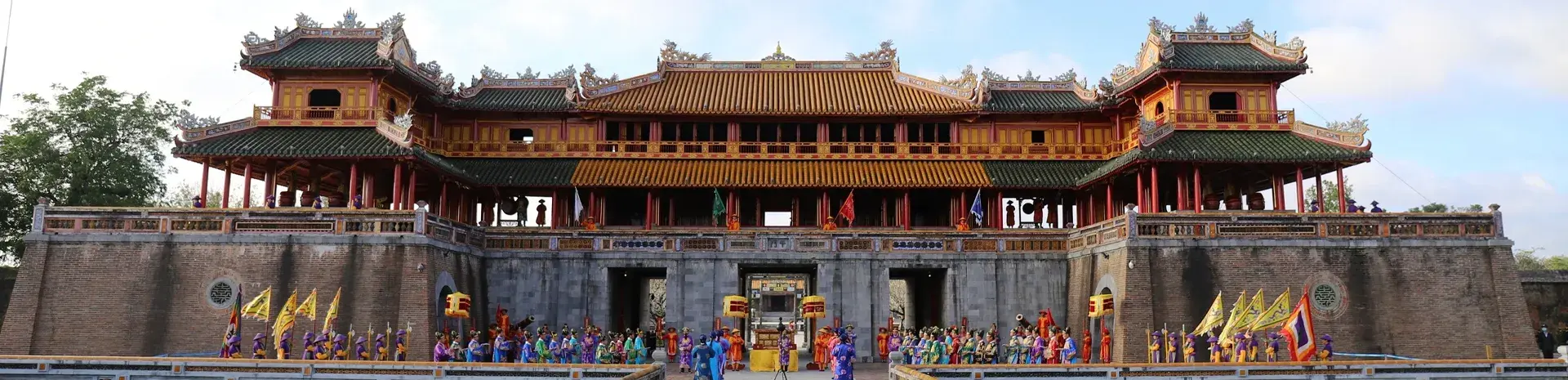
Ngo Mon: As mentioned, this is the main gate leading into the Imperial Citadel, located on the south side and built in the 14th year of Minh Mang's reign (1834). This was where military parades, the ceremony of announcing the names of newly graduated doctors, and the ceremony of bestowing the calendar for the new year were held.
Thai Hoa Palace: The palace, along with the courtyard (Dai Trieu Nghi courtyard), was where the court held its sessions and important ceremonies such as the coronation, the king's birthday, and the reception of foreign envoys took place. The king's throne was placed under a canopy inside Thai Hoa Palace.
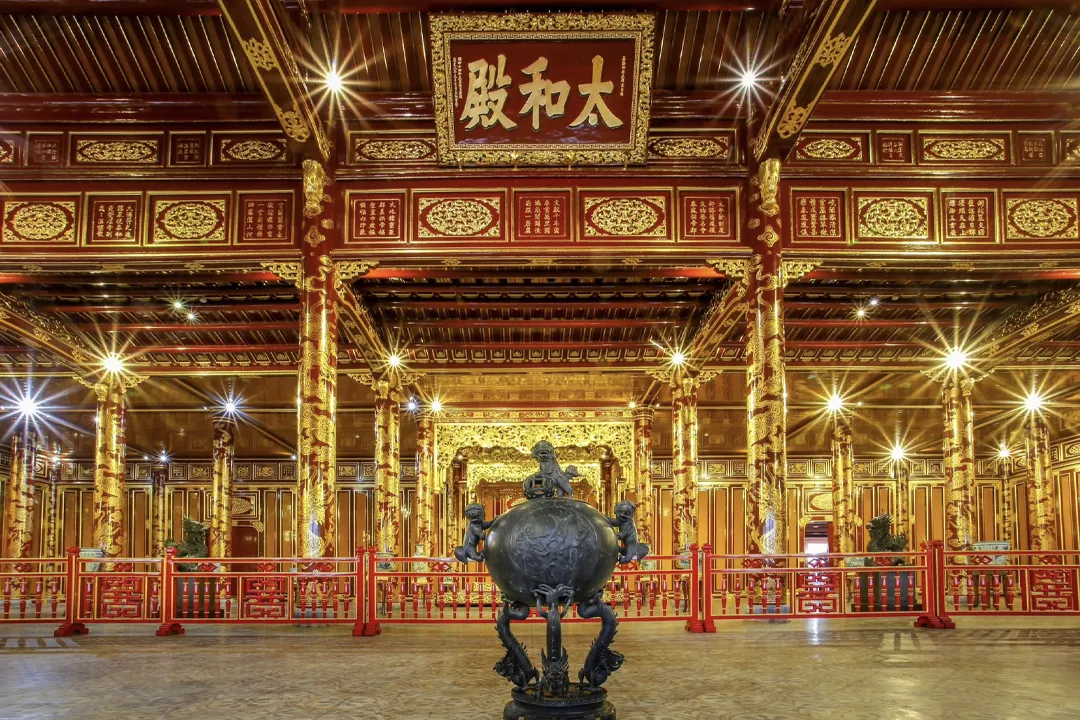
Temples and Shrines: The area of shrines is arranged in front of and along both sides of the main axis of the citadel. This is where the ancestors and kings of the Nguyen dynasty are worshipped, such as:
- Trieu To Mieu (Trieu Mieu): The shrine of Nguyen Kim (father of Lord Nguyen Hoang)
- Thai To Mieu (Thai Mieu): The shrine of the Nguyen lords, from Nguyen Hoang to Nguyen Phuc Thuan
- Hung To Mieu (Hung Mieu): The shrine of Nguyen Phuc Luan and Nguyen Thi Hoan (parents of King Gia Long)
- The To Mieu (The Mieu): The shrine of the Nguyen dynasty kings
- Phung Tien Palace: The shrine of the Nguyen dynasty kings and queens
Internal Affairs Office: The agency responsible for storing the assets and belongings of the king, the royal family, and public property such as gold, jewels, silk, musical instruments, tributes, etc. The Internal Affairs Office also had the task of producing items for the king and the royal court to use.
Co Ha Garden – Kham Van Palace: This is one of the five royal gardens within the Hue Imperial Citadel and served as an area for the princes to study and relax.
Truong Sanh Palace, Dien Tho Palace: Areas reserved for the Empress Dowagers (the king's grandmothers) and the Empress Dowagers (the king's mothers).
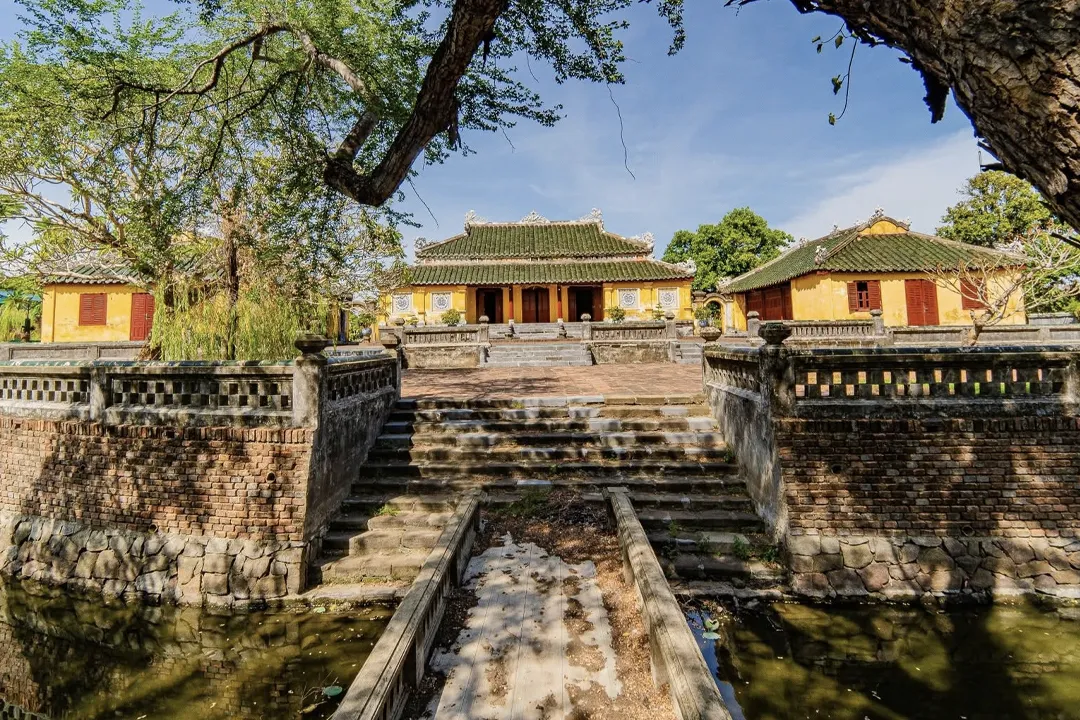
Forbidden City
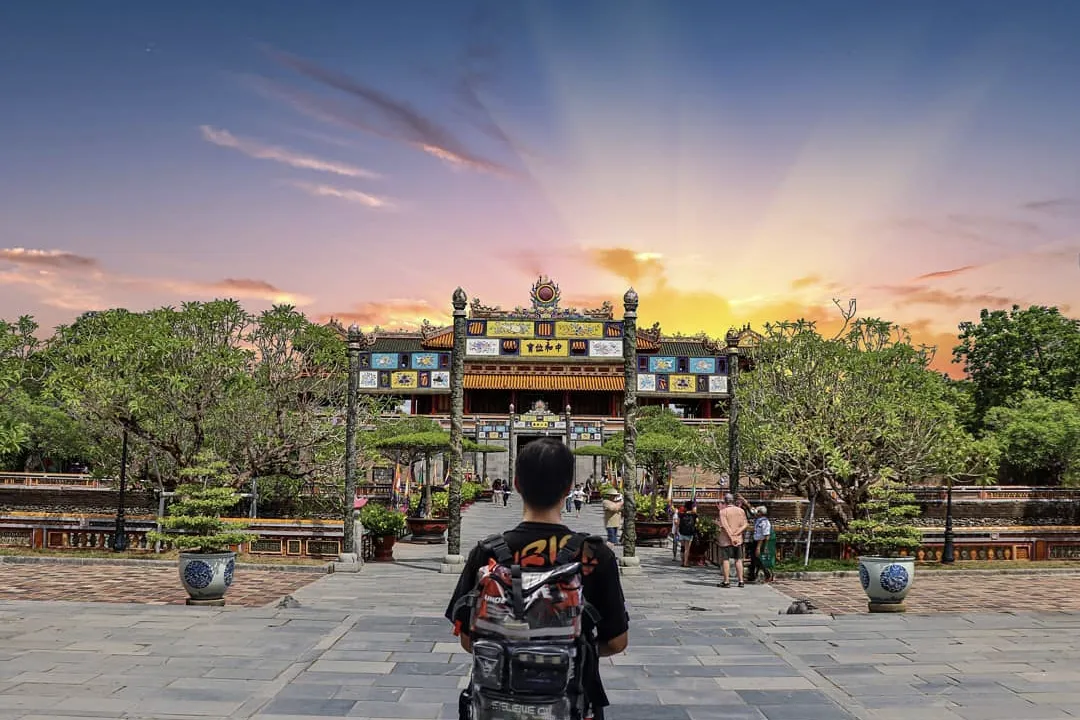
The Forbidden City is located inside the Imperial Citadel and is the innermost area of the Hue Citadel. Inside the Forbidden City, there are many areas with dozens of architectural structures:
- Dai Cung Mon: The main gate leading into the Forbidden City
- Can Thanh Palace: The residence of the king
- Khon Thai Palace: The residence of the empresses and imperial consorts
- Duyet Thi Duong: A theater for performing court plays for the king, princes, high-ranking officials, and envoys…
- Thuong Thien: The area for cooking for the king
- Vien Duong Tam, Thai Binh Lau: Where the king rested and read books
- Minh Quang Hall: The residence of the princes
- Trinh Minh Hall: The residence of the concubines
What to see nearby
Thien Mu Pagoda
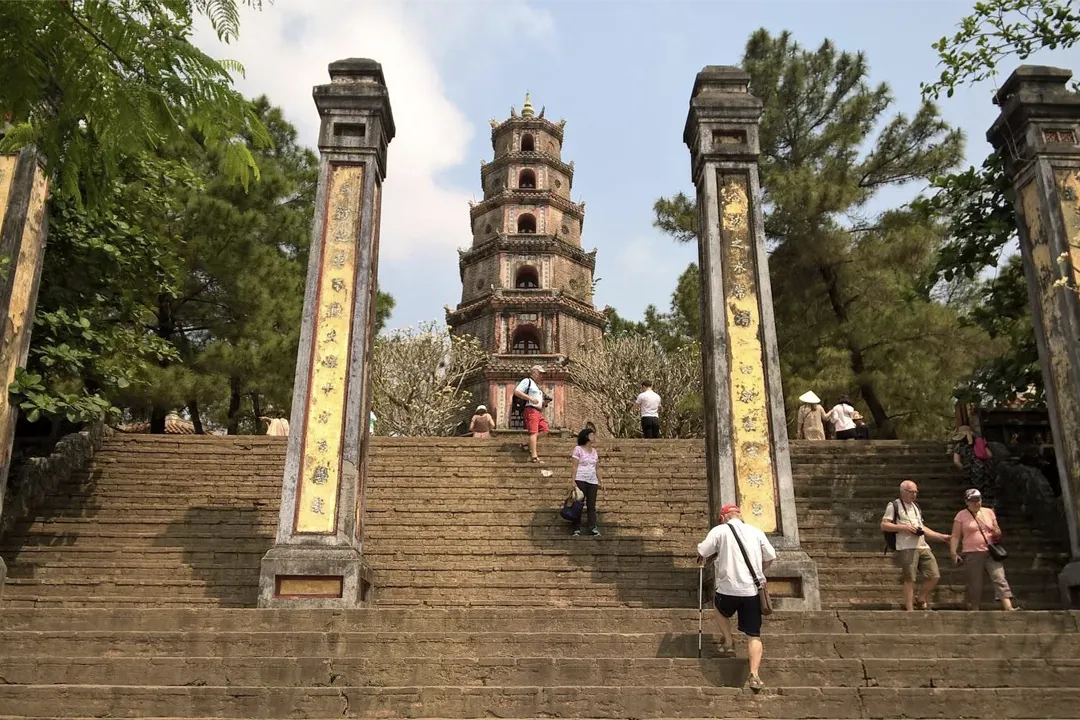
Thien Mu Pagoda is a seven-storey pagoda on the Perfume River. It is one of the oldest religious buildings in Hue, built in 1601. The pagoda has a large bronze bell and a small garden. From the hill, you can see beautiful views of the river and the countryside. This is a quiet place to relax.
- Location: Kim Long Road, Huong Long Ward, Hue City (about 4 kilometers west of the Citadel).
- Open time: 8:00 AM – 6:00 PM daily.
- Suggested activities: Take a peaceful walk around the gardens, look at the famous 7-story Phuoc Duyen tower, take beautiful photos of the Perfume River, and listen to the relaxing evening bells.
- Must-try local food: Banh Cuon Kim Long (grilled pork wrapped in soft rice paper with fresh herbs and peanut sauce).
- Entry fee: Free.
Tu Duc Mausoleum
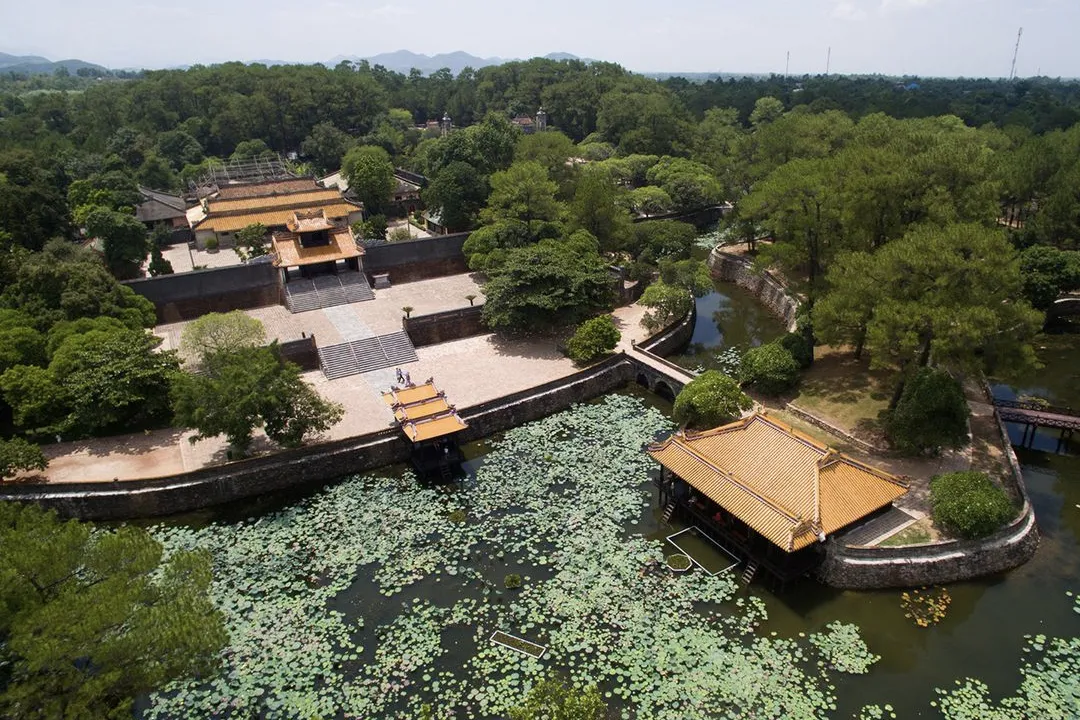
Tu Duc Mausoleum is the final resting place of Emperor Tu Duc. It is not just a tomb but a large park with a lake, a temple, and a pavilion. The emperor used it as a second home during his life. You can see where he relaxed, wrote poetry, and hunted. The tomb is very peaceful and romantic.
- Location: Duong Xuan Thuong Village, about 7 km south of the Citadel
- Open time: 7:00 – 17:30 daily
- Suggested activities: Walk around the lake, visit the emperor’s temple, take photos of the lotus flowers
- Must-try local food: Cơm hến (clam rice) at a local restaurant near the tomb – 25,000 VND ($1.10)
- Entry fee: 150,000 VND ($6.40)
Dong Ba Market
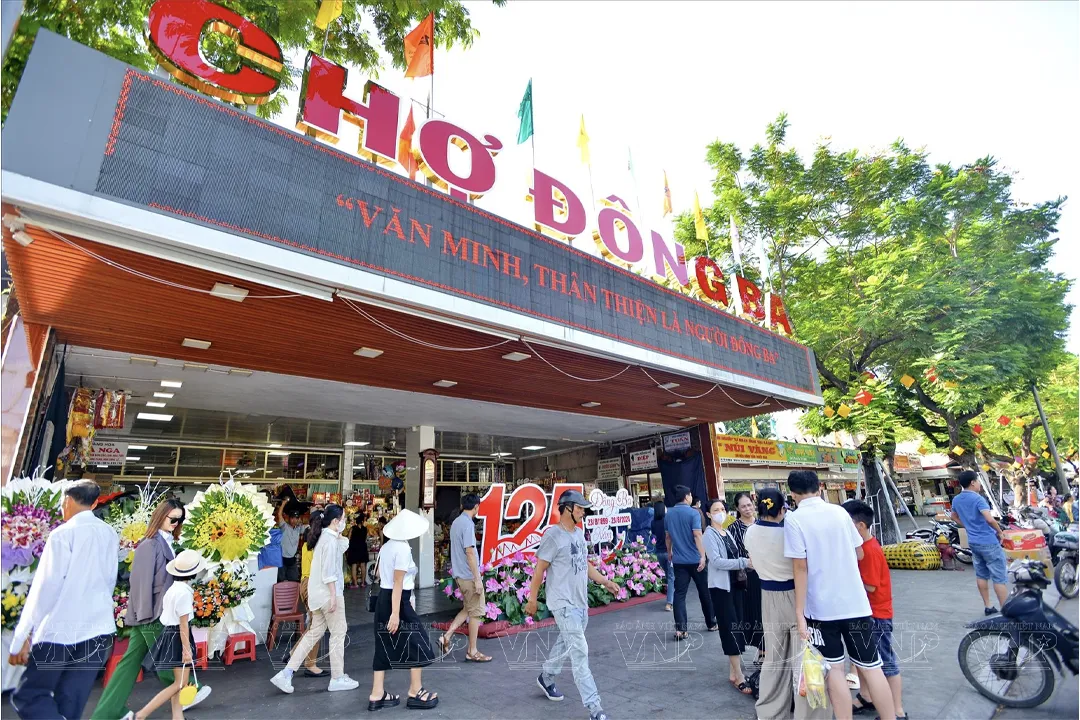
Dong Ba Market is the biggest market in Hue. It is very busy and colourful. You can find local food, clothes, souvenirs, and fresh fruit. The market is a great place to see daily life in Hue. Vendors are friendly and you can try many local dishes.
- Location: Tran Hung Dao Street, Phu Hoa Ward, Hue City (just 1 kilometer east of the Citadel).
- Open time: 5:00 AM – 7:00 PM daily.
- Suggested activities: Shop for local souvenirs like traditional conical hats, watch local merchants sell daily goods, and practice bargaining for cheap clothes or gifts.
- Must-try local food: Banh Beo and Banh Loc (steamed savory rice cakes served with sweet fish sauce and dried shrimp).
- Entry fee: Free.
Suggested 1-Day Multi-Point Itinerary
08:00 AM – 11:00 AM: Start your morning early at the Imperial Citadel. Walk through the grand Noon Gate, visit the majestic Thai Hoa Palace, and explore the quiet ruins of the Forbidden Purple City while the air is fresh.
11:30 AM – 01:00 PM: Travel to a local restaurant nearby. Enjoy a delicious bowl of authentic Bun Bo Hue and try some sweet Hue cakes for lunch.
01:30 PM – 03:00 PM: Take a short drive or a relaxing dragon boat ride to visit the ancient Thien Mu Pagoda. Enjoy the beautiful river views.
03:30 PM – 05:00 PM: Head south to explore the grand Tomb of Emperor Khai Dinh. Admire the unique mix of European and Vietnamese architecture.
05:30 PM – 07:00 PM: Finish your wonderful day at Dong Ba Market. Shop for souvenirs and taste delicious street food like snack cakes and local sweet soup.
Pro-Traveler Experience Tips
Buy tickets online or early: You can buy the Citadel ticket online to avoid long queues. Arrive at 7:00 when it opens. The morning light is perfect for photos and there are fewer tourists.
Wear the right clothes: The Citadel and pagodas require respectful clothing. Cover your shoulders and knees. A light scarf is useful. Wear comfortable walking shoes because you will walk a lot on stone paths.
Stay hydrated: The weather in Hue can be very hot. Bring a refillable water bottle. You can find cold drinks outside the main gates. Many cafes sell fresh coconut water – very refreshing.
Use a local guide: For a deeper experience, hire a guide at the entrance. A guide costs about 300,000 VND ($12.80) for two hours. They explain the history and stories you would miss alone.
Avoid midday sun: The sun is strongest from 11:00 to 14:00. Plan to be indoors at the market or have a long lunch during these hours. Use an umbrella or wear a wide hat.
Try royal tea: Near the Forbidden Purple City, there is a small tea house. You can taste traditional royal tea with lotus flavour. It costs 40,000 VND ($1.70) per pot. It is a unique experience.
Cash is important: Many small shops and food stalls do not accept cards. Bring Vietnamese Dong in small notes. ATMs are available near the Citadel entrance but may charge a fee.
Respect the site: Do not climb on old walls or touch carvings. Stay on the paths. The Citadel is a historic treasure. Help keep it clean by taking your rubbish with you.