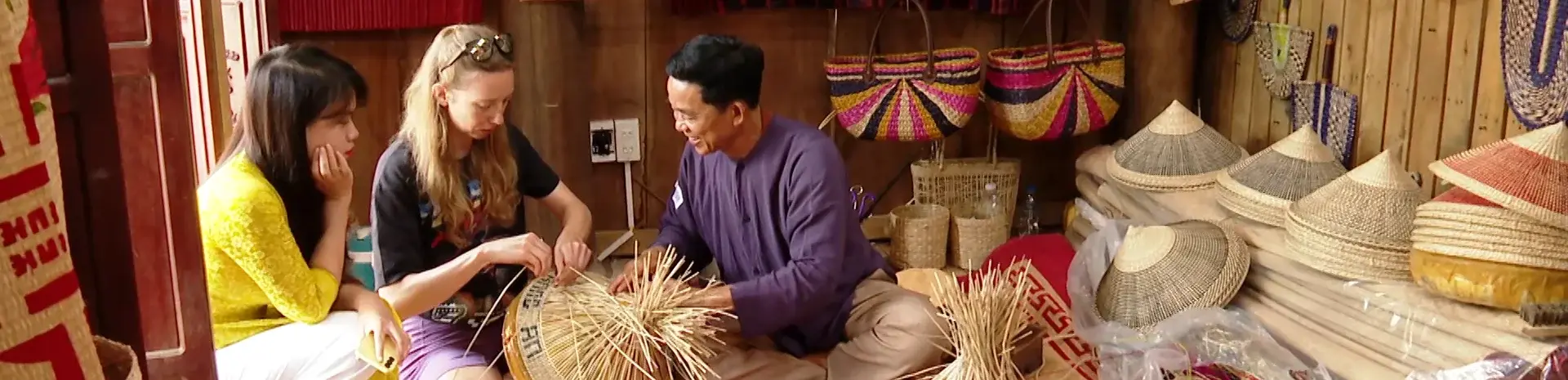
The rhythmic clacking of wooden handlooms echoes through the village lanes, a sound that has filled the air here for centuries. In the shade of simple workshops, skilled hands – mostly women – weave strands of dried sedge into intricate patterns, their movements fluid and practiced. The sweet, earthy scent of sun‑dried grass mingles with the coastal breeze.
This is Kim Son, a district where the art of sedge weaving is not just a livelihood but a living heritage. Located at the southern tip of Ninh Binh province, this serene coastal area was once a wild marshland. In 1829, the visionary mandarin Nguyen Cong Tru led an ambitious land‑reclamation project, transforming the wilderness into fertile fields perfect for growing sedge. For over 200 years, Kim Son’s artisans have turned this humble plant into beautiful, durable products. In 2024, their craft was officially recognized as a National Intangible Cultural Heritage. If you've never set foot in this hidden cultural gem, here are the reasons to change that.
Overview
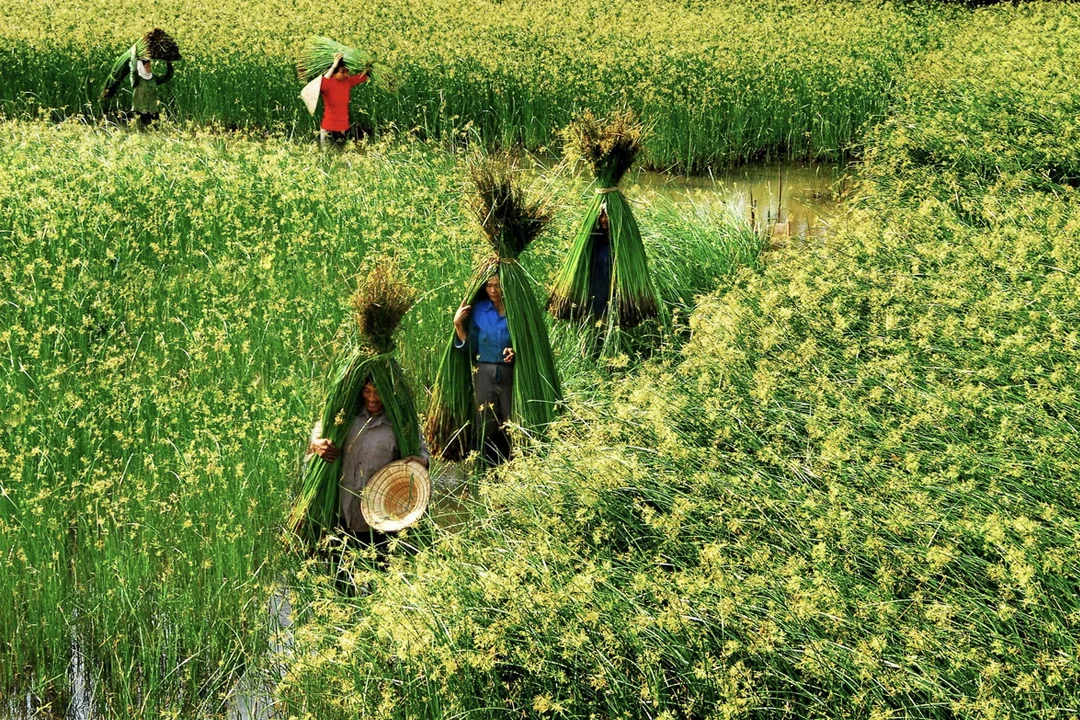
Kim Son is a coastal district in southern Ninh Binh province, approximately 30 kilometers southeast of Ninh Binh City. The district borders the East Sea to the south, with an 18‑kilometer coastline, and sits between the Day and Can rivers, making it a natural link between freshwater and saltwater ecosystems. The journey from Ninh Binh City takes about 45 minutes to 1 hour by car or motorbike.
Ninh Binh enjoys a tropical monsoon climate with a distinct dry season from November to April. This period offers the most pleasant weather for travel, with cool, sunny days ideal for exploring the village on foot and watching the artisans at work. The sedge harvest, which takes place twice a year in June and November, is a particularly vibrant time to visit.
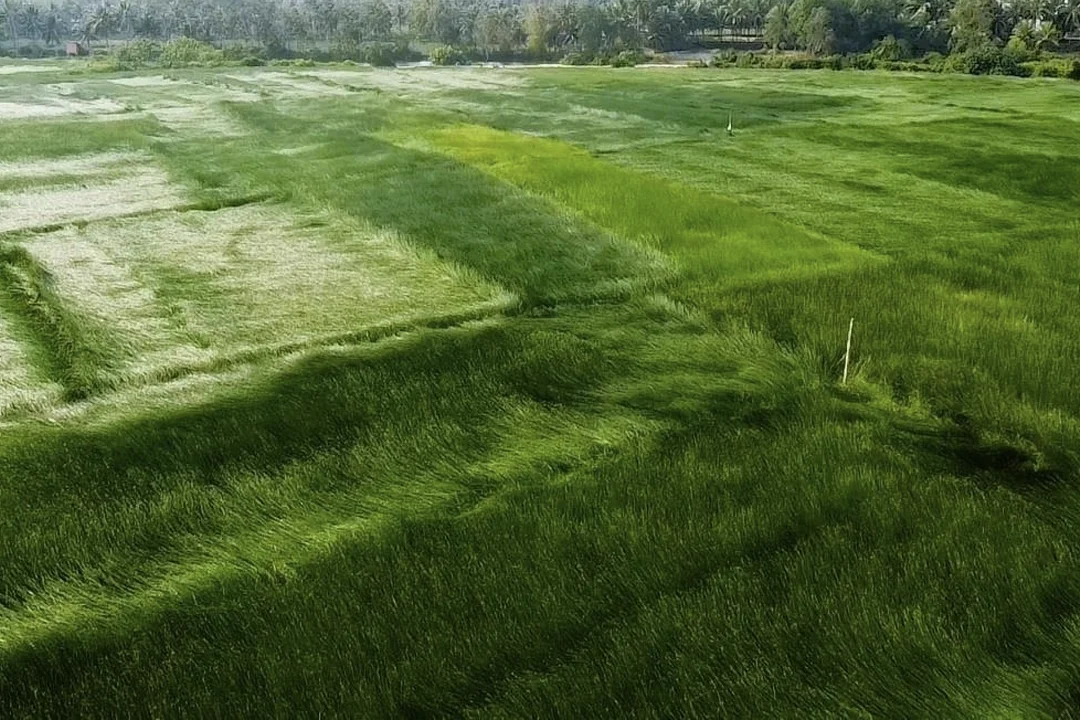
What makes this place truly stand out is its dual identity. Kim Son is not only Vietnam's largest center for sedge cultivation and weaving — with about 4,000 hectares of sedge fields and over 20 officially recognized craft villages — but also a unique Catholic hub, home to the magnificent Phat Diem Stone Cathedral. Kim Son is not just a craft village; it is a living community where tradition, faith, and nature intertwine, offering a rare glimpse into Vietnam's diverse cultural landscape.
The Sedge Weaving Workshops
The heart of Kim Son lies in its countless small workshops, where the magic of sedge weaving comes to life. Scattered across villages like Thuong Kiem, Phat Diem, and Quang Thien, these humble spaces are where you can witness the transformation of raw sedge into beautiful handicrafts.
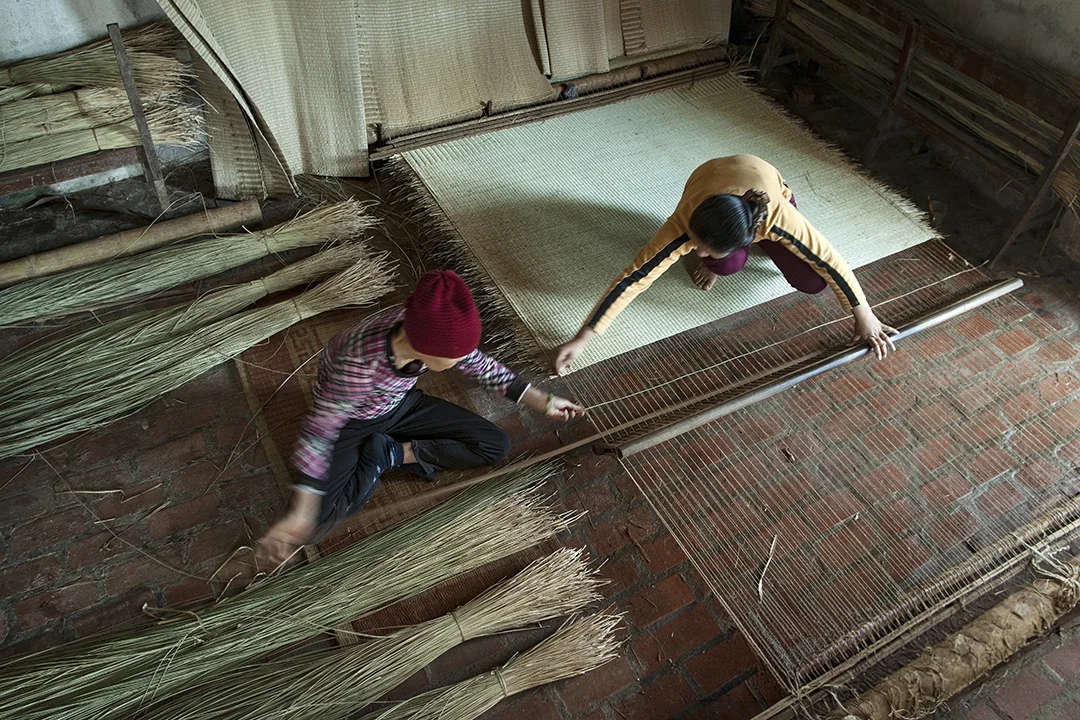
As you step into a workshop, the first thing you notice is the rhythmic sound of handlooms. Most weavers are women, sitting on bamboo frames, their hands moving with practiced precision as they weave sedge strands into mats, bags, and decorative pieces. The atmosphere is calm and focused. Some workshops, like the one run by Ms. Phan Thi Ngoan, a third-generation weaver, have become recognized heritage facilities where visitors are welcome to observe the entire process.
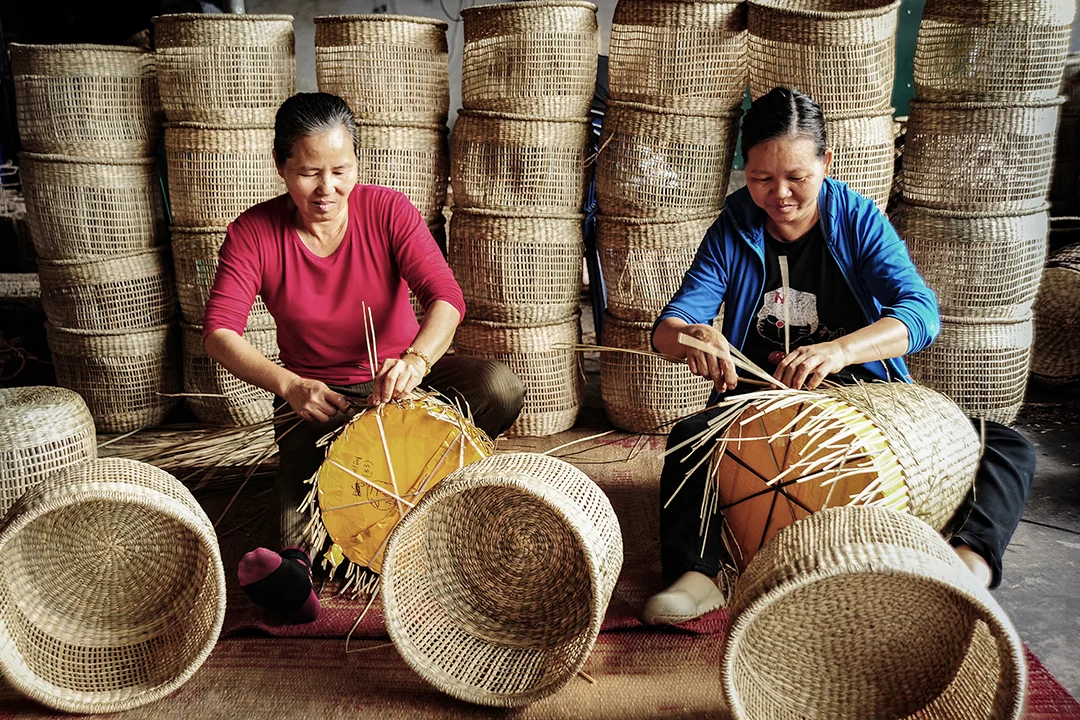
What visitors often miss: the sheer scale of the local industry. Over 5,000 households and businesses across Kim Son are involved in sedge production, generating revenue that reached nearly 40 billion VND in 2024 alone. A simple wooden loom can produce up to 3–5 mats a day, each one a testament to generations of accumulated skill.
Best time to visit: Early morning (8:00–10:00 AM) or late afternoon (2:30–4:30 PM), when the workshops are most active.
A Two‑Century‑Old Craft: From Sedge Field to Finished Product
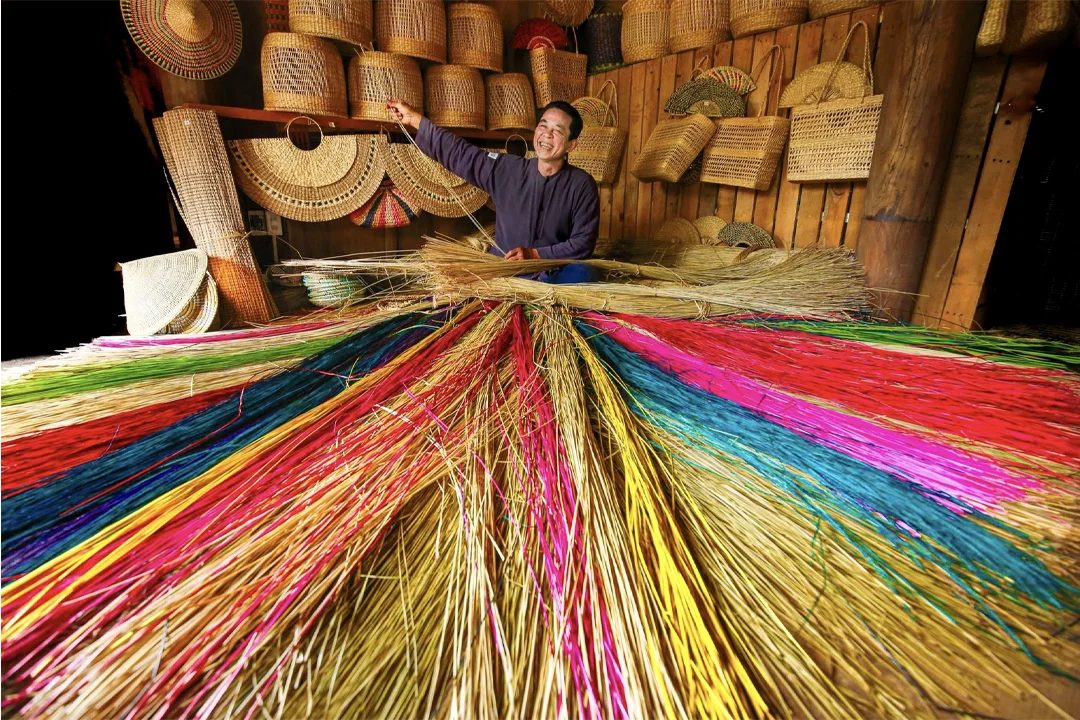
To truly appreciate the beauty of a Kim Son sedge mat, you need to understand the journey behind it. The craft involves an elaborate, multi-stage process that begins long before the weaving starts.
Step 1 – Harvesting & Drying: Sedge, a plant that thrives in saltwater alluvial soil, is harvested twice a year in June and November. The fresh stalks are sorted by length, split, and dried under the sun. According to traditional knowledge passed down through generations, the sedge must be dried under “three suns” and exposed to dew for about a week until it turns a creamy white, becoming both supple and resilient.
Step 2 – Dyeing: Kim Son artisans use a unique technique where fibers are dyed before weaving. Natural dyes derived from local plants — or, in some families, a special solution made from rusted iron tools boiled with natural pigments — are used to fix vibrant, long‑lasting colors.
Step 3 – Weaving: The final stage. Using simple bamboo looms, the weaver interlaces the prepared strands, creating everything from classic mats to contemporary items like lanterns, handbags, hats, and even children's toys.
Phat Diem Stone Cathedral: A Divine Architectural Masterpiece
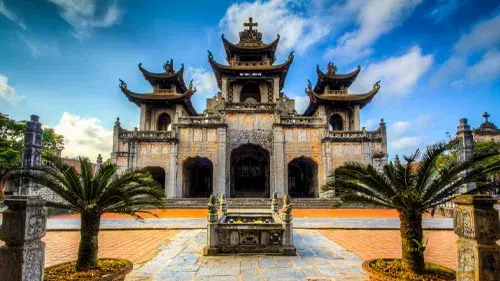
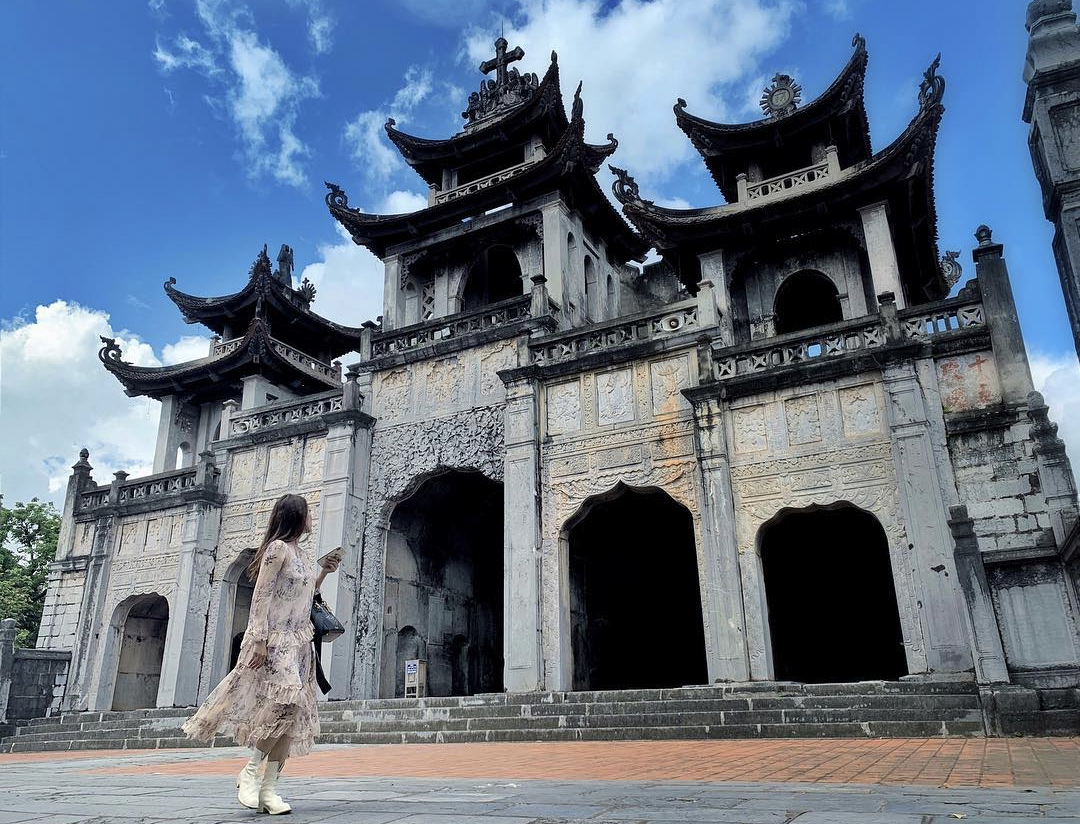
Just a short distance from the sedge weaving village lies one of Vietnam’s most extraordinary religious structures: Phat Diem Stone Cathedral. Built from 1875 to 1898, this sprawling complex is a stunning fusion of Eastern and Western architectural styles.
The cathedral is entirely constructed from locally quarried stone and wood, without a single drop of mortar binding the massive stone blocks. Its design blends Vietnamese pagoda roofs and curved eaves with European Gothic vaulted ceilings and arches. The main cathedral can accommodate over 2,000 worshippers, while the surrounding complex includes four chapels, three artificial lakes, and a towering 25‑meter stone bell tower. The bells, cast in bronze, weigh up to 5 tons each.
What visitors often miss: The tomb of Bishop Tran Lu, who oversaw the cathedral's construction, lies in a small garden behind the main altar. Also, the intricate wooden carvings inside the side chapels — depicting lotus flowers, dragons, and phoenixes — are masterpieces of Vietnamese folk art.
Best time to visit: Late afternoon (3:30–5:00 PM), when the golden sunlight illuminates the stone facade, making it perfect for photography.
Kim Son Mangrove Forest and Coastal Wetlands
Beyond the villages, Kim Son is also home to a UNESCO‑recognized biosphere reserve: a 600‑hectare mangrove forest that hugs the coast. This pristine ecosystem is a haven for birdwatchers and nature lovers.
Within the mangrove forest lies the Con Noi Sea Bridge, a 3‑kilometer‑long path that leads to a small island accessible only at low tide. This is a hidden gem, little known even to domestic travelers, and offers spectacular sunset views over the East Sea.

Activities include kayaking through the flooded mangroves, birdwatching (over 100 species, including storks and herons), and guided walking tours through the forest’s shaded canopy. The best time to visit is early morning (5:30–7:30 AM) or late afternoon (3:30–5:30 PM) to avoid the heat and catch the wildlife in action.
Practical Tips & Notes
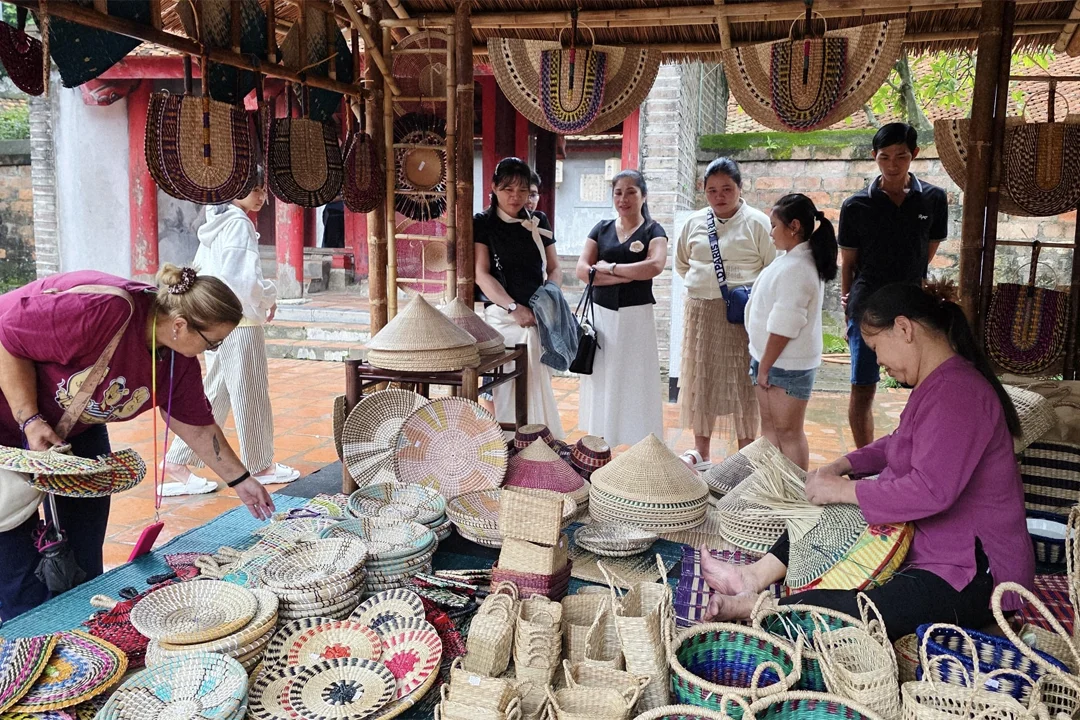
When planning your visit, the dry season from November to April offers the most pleasant weather, though timing your trip during the sedge harvest months of June and November will reward you with the area's most vibrant activity. For a solo traveler taking a day trip from Ninh Binh City, the average budget is highly affordable at approximately 430,000 VND (~$16.30 USD), which covers a motorbike rental for 100,000 VND (~$3.80 USD), 30,000 VND (~$1.15 USD) for fuel, 100,000 VND (~$3.80 USD) for lunch, and around 200,000 VND (~$7.60 USD) for souvenirs. When packing, it is best to bring light, breathable clothing to stay comfortable in the warm coastal climate, along with sunscreen, a hat, insect repellent, a reusable water bottle, and a camera. To ensure a smooth experience, visit on a weekday to avoid the weekend crowds—especially at the cathedral—and be sure to bring cash, as most local eateries and workshops do not accept cards. Finally, remember to practice proper cultural etiquette by removing your hat and speaking quietly inside the cathedral, and always ask permission before taking close-up photos of artisans without interrupting their work.