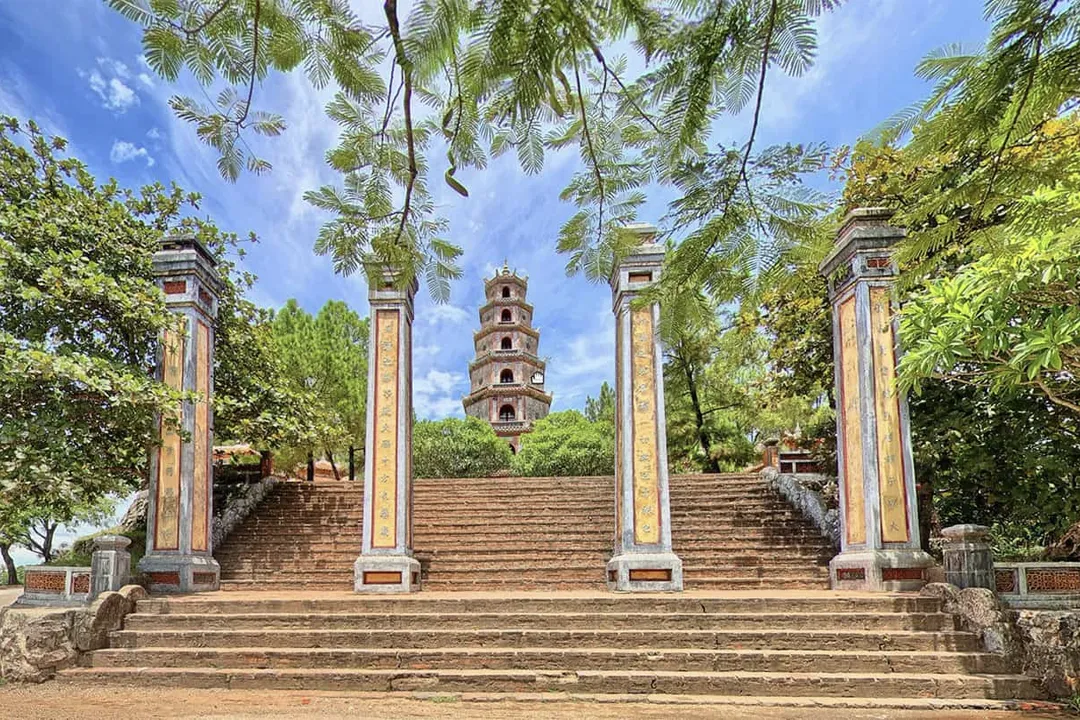
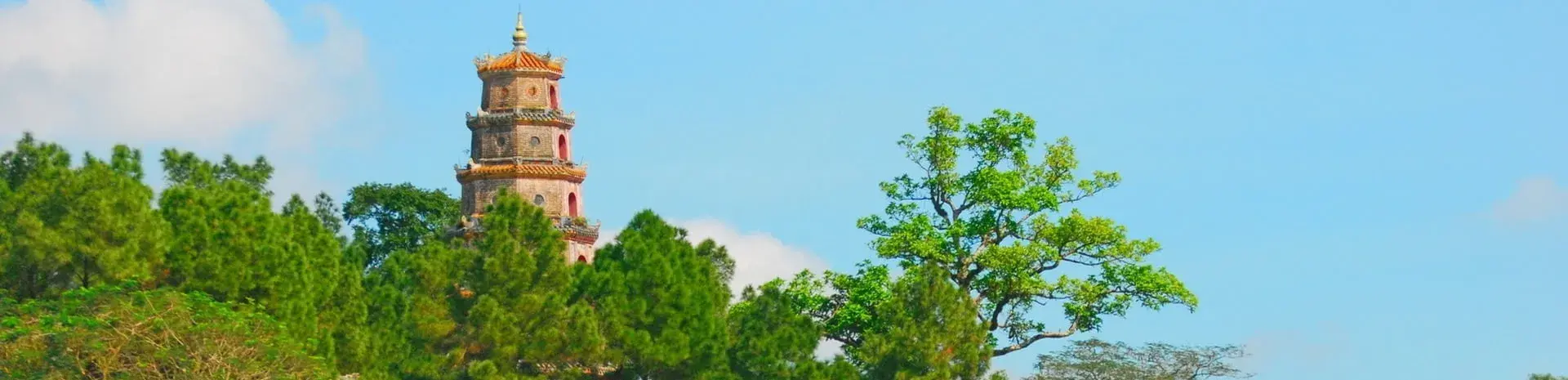
Thien Mu Pagoda is widely regarded as the oldest and most beautiful religious architectural complex in Hue. Founded in 1601 by Lord Nguyen Hoang, the pagoda bridges the gap between legend and history. It is most famous for the 21-meter-tall Phuoc Duyen Tower, which has become an unofficial symbol of the former imperial capital. Visitors are drawn here not only for the intricate Buddhist statuary and the historic Austin car used by Thich Quang Duc but also for the unparalleled views of the Perfume River. It is a place where architecture, nature, and spirituality harmonize perfectly.
The majestic Tam Quan Gate
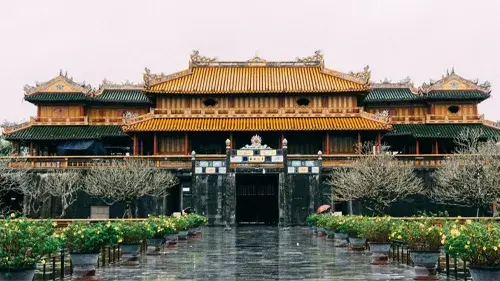
Before entering the temple, you will first encounter the Tam Quan gate. The gate has a 2-storey design, 8 roofs and 3 entrances. The doors here are all made of red vermilion wood, extremely sturdy and solid. Around the gate are placed statues of the Guardian God to help protect the peace of the temple, creating a majestic look for Tam Quan gate.
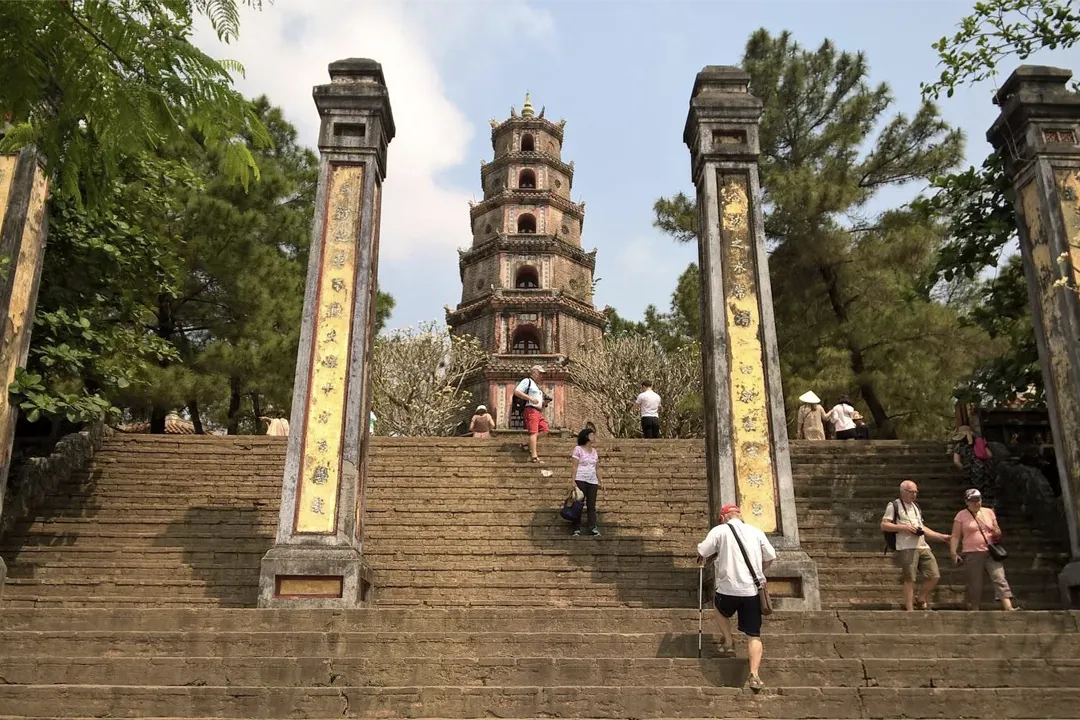
The Architectural Grandeur of Phuoc Duyen Tower
The focal point of any visit is the Phuoc Duyen Tower. Built in 1844 by Emperor Thieu Tri, each of its seven levels represents a different "Manushi-Buddha" (a Buddha who appeared in human form). Moving past the tower, you encounter the Dai Hung Palace, the main sanctuary, which houses impressive bronze sculptures and a giant bell cast in 1710 weighing over 2,000 kg. The transition from the towering exterior to the fragrant, incense-filled interior halls provides a sensory journey through Hue’s royal religious history.
.webp)
Dai Hung Palace
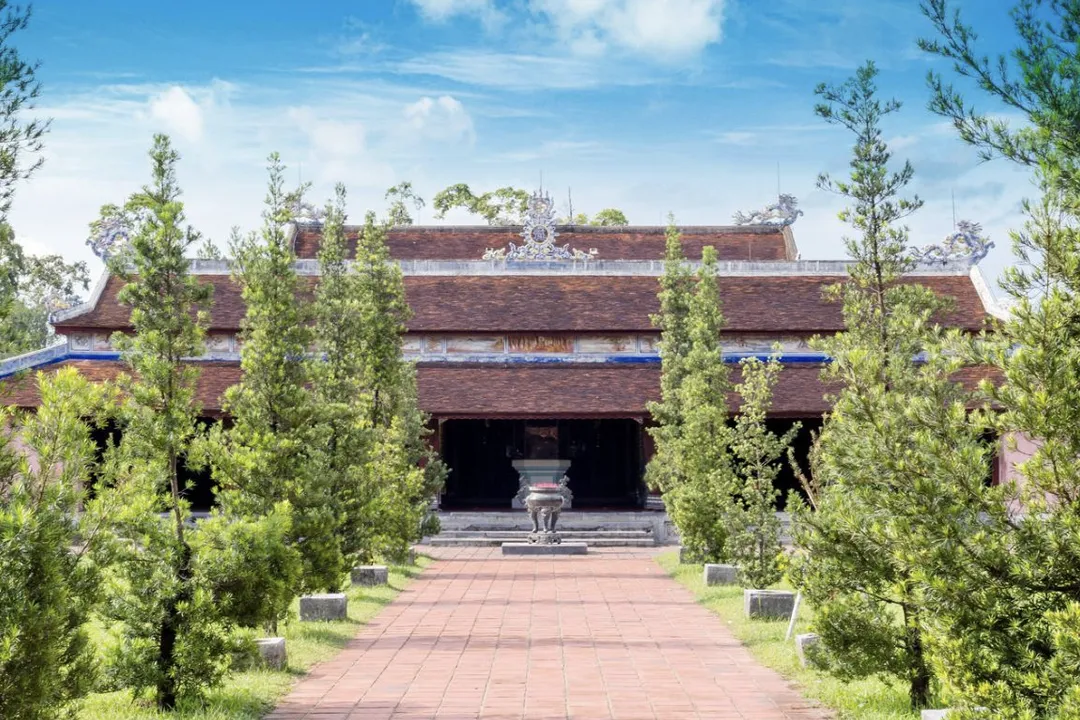
Located right in the main hall of Thien Mu Pagoda, Dai Hung Palace is a place to worship Maitreya Buddha – the God who brings carefree joy. The statue depicts Maitreya Buddha with a gentle appearance, large, knowledgeable ears, a large belly filled with tolerance and a kind smile. The palace is built entirely of solid cement. The side is repainted in wood color, giving us a feeling of closeness and familiarity.
Not only displaying the Maitreya Buddha, Dai Hung Palace is also home to a great painting, dating from 1974, and an extremely delicate bronze moon-shaped bell. Going deep inside is the temple, in the center is the statue of Tam The Buddha, on the left is Van Phu Bodhisattva and on the right is Pho Hien Bodhisattva. In particular, the land deep in Dai Hung Palace is the burial place of Dharma Master Thich Don Hau – once the abbot of the pagoda.
The Legend of the Celestial Lady and Imperial Gardens
According to local lore, an old woman in red appeared on the hill, prophesying that a lord would build a pagoda to bring prosperity to the country. This legend gave the pagoda its name. Beyond the altars, the grounds open into meticulously manicured gardens and bonsai displays. This area offers a peaceful retreat where the sounds of prayer bells mingle with the rustle of pine trees. The site also serves as a poignant historical museum, housing the vehicle that carried the monk Thich Quang Duc to his self-immolation in 1963, a turning point in modern Vietnamese history.
Experience Tips for Professional Travelers
For the discerning traveler, arriving between 7:30 AM and 9:00 AM (right after the morning chant but before tour buses from Da Nang arrive) ensures near-solitude. Wear long pants and covered shoulders out of respect—security may remind you otherwise. Avoid visiting between 11:00 AM and 1:30 PM, as the pagoda closes for the monks’ midday rest; you can still wander the grounds, but the main hall will be locked. Photography enthusiasts: the western side of the tower is backlit in the afternoon, so for soft light on the tower’s face, come before 10:00 AM. For an unforgettable shot, hire a traditional dragon boat (approx. 150,000–250,000 VND / $6–$10 USD for a round trip) from Toa Khoa Boat Wharf to approach the pagoda from the water. Lastly, carry small VND notes (10,000 or 20,000 VND / $0.40–$0.80 USD) for donation boxes—it’s customary, though not forced. And a pro tip: the best souvenir isn’t from a shop; it’s a packet of the pagoda’s own “Thien Mu” incense, sold by a small stall near the parking lot, made from local herbs and sandalwood.