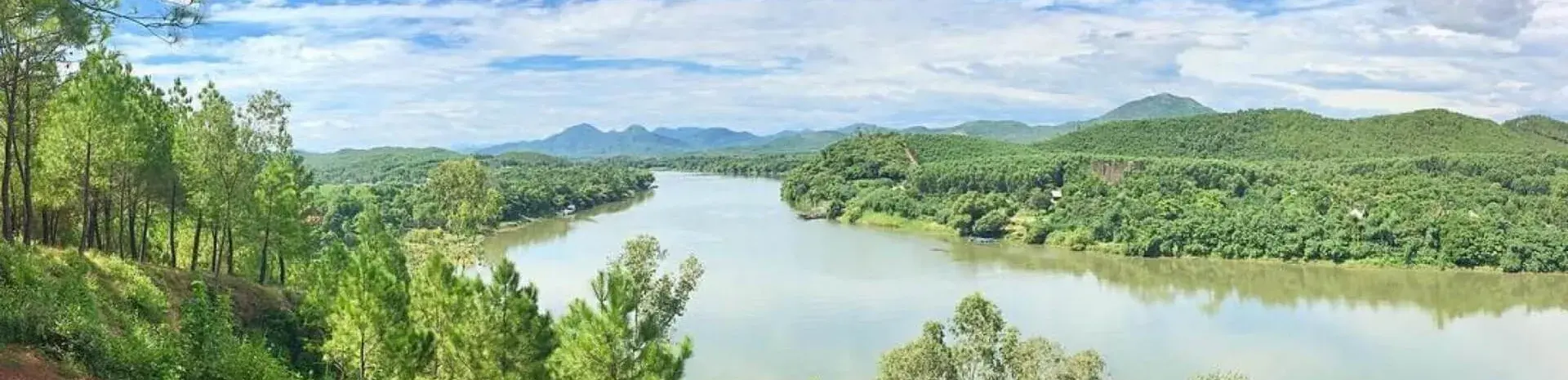
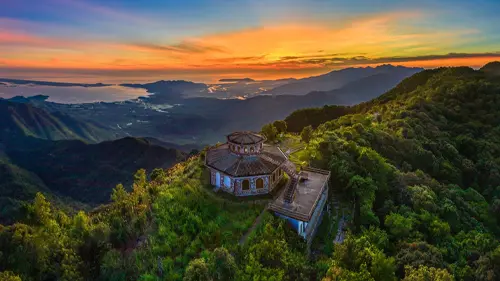
Rising gently above the Perfume River's southern bank, Vong Canh Hill—meaning "Hill of Gazing at the Landscape"—has been a favorite lookout point for emperors, poets, and travelers for over two centuries. From this grassy summit, the river unwinds below like a silk ribbon, curling around the ancient capital's citadel walls, pagodas, and distant mountains. Emperor Thiệu Trị once listed this view among the "Twenty Scenic Sights of Huế." Today, it remains one of the city's most beloved sunset spots, drawing couples, photographers, and anyone seeking a moment of quiet elevation. For travelers who have explored tombs and temples, Vong Canh offers something different: not a monument, but a perspective—the imperial capital spread out like a living map.
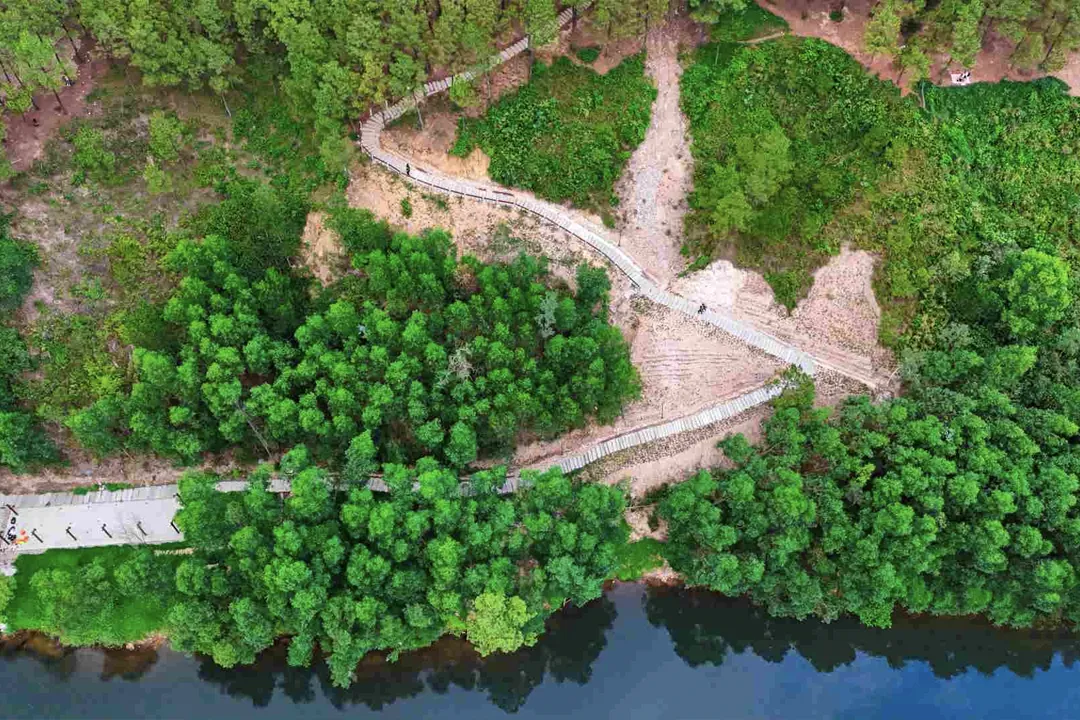
The Emperor's Favorite View
In 1843, Emperor Thieu Tri—a poet and connoisseur of beauty—compiled a list of Huế's most magnificent vistas. He called them the "Twenty Scenic Sights of the Imperial Capital." At number twelve stood Vong Canh Hill. The name itself translates to "Overlooking the Landscape," and little has changed in nearly two centuries. Standing on this modest hill today, you see exactly what the emperor saw: the Perfume River (Hương Giang) performing a slow, graceful bend around the sandbanks of Con Hến (Hen Islet). To the north, the dark outline of the Citadel's flag tower rises above the treeline. To the east, the iconic seven-tiered tower of Thien Mu Pagoda pierces the sky. And to the west, the Truong Son mountains fade into layers of blue haze. What makes Vong Canh special is not grandeur but proportion. The hill is just high enough to reveal the river's full curve without losing detail—you can still make out boats, water buffalo grazing on the banks, and villagers casting nets. Unlike the manicured observation decks found elsewhere in Asia, Vong Canh remains refreshingly raw. There are no railings, no paved walkways, no entrance gates. Just grass, a few weathered concrete benches, and an unobstructed 180-degree view that changes with every passing cloud. For photographers, this is a canvas that rewards patience. For romantics, it is a place to watch the sunset and feel the weight of history lift.
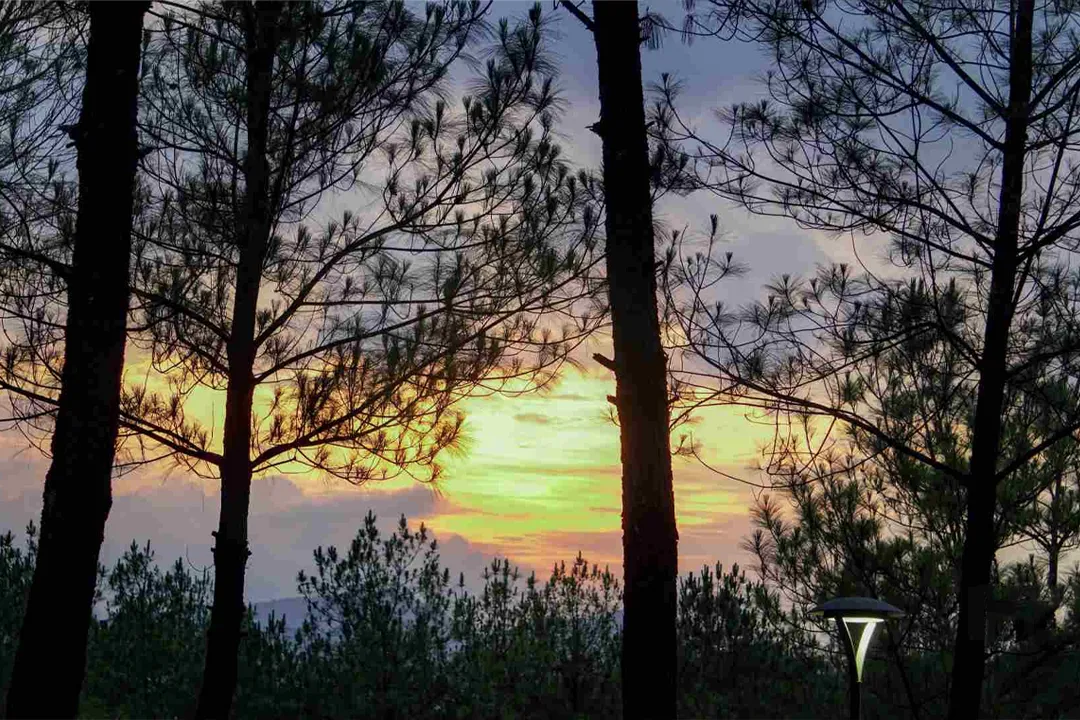
A Local Gathering Place at Dusk
By late afternoon, Vong Canh transforms. The professional photographers pack up their tripods, and the hill fills with a different crowd: young couples on motorbikes, families with children, groups of students sharing snacks, and elderly locals who have been coming here for decades. This is Huế at its most relaxed. Vendors appear as if by magic, balancing baskets of steamed corn, roasted sweet potatoes, and sugar cane juice on their shoulders. A styrofoam box of grilled squid costs 30,000 VND (~1.25 USD); a fresh coconut is 20,000 VND (~0.80 USD). The atmosphere is unhurried and joyful—people laughing, children flying kites, and the distant sound of someone playing a guitar. For travelers who have spent days in museums and tombs, this is a welcome reminder that Huế is not just a historical relic but a living city. The sunset itself, when it arrives, is rarely spectacular in the tropical way—more often a slow softening of light, the river turning from blue to silver to gold, and finally the Citadel's lights flickering on across the water. Then, as darkness settles, the hill empties almost as quickly as it filled. Locals head home for dinner, motorbikes stream down the narrow road, and Vong Canh returns to silence. If you linger, you'll see the first stars appear above the mountains—a quiet reward for those who wait.
Experience Tips for Professional Travelers
For landscape photographers, Vong Canh requires planning. The ideal time is the "golden hour" before sunset (4:30 PM–5:30 PM between October and March; 5:00 PM–6:00 PM between April and September). Arrive 45 minutes early to claim your spot—on clear weekends, local couples fill the best positions. Bring a tripod and a wide-angle lens (16-35mm) to capture the river's full curve. A polarizing filter is essential to reduce glare on the water and deepen the blue of the sky. For drone operators, Vong Canh is outside Huế's restricted flight zones. Launch from the grassy field behind the hilltop, but keep your drone below 150 meters to avoid interference with local air traffic. The best aerial shot is at 100 meters, looking directly down the river's bend toward the Citadel. For travel writers, arrive at 6:00 AM instead. The morning mist rising off the river creates a completely different atmosphere—ethereal, quiet, and almost monochrome. You'll have the hill entirely to yourself. Pro tip: There is no shade on Vong Canh Hill. Between 10:00 AM and 2:00 PM, the sun is brutal. Bring a wide-brimmed hat, sunscreen, and at least one liter of water per person. The nearest shop is a 10-minute walk downhill toward the main road. Also, the hill's grass can be slippery after rain; wear shoes with good grip.
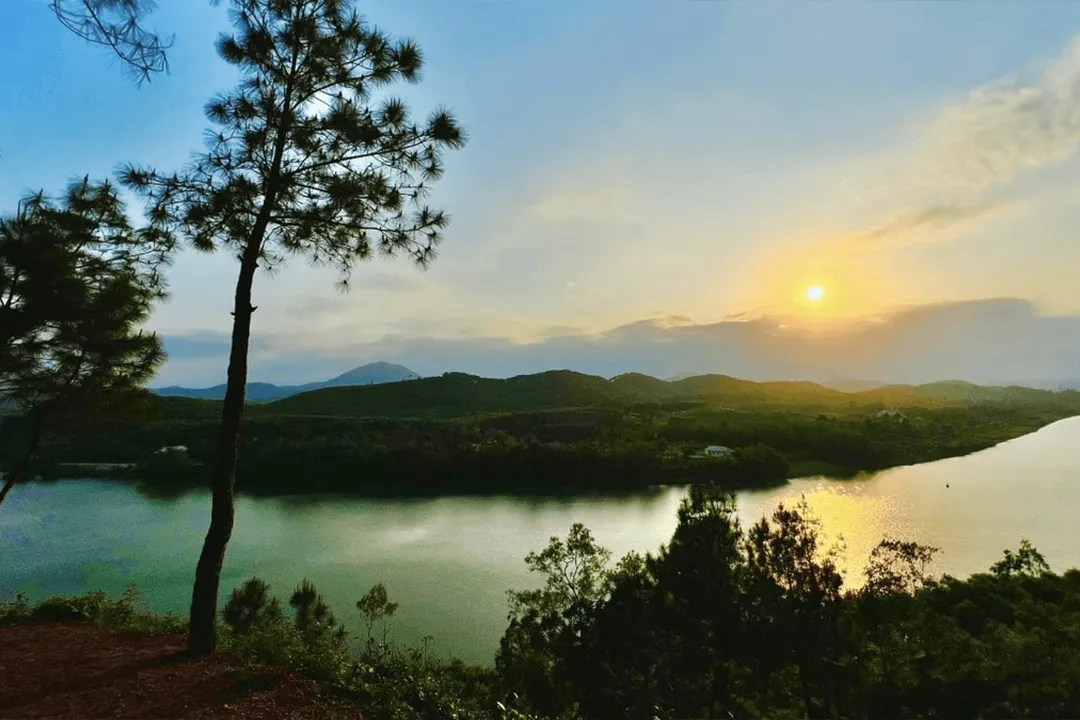
For content creators filming travelogues or vlogs, Vong Canh offers a perfect "golden hour" sequence. Arrive at 4:30 PM for setup, film the transition from daylight to dusk, then capture the local atmosphere as the crowd gathers. A 25mm lens works well for street-style shots of vendors and families. For audio, the ambient sound at 5:30 PM is rich with laughter, sizzling food, and distant traffic—ideal for B-roll. If you're a writer working on a travel memoir, bring a notebook and sit on the low concrete wall facing the river. Many writers find the view conducive to reflection; the novelist Graham Greene, who visited Huế in the 1950s, supposedly sketched scenes here. For budget travelers, Vong Canh is one of Huế's few free attractions with no ticket or hidden fees. However, be aware of motorbike parking: there is no official lot. Park along the roadside 200 meters downhill, but lock your bike securely (motorbike theft is rare but not impossible). For those using ride-hailing apps, a Grab car from the city center costs 50,000–70,000 VND (~2–3 USD) and takes 15 minutes. Finally, a note on safety: the hill has no guardrails, and the edge near the river side is a 10-meter drop. Keep a safe distance, especially with children or after a few beers. Locals are careful; travelers should be too.