Best Way to Travel from Hanoi to Hue on 2026
Overview
Traveling from Hanoi, the thousand-year-old capital, to the ancient imperial city of Hue is a journey through the heart and history of Vietnam. As of 2026, this route remains one of the most traveled corridors in the country, connecting the political center with the cultural and poetic soul of the central region.
Whether you are a budget backpacker, a business traveler, or a family seeking a luxury retreat, the options for traversing these 700 kilometers have never been more diverse. This article explores the modern landscape of travel between Hanoi and Hue, detailing the current demand, the logistics of the journey, and a comprehensive breakdown of the four primary modes of transportation.
In the first quarter of 2026, Hanoi's tourism sector reported a record-breaking 8.8 million arrivals, a significant portion of which were domestic and international travelers looking to extend their journey southward toward Hue and Da Nang. The actual travel distance between Hanoi and Hue is approximately 660~700 km (410~435 miles), depending on the specific route taken. Because Vietnam is a long, narrow country, this journey typically involves moving from the Red River Delta through the narrow "waist" of the central provinces.
The travel time varies drastically based on the mode of transport:
- By Air: ~1 hour 15 minutes flight time.
- By Train: 12 to 14 hours.
- By Road (Car/Bus): 11 to 13 hours of driving time.
Traveling from Hanoi, the thousand-year-old capital, to the ancient imperial city of Hue is a journey through the heart and history of Vietnam. As of 2026, this route remains one of the most traveled corridors in the country, connecting the political center with the cultural and poetic soul of the central region.
Popular Modes of Transportation
Choosing how to travel from Hanoi to Hue depends on your priorities: speed, budget, comfort, or the desire for scenery.
1. Airplane: The Fast Track
.webp)
Flying is the most efficient way to reach Hue. Most flights depart from Noi Bai International Airport (HAN) and land at Phu Bai International Airport (HUI).
Advantages:
- Speed: The actual time spent in the air is barely over an hour, making it possible to have breakfast in Hanoi and lunch in Hue.
- Comfort: Modern fleets from Vietnam Airlines, VietJet Air, and Bamboo Airways ensure a climate-controlled, professional experience.
- Frequency: There are typically 6 to 10 direct flights daily, providing flexibility for different schedules.
Disadvantages:
- Total Travel Time: While the flight is short, you must factor in the 45-minute drive to Noi Bai, the 2-hour check-in requirement, and the 30-minute drive from Phu Bai to Hue city center. Total "door-to-door" time is often closer to 4–5 hours.
- Cost: Generally the most expensive option, especially during peak holidays like Tet or the Hue Festival.
- Environmental Impact: Flying has a significantly higher carbon footprint compared to rail or bus travel.
2. The Train: The Scenic Classic
.webp)
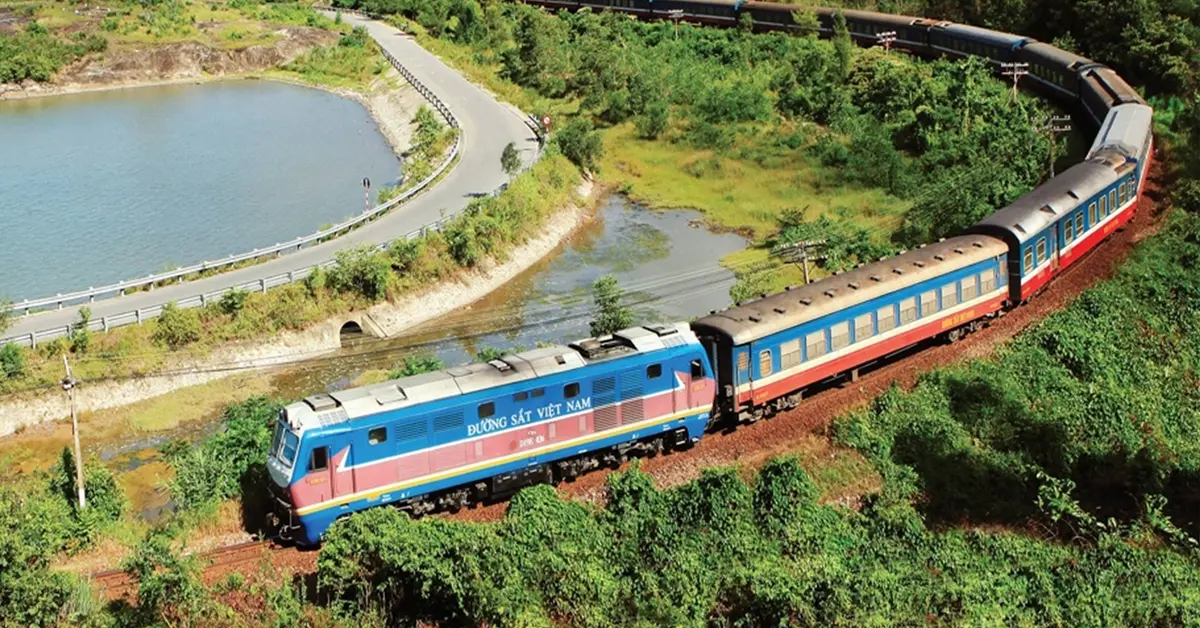
The Reunification Express is a legendary rail line. For many, the train isn't just a way to get to Hue; it is a highlight of the trip itself.
Advantages:
- Scenery: The train passes through stunning landscapes, particularly as it moves toward the central coast.
- Social and Cultural Experience: It’s an excellent way to meet locals and other travelers. The atmosphere in a "Soft Sleeper" cabin is often cozy and communal.
- Cost-Efficient Accommodation: By taking an overnight train (e.g., SE1 or SE3), you save the cost of a hotel night while making progress on your journey.
- Luxury Options: In 2026, private luxury carriages offer high-end bedding, snacks, and better hygiene for a premium price.
Disadvantages:
- Duration: At 13+ hours, it is a long commitment.
- Sleep Quality: Despite the "sleeper" designation, the tracks can be noisy and the movement of the train may disturb light sleepers.
- Infrastructure: While reliable, the current rail system is older and slower than modern high-speed rails found in other parts of Asia.
Check now: How to travel from Hanoi to Hue train (by Vietnam Railway)
3. Private Car: The Flexible Explorer
.webp)
For families or small groups, hiring a private car with a driver offers the ultimate level of autonomy.
Advantages:
- Customization: You can stop whenever and wherever you like. Popular stops between Hanoi and Hue include the karst landscapes of Ninh Binh or the caves of Phong Nha-Ke Bang.
- Privacy: No sharing space with strangers; you have full control over the temperature, music, and stops.
- Door-to-Door Service: The car picks you up at your Hanoi hotel and drops you exactly at your destination in Hue.
Disadvantages:
- Tiring for One Day: Driving 700km in a single day is exhausting. Most people choose to split this into a 2-day trip.
- Cost: This is the most expensive land-based option, as you are paying for the vehicle, fuel, tolls, and the driver’s service.
- Road Safety: While Highway 1A is much improved, long-distance road travel in Vietnam requires an experienced driver to navigate heavy truck and bus traffic.
2.4. Sleeper Bus: The Budget Favorite
The Sleeper Bus remains the backbone of domestic travel for budget-conscious locals and backpackers.
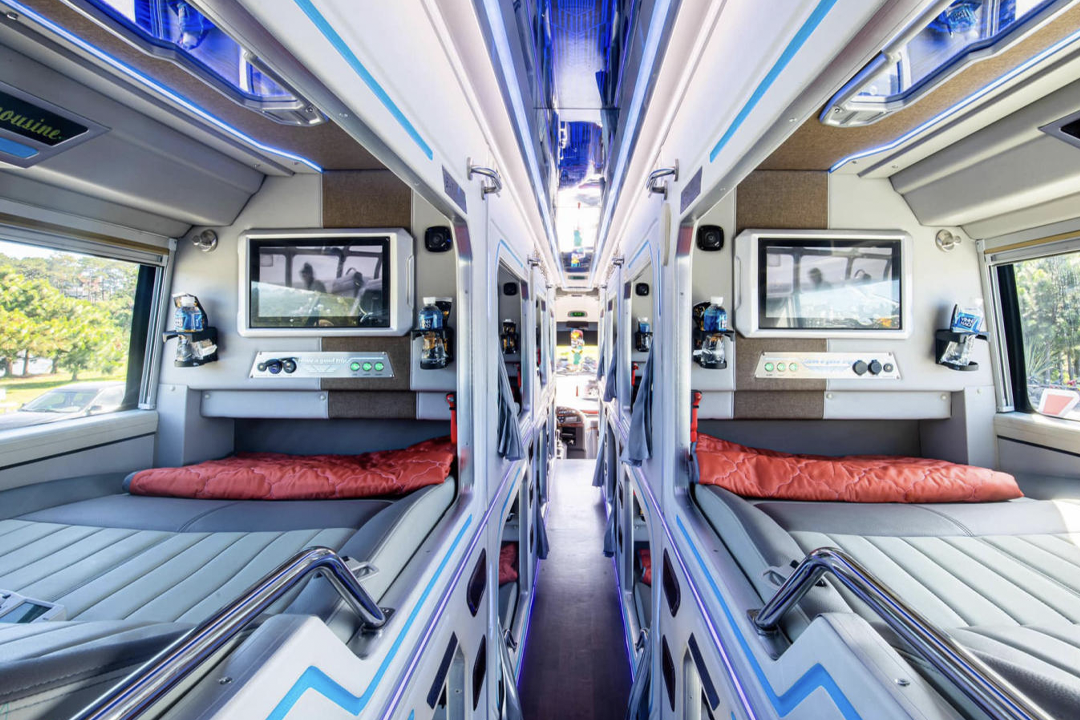
Advantages:
- Affordability: This is almost always the cheapest way to travel, with tickets often costing half the price of a train berth.
- Convenience: Buses depart from various points (My Dinh, Giap Bat, or private offices in the Old Quarter) and run frequently throughout the evening.
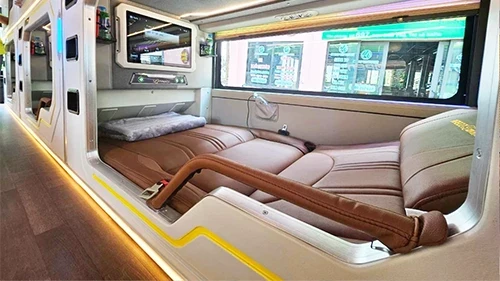
- Modern Cabin Options: Many operators now use "VIP Cabin" buses, which feature individual pods with curtains, USB ports, and flat-screen TVs, offering more privacy than traditional open-plan sleepers.
Disadvantages:
- Safety Record: Sleeper buses have historically been involved in more road incidents than trains or planes.
- Comfort for Taller Travelers: The bunk beds are designed for the average Vietnamese stature; travelers over 180cm (5'11") may find it difficult to fully stretch out.
- Unpredictability: Arrival times depend heavily on traffic and the number of stops the driver makes to pick up or drop off goods and passengers.
Looking for sleeper bus service from Hanoi to Hue? Check now!
Conclusion
The journey from Hanoi to Hue is a transition from the bustling, historic energy of the North to the refined, slow-paced elegance of Central Vietnam. For the time-pressed, the airplane is king. For the romantic and the sightseer, the train offers an irreplaceable experience. Families and groups seeking a curated road trip will find the private car most rewarding, while the sleeper bus remains the undisputed champion for those traveling on a shoestring budget. Regardless of how you choose to go, the destination—the Imperial City of Hue—is well worth the miles.