Hanoi to sapa transfer (hide)
Updated on 22 Apr 2026
Overview
As of 2026, Sapa remains Vietnam’s premier highland destination, experiencing a significant surge in demand from both domestic and international markets. Following the full integration of the "Smart Sapa" initiative, which digitized trekking routes and homestay bookings, the town has seen a 25% year-on-year increase in arrivals. Travelers are no longer just visiting for the iconic rice terraces; there is a burgeoning demand for "wellness retreats" and luxury mountain escapes. This high demand has led to a diversification of transport services, moving away from basic transit toward high-comfort, experiential travel options that cater to digital nomads and luxury-seeking families alike.
The journey from the heart of Hanoi to the mist-shrouded peaks of Sapa covers a distance of approximately 315 to 320 kilometers (195 to 200 miles). In 2026, travel times have been further optimized by road and rail improvements:
- By Road (Car/Bus): Approximately 5 to 6 hours via the expressway.
- By Train: 7.5 to 8 hours (to Lao Cai station) plus an additional 50–60 minutes by road to reach Sapa town.
- By Motorbike: 8 to 10 hours, depending on the route and frequency of stops.
Popular Modes of Transportation
Choosing how to get from the chaotic energy of Hanoi to the cool, misty peaks of Sapa depends on your preference for comfort, budget, or adventure.
Train: The Classic Rail Journey
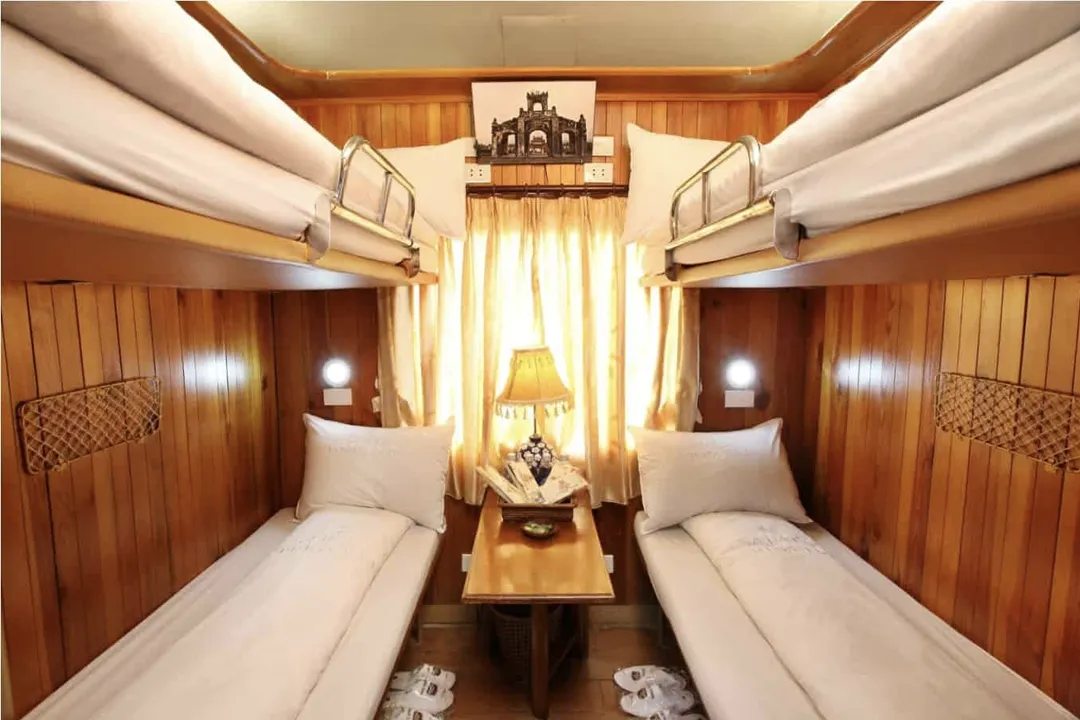
For many, the overnight train to Sapa is a nostalgic rite of passage. In 2026, while the train only goes as far as Lao Cai city, the experience remains a favorite for those who value sleep and safety over speed.
You will board an overnight train at Hanoi Railway Station (typically departing between 9:00 PM and 10:30 PM) and arrive at Lao Cai Railway Station in the early morning. From there, you take a taxi or a shuttle bus for the final 35km winding climb into Sapa town.
Advantages:
- Safety and Comfort: Trains are arguably the safest way to traverse the mountainous terrain. High-end carriages like Fansipan Express, Orient Express, or King Express offer "Soft Berths" with clean linens and climate control.
- Time and Accommodation Efficiency: By traveling overnight, you save the cost of a hotel night and arrive in Lao Cai refreshed and ready to start your day.
- Scenery: The early morning views of the China-Vietnam border area as you pull into Lao Cai are breathtaking.
Disadvantages:
- The "Final Leg" Hassle: You cannot reach Sapa town directly by rail. The 60-minute taxi ride from Lao Cai station involves steep switchbacks which can be challenging for those prone to motion sickness.
- Higher Total Cost: When you combine the train ticket with the taxi/shuttle fee, it often becomes more expensive than a direct bus.
- Noise: Despite being "luxury," older tracks can be noisy, potentially disrupting light sleepers.
Private Car: The Door-to-Door Luxury
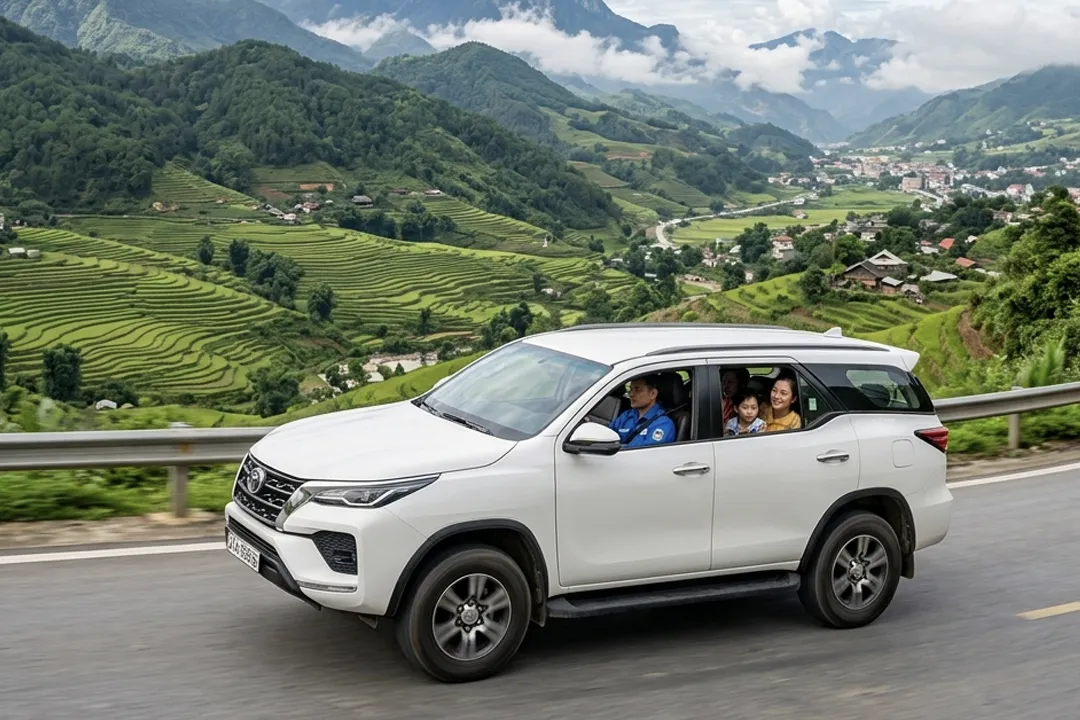
In 2026, the private car has become the "Gold Standard" for families, small groups, and luxury travelers who want to maximize their time and comfort.
Advantages:
- Absolute Flexibility: You choose your departure time. Whether you want to leave Hanoi at 4:00 AM to catch the sunrise or 2:00 PM after a business meeting, the schedule is yours.
- Direct Service: The car picks you up at your hotel in the Hanoi Old Quarter and drops you off directly at your resort (such as Hotel de la Coupole or Topas Ecolodge), eliminating the need for transfers.
- The Expressway Benefit: Private cars can maintain a steady speed on the Noi Bai – Lao Cai Expressway, often making the trip in under 5 hours.
- Privacy: Ideal for those who need to work on the go or families who want to stop for breaks at their own pace.
Disadvantages:
- Most Expensive Option: This is the highest-cost mode of transport, as you are paying for the vehicle, fuel, driver, and expressway tolls.
- Driver Reliability: It is essential to book through reputable agencies in 2026 to ensure the driver is experienced with mountain roads and that the vehicle is modern and well-maintained.
Sleeper Bus/Cabin Bus/Limousine Van: The Perfect Balance of Cost and Comfort
Sleeper Bus and Limousine Bus
For budget-conscious travelers and backpackers, the overnight sleeper bus is the most popular and cost-effective way to get from Hanoi to Sapa. Many services now run direct from Noi Bai Airport, saving you the hassle of a transfer in Hanoi.
It’s important to distinguish between a standard “sleeper bus” and a “limousine van.” Both are popular, but they offer very different experiences.
Sleeper buses are the most traditional type of bus on the Hanoi – Sapa route, suitable for those who want to save money. These buses have bunk beds and no private compartments, but offer advantages in terms of price and frequent departures. The beds on the vehicle are designed two levels, three beds per row on each side, open space.
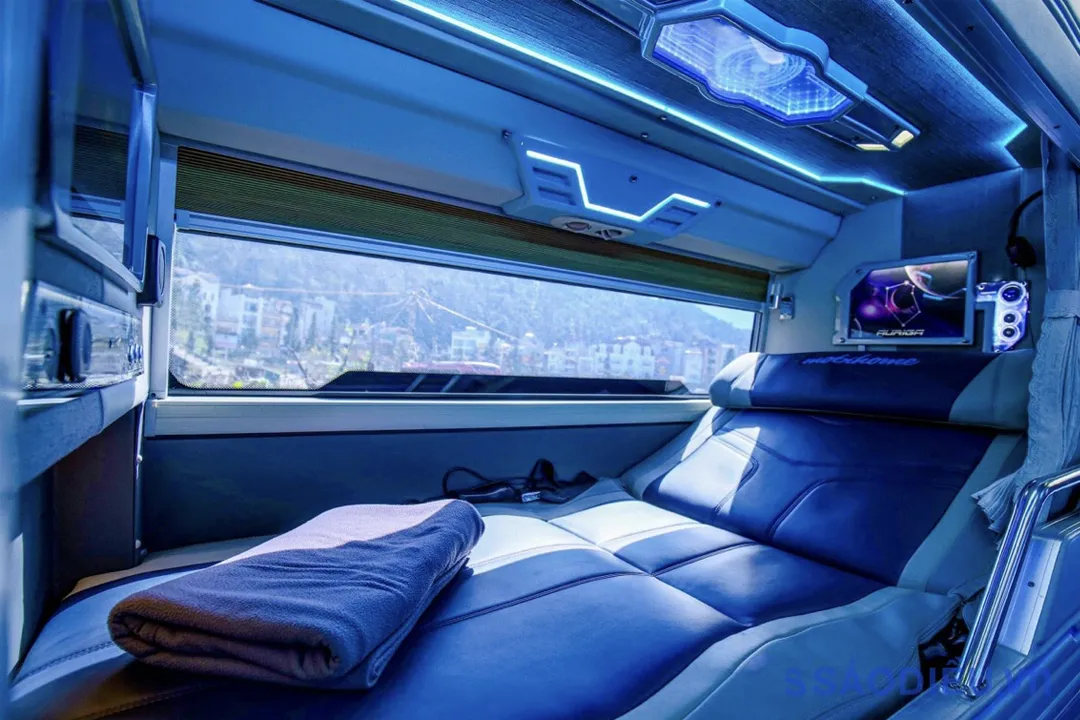
Limousine Van: A smaller vehicle (typically 9-16 seats) with wide, plush captain’s chairs that recline significantly. These offer much more personal space, USB charging ports, complimentary water and towels, and a smoother, quieter ride. Especially, if you book a shared limousine, there will be fewer seats, meaning fewer passengers will be traveling with you, and the vehicle won't need to stop to pick up or drop off passengers as often. Therefore, travel time will be shorter compared to sleeper buses.
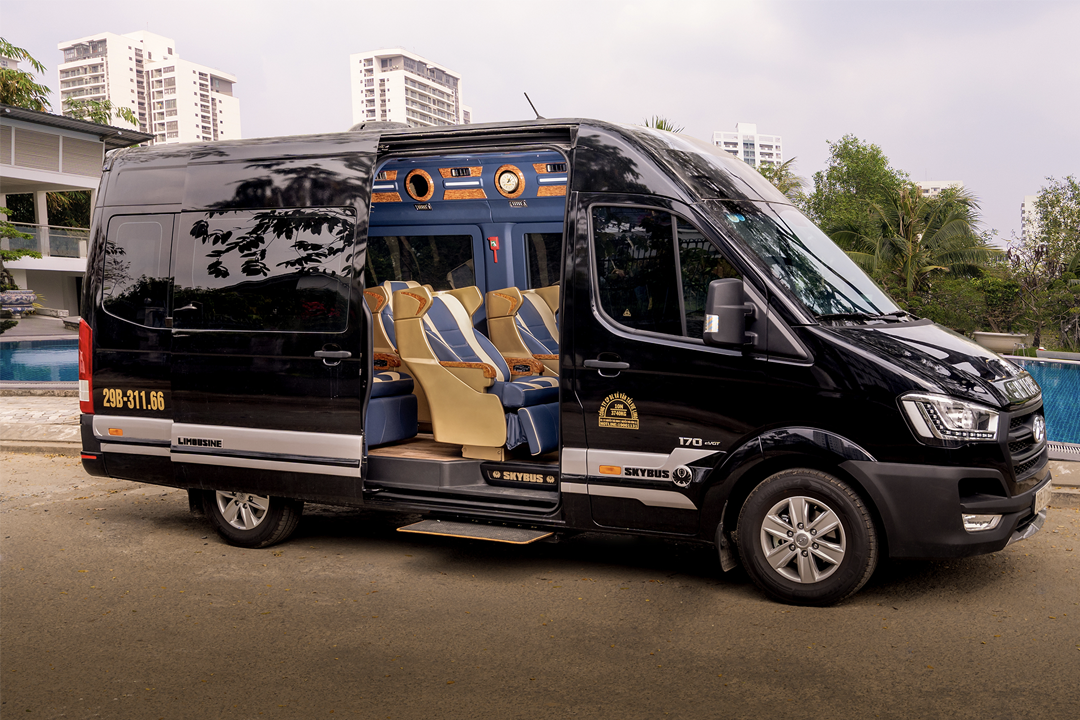
Cabin Bus divide into two types - Single Desk and Double Desk. Single desk are designed for one person, like a private "mini-room" right on the bus. This is a suitable option if you want a quiet, comfortable overnight sleep without being disturbed by others. Beside of that, double desk are considered a more premium version, designed for two people to share. The spacious interior, private curtains, and entertainment amenities make the journey much more comfortable than a regular sleeper cabin. The beds on the vehicle are designed to spacious beds, private compartments, control screens, complete bedding.
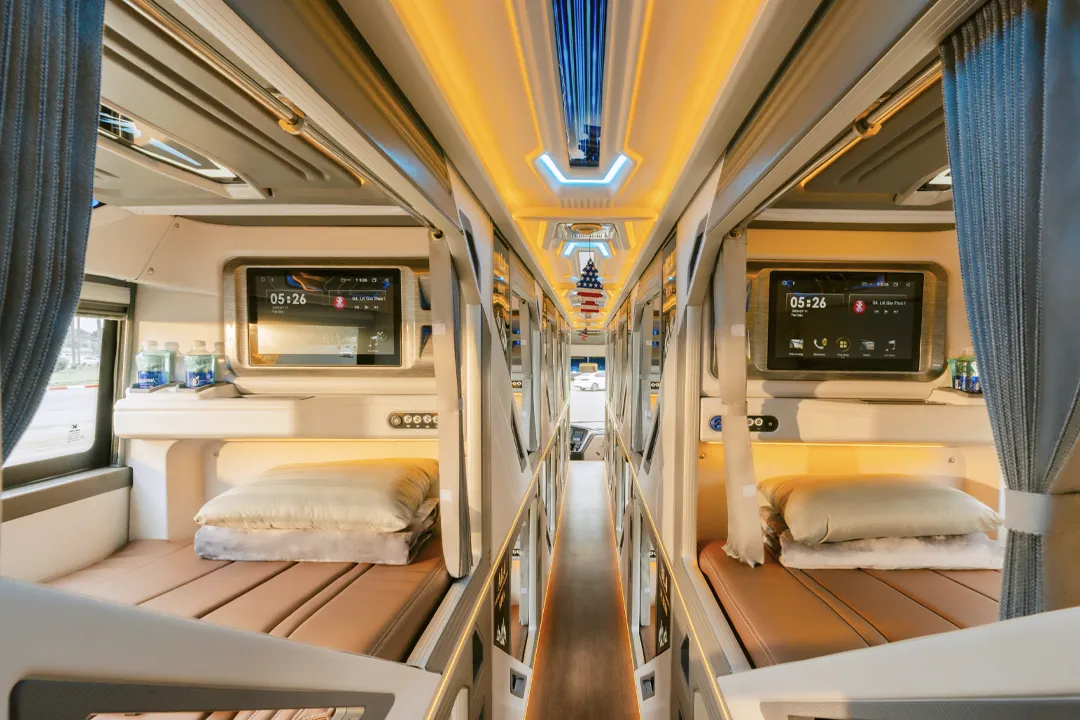
Basically, there isn't much difference in travel time between these types of buses (a difference of only about 20-30 minutes), largely depending on the size of the vehicle. Larger buses (cabin buses, sleeper buses) tend to travel slower, but are more comfortable due to their more spacious interiors. It's also worth noting that, in common usage, cabin buses are sometimes called sleeper buses because of their similar sleeping berths; however, cabin buses are distinguished by having physical partitions between passengers (creating independent 'cabins'). Therefore, it is very important to contact the service provider to confirm which type of vehicle you have chosen
Advantages:
- Direct to Sapa: Unlike the train, the bus takes you directly to the Sapa town center or your specific hotel area.
- Cost-Effective: It offers the best balance between price and comfort. A VIP cabin ticket is significantly cheaper than a private car or luxury train berth.
- Frequency: There are departures almost every hour, providing much more flexibility than the twice-daily train schedule.
Disadvantages:
- Road Safety Concerns: While expressways are safe, the high-speed nature of buses and the winding final climb into Sapa require choosing top-tier operators with good safety records.
- Confined Space: While "VIP," the cabins can be restrictive for very tall travelers (over 190cm).
Motorbike: The Adventurer’s Odyssey
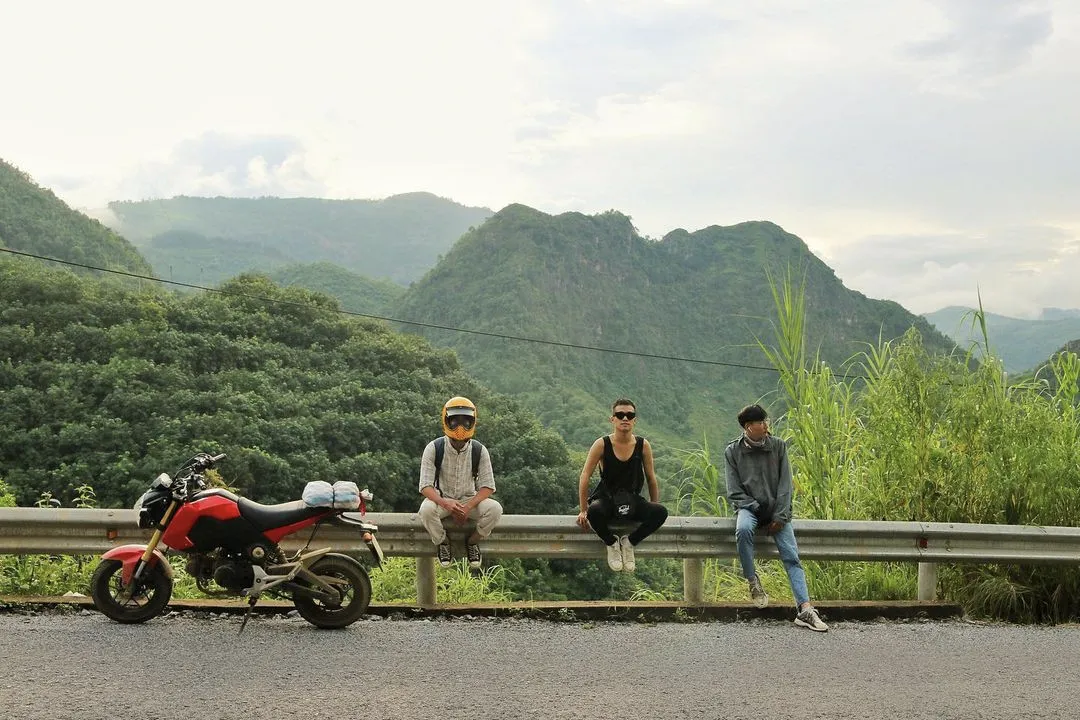
For the thrill-seeker, the 300km ride to Sapa is one of the most rewarding road trips in Southeast Asia.
Advantages:
- Unrivaled Freedom: You are not restricted to the expressway. You can take the QL32 route through Mu Cang Chai to see the world's most beautiful terraced rice fields before reaching Sapa.
- Immersive Experience: You feel the temperature drop, smell the mountain air, and can stop at any ethnic minority market or waterfall along the way.
- Lowest Cost: The only expenses are fuel and basic maintenance.
Disadvantages:
- High Physical Demand: Riding for 8–10 hours is exhausting and requires a high level of physical fitness and riding experience.
- Safety Risks: The mountain passes are beautiful but dangerous. Weather in 2026 can be unpredictable, with sudden fog or rain making the roads extremely slippery.
- Logistical Fatigue: Managing luggage on a bike for a multi-day trip requires careful packing and waterproofing.
Comparison Chart
| Mode of Transport | Est. Price (VND) | Duration | Best For |
| Train + Taxi | 800,000 – 1,500,000 | 9 Hours | Safety & Classic Experience |
| Private Car | 3,500,000 – 5,500,000 | 5 Hours | Families & Luxury / Groups |
| VIP Cabin Bus | 450,000 – 700,000 | 5.5 Hours | Efficiency & Budget Comfort |
| Motorbike | <200,000 (Without Fuel Fee) | 9+ Hours | Backpackers & Adventurers |
Conclusion: Which Mode Should You Choose?
In 2026, your choice should reflect your travel priorities. If you are looking for a romantic, safe, and traditional start to your holiday, book a luxury overnight train. For the fastest and most convenient "door-to-resort" experience, the private car remains unbeatable.
Budget-conscious travelers who still want a touch of modern luxury should look no further than the VIP Cabin Sleeper Bus. Finally, if you are a seasoned rider looking for a bucket-list adventure, the motorbike route through the northern highlands will provide memories that no train or car ever could.
Sapa is waiting for you in the clouds. Whichever way you choose to go, the destination is sure to be worth the journey.
Useful travel blogs
About A21 Tours
As a pioneering e-commerce travel agency in Vietnam, now expanding into Laos and Cambodia, A21 Tours proudly offers over 5,000 unique travel products across Vietnam, Laos and Indochina.
Explore A21 Tours