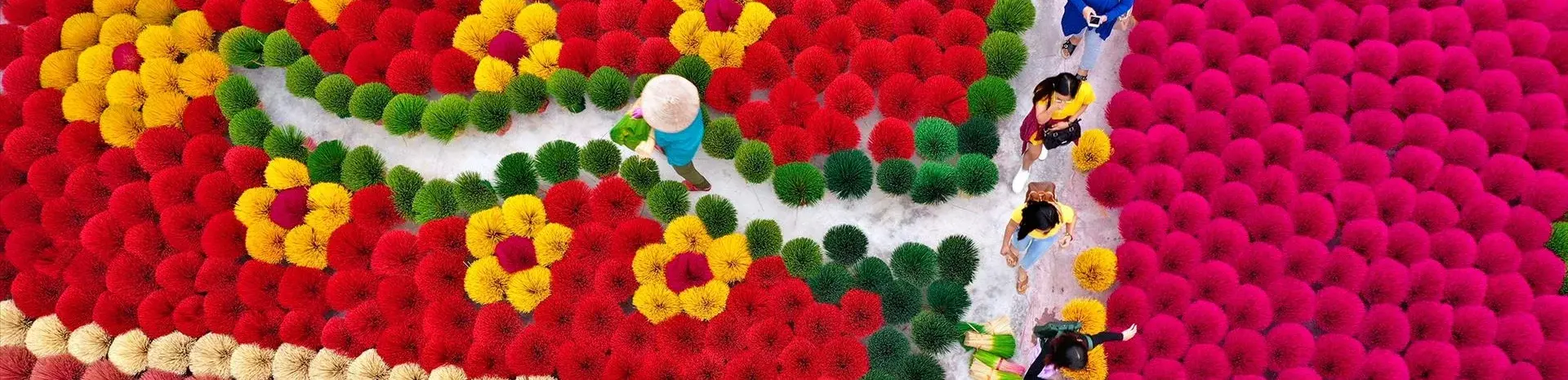
The first thing that hits you is the color — a sea of crimson and pink stretching across sun-drenched courtyards, each bundle of incense sticks arranged like giant blooming flowers. Then comes the scent — a gentle, woody fragrance of agarwood, cinnamon, and star anise carried on the warm breeze. Artisans in conical hats sit cross-legged on bamboo mats, their nimble fingers rolling, tying, and arranging thousands of sticks by hand. This is Quang Phu Cau, Hanoi's famous incense-making village. Located just an hour from the Old Quarter's bustling streets, this 100-year-old craft community has become a must-visit destination for travelers seeking authentic Vietnamese culture and unforgettable photography. If you've never set foot here, here are the reasons to change that.
Overview
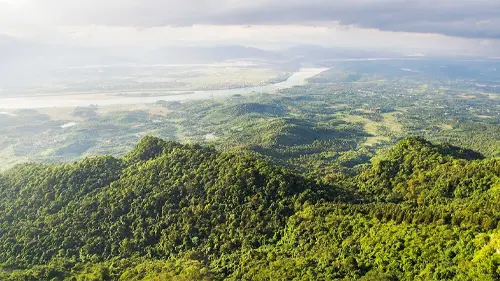
Quang Phu Cau is located in Ung Hoa District, approximately 30–35 kilometers southwest of central Hanoi. The journey takes about 1 to 1.5 hours by road, making it a perfect half-day or full-day excursion from the capital. The village is tucked away in the peaceful Red River Delta countryside, surrounded by rice paddies and rural landscapes.
The climate is typical of northern Vietnam, with four distinct seasons. The dry season (October to April) is the best time to visit, as the incense sticks must be dried under the sun and cannot be laid out on rainy days. The weeks leading up to Tet (Lunar New Year, usually January to February) are especially vibrant, as production peaks to meet nationwide demand.
What makes Quang Phu Cau stand out is its breathtaking visual aesthetic. Unlike other Asian incense that is typically brown or beige, Quang Phu Cau's sticks are dyed in brilliant crimson, bright pink, and golden yellow — colors that symbolize luck, prosperity, and happiness in Vietnamese culture. Arranged in circular fan patterns across village courtyards, the drying incense creates the illusion of massive floral blooms, earning the village its reputation as a "living museum" of traditional craftsmanship. Quang Phu Cau is not just an incense workshop; it is a feast for the eyes, a photographer's paradise, and a living testament to Vietnam's rich cultural heritage.
The Incense Drying Courtyards: A Sea of Color
.webp)
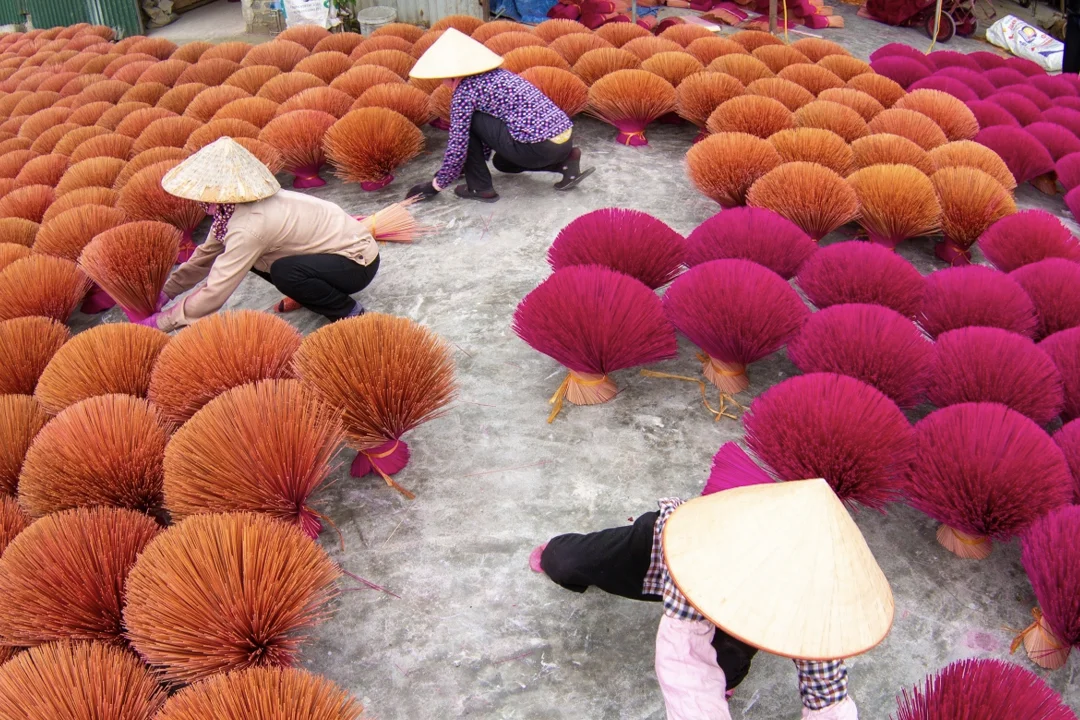
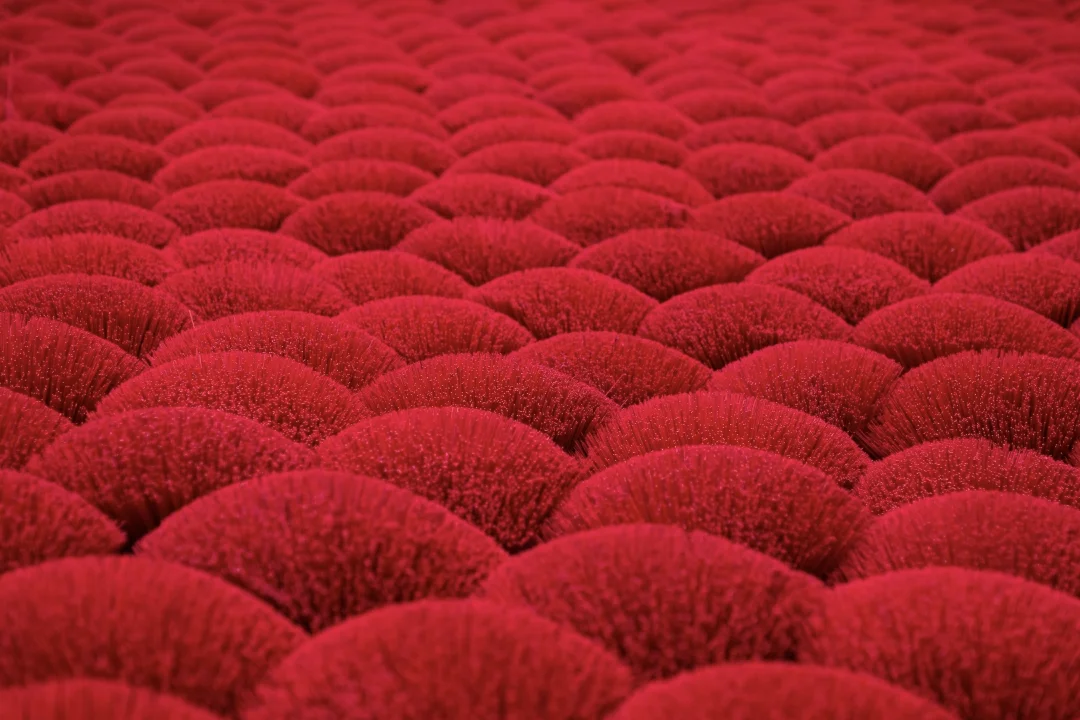
The heart of Quang Phu Cau — and the reason travelers come from around the world — is its spectacular incense drying yards. Throughout the village, families lay out tens of thousands of incense sticks in massive circular patterns. One end of each bundle is tied tightly together, while the sticks at the opposite end fan outward, creating the unmistakable shape of blooming flowers. When multiple bundles are arranged side by side across entire courtyards, the effect is nothing short of magical: a dazzling carpet of crimson and pink stretching as far as the eye can see.
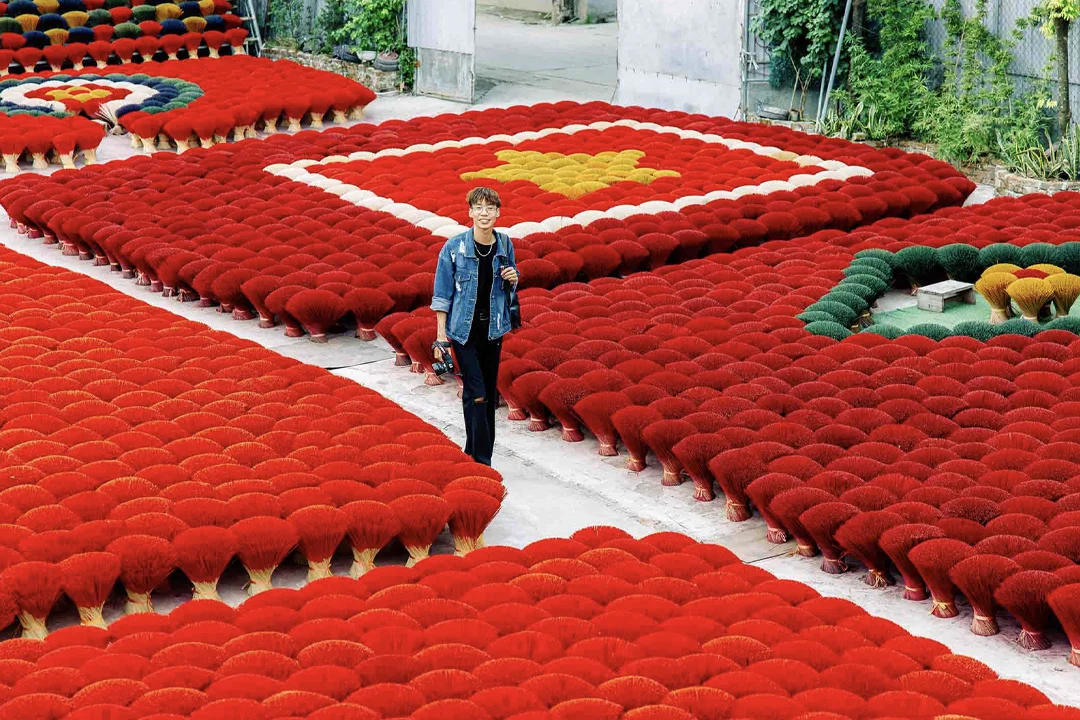
Each bundle is arranged with precise spacing to allow sunlight to reach every stick, ensuring they dry evenly. The artisans' skill is evident not only in the incense quality but also in the artistry of the arrangement. On clear days, you will also see sticks laid out along roadsides, in alleys, and on wooden racks — the entire village becomes an open-air gallery. Some households go further, arranging incense into the S-shaped map of Vietnam or the national flag, creating patriotic masterpieces that are especially popular for photography.
According to Eastern philosophy, the vibrant red color represents luck and good fortune, while pink is used for home altars and yellow symbolizes prosperity. As you wander through the courtyards, you will notice the incredible variety of colors, each with its own spiritual significance. The contrast between the bright incense bundles and the dusty village lanes, the blue sky, and the green rice fields beyond creates a composition that is truly unforgettable.
Witnessing the Incense-Making Process
Beyond the visual spectacle, Quang Phu Cau offers a rare behind-the-scenes look at an ancient craft that has sustained this community for generations. The incense-making process involves several meticulous stages, and many families invite visitors to watch (and even try) each step.
Bamboo Preparation: The journey begins with bamboo, sourced from provinces like Bac Kan, Lang Son, Thai Nguyen, and Thanh Hoa. Villagers consume approximately 200 tons of bamboo daily. The bamboo is first soaked in ponds for 1–2 months, then washed and dried. This traditional method ensures the incense burns evenly and produces a milder, more pleasant scent.
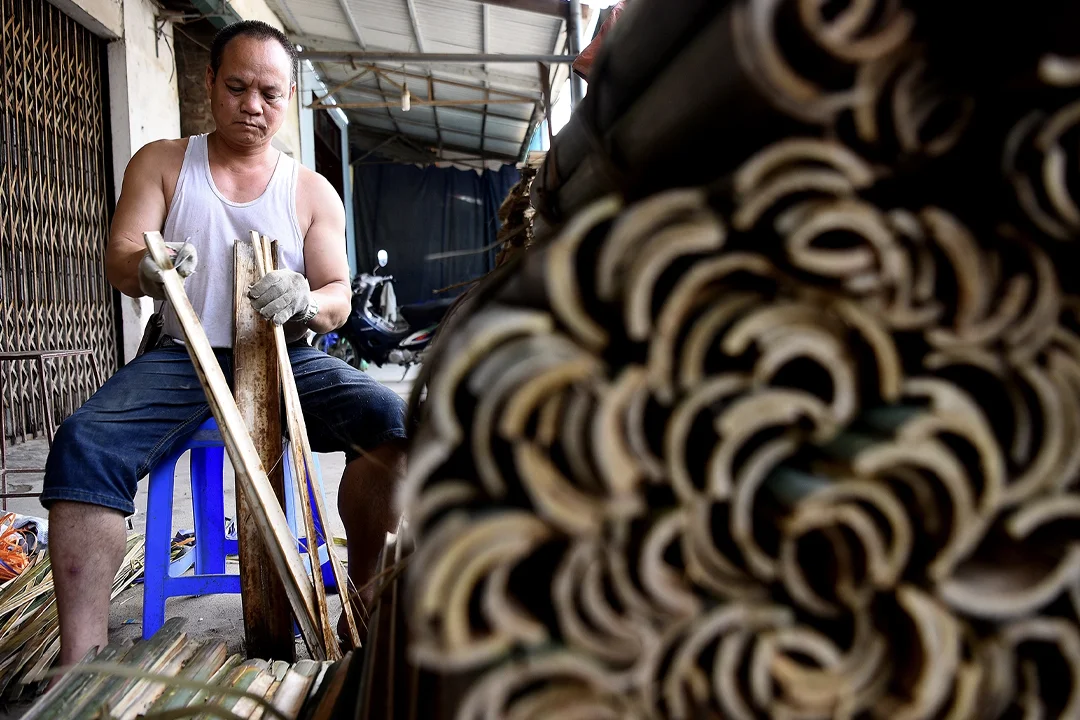
Splitting and Shaping: Once dried, the bamboo is hand-split into thin, uniform sticks. While some households now use machines to increase productivity, many still rely on the skillful hands of local artisans. A well-split stick is straight and smooth, ready for the next stage.
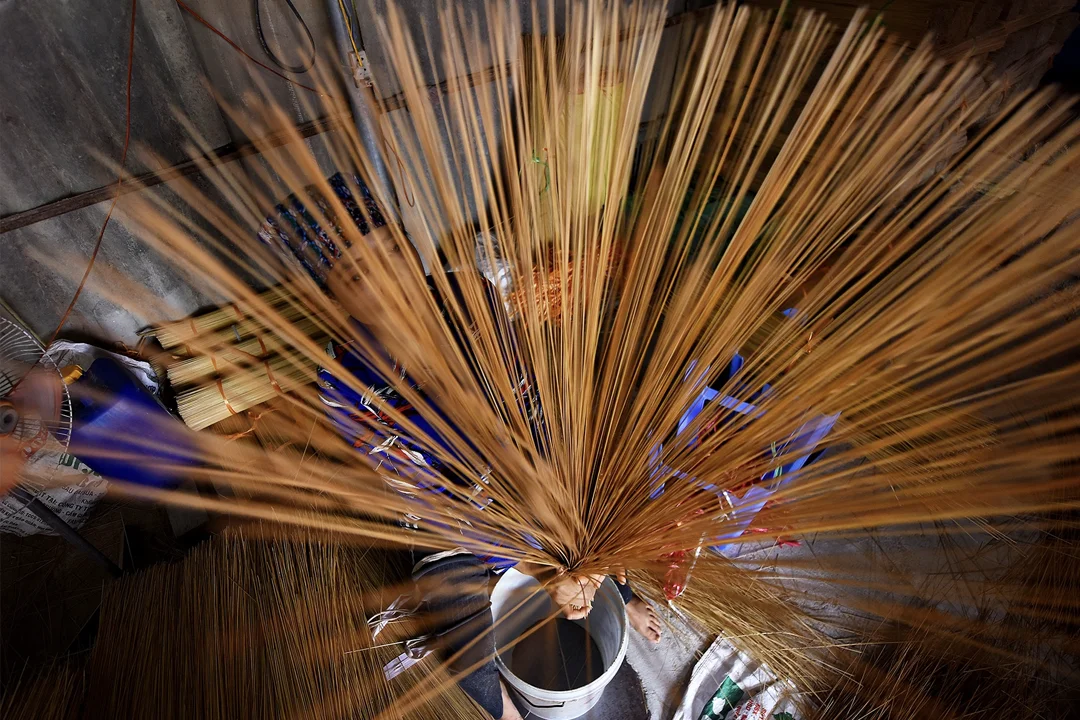
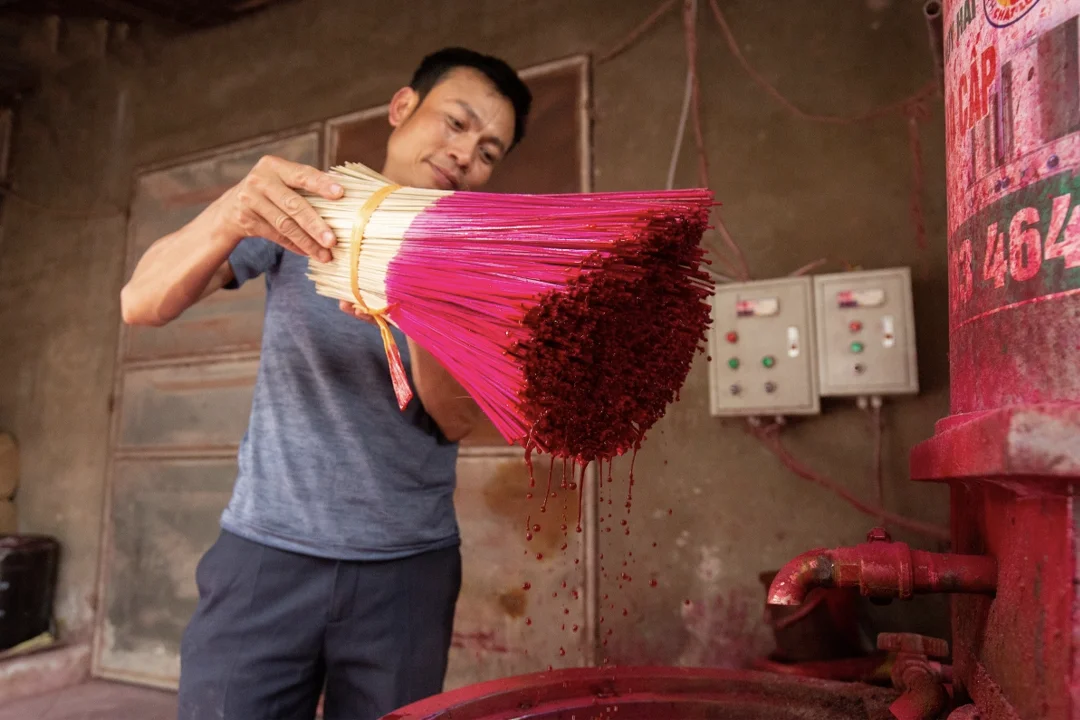
Dyeing: The sticks are dipped in vats of boiling dye — crimson for temple incense, pink for home use, yellow and green for decorative purposes. This step is done entirely by hand; as one artisan explains, machines cannot judge when to stop or where deeper color is needed.
Drying: The wet sticks are opened and left to dry under the Vietnamese sun. This is the stage that creates the village's signature visual spectacle.
Scent Coating: Once dry, the sticks are coated with a secret aromatic paste made from natural resins, agarwood, cinnamon, star anise, pine resin, and canarium tree resin. The exact recipe is passed down through generations and kept within each family. A well-coated incense stick burns evenly, releases fragrance gradually, and leaves a clean, white ash.
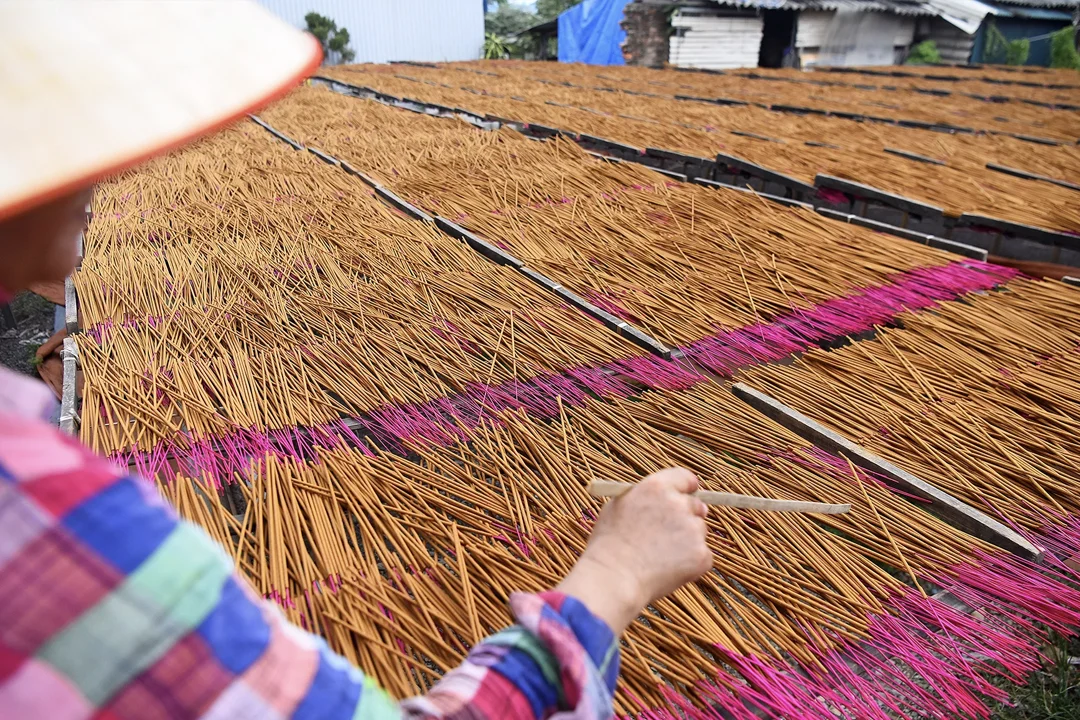
Bundling: The finished incense is tied into bunches of approximately 3 kilograms and sent to markets, temples, and export facilities across Vietnam, China, India, Malaysia, and the United Kingdom.
The Artisans: Guardians of a Living Heritage
The soul of Quang Phu Cau lies not in its colorful displays but in its people — the artisans who have dedicated their lives to preserving this ancient craft. Many are third or fourth-generation incense makers, inheriting skills passed down through their families. Watching them work is mesmerizing: fingers moving with practiced speed, hands rolling incense paste with just the right pressure to ensure even burning, eyes judging the exact moment when a bundle needs to be turned in the sun.
Visitors are welcome to sit with the artisans, watch them work, and even try their hand at making incense. A fourth-generation maker named Mai explains: "To produce a truly fine batch of incense, craftsmen still rely on the dedication and experience handed down from our ancestors, especially in selecting ingredients such as agarwood, cinnamon, and star anise to preserve a natural, safe fragrance. Modern machinery helps ease the workload, but the soul of the craft still lies in human hands and sensibility."
The village's recognition as a key craft-tourism destination by the Hanoi People's Committee has created new opportunities for the community. Several OCOP (One Commune One Product) star-rated products, including cinnamon and herbal incense, have helped Quang Phu Cau bridge the gap between a traditional workshop and a world-class travel destination. Visitors can watch artisans at work, try their hand at blending scents, and purchase authentic incense directly from the makers.
Modern Attractions & Photo Spots
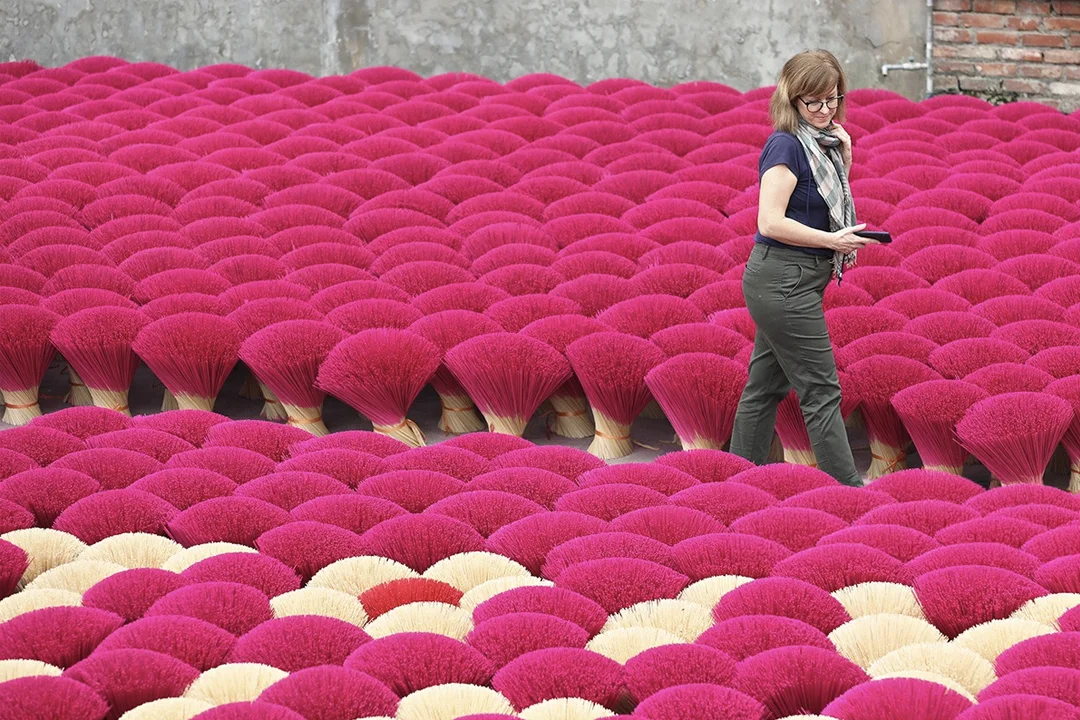
Quang Phu Cau has gained international fame not only for its craftsmanship but also for its incredible Instagram-worthy visuals. For travelers and photographers, here are the must-visit spots and tips:
- The "Flower Field" Courtyards: The largest incense-drying yards are the main attraction. Some families have set up dedicated photo booths, arranging incense in perfect geometric shapes or the map of Vietnam. A small entrance fee (usually 30,000–50,000 VND or $1.20–2 USD) is requested, and this directly supports the local community.
- The Conical Hat Experience: Many households offer traditional conical hats (non la) for visitors to borrow free of charge — or rent an ao dai (traditional Vietnamese dress) for the perfect cultural portrait.
- High-Angle Shots: For the best panoramic view of the incense fields, head to higher ground. Platforms and ladders are available at several courtyards, offering a stunning top-down perspective. No drone is needed!
- Rural Landscape Views: Step outside the village center to capture the contrast between the bright incense drying yards and the surrounding green rice fields, old banyan trees, and traditional Vietnamese countryside homes.
- Nearby Attractions for a Combined Day Trip: Quang Phu Cau can be combined with other Hanoi craft villages and historical sites: Perfume Pagoda, Bat Trang Ceramic Village, Chuong Conical Hat Village, Quat Dong Embroidery Village, Van Phuc Silk Village.
Important Note:
You can find many beautiful photos of Quang Phu Cau village online. The scenery here is indeed beautiful and worth visiting; however, please note that in reality, this is still an active craft village, and the scenery may differ from what you see in the photos, which may disappoint tourists who come to the village looking for beautiful pictures.
If you want to ensure you get beautiful photos as souvenirs, you can find some designated photo spots (where you might have to pay a small fee, but you will also receive professional photography services).
Practical Tips & Notes
To make the most of your visit, plan your trip during the dry season (October – April), as the sun is essential for the incense to be laid out; rainy days will result in empty fields and missed opportunities. The weeks leading up to Tet (late January or February) offer the most vibrant production scenes, though you should avoid the actual public holidays to escape the heavy crowds. When packing, prioritize sun protection with a hat, sunglasses, and sunscreen, as the open courtyards offer little shade. Additionally, bring insect repellent for the rural surroundings and wear sturdy walking shoes for the uneven terrain. Don’t forget a fully charged camera with spare batteries to capture the stunning visuals.
For a seamless experience, arrive before 10:00 AM to catch the best morning light and watch the artisans arranging their colorful bundles. Since the village is a cash-only economy, ensure you have plenty of Vietnamese Dong on hand. While booking a guided tour can handle your logistics and provide deep cultural context, a little personal effort—like learning "Xin chao" (hello) and "Cam on" (thank you)—goes a long way with the locals.
Finally, maintain high cultural etiquette by always asking permission before entering private courtyards or taking portraits. While many families are welcoming, be careful not to obstruct their work and never walk on or disturb the drying incense sticks. If you spend considerable time photographing a specific area, it is customary and appreciated to offer a small tip of 20,000–50,000 VND as a token of gratitude for their hospitality.