Ferry to Phu Quoc: The Complete Guide (2026)

Phu Quoc Island, the "Pearl Island" of Vietnam, is a tropical paradise known for its white-sand beaches, turquoise waters, and lush national parks. As one of the top destinations in Southeast Asia, getting there is a crucial part of your journey. While flights from Ho Chi Minh City (Saigon) and Hanoi are popular, many customers decide to choose ferries as a means of transportation from the mainland to Phu Quoc Island due to advantages such as speed and affordability.
In this complete guide for 2026, we’ll cover everything you need to know: the two mainland departure ports (Ha Tien and Rach Gia), ferry operators like Superdong and Phu Quoc Express, schedules, prices, insider tips, and how to book with confidence. Whether you’re a solo backpacker, a family, or a traveler bringing a motorbike, this guide is for you.
Ferry: Who should choose?
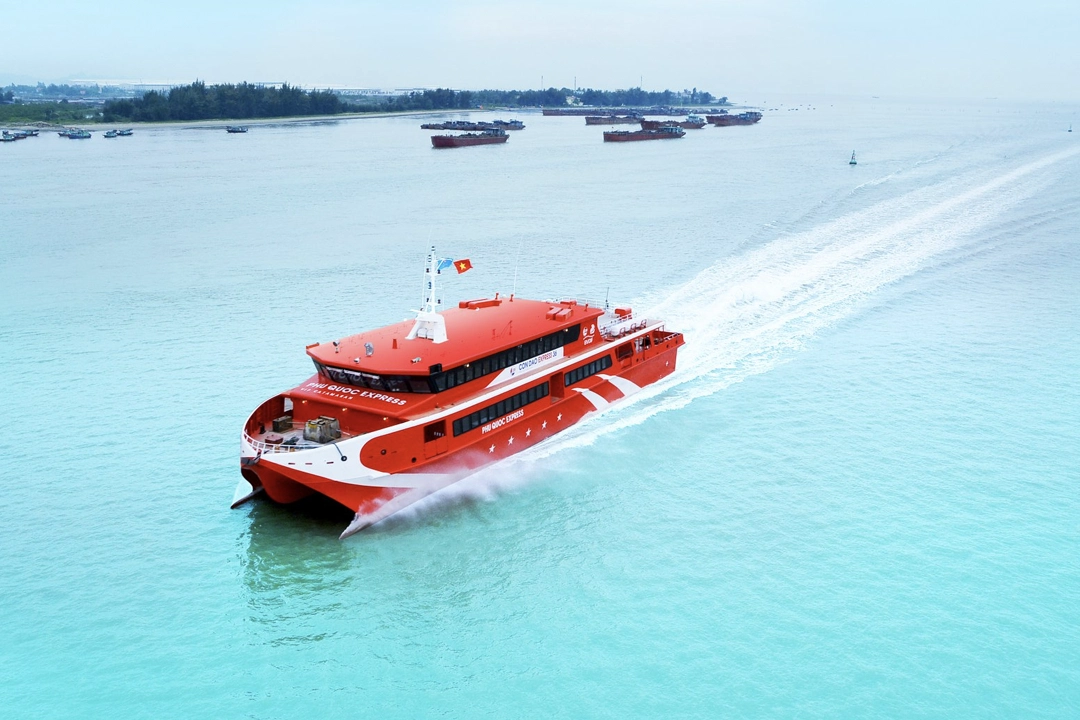
Flying to Phu Quoc International Airport (PQC) is fast—usually under an hour from HCMC. However, in the current climate of rising fuel prices, airfare can sometimes become a significant obstacle. Furthermore, there are currently few direct flights from overseas to Phu Quoc. Many travelers are starting to look for more affordable options for their journeys – and ferries are a top choice.
Ferry vs Flight — Which Is Right for Your Trip?
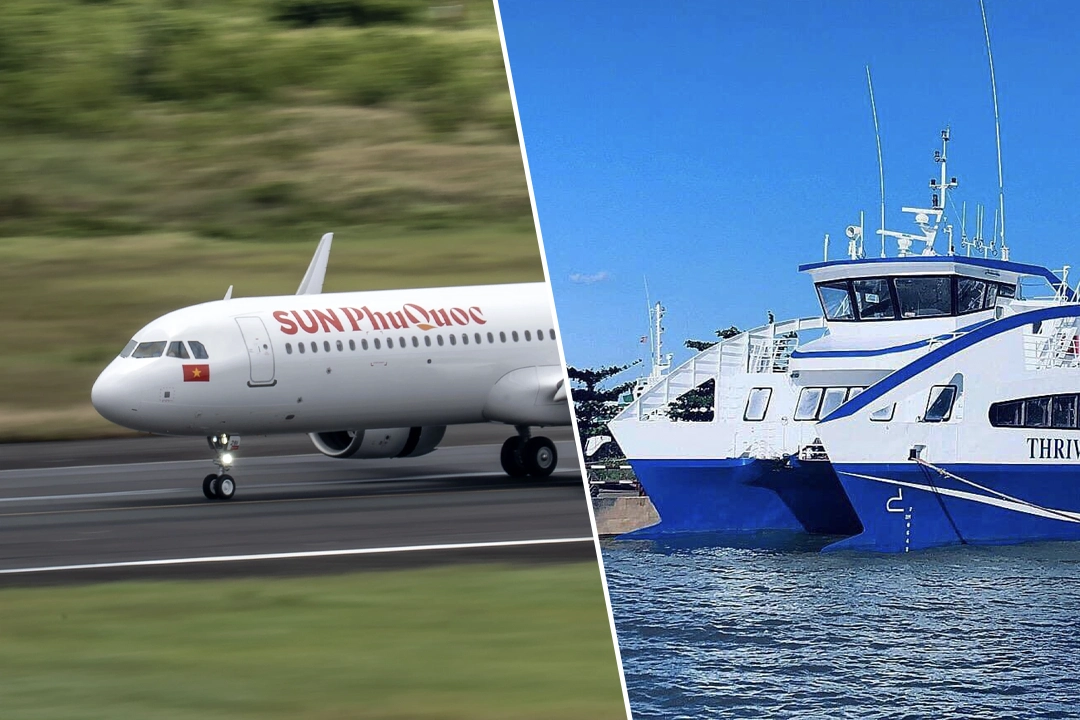
With many airlines offering daily flights to Phu Quoc, many travelers may still be undecided between ferry and plane. In our opinion, this largely depends on your budget and the type of luggage you bring. You should choose a flight if you’re short on time or prone to severe seasickness. Additionally, you might consider flying if you're coming from a location quite far from Phu Quoc (such as Hanoi, Hue, or Da Nang). A flight will simplify the travel process.
So, who is the ferry best for? It’s ideal for:
- Budget travelers – Ferry tickets are significantly cheaper than airfares, especially during peak season.
- Travelers with motorbikes or bicycles – Only ferries allow you to bring your own vehicle.
- Those coming from the Mekong Delta – If you’re already exploring Can Tho or Chau Doc, the ferry ports are right on your route.
- Travelers from Cambodia – The Ha Tien border crossing connects seamlessly to the ferry.
- Adventure seekers – If you don’t mind a 2–3 hour cruise and love ocean views, the ferry is a great choice.
Here's a quick comparison table to help you make your decision.
| Feature | Ferry | Flight |
|---|---|---|
| Travel time | 2–3 hours plus port transfer | ~1 hour flight + airport transfer |
| Cost (2026) | 12–25 USD one-way | 50–100+ USD one-way (depend on your departure location) |
| Scenery | Ocean, islands, coastline | Clouds (if you get a window seat) |
| Luggage | Generous (included) | Strict weight limits, extra fees |
| Motorbike transport | Yes (additional fee) | No |
| Reliability in storms | Can be cancelled | Rarely cancelled |
| Departure location | Ha Tien, Rach Gia, Nam Can, Song Doc | Most major cities in Vietnam |
Best Time to Take the Ferry to Phu Quoc
The best time to take the ferry to Phu Quoc depends heavily on the distinct seasons of the Gulf of Thailand, which dramatically affect sea conditions and travel reliability. The dry season, spanning from November to April, offers ideal crossing conditions characterized by sunny weather, light winds, and calm seas with only slight to moderate waves, making motion sickness rare and ferry cancellations almost non-existent. However, because crowds are high during this peak period, booking your tickets well in advance is essential. Conversely, the wet season from May to October brings frequent rain, strong winds, and rough to very rough seas that cause even large ferries to rock significantly. Ferry cancellations are common during these months, especially for smaller operators, though Superdong remains the most resilient. If you choose to travel during the wet season, it is crucial to allow flexibility in your itinerary, as a cancellation might force you to wait one to two days for the weather to clear or require you to book a last-minute flight instead.
The Two Ferry Routes to Phu Quoc — Ha Tien vs Rach Gia
There are two mainland departure points for ferries to Phu Quoc: Ha Tien (Kien Giang province) and Rach Gia (the provincial capital). Each has its own advantages.
Ha Tien - Phu Quoc Route
Ha Tien is a small, charming border town close to the Cambodian frontier. It’s the preferred departure point for most travelers because it’s closer to Phu Quoc, meaning a shorter ferry ride. The distance from Ha Tien to Phu Quoc is approximately 45km across the sea, and the travel time is usually 1.5-1.75 hours, depending on operator and weather. To accommodate travelers, there are generally 6 to 8 daily departures, with peak season schedules offering convenient regular sailings at 8:00 AM, 9:30 AM, 11:00 AM, 1:00 PM, 2:30 PM, and 4:00 PM, though these frequencies may be reduced during the rainy season. Please note that ferry schedules may vary between transport providers, so we recommend that you carefully check the updated ferry schedule provided by the provider or travel agency before your trip.
Ha Tien to Phu Quoc Ferry Price 2026
Depending on the ferry company you choose, the specific price will vary. Below are the reference ticket prices at the time of writing:
- Standard seat: 290,000 – 350,000 VND ($12–15 USD)
- VIP/ business seat: 400,000 – 480,000 VND ($17–20 USD)
- Motorbike (checked baggage): +100,000 – 150,000 VND ($4–6 USD)
How to get to Ha Tien from Ho Chi Minh City
The distance from Saigon to Ha Tien is approximately 230km, and the travel time is usually 5-6 hours. The most common mode of transport on this route is by bus, with estimated ticket prices around $10~12 USD (200,000 to 300,000VND) per trip. For a more comfortable journey, you should prioritize choosing a sleeper bus/cabin bus for easier rest and consider departing at a suitable time to conveniently connect to the ferry to the island, but the travel time will be longer (8 hours). If you're traveling in a large group and want to ensure privacy throughout your journey with fastest speed, a private HCMC - Ha Tien car service would be ideal.
Rach Gia to Phu Quoc Ferry
Rach Gia is the capital of Kien Giang province and a larger city than Ha Tien. It has more amenities and better transport links from HCMC, but the ferry ride is longer. The distance from Rach Gia to Phu Quoc is approximately 120km across the sea, and the travel time is usually 3-3.5 hours, depending on operator and weather. Passengers can choose from four to 6 daily departures, with standard schedules usually offering convenient options throughout the day at 7:00 AM, 9:00 AM, 12:00 PM, and 2:00 PM. Please note that ferry schedules may vary between service providers.
Rach Gia to Phu Quoc Ferry Price 2026
Depending on the ferry company you choose, the specific price will vary. Below are the reference ticket prices at the time of writing:
- Standard seat: 320,000 – 380,000 VND ($13–16 USD)
- VIP seat: 450,000 – 540,000 VND ($19–23 USD)
- Motorbike: +120,000 – 180,000 VND ($5–7 USD)
How to get to Rach Gia from Ho Chi Minh City
Traveling the Saigon - Ha Tien - Phu Quoc route beginning with a 6 to 7-hour sleeper bus journey that typically costs between $9.50-11.40 USD (250,000 – 300,000 VND) depending on the operator and booking time. If you want to have control over your schedule and minimize travel time by land, a private HCMC - Rach Gia car service is the perfect choice.
Ha Tien vs Rach Gia — Which Port Should You Choose?
Unless you are coming from the southern Mekong Delta (Can Tho, Soc Trang) or prefer a larger city, choose Ha Tien Route. The shorter ferry ride is well worth it.
| Factor | Ha Tien | Rach Gia |
|---|---|---|
| Ferry duration | 1.5 – 1.75 hours | 3 – 3.5 hours |
| Scenery | Coastal, closer to Cambodia | More open sea |
| Port facilities | Basic but adequate | Larger, more shops/restaurants |
| Bus connections from HCMC | 8–9 hours | 6–7 hours |
| Overnight bus options | Yes | Yes |
| Best for... | Speed, motorbikes, border crossers | Comfort, Mekong Delta travelers |
Ferry Operators Compared — Superdong, Phu Quoc Express & Thanh Thoi
Three main companies operate ferries to Phu Quoc. Each has a different style, price point, and set of amenities.
Superdong Ferry — The Veteran Operator
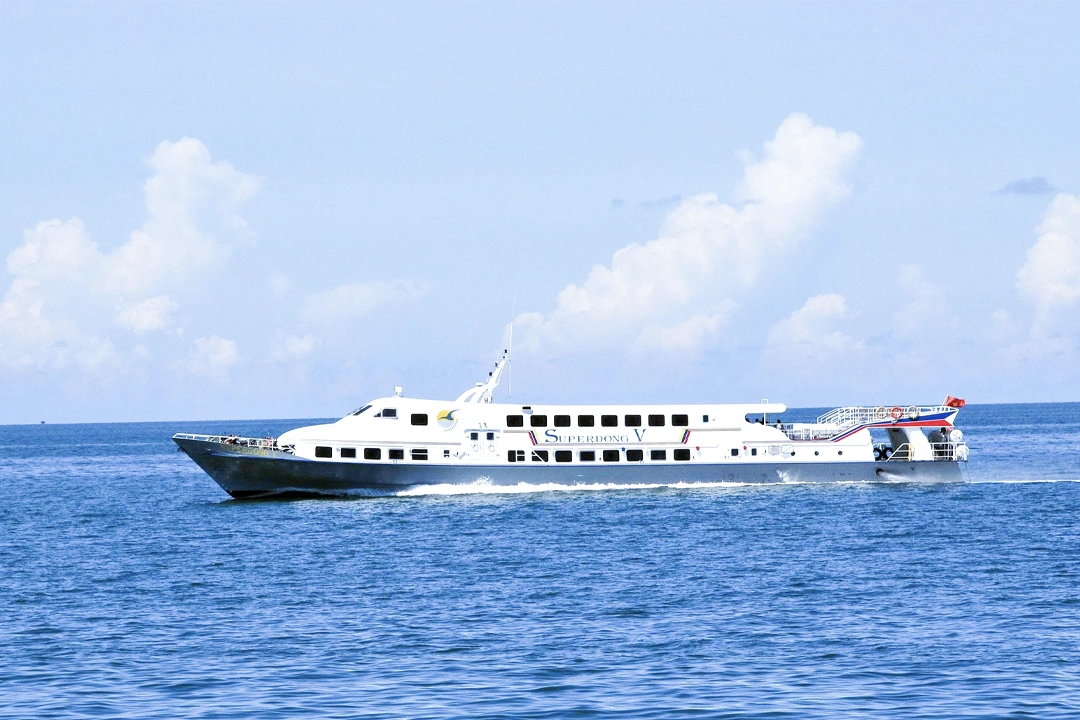
Superdong has been the backbone of Phu Quoc ferry services for over a decade. They are known for reliability, frequent departures, and a no-frills but comfortable experience.
- Fleet: High-speed ferry with two decks.
- Facilities: Air-conditioned cabins, TV (Vietnamese programs), small snack kiosk, life jackets under seats.
- Highlight: Superdong is often the last to cancel in bad weather, but the ride can be rough.
Ticket prices for the Superdong fast ferry vary slightly depending on your departure port, with a standard one-way ticket costing approximately 230,000 VND ($8.75 USD) from Ha Tien to Phu Quoc and around 330,000 VND ($15 USD) for the longer route from Rach Gia to Phu Quoc. Superdong also offers a shuttle service from Bai Vong Port to Duong Dong for 40,000 VND ($1.8 USD), dropping passengers off at the Superdong Phu Quoc ticket office if needed. Securing your seats is highly flexible, as passengers can book tickets directly through local travel agencies, purchase them in person at the ferry port ticket booths, or reserve them online on their website.
Phu Quoc Express — The Modern High-speed Ferry
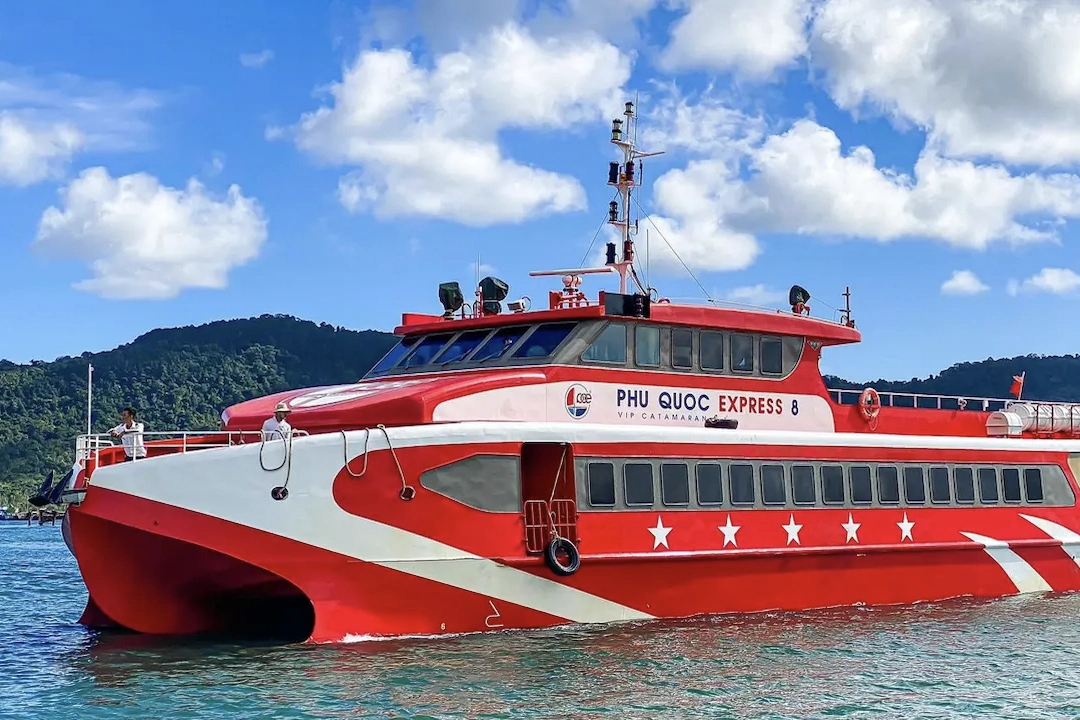
Phu Quoc Express is the newer, sleeker competitor. Their vessels are modern, slightly faster, and offer more comfort.
- Vessel type: Modern aluminum catamarans with padded leather seats, USB charging ports, and large windows.
- Comfort level: High. Less engine noise and vibration than Superdong.
- Highlight: VIP cabin has genuine leather seats that recline up to 130°, individual entertainment screens, and luxurious private spaces; the outdoor deck is ideal for enjoying the sea view and taking photos on the journey to the island.
Ticket prices for the Phu Quoc Express red-and-white double-hull high-speed ferry vary depending on the route and seating class. Traveling from Ha Tien to Phu Quoc costs approximately 330,000 VND ($12.5 USD) for a standard Eco seat and 220,000 VND ($8.5 USD) for a premium VIP ticket, while the longer journey from Rach Gia to Phu Quoc is priced at around 315,000 VND ($12 USD) for a standard ticket and 500,000 VND ($19 USD) for a VIP ticket. Securing your trip is highly convenient, as passengers can book directly through the operator's official website, purchase tickets via any local travel agent, or use major digital transit and booking applications for instant confirmation.
Thanh Thoi — The Vehicle and Motorbike Ferry
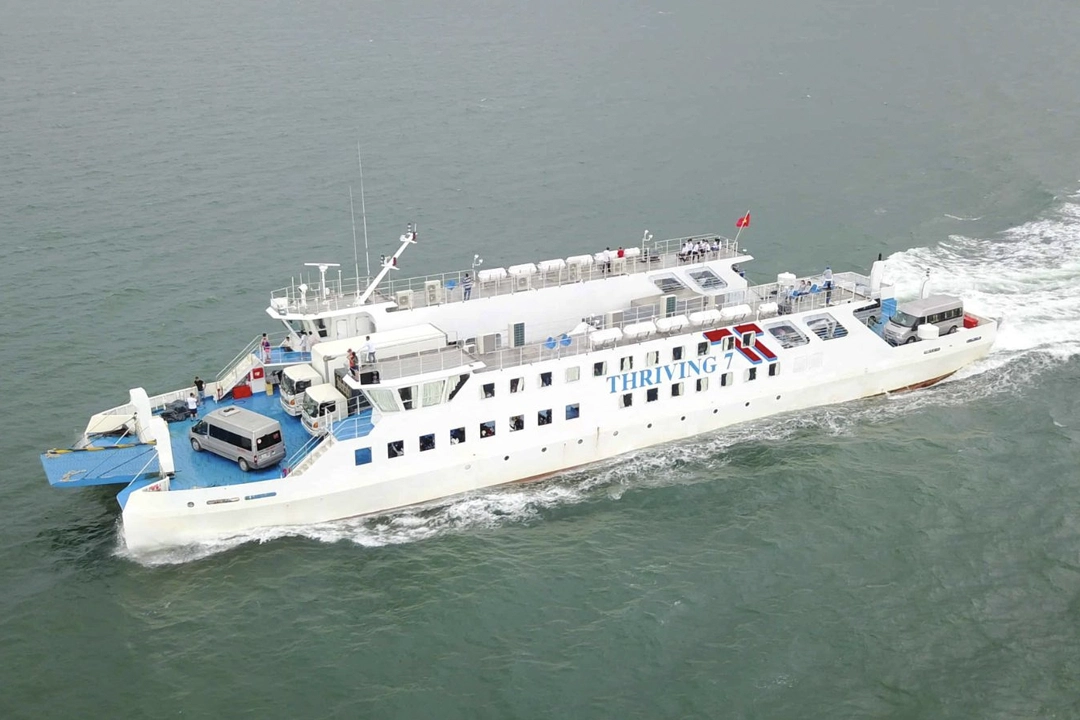
Thanh Thoi is a slower, larger vehicle ferry. It’s not for passengers seeking speed, but it is essential for anyone shipping a car, van, or multiple motorbikes. This is also the primary choice of the local residents because the frequency of ferry in a day is quite high.
- Best for: Travelers with cars, cargo, or groups of motorbikes. Also used by locals moving goods.
- Travel time: 3–4 hours (ussualy much slower)
- Highlight: Most frequent trips, spacious passenger compartment, low price, specializing in transporting goods and vehicles.
Ferry tickets from Thanh Thoi are usually cheaper than other providers, but this comes at the cost of often longer travel times. An Eco ticket for an adult on the Ha Tien - Phu Quoc route costs approximately 205,000 VND (7.8 USD), while the Rach Gia - Phu Quoc route costs approximately 315,000 VND (12 USD). You can easily book tickets on the provider's official website or through a travel agency.
Quick Comparison Table — Which Operator Is Best for You?
| Operator | Speed | Route | Travel time | Comfort | Price | Vehicle Transport | Best For |
|---|---|---|---|---|---|---|---|
| Superdong | Fast |
Ha Tien ⇄ Phu Quoc Rach Gia ⇄ Phu Quoc |
1.25-1.5 hours (Ha Tien - Phu Quoc); 2.25 - 2.75 hours (Rach Gia - Phu Quoc) |
Medium | $$ | Yes | Budget travelers, reliability |
| Phu Quoc Express | Fastest | 1.25-1.5 hours (Ha Tien - Phu Quoc); 2.25 - 2.75 hours (Rach Gia - Phu Quoc) | High | $$$ | Yes | Comfort, USB ports, style | |
| Thanh Thoi | Slow | 2.5 hours (Ha Tien - Phu Quoc); 3-3.25 hours (Rach Gia - Phu Quoc) | Low | $ | Yes (cars/ trucks) | Shipping vehicles, cargo |
For most travelers, Phu Quoc Express offers the best balance of speed and comfort. For budget travelers, Superdong is perfectly fine.
Ferry Ports and Terminals — What to Know Before You Arrive
Currently, Phu Quoc has 3 main ports and many smaller piers. Depending on their location and function, these piers serve different purposes. Some piers only serve local fishermen, some only serve trade and transportation, and some serve both purposes. Understanding the ports will save you confusion on travel day.
Departure Ports on the Mainland

Ha Tien ferry terminal port
- Location: 05 Nguyen Cong Tru Street, Ha Tien city. About 3 km from the city center and 5 km from the Xa Xia border crossing to Cambodia.
- Facilities: Small waiting area with plastic chairs, basic toilets, a few snack stalls, and ticket counters. No ATM (get cash before arriving).
- Tips: Arrive 45–60 minutes early. There is no luggage storage, so keep your bags with you.

Rach Gia ferry terminal
- Location: 1A Nguyen Van Cu Street, Rach Gia city. About 4 km from the bus station.
- Facilities: Larger terminal with air-conditioned waiting room, multiple ticket counters, souvenir shops, cafes, and ATMs.
- Tips: The port can be chaotic during holidays. Arrive 60–90 minutes early. Follow signs to your operator’s check-in counter.
Arrival Ports in Phu Quoc
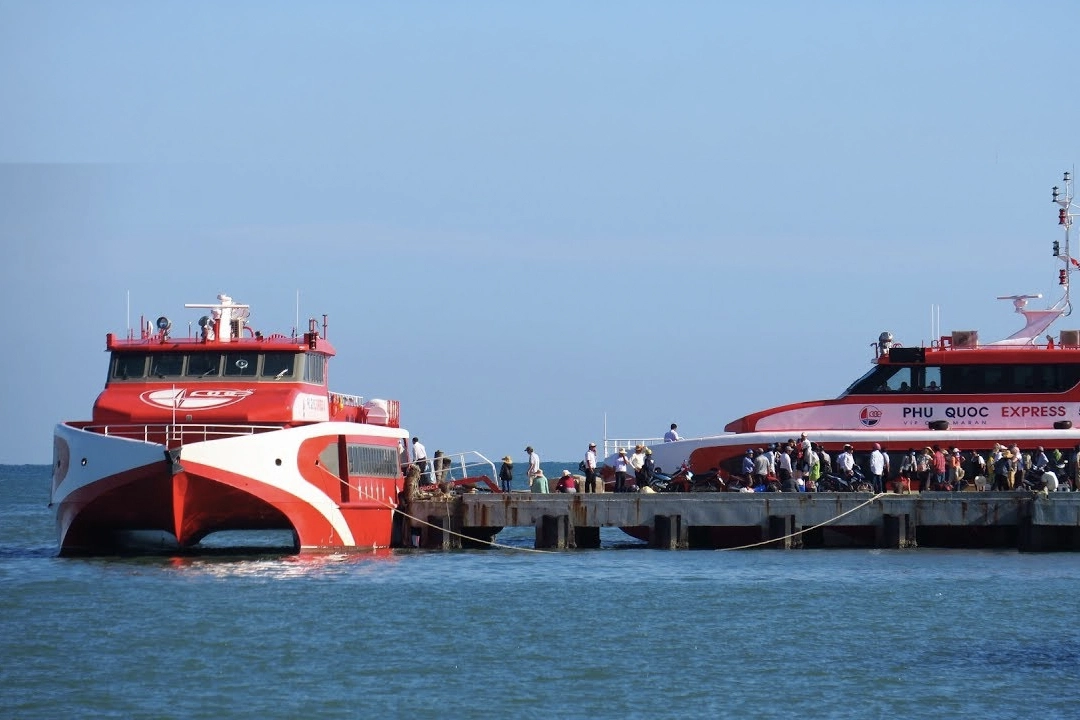
Bai Vong Port
This is the main tourist pier where high-speed ferry companies operating to Phu Quoc such as Superdong, Hoa Binh Ship, and Phu Quoc Express dock. Major ferry companies like Thanh Thoi, Superdong, and Binh An also berth here. Most tourists arriving in Phu Quoc arrive via this ferry terminal.
- Location: East coast of Phu Quoc, about 20km from Duong Dong (the main town).
- What’s there: A modern pier, ticket counters for return trips, small shops, and a waiting area.
- Getting to your hotel: Taxis, Grab (ride-hailing app), or pre-arranged shuttle vans. Expect 250,000 – 350,000 VND ($10–15 USD) to Duong Dong.
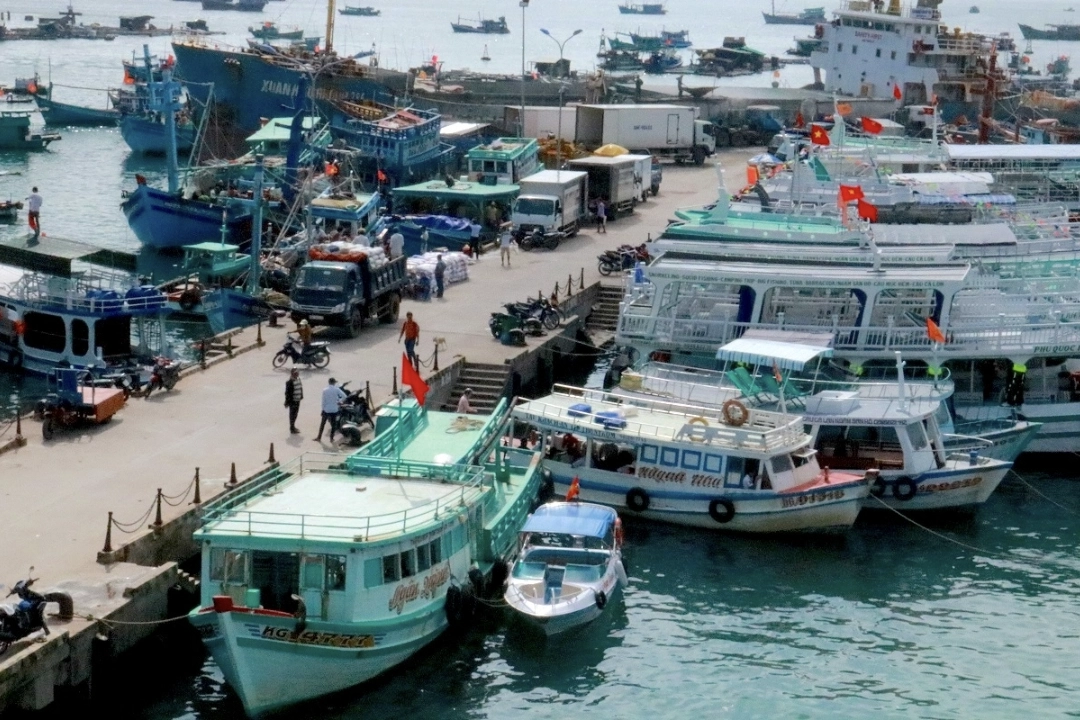
An Thoi Port
This is one of the busiest ports in Phu Quoc, located in An Thoi Town, the southernmost point of Phu Quoc. The port serves not only tourist boats and fishing vessels but also large cargo ships, coast guard patrol boats, and naval vessels. All snorkeling tours in the southern part of the island, as well as 4-island tours, 3-island tours, and 5-island tours, depart from this port.
- Location: Southernmost tip of the island, about 27km from Duong Dong (the main town).
- Note: Primarily serves ferries from Ha Tien, cargo ships, and tourist routes exploring nearby small islands (Hon Thom, Hon Dam, etc.
- Getting to your hotel: A short taxi ride (50,000 – 100,000 VND). You also can ride a bike from port to your hotel.
Ferry Schedule to Phu Quoc 2026 — Daily Departure Times
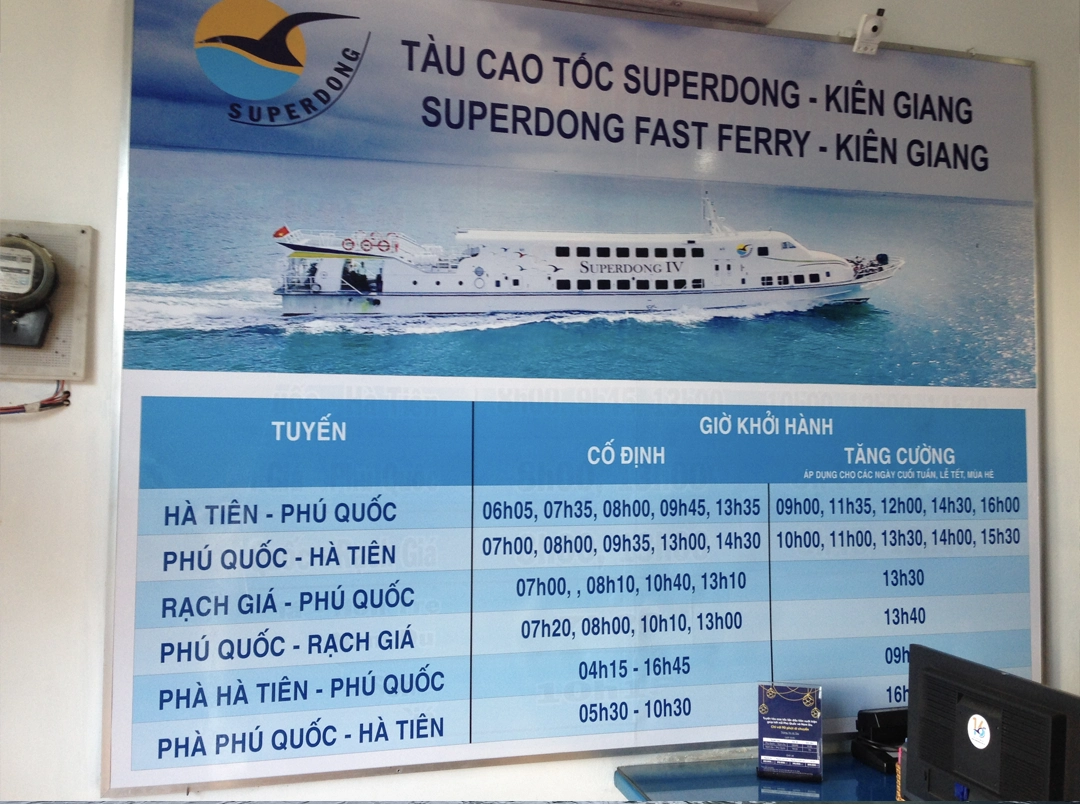
The daily scheduling and frequency of the Phu Quoc ferries vary depending on your chosen departure port and the day of the week. For those traveling on the Rach Gia to Phu Quoc route, departures begin at 7:00 AM and conclude by 2:30 PM, with vessels leaving at regular intervals of three to four hours for a total of four trips per day. In contrast, the Ha Tien to Phu Quoc route offers an earlier head start, with initial departures launching at 4:30 AM and final crossings wrapping up around 11:30 AM or 12:30 PM, resulting in a slightly higher overall daily frequency than the Rach Gia route. Regardless of which port you choose, all operators adjust their schedules to accommodate increased demand on weekends and major holidays, ramping up service to eight to ten trips per day compared to the standard weekday baseline of four to six. When it is time to head back, return ferries leave Phu Quoc's Bai Vong Port between 7:30 AM and 3:30 PM, with the earliest morning boats hitting Ha Tien by roughly 9:00 AM; just be sure to confirm your return ticket at least twenty-four hours in advance to secure your preferred slot.
Note that schedules change seasonally. Below is a typical dry season (November–April) schedule. In the wet season, expect fewer departures.
How to Check If Your Ferry Is Cancelled Due to Weather
- Check the morning of departure: Operator Facebook pages or websites often post updates by 6:00 AM.
- Call the operator: You can easily find the hotline numbers of the service providers printed on the ticket or on their booking websites.
- Ask your hotel or travel agent: They receive updates quickly.
- Look at wind forecasts: Wind speeds over 30–40 km/h often lead to cancellations.
How to Buy Ferry Tickets to Phu Quoc
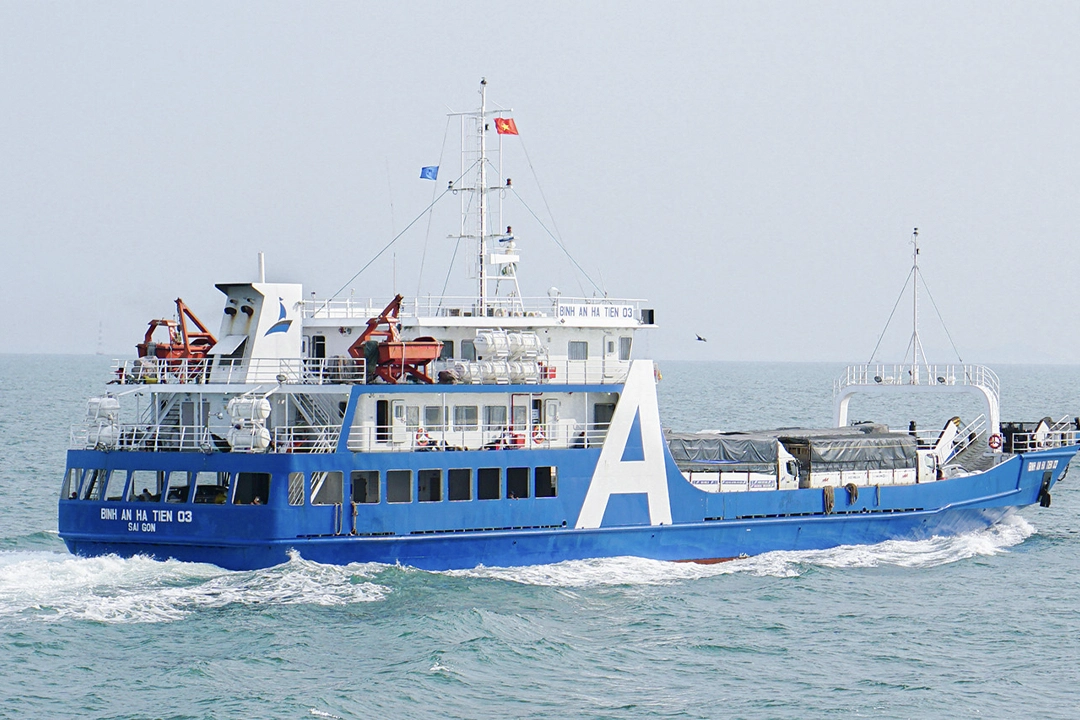
Deciding whether to book your Phu Quoc ferry tickets online or at the port comes down to a trade-off between certainty and flexibility. Booking online in advance guarantees your seat, allows you to select your preferred operator and seating class, lets you skip the ticket window queues, and occasionally secures small discounts; however, it does require internet access, usually incurs a minor booking fee, and locks you into a fixed schedule. On the other hand, purchasing your tickets directly at the port on the day of travel gives you total flexibility if your plans change and avoids booking fees altogether, but it exposes you to long queues, potential language barriers, and a high risk of sold-out vessels.
As a rule of thumb, you should absolutely book online at least two to three days in advance if you are traveling during the peak season—spanning December through February—or around major Vietnamese holidays like Tet. During the low season, however, turning up and buying your tickets straight from the port ticket booth is generally perfectly fine.